快速充电器

Search documents
纽约时报:中国比美国更可靠,特朗普赢了当下,却输了未来
Sou Hu Cai Jing· 2026-01-21 09:25
Core Viewpoint - The global perception of China has dramatically shifted after a year of tariff wars, with many now viewing China as a more reliable economic partner [1] Group 1: Impact of Tariffs - Trump's tariffs, initially intended to leverage the global economy, have led to increased tariffs on Chinese goods, reaching as high as 145% on certain products [5] - Critics, including Thomas Friedman, argue that the tariff strategy has been ineffective, harming U.S. interests and alienating allies [5][7] - The expectation that tariffs would force China to yield has backfired, with China focusing on long-term industrial development and emerging as a stable economic partner [7] Group 2: China's Manufacturing Dominance - China now accounts for one-third of global manufacturing, a significant increase from 6% in 2000, with projections suggesting it could reach 45% by 2030 [7] - The article highlights the rise of "black light factories" in China, which utilize AI for continuous, unmanned production across various sectors [7] Group 3: Technological Advancements - Huawei installed 100,000 fast chargers for electric vehicles in China in 2024, contrasting sharply with the U.S. which only installed 214 chargers despite significant funding [9] - The U.S. is seen to be regressing in renewable energy initiatives, with policies that could hinder its competitiveness in solar, wind, and electric vehicle technologies [9] Group 4: Economic Predictions - The IMF predicts a slowdown in U.S. economic growth to 1.8%, the largest downward adjustment among developed economies, due to trade tensions and policy uncertainties [9] - The article concludes that reliance on tariffs cannot foster long-term prosperity, especially in an era dominated by technological advancements [11] Group 5: Future Industry Leadership - The tariffs have inadvertently propelled China to leadership positions in electric vehicles, robotics, and rare materials, pushing it towards greater independence from the U.S. [13] - While Trump may have won the tariff battle in 2025, China is positioned to dominate the industrial landscape of the 2030s [13]


车载电池(4)中美企业争建快充
日经中文网· 2025-11-08 00:33
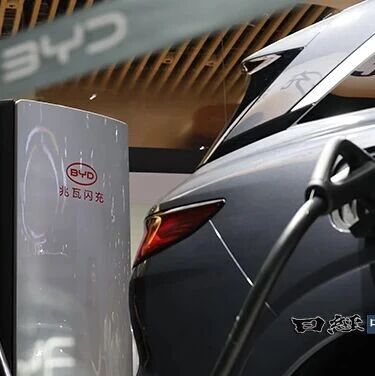
Group 1 - The core viewpoint of the article emphasizes the necessity of upgrading chargers to fully utilize the performance of vehicle batteries, with companies like BYD and Tesla leading the development of fast charging networks in China and the US respectively [2][4]. - BYD plans to establish over 4,000 self-owned chargers across China, with a maximum output power of 1.36 megawatts (1,360 kilowatts), while Tesla has set up over 70,000 chargers globally with a maximum output power of 250 kilowatts [2][4]. - The development of high-performance batteries is crucial for the electric vehicle (EV) market, as demonstrated by CATL's announcement of a battery that can be charged in 5 minutes for a range of 520 kilometers, and BYD's release of an EV technology that allows for 400 kilometers of range with a 5-minute charge [2][4]. Group 2 - The charging standards for EVs vary by region, with China's "GB/T" standard gaining popularity and many local companies developing chargers that support this standard [5]. - In Japan, the "CHAdeMO" standard is prevalent, with chargers typically offering 50 to 90 kilowatts of output, which currently does not support megawatt-level output [7]. - Tesla is focused on building its own charging infrastructure globally, using the "NACS" standard, which has become the most common charging standard in the US, adopted by companies like Toyota and Ford in North America [7].



功率GaN,极速扩张,增长600%
半导体行业观察· 2025-10-24 00:46
Core Insights - The article highlights a significant acceleration in artificial intelligence development by 2025, alongside a growing demand for efficient power in data centers and telecommunications infrastructure [2] - The power GaN market is projected to grow over tenfold from 2020 to 2025, reaching $2.9 billion by 2030, with a compound annual growth rate (CAGR) of 42% from 2024 to 2030 [2] - Consumer applications, particularly fast chargers and home appliances, are identified as the main growth drivers, expected to account for over 50% of the market by 2030 [2] - Automotive and mobility sectors are also significant growth engines, with GaN applications in ADAS and onboard chargers anticipated to capture about 19% of the market by 2030 [2][3] Market Dynamics - The industrial and grid sectors are emerging as the third major growth driver for power GaN, with strong opportunities in robotics and motor drives expected to accelerate around 2028-2029 [3] - The power GaN industry has entered a consolidation phase since 2023, driven by major mergers and acquisitions, such as Infineon's $830 million acquisition of GaN Systems [6] - Over $1.25 billion has been invested in the sector in recent years, indicating robust market momentum [6] Technological Advancements - The industry is rapidly transitioning from 6-inch to 8-inch wafers, with expectations that 8-inch will meet over 80% of demand by 2030 [8] - Innovations in GaN epitaxy are focused on reducing costs, with platforms like AIXTRON's G10 MOCVD expected to lower epitaxy costs significantly [9] - New GaN devices, including those over 1200V and 600-650V, are set to be launched by companies like Navitas and Infineon, enhancing the application in next-generation microinverters [9]

中国商用EV在加速发展
3 6 Ke· 2025-10-17 13:57
Core Insights - The sales of large new energy trucks in China reached 87,100 units in the first half of the year, surpassing the total expected for 2024, driven by a narrowing price gap between electric vehicles (EVs) and gasoline vehicles, as well as government subsidies [2][4] - The market share of new energy vehicles in China has increased to 20%, with significant growth in pure electric commercial vehicles [2][5] - Major companies like SANY Group and XCMG have reported substantial increases in sales, with SANY's electric truck sales doubling to 11,100 units compared to the same period last year [4] Market Dynamics - The price of large pure electric trucks is approximately 470,000 yuan, while gasoline trucks are around 400,000 yuan, with battery prices dropping by 40% over the past three years [4] - Government subsidies for new energy vehicles are set to increase, with higher incentives for replacing gasoline trucks with electric ones [4][5] Future Projections - The commercial vehicle sector is expected to see a 3% increase in sales by 2025, reaching 4 million units, driven by subsidy policies [5] - The electrification of commercial vehicles is anticipated to become a new business opportunity, with the potential for explosive growth in the large truck industry [5] Infrastructure Development - The establishment of more charging stations and battery swapping mechanisms is crucial for the growth of electric commercial vehicles [6][9] - Companies like Telai Electric have developed fast chargers that can provide 100 kilometers of range in just 6 minutes, significantly reducing downtime [7] - CATL plans to build 300 battery swapping stations within the year to support the electric vehicle ecosystem [9]


中国商用EV在加速发展
36氪· 2025-10-17 13:35
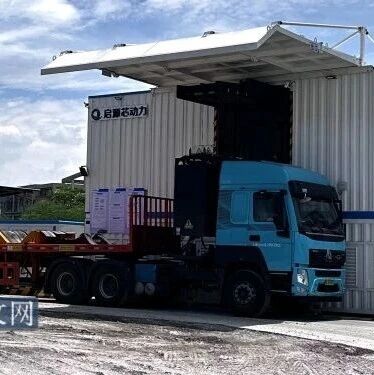
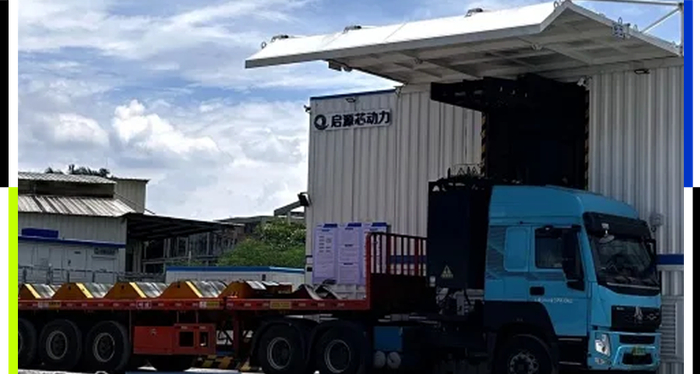
Core Viewpoint - The rapid increase in sales of large new energy trucks in China is driven by the narrowing price gap between electric vehicles (EVs) and gasoline vehicles, as well as increased government subsidies for new energy vehicles [4][8][9]. Market Overview - In the first half of this year, sales of large new energy trucks in China reached 87,100 units, surpassing the total sales expected for the entire year of 2024 [4][8]. - The market share of new energy vehicles, including pure electric trucks, has risen to 20% [5]. Price Dynamics - The price of large pure electric trucks is approximately 470,000 yuan, while gasoline trucks are around 400,000 yuan. The price of electric trucks has decreased by about 40% compared to three years ago due to a 40% drop in battery costs [8][10]. Government Support - The Chinese government has increased subsidies for new energy vehicles, with a higher subsidy for replacing old trucks with new energy models compared to gasoline models [9][10]. - Starting in 2024, a new subsidy system will be implemented, expanding the range of eligible vehicle models by March 2025 [9]. Industry Growth - SANY Group's truck subsidiary reported a twofold increase in sales of large pure electric trucks, reaching 11,100 units in the first half of the year [7]. - XCMG's large new energy truck sales also increased by 60% year-on-year, totaling 12,900 units [5][8]. Charging Infrastructure - The establishment of more charging stations and the development of quick battery replacement mechanisms are crucial for the growth of electric trucks [11][13]. - Companies like Telai Electric have created rapid chargers that can provide 100 kilometers of range in just six minutes [11]. Battery Replacement Model - Shanghai Qiyuan Chip Power Technology aims to popularize battery replacement instead of charging, allowing for a battery swap in just five minutes [13]. - CATL plans to build 300 battery replacement stations this year to support the new energy commercial vehicle market [14].

中国商用EV在加速发展
日经中文网· 2025-10-10 03:27
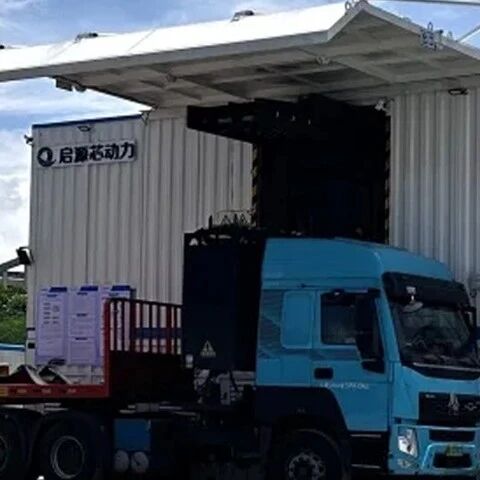
Core Viewpoint - The rapid growth of large electric trucks in China is driven by the narrowing price gap between electric vehicles (EVs) and gasoline vehicles, along with increased government subsidies for new energy vehicles [6][8]. Group 1: Market Performance - In the first half of 2023, sales of large new energy trucks in China reached 87,100 units, surpassing the total sales expected for the entire year of 2024 [6]. - XCMG's large new energy truck sales reached 12,900 units in the first half of 2023, a 60% increase compared to the same period last year [4]. - SANY Heavy Truck's sales of large electric trucks also doubled year-on-year, reaching 11,100 units in the first half of 2023 [6]. Group 2: Price Dynamics - The price of large electric trucks is approximately 470,000 yuan, while gasoline trucks are around 400,000 yuan, indicating a reduced price gap [6]. - Battery prices have decreased by 40%, making electric trucks about 40% cheaper than three years ago [6]. Group 3: Government Support - The Chinese government has increased subsidies for new energy vehicles, with higher subsidies for replacing gasoline trucks with electric ones [6]. - Starting in 2024, a new subsidy system will be implemented, expanding the range of eligible vehicle models by March 2025 [6]. Group 4: Future Growth Potential - The proportion of new energy vehicles in commercial vehicles is currently 20%, with expectations for significant growth in the coming years [8]. - The commercial vehicle market is projected to recover, with a 3% year-on-year increase in sales expected by 2025, reaching 4 million units [8]. Group 5: Infrastructure Development - The establishment of more charging stations and battery swapping mechanisms is crucial for the growth of electric trucks [9]. - Companies like Telad and CATL are developing rapid charging solutions and battery swapping stations to enhance the efficiency of electric truck operations [9][11].