
意外伤害保险

Search documents
中国人寿(02628) - 海外监管公告 - 中国人寿保险股份有限公司2025年度财务报表及审计报告
2026-03-25 10:31
中国人寿保险股份有限公司 (在中华人民共和国注册成立) 中国人寿保险股份有限公司 目 录 | | 页 | | 次 | | --- | --- | --- | --- | | 审计报告 | 1 | - | 6 | | 已审财务报表 | | | | | 合并资产负债表 | 7 | - | 8 | | 公司资产负债表 | 9 | - | 10 | | 合并利润表 | 11 | - | 12 | | 公司利润表 | 13 | - | 14 | | 合并股东权益变动表 | | 15 | | | 公司股东权益变动表 | | 16 | | | 合并现金流量表 | 17 | - | 18 | | 公司现金流量表 | 19 | - | 20 | | 财务报表附注 | 21 | - | 158 | | 补充资料 | | | | | 一、扣除非经常性损益后的净利润 | | 1 | | | 二、净资产收益率及每股收益 | | 1 | | 审计报告 2025年度财务报表及审计报告 安永华明(2026)审字第70002226_A01号 中国人寿保险股份有限公司 中国人寿保险股份有限公司全体股东: 一、审计意见 我们审计了中国人寿保险股份 ...

阳光保险附属公司拟向阳光资管香港增资不超10亿港元
Xin Lang Cai Jing· 2026-02-09 10:26
Core Viewpoint - Sunshine Insurance announced that its subsidiaries, Sunshine Life and Sunshine Asset Management, plan to increase capital in Sunshine Asset Management (Hong Kong) by up to HKD 250 million and HKD 750 million respectively, raising the total capital from HKD 100 million to HKD 1.1 billion, while maintaining their shareholding ratios at 25% and 75% [1][19][23]. Group 1: Capital Increase Details - The capital increase will be priced at HKD 1 per share, and the total capital of Sunshine Asset Management (Hong Kong) will rise to HKD 1.1 billion after the increase [5][26]. - The capital increase is proportionate to the existing shareholding ratios of Sunshine Life and Sunshine Asset Management, reflecting a fair and reasonable agreement [12][26]. - The payment for the capital increase will be made from internal resources of Sunshine Life and Sunshine Asset Management after obtaining necessary regulatory approvals [27][29]. Group 2: Rationale for Capital Increase - The capital increase is deemed necessary due to four main reasons: the inevitable trend of global insurance asset management business development, the internal demand for healthy and rapid growth in China's insurance industry, the need to reduce exposure to single market risks, and the proactive response to challenges in the era of globalization and large asset management [12][33]. - The board believes that the terms of the capital increase are fair and reasonable, aligning with the overall interests of the company and its shareholders [33]. Group 3: Regulatory Compliance - The capital increase constitutes a related party transaction under Hong Kong Listing Rules, as Sunshine Asset Management is a non-wholly owned subsidiary of the company [13][34]. - The capital increase exceeds the applicable percentage threshold but is exempt from independent shareholder approval requirements [34].


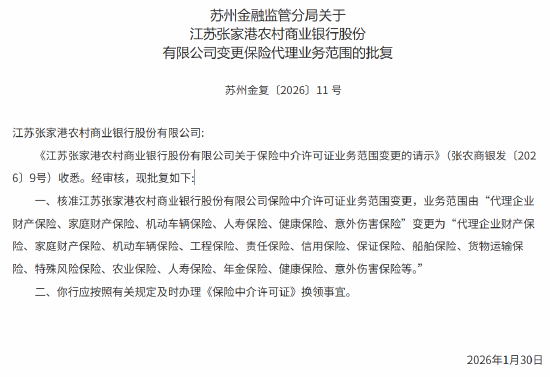
张家港行获批变更保险中介许可证业务范围
Xin Lang Cai Jing· 2026-02-02 07:22
Core Viewpoint - Jiangsu Zhangjiagang Rural Commercial Bank has received approval to expand its insurance intermediary license, significantly broadening its range of insurance products offered [1][2]. Summary by Category Business Scope Change - The bank's insurance intermediary business scope has been expanded from five types of insurance: enterprise property insurance, household property insurance, motor vehicle insurance, life insurance, health insurance, and accident insurance to a total of thirteen types, including engineering insurance, liability insurance, credit insurance, guarantee insurance, marine insurance, cargo transportation insurance, special risk insurance, agricultural insurance, annuity insurance, and others [1][2].
太平财险增资至76.7亿元,增幅约7%
Jin Rong Jie· 2026-01-28 04:44
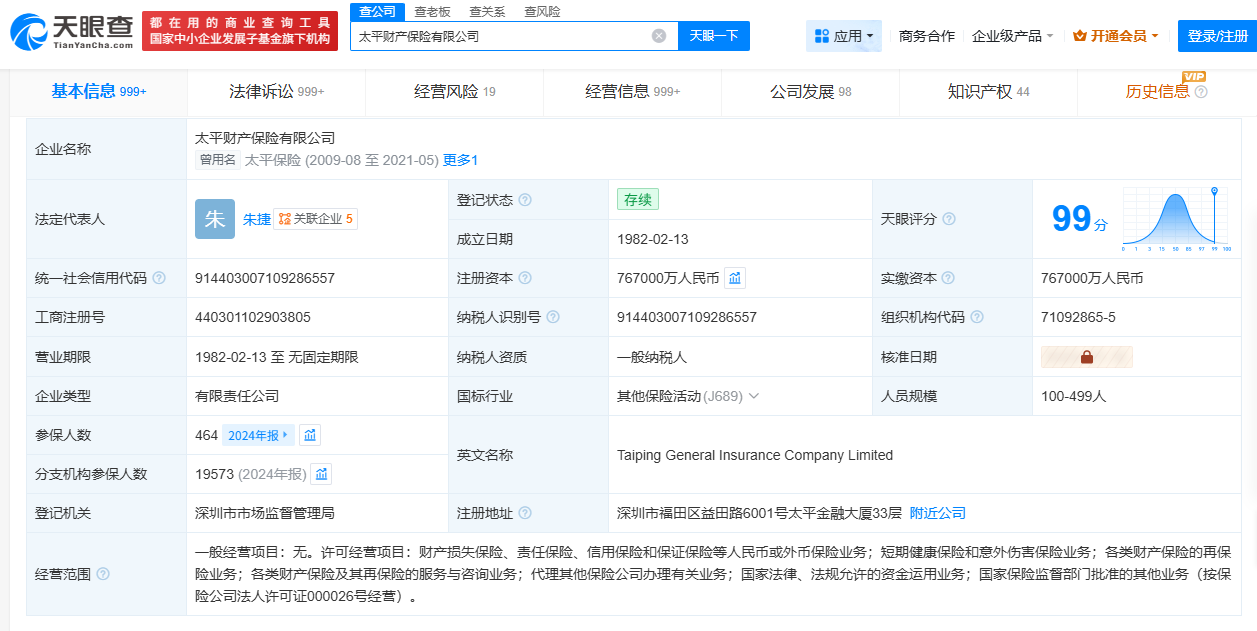
Core Viewpoint - Taiping General Insurance Company has increased its registered capital from 7.17 billion RMB to 7.67 billion RMB, representing an approximate increase of 7% [1]. Group 1: Company Overview - Taiping General Insurance Company was established in February 1982 and is co-owned by China Taiping Insurance Holdings Company and Longpi Industrial Zone Management (Shenzhen) Co., Ltd. [1][2]. - The company operates in various insurance sectors, including property loss insurance, liability insurance, credit insurance, and guarantee insurance, in both RMB and foreign currencies [1][2]. Group 2: Financial Changes - The recent capital increase reflects a strategic move to enhance the company's financial strength and operational capacity [1]. - The new registered capital stands at 7.67 billion RMB, which may support the company's growth and expansion plans in the insurance market [1].
深耕乡村振兴 阳光人寿多维赋能绘就共富新图景
Jin Rong Jie Zi Xun· 2026-01-27 04:48
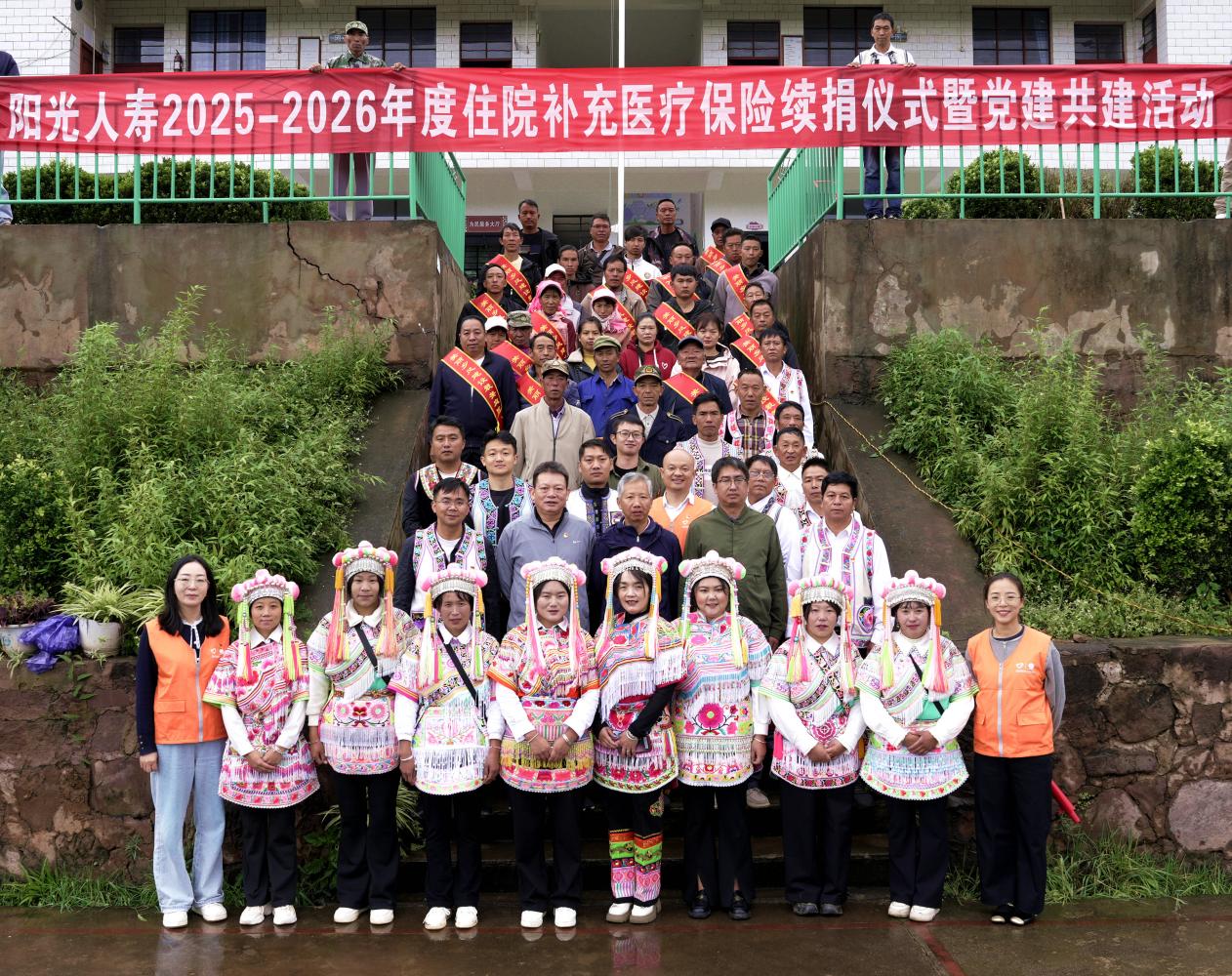
Core Viewpoint - In 2025, the company emphasizes its social responsibility as an insurance enterprise, leveraging its main business advantages and resource integration capabilities to support rural revitalization through various initiatives, including insurance protection, industrial development, educational support, and infrastructure construction [1] Group 1: Insurance Support and Health Safety - The company plays a crucial role as a "social stabilizer," focusing on urgent needs and expanding the coverage and protection of insurance assistance. It has underwritten major illness insurance projects in multiple regions, providing health protection for millions [2] - Targeting vulnerable groups such as orphans and low-income individuals, the company has implemented measures to increase reimbursement rates, lower deductibles, and eliminate caps on coverage, thereby strengthening health safety nets for disadvantaged communities [2] - The company has expanded its government cooperation projects across various provinces, covering over 11 million people through different types of insurance programs [2] Group 2: Tailored Support in Designated Areas - In designated assistance areas, the company has developed customized insurance solutions, providing supplementary medical insurance for 6,216 residents in Inner Mongolia, resulting in 92 claims totaling 1.4132 million yuan [3] - The company has also provided specialized medical insurance for 1,648 villagers in Yunnan, achieving 100% reimbursement for impoverished households, with total claims amounting to 189,800 yuan [3] - Additionally, the company donated accident insurance to 1,263 villagers in Shanxi, with a total coverage amount of 116 million yuan, alongside a special fund to alleviate medical burdens [3] Group 3: Industrial Empowerment and Infrastructure Development - The company adopts a dual approach of "blood transfusion" and "blood production" through industrial and consumption assistance to enhance rural industries. It has engaged with local governments to support the cultivation of specialty medicinal herbs, addressing sales challenges for farmers [6] - The company has also facilitated the purchase of local agricultural products worth 603,200 yuan, contributing to increased farmer incomes and sustainable rural development [6] - In terms of infrastructure, the company has donated funds to improve living conditions in rural elderly care facilities and has supported cultural initiatives to promote community values [6] Group 4: Educational Support - The company continues to advance its "Sunshine Star Love Fund" project, focusing on enhancing rural educational resources. It has donated 200,000 yuan for multimedia equipment and furniture for a primary school in Hebei, aiming to create a better learning environment for rural students [7][8] Group 5: Commitment to Rural Revitalization - The company is committed to its mission of rural revitalization, with various assistance measures taking root and yielding results. It plans to continue innovating its support models, expanding assistance areas, and increasing efforts to strengthen insurance protection and industrial support for rural development [10]
本科不配双休?中国人寿HR扬言拉黑求职者
Xi Niu Cai Jing· 2026-01-22 06:12
Group 1 - The core incident involves a job seeker expressing dissatisfaction with a position that does not offer weekends off, leading to a negative response from a China Life HR representative, which included threats of being blacklisted from future interviews [2][4] - The video of the incident has sparked significant public discussion and controversy, highlighting issues related to job expectations and employer responses in the recruitment process [6] - BOSS Zhipin, the recruitment platform involved, acknowledged the inappropriate remarks made by the HR representative and has taken disciplinary action against the account [6] Group 2 - As of January 20, 2026, China Life has reported the incident to relevant authorities but has not yet issued a public statement regarding the matter [7] - China Life Insurance (Group) Company was established in August 1996 with a registered capital of 4.6 billion yuan, providing various insurance services including life, health, and accident insurance, as well as reinsurance [7]


平安产险为冰雪大世界游客保驾护航
Xin Lang Cai Jing· 2026-01-20 21:54
Core Insights - Harbin Ice and Snow World is experiencing its most prosperous tourism season ever, with Ping An Property & Casualty Insurance providing 5.7 billion yuan in accident and public liability insurance coverage for construction workers, staff, and visitors [1][2] Group 1: Insurance Coverage and Risk Management - Ping An Property & Casualty Insurance is the exclusive underwriter for the 27th Ice and Snow World, offering comprehensive accident insurance [1] - The company has developed a three-dimensional protection system focusing on risk reduction, emergency response, and claims service [1] - The insurance coverage includes measures tailored to the unique risks of low temperatures, slippery roads, and high foot traffic in the park [1] Group 2: Safety Measures and Public Education - Ping An Property & Casualty Insurance implements a dual approach of "source prevention + safety education" to mitigate risks [1] - Physical safety measures include installing anti-slip facilities and increasing warning signs in key areas of the park [1] - Behavioral guidance is provided through on-site personnel promoting easy-to-learn anti-slip techniques and reinforcing safety knowledge among visitors [1] Group 3: Emergency Response and Healthcare Collaboration - The company has established a "medical insurance linkage" emergency rescue system in collaboration with nearby top-tier hospitals [2] - A 24-hour green channel is available for critically ill visitors, ensuring high-quality medical care through expert teams [2] - The initiative aims to protect visitors' health while minimizing economic losses from accidents by reducing emergency service fees and guiding precise treatment [2]

“电销之王”再领罚单 寿险巨头难逃转型阵痛?
Nan Fang Du Shi Bao· 2026-01-16 05:20
Core Viewpoint - China United Metropolitan Life Insurance Co., Ltd. is facing significant challenges including regulatory penalties, declining net profits, and a transition away from its once-dominant telemarketing sales channel, reflecting broader issues in the life insurance industry as it shifts from scale expansion to high-quality development [1][5][12] Regulatory Issues - On January 14, 2026, the Guangdong Financial Regulatory Bureau imposed a fine of 100,000 yuan on the company's Foshan branch for "false reimbursement" practices, highlighting internal control gaps [1][3] - Specific individuals, including the branch's general manager, were penalized, indicating the regulatory body's commitment to a "double penalty" system [3] - The company has faced multiple fines in recent years for various compliance issues, including exaggerating insurance responsibilities and misleading policyholders [3][4] Financial Performance - The company's insurance business revenue has shown consistent growth from 66.39 billion yuan in 2016 to 259.7 billion yuan in 2024, with a notable 51.19% increase in the first three quarters of 2025 [6][7] - However, net profits have declined for three consecutive years, dropping from a peak of 1.854 billion yuan in 2019 to just 206 million yuan in 2024, representing a decline of over 90% from its peak [7][8] Transition from Telemarketing - Once known as the "king of telemarketing," the company has seen a significant shift in its sales channels, with telemarketing revenue dropping from 61.37% of total premiums in 2012 to just 27.13% in 2021 [9][10] - The decline in telemarketing has been attributed to high complaint rates and increased competition from online insurance channels, leading to the closure of all telemarketing centers by 2025 [10][11] - The company has acknowledged the need to address past issues and has committed to improving business quality by shutting down underperforming telemarketing operations [11] Future Challenges - The complete shutdown of the telemarketing business is seen as just the first step in the company's transformation, with the need to balance growth and value enhancement being a critical challenge moving forward [12]
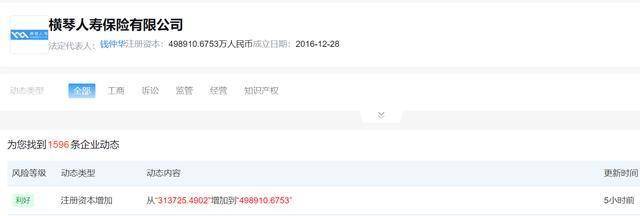
横琴人寿注册资本增59%至49.9亿,64岁董事长钱仲华曾因年龄原因离任中国太保
Sou Hu Cai Jing· 2026-01-15 01:45
Core Viewpoint - Hengqin Life Insurance Co., Ltd. has increased its registered capital from approximately 3.137 billion to about 4.989 billion yuan, marking a 59% increase [1] Group 1: Company Overview - Hengqin Life was established in December 2016 and its main business includes life insurance, health insurance, accident insurance, and related reinsurance and investment operations [1] - The shareholders of Hengqin Life include Hengtong Group Co., Ltd., Zhongzhi Enterprise Group Co., Ltd., Zhuhai Huachuang Investment Management Co., Ltd., Suzhou Anyuan Industrial Co., Ltd., and Shenzhen Pearl Red Trading Co., Ltd. [1] - The chairman of Hengqin Life is Qian Zhonghua, who has a background in public service and has held various positions in the insurance industry since 1995 [1] Group 2: Financial Performance - For the first half of 2025, Hengqin Life reported insurance revenue of 4.39 billion yuan and a net loss of 838 million yuan, with a return on equity of -99.09%, indicating ongoing financial difficulties [2] - From 2022 to 2024, Hengqin Life's cumulative net loss reached 1.515 billion yuan [2]

青海全力构建高原特色养老服务新格局
Xin Lang Cai Jing· 2026-01-14 19:41
Core Viewpoint - Qinghai Province has made significant progress in establishing a new elderly care service system that integrates home, community, and institutional care, enhancing the sense of gain, happiness, and security for the elderly population during the "14th Five-Year Plan" period [1][2] Group 1: Policy Framework - Over 30 policy measures related to elderly care service guarantees, industry promotion, and institutional regulation have been formulated and revised, creating a robust policy system based on normative documents from the provincial government [1] - The policy framework supports a model of "government-led, social participation, and family responsibility" in elderly care [1] Group 2: Community and Institutional Care - Breakthroughs in community elderly care include the establishment of 61 street-level comprehensive elderly service centers, the renovation of 476 rural mutual happiness homes, and the creation of 755 "happiness canteens" to address meal assistance challenges [1] - Institutional elderly care has been expanded and improved with an investment of 1.27 billion yuan to upgrade 754 elderly care facilities, the establishment of 12 county-level public elderly care institutions, and 13 county-level elderly activity centers, resulting in a total of 12,000 beds, with 60.85% being nursing beds [1] Group 3: Financial Support and Insurance - A total of 83,300 elderly individuals have been included in urban and rural subsistence allowances, and 13,100 elderly individuals have been included in special care support, significantly enhancing care capabilities for those in need [1] - The government has allocated 56.63 million yuan in central and provincial financial support for the purchase of elderly care services, benefiting 120,000 individuals through government-purchased home services [2] Group 4: Home Care Improvements - 4,534 family elderly care beds have been established, and 11,000 households have undergone age-friendly renovations, with a 100% monthly visit rate for elderly individuals facing special difficulties [2] - The high-age subsidy policy has been continuously improved, providing annual subsidies to over 380,000 elderly individuals aged 70 and above, making it one of the provinces with the widest coverage and highest beneficiary ratio for high-age subsidies in the country [2] Group 5: Talent Development - Continuous strengthening of talent support includes at least one annual training session for nursing home directors and nursing skills, with over 6,000 nursing staff trained, achieving a 100% training rate for nursing home directors and pre-job fire safety training for nursing staff [2]