探陆

Search documents
车贷“长跑”开启,汽车金融驶入共赢新赛道
Xin Lang Cai Jing· 2026-02-14 00:15
Core Insights - The automotive market is experiencing a shift in competitive dynamics with the introduction of long-term financing options such as "0 down payment" and "7-year ultra-low interest" loans, moving away from cash discounts [1][8][9] Group 1: Long-term Financing Options - Companies like Tesla, Xiaomi, and Li Auto have launched 7-year low-interest car loan products to attract new customer segments [2][10] - For instance, Xiaopeng Motors offers a 7-year financing plan with monthly payments starting at 1,355 yuan, while Xiaomi's new plan requires a down payment of 99,900 yuan with monthly payments starting at 1,931 yuan [2][10] - Nissan has also introduced an 8-year low-interest loan option, highlighting the trend towards extended loan terms in the market [2][10] Group 2: Consumer Demographics - The primary customers opting for these long-term loans include young individuals with limited savings, those facing existing financial pressures, and customers looking to replace their vehicles [3][11] - The extended repayment periods lower the barrier to entry for first-time buyers, particularly young families and those interested in electric vehicles [1][9] Group 3: Market Dynamics and Competition - The introduction of ultra-long-term loans is seen as a competitive strategy for automakers to stimulate demand and alleviate financial pressure on consumers [4][12] - The market for new energy vehicles (NEVs) is projected to grow significantly, with NEV sales expected to account for 47.9% of total new car sales by 2025, reflecting a 7% increase from 2024 [4][12] Group 4: Banking Sector Involvement - Banks are increasingly viewing high-quality auto loans as a key area for business expansion, collaborating with automakers to offer long-term low-interest products [5][13] - The regulatory environment is supportive, with policies allowing banks to extend personal loan terms from 5 to 7 years for long-term consumer needs [5][12] Group 5: Risk Management and Future Strategies - The shift to long-term loans raises concerns about asset depreciation and credit risk, particularly for electric vehicles, which may have lower resale values compared to traditional vehicles [6][15] - Financial institutions are encouraged to enhance risk management capabilities and develop a comprehensive service ecosystem that integrates vehicle financing with additional services [16][14]
车贷“长跑”开启 汽车金融驶入共赢新赛道
Zheng Quan Ri Bao· 2026-02-13 15:43
Core Viewpoint - The automotive market is experiencing a shift in competitive dynamics as long-term financing options like "0 down payment" and "7-year ultra-low interest" loans become more prevalent, moving away from cash discounts [1][4]. Group 1: Long-term Financing Options - Companies such as Tesla, Xiaomi, and Li Auto have introduced 7-year low-interest car loan products to attract new customers with lower entry barriers [2][4]. - The extended repayment periods allow first-time buyers, particularly young families, to experience electric vehicles sooner, effectively lowering the cost of ownership [1][4]. - The introduction of these financing options is seen as a strategy to stimulate demand and alleviate financial pressure on consumers [4][5]. Group 2: Market Dynamics and Competition - The competition in the automotive market is intensifying, particularly in the electric vehicle sector, with projections indicating that by 2025, new energy vehicles will account for 47.9% of total new car sales in China [4]. - The long-term loan offerings serve as a differentiation strategy for automakers, enabling them to secure long-term customer relationships and create opportunities for additional services [4][5]. Group 3: Banking Sector Involvement - Banks are increasingly viewing high-quality auto loans as a key growth area, responding to government policies aimed at boosting consumer spending [5][6]. - Collaborations between banks and automakers on long-term low-interest products allow banks to access quality customer resources while mitigating risks through interest subsidies from car manufacturers [5][6]. - Financial institutions are encouraged to enhance their risk management capabilities and customer credit assessment systems to adapt to the long-term nature of these loans [5][6]. Group 4: Future Ecosystem Development - There is a potential shift from traditional lending to a comprehensive service model that encompasses the entire lifecycle of vehicle ownership, including financing, insurance, and maintenance [6][7]. - Banks are advised to establish data-sharing mechanisms with automakers to create integrated financial products that cater to various customer needs throughout the vehicle ownership experience [7]. - The goal is to transition from one-time transactions to long-term customer engagement, fostering a win-win ecosystem for banks, automakers, and consumers [7].
东风日产襄阳工厂启动改造,生产华为赋能的猛士越野车
Guan Cha Zhe Wang· 2025-09-19 02:55
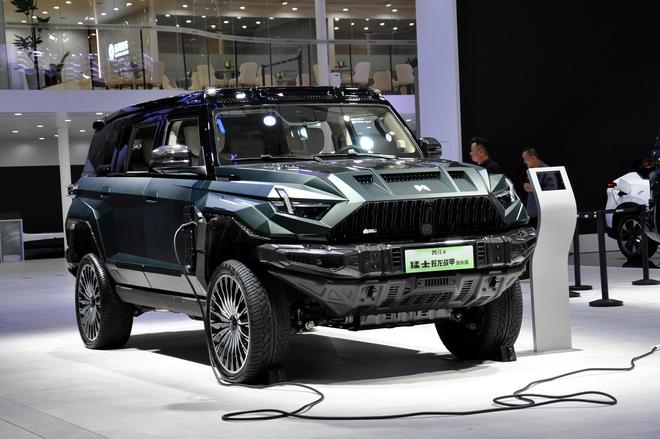
Group 1 - Dongfeng Motor Group Co., Ltd. announced the establishment of a joint venture focused on manufacturing and selling smart off-road vehicles under the Hummer brand, with a registered capital of RMB 8.47 billion [1] - The joint venture will involve contributions from Dongfeng Group, Dongfeng Motor Co., and other partners, with Dongfeng Group contributing intangible asset usage rights and physical assets [1] - The new joint venture aims to leverage Huawei's technology to enhance the Hummer brand's offerings in the high-end off-road vehicle market [2][4] Group 2 - Dongfeng's high-end new energy brand, Lantu, has seen significant growth, with sales exceeding 80,000 units from January to August, a year-on-year increase of 94.3% [4] - Lantu's financial performance has improved, with a projected tax-adjusted net loss of RMB 180 million in 2024, a significant reduction from RMB 1.472 billion in 2023 [4][6] - The partnership with Huawei has been pivotal for Lantu, with new models featuring advanced Huawei technologies [4][6] Group 3 - Dongfeng is replicating Lantu's success by creating another high-end new energy brand, Hummer, which has already launched two models and achieved sales of 2,451 units from January to August, an increase of 88.8% [7] - The Hummer brand is focusing on the niche off-road market and aims to strengthen its brand recognition through innovation and collaboration with Huawei [7] - The Hummer M817 model, developed in collaboration with Huawei, features advanced technology and is expected to enhance the brand's market presence [7] Group 4 - Dongfeng Nissan's production facility in Xiangyang has faced declining sales, with a 10.6% year-on-year drop in total sales for the first eight months of the year [10][12] - The Xiangyang plant, which has a maximum annual production capacity of over 200,000 vehicles, is undergoing transformation to address overcapacity issues [10][12] - Dongfeng is actively working to optimize production capacity across its facilities, with plans to expand the Xiangyang plant's capacity to 300,000 vehicles in the long term [12]


中高级纯电轿车12万起售,东风日产放下身段鏖战新能源市场
Jing Ji Guan Cha Wang· 2025-04-29 08:40
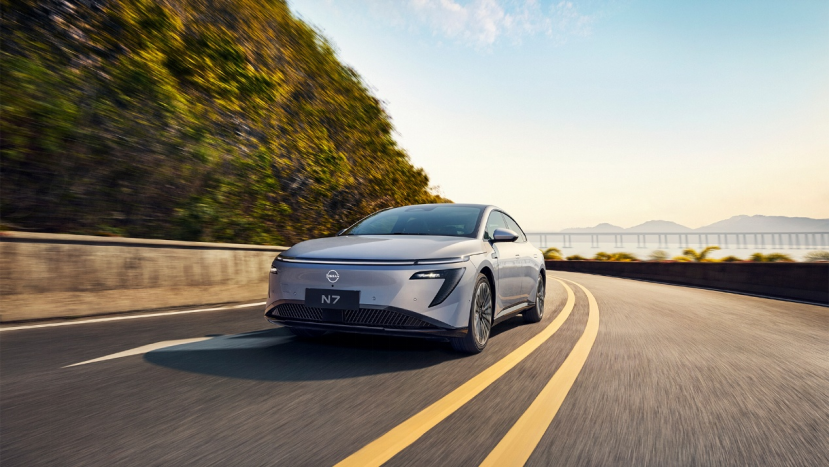
Group 1 - Dongfeng Nissan's first new energy strategic model, the N7, was launched on April 27, with a price range of 119,900 to 149,900 yuan, significantly lower than its first electric model, the ARIYA, by 80,000 yuan [2] - The N7 is positioned as a mid-to-high-end electric sedan, while the ARIYA is a compact SUV, indicating a shift in pricing strategy to attract more consumers [2] - Dongfeng Nissan's overall sales in 2024 were 631,200 units, a year-on-year decline of 12.7%, continuing a downward trend since 2021, with a market share drop from approximately 10% in 2021 to 6.5% in 2024 [3] Group 2 - The N7 is designed by a local Chinese team and features dimensions of 4930mm in length, 1895mm in width, and 1487mm in height, with a wheelbase of 2915mm, classifying it as a standard mid-to-large sedan [4] - The N7 includes advanced features such as a 15.6-inch 2.5K central control screen, AI zero-pressure cloud seat technology, and an intelligent driving assistance system, showcasing its competitive edge in technology and configuration [4][5] - Dongfeng Nissan is optimizing its sales and service channels by implementing a separation of ordering, delivery, and service processes, with over 100 delivery centers and 500 retail centers established nationwide [5][6] Group 3 - Dongfeng Nissan is reportedly planning to close its Wuhan factory, which has been operational since 2022, due to urgent transformation needs and declining sales [6][7] - The Wuhan factory, with an annual production capacity of 300,000 vehicles, has faced significant underutilization issues and is expected to start producing vehicles for Lantu Automotive [7]