数字故宫

Search documents
【光明论坛】让数智为文化赋能添彩
Xin Lang Cai Jing· 2026-01-25 19:17
Group 1 - The article highlights the integration of mobile game IP elements into traditional cultural settings, exemplified by the immersive experiences at Xi'an's Datang Furong Garden, which attract young visitors and stimulate cultural consumption [1] - The ongoing technological revolution and industrial transformation are reshaping various sectors, emphasizing the need for deep integration of culture and technology to enhance cultural development and innovation [1][2] - The "14th Five-Year Plan" suggests promoting the digitalization of cultural construction and the development of new cultural formats, indicating a strategic direction for cultural and technological integration [1][2] Group 2 - Since the 18th National Congress, China has accelerated the integration of culture and technology, achieving significant breakthroughs in the digital preservation and utilization of cultural resources [2] - Technologies such as virtual reality (VR) and augmented reality (AR) are transforming cultural experiences, with initiatives like the "Digital Palace Museum" allowing remote access to cultural heritage [2] - New cultural formats driven by digital technology, such as immersive performances and metaverse cultural spaces, are expanding cultural consumption scenarios and fostering new productive forces in culture [2] Group 3 - Challenges remain in the digital empowerment of cultural construction, including the need for stronger core technology support and addressing issues of content quality and depth [3] - The article stresses the importance of integrating socialist core values into the digitalization process to ensure that technology serves the development of socialist culture [3][4] - Digital platforms are enhancing public cultural services, aiming to bridge cultural gaps between urban and rural areas and improve the cultural well-being of the population [3] Group 4 - Upholding the principles of "cultural subjectivity" and "cultural diversity" is essential for maintaining the cultural foundation of digital empowerment [4] - Successful examples of technology serving cultural core include projects like "Digital Dunhuang" and programs that utilize digital visual technology to present traditional cultural stories [4] - The article calls for the establishment of industry standards and regulatory frameworks to protect cultural data security and promote ethical technology use in cultural contexts [5]
面对面丨百年故宫如何再出圈
Xin Lang Cai Jing· 2025-12-21 19:39
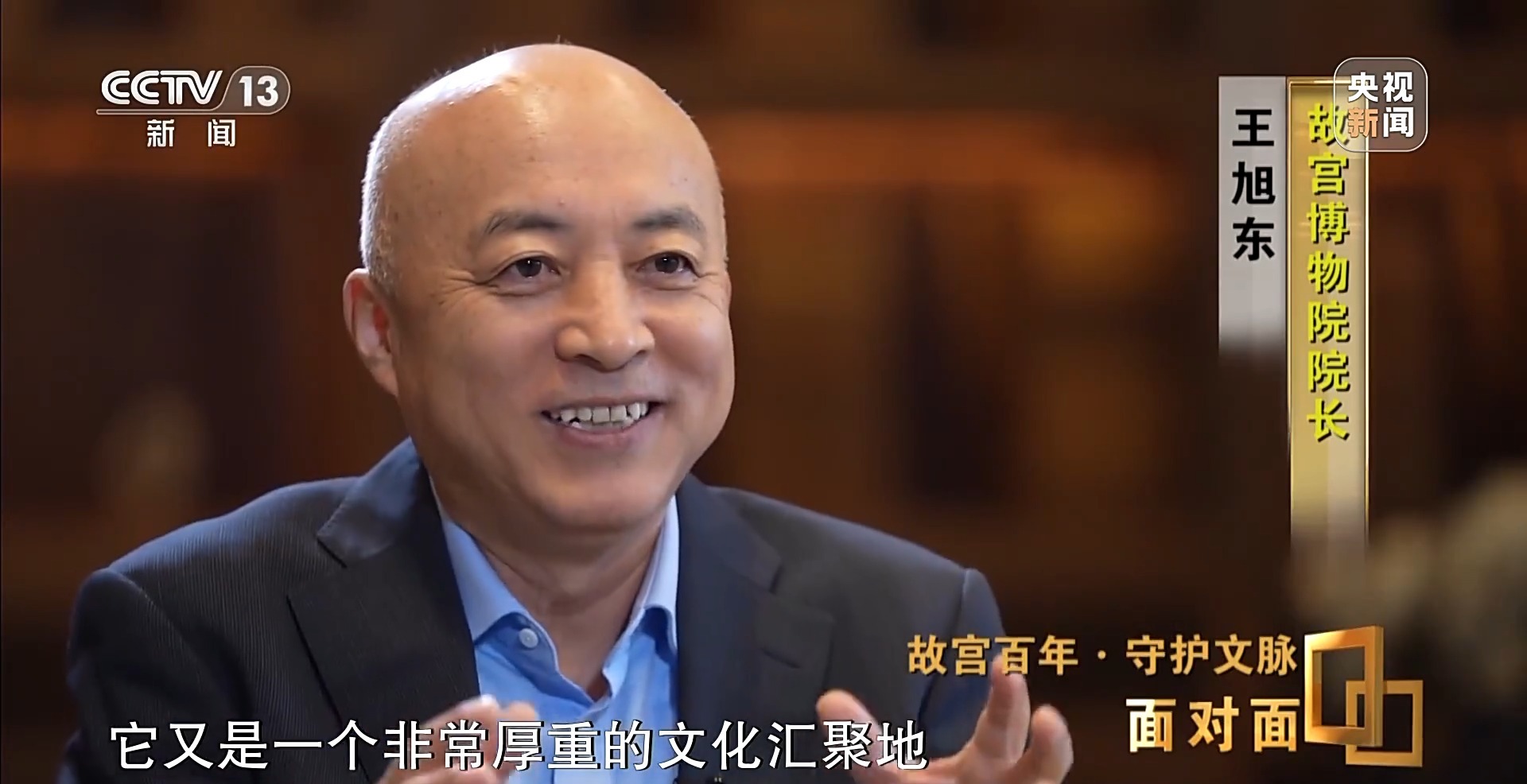
Core Viewpoint - The Palace Museum is celebrating its centenary in 2025, marking its transformation from an imperial palace to a national museum, and emphasizing its role as a global cultural heritage site [1]. Group 1: Historical Significance - The Palace Museum was established on October 10, 1925, and was listed as a UNESCO World Heritage Site in 1987, representing a significant cultural evolution from national memory to a shared human heritage [1]. - The museum has preserved 1.95 million cultural relics, forming an invaluable cultural treasure alongside the ancient architectural complex [75]. Group 2: Future Vision - Wang Xudong, the seventh director of the Palace Museum, emphasizes the importance of looking ahead 10 to 20 years to ensure sustainable development and cultural preservation [41]. - The museum aims to become a key base for patriotic education and a vital window for understanding Chinese civilization [75]. Group 3: Cultural Heritage Protection - The museum is actively involved in establishing an International Standardization Organization for cultural heritage protection, promoting global sharing and respect for human civilization [44]. - The integration of modern detection technology with traditional restoration methods has positioned the Palace Museum at the forefront of global cultural heritage protection [73]. Group 4: Digital Transformation - The "Digital Palace" initiative aims to preserve information and lay a solid foundation for cultural dissemination, with over 1 million cultural relics digitized [51]. - Digital technologies are being utilized to create engaging cultural products, enhancing public interaction with the museum's collections [45][51]. Group 5: Restoration Practices - The restoration approach emphasizes minimal intervention, focusing on preserving historical authenticity while ensuring safety [64]. - The ongoing restoration of the Yangxin Hall involves meticulous work on over 450 cultural relics, highlighting the complexity and dedication required in heritage conservation [69]. Group 6: Public Engagement - The "Hundred Years of Guardianship" exhibition showcases significant cultural relics and aims to deepen public understanding of the museum's history and mission [85]. - The exhibition has attracted numerous visitors, reflecting the strong cultural appeal and commitment of the Palace Museum staff to their roles as guardians of heritage [85].

立足优势壮大文创产业
Jing Ji Ri Bao· 2025-11-25 22:37
Core Viewpoint - The cultural and creative industry in China has developed unique advantages through cultural heritage and innovative models, necessitating improved top-level design and policy support to enhance innovation capabilities and market adaptability, ultimately expanding the industry [1] Group 1: Industry Growth and Trends - The sales revenue of cultural and creative products from museums in China is projected to reach 3.428 billion yuan in 2024, representing a year-on-year growth of 63.7% [1] - Cultural and creative products have transcended the realm of souvenirs, becoming popular consumer items integrated into daily life [1] - The industry is characterized by creative-driven, cross-industry integration, and ecological empowerment, with significant innovations in product design and cultural adaptation [2] Group 2: Comparative Advantages - Compared to international counterparts, China's cultural and creative industry leverages its rich cultural heritage and innovative approaches, creating a unique ecosystem that emphasizes public participation and experience [3] - Examples include the archaeological blind boxes from the Sichuan Sanxingdui Museum and the "Digital Guardian" project from Dunhuang, which engage the public in cultural heritage preservation [3] Group 3: Challenges and Recommendations - Current challenges include severe product homogeneity, insufficient integration along the industry chain, and a disconnect between upstream creativity and market demand [3] - Recommendations for improvement include enhancing top-level design and policy support, optimizing tax incentives, and strengthening intellectual property protection at the macro level [4] - At the industry level, promoting collaboration and resource matching among enterprises, and establishing industry standards for high-quality development are essential [4] - At the enterprise level, enhancing innovation capabilities, conducting market research, and increasing technological investment to develop immersive and interactive cultural products are crucial [4]
数字化守护文明瑰宝
Jing Ji Ri Bao· 2025-09-23 22:16
Core Insights - The digital wave is rapidly integrating into economic and social development, significantly transforming traditional production and lifestyle, and creating new pathways for cultural heritage protection and transmission [1][2] Group 1: Digital Technology in Cultural Heritage - Digital technology is enhancing the clarity and completeness of cultural heritage management, allowing for more precise and scientific management [1] - Satellite remote sensing has achieved full coverage of over 40 world cultural heritage sites and 5,058 national key cultural relic protection units, supporting a shift from reactive to preventive protection [2] - The integration of big data, IoT, and cloud computing is providing a solid foundation for digital safety supervision in cultural heritage [2] Group 2: Systematic Protection Approaches - Systematic thinking is essential for cultural heritage protection, emphasizing comprehensive coverage and the integration of cultural heritage with urban development [2] - The focus is on activating the value of cultural heritage by aligning it with urban planning, improving livelihoods, and upgrading industries [2] Group 3: Digital Initiatives by Institutions - The Palace Museum has been building a digital framework for nearly 30 years, with plans to digitize all 1.95 million artifacts over the next 10 to 20 years [2] - The Dunhuang Academy has completed digital collection of 300 caves and aims to utilize high-tech methods for sharing digital resources securely [2] - The Beijing Central Axis Heritage Protection Center is promoting public participation in heritage protection through digital platforms, creating a replicable model for global cultural heritage digital protection [2]
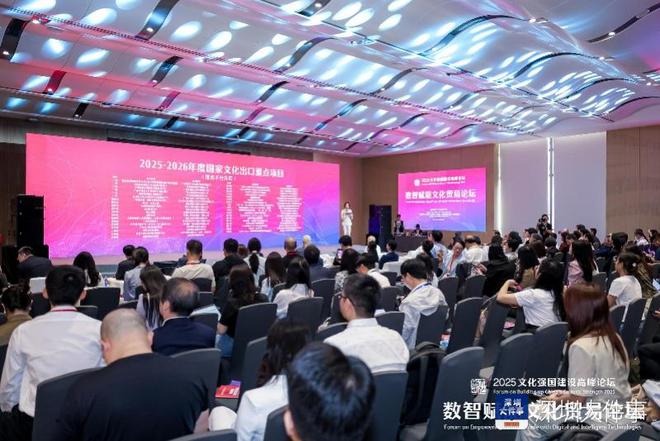
数智浪潮下破圈出海,中国文化如何跨越地界与认知?
Nan Fang Du Shi Bao· 2025-05-28 06:56
Core Insights - The article highlights the significant growth of China's cultural exports, particularly in the gaming industry, with overseas gaming revenue reaching $18.557 billion in 2024, a year-on-year increase of 13.39% [1] - A high-profile forum on "Digital Intelligence Empowering Cultural Trade" gathered government officials, scholars, and business leaders to discuss how China can leverage technology to enhance its cultural influence globally [1][4] Industry Growth - The Chinese cultural trade total reached 1.4 trillion yuan in 2024, with digital cultural trade, including online games and audiovisual content, exceeding 370 billion yuan, accounting for 25.8% of the total cultural trade [4] - The government has emphasized the importance of cultural trade as a strategic component of building a cultural power, with policies aimed at enhancing digital capabilities and international competitiveness [4][5] Technological Advancements - AI technology is transforming cultural exports by overcoming language barriers, enabling rapid multi-language adaptation of cultural works, and significantly reducing costs [6][7] - Innovations in video production, such as the domestic video model "Vidu," are leading to lower production costs and higher quality outputs, facilitating the export of cultural content [6][9] Systematic Approach - Companies are shifting from single product exports to a more integrated "system output" strategy, exemplified by Pop Mart's overseas revenue surpassing 5 billion yuan in 2024, driven by an IP ecosystem and digital infrastructure [8] - The gaming industry is adopting a "research and operation integration" model, customizing game content for different markets, which has led to significant overseas revenue growth for companies like 37 Interactive Entertainment [9] Cultural Heritage Digitization - The digital transformation of cultural heritage is being prioritized, with over 52% of the Palace Museum's collection digitized by 2024, allowing for global access and the creation of derivative cultural products [10] - Innovative projects like the VR film "Tang Palace Night Banquet" are successfully combining traditional culture with modern technology to enhance international appeal [10] Challenges and Future Directions - Despite successes, challenges remain, including a lack of high-quality cultural data for AI training and the need for effective cross-cultural communication strategies [11][12] - Companies are exploring localized strategies to better resonate with international audiences, emphasizing the importance of cultural context in content delivery [12]