
长征十二号甲火箭

Search documents
一次试验拿下两项核心技术,中国载人登月已是“早晚的事”
Guan Cha Zhe Wang· 2026-02-13 00:33
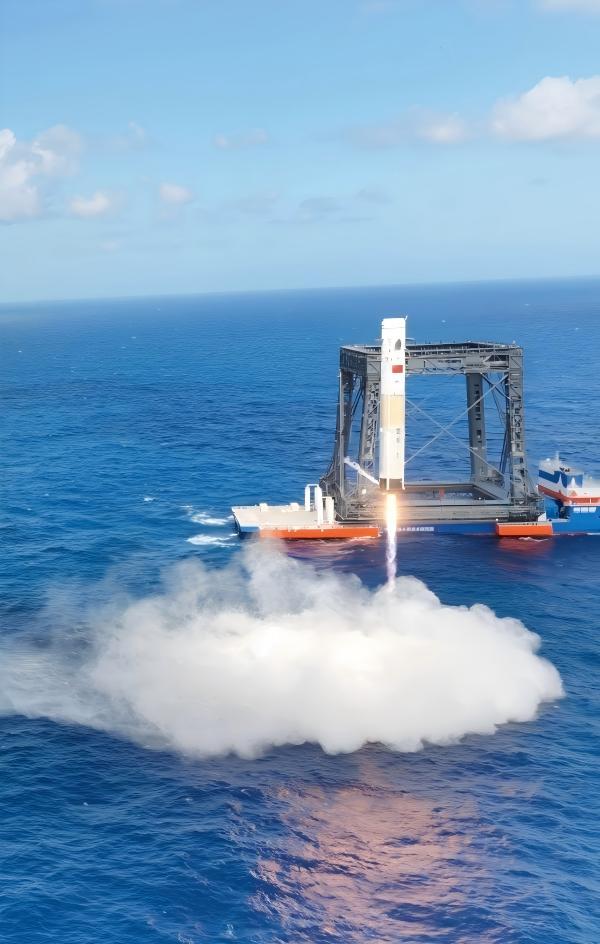
Core Viewpoint - The successful low-altitude demonstration and maximum dynamic pressure escape flight test of the Long March 10 rocket system and the "Dream Boat" crewed spacecraft mark a significant breakthrough in China's crewed lunar exploration program [1][3][4]. Group 1: Long March 10 and Dream Boat Achievements - The Long March 10 rocket's first stage successfully performed a controlled splashdown in the designated sea area, demonstrating precise landing capabilities and completing key recovery processes [2][8]. - The "Dream Boat" spacecraft successfully executed an escape maneuver under maximum dynamic pressure conditions, validating its ability to safely separate from the rocket during critical phases [3][15]. - This test represents a pivotal moment in China's crewed spaceflight history, akin to previous milestones in the "Two Bombs, One Satellite" and Shenzhou missions, indicating a clear path towards future lunar missions [4][12]. Group 2: Comparison with International Space Programs - The article contrasts China's approach to crewed spaceflight with that of the United States, highlighting the ongoing operational status of the Dragon spacecraft and the uncertainties surrounding the Artemis program [3][19]. - China's strategy emphasizes early validation of high-risk components, which may provide a competitive edge in the race for lunar exploration, as it allows for more frequent and lower-cost operations [19]. Group 3: Technical Innovations and Challenges - The Long March 10 rocket features significant advancements in size and technology, with a diameter of approximately 5 meters, which increases the complexity of recovery operations compared to previous models [11][10]. - The escape system of the "Dream Boat" is designed to function effectively under extreme conditions, showcasing the integration of advanced engineering principles to ensure astronaut safety during emergencies [15][17]. - The testing methodology employed by China reflects a historical approach of maximizing the utility of each test flight by combining multiple objectives, thereby accelerating the overall development timeline [12][11].

高密度发射 我国商业航天何以迎来突破?
Xin Lang Cai Jing· 2026-01-26 18:59
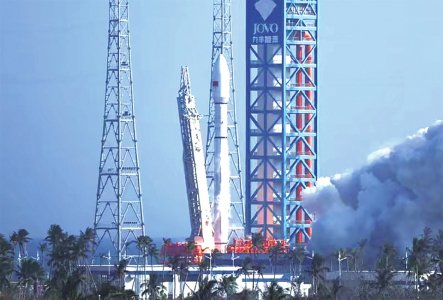
Core Insights - The recent launch of 19 low-orbit satellites by China's commercial space sector marks a significant step in the country's ambition to become a "space power" as outlined in the 14th Five-Year Plan [2][8] - The rapid advancements in technology and the increasing capabilities of private space companies are driving the commercialization of space, transitioning from supplementary forces to strategic pillars [2][7] Group 1: Launch and Technology Developments - The Long March 12 rocket, used for the recent satellite launch, is China's first 4-meter single-core rocket with a near-Earth orbit capacity of at least 12 tons, supporting various launch missions [3] - Galaxy Space successfully launched its second group of self-developed low-orbit satellites, incorporating advanced technologies such as low-cost phased array antennas and automated production processes to enhance efficiency [2][3] Group 2: Reusable Rocket Technology - The development of reusable rocket technology is seen as a key factor in reducing launch costs and increasing launch frequency, with both state-owned and private enterprises collaborating on this front [5][7] - By the end of 2025, attempts at first-stage recovery tests for the Zhuque-3 and Long March 12A rockets are planned, indicating progress in this area [5] Group 3: Market and Policy Drivers - The rapid growth of China's commercial space sector is driven by favorable policies, capital investment, and technological breakthroughs, with a focus on satellite internet and 6G technology [6][7] - China has submitted applications for an additional 203,000 satellites, with major telecom operators like China Mobile and China Telecom entering the satellite constellation market [7][8] Group 4: Industry Ecosystem - The commercial space industry in China is developing a complete ecosystem from rocket and satellite manufacturing to launch services and communication operations, creating internal momentum for growth [8] - The successful integration of key technologies and the expansion of large-scale applications position China's commercial space sector to play an increasingly important role in the global space economy [8]
我国新增申请超20万颗卫星频轨资源,航天航空ETF(159208)涨近4%冲击3连涨
Xin Lang Cai Jing· 2026-01-12 02:28
Group 1 - The aerospace sector experienced a significant surge, with the CN5082 index rising by 3.97% and notable individual stocks like Guobo Electronics increasing by 14.53% [1] - The Aerospace ETF (159208) also saw a rise of 3.75%, marking a three-day consecutive increase, and has accumulated a 14.45% increase over the past week [1] - China applied for frequency orbit resources for over 200,000 satellites, indicating that satellite frequency resource applications have reached a national strategic level [1] Group 2 - China’s commercial aerospace is transitioning from the "exploration and verification" phase to a "growth explosion" period, marking a critical development turning point [2] - The establishment of a Commercial Aerospace Department by the National Space Administration and the release of a special development action plan during the 14th Five-Year Plan period highlight the elevated political positioning of commercial aerospace [2] - The successful first flights of the Zhuque-3 and Long March 12甲 rockets have validated the liquid oxygen-methane and reusable technology paths [2] - The fifth set of standards on the Sci-Tech Innovation Board supports financing for commercial rocket companies, with Blue Arrow Aerospace's IPO accepted to raise 7.5 billion yuan for reusable rocket R&D and capacity building [2] - The next two years are expected to see a global explosion in the commercial aerospace industry, with demand for launch services and satellite networking anticipated to continue to grow [2] - The top ten weighted stocks in the CN5082 index account for 52.7%, including companies like Guangqi Technology and China Satellite [2] Group 3 - The Aerospace ETF (159208) closely tracks the CN5082 index and is characterized by high growth and high elasticity [3]

商业航天的“水下链主”,北京、成都、无锡都投了
投中网· 2026-01-06 06:11
Core Viewpoint - The commercial space industry is rapidly evolving, with significant market potential and investment opportunities emerging, particularly in rocket and satellite enterprises [3][4][5]. Group 1: Market Potential and Investment Trends - The commercial space sector is projected to become a major player in the capital market, with discussions around the first commercial space stock and the launch of satellite ETFs gaining traction [3]. - The successful recovery tests of rockets like Zhuque-3 and Long March 12A, along with SpaceX's anticipated IPO, highlight the industry's growth and the importance of reliable and cost-effective rocket launch capabilities [3][4]. - The Shanghai Stock Exchange's guidelines for commercial rocket enterprises emphasize the priority of launch cost efficiency, indicating a shift towards more sustainable business models in the sector [4]. Group 2: Role of Satellite Enterprises - Satellite companies are positioned as the demand initiators in the commercial space industry, driving the need for rocket launches and component manufacturing [5][6]. - The standardization and supply chain innovation led by satellite enterprises are crucial for achieving large-scale, low-cost manufacturing, which is essential for the industry's growth [6]. - Companies like Weina Space are emerging as key players, having secured significant funding to enhance their R&D capabilities and expand production capacity [6][12]. Group 3: Historical Context and Development - The commercial space industry has a rich history, with satellite technology evolving over 60 years, establishing its role as a critical infrastructure for communication and data collection [8]. - The establishment of policies promoting private investment in space has catalyzed the growth of commercial space ventures, with Weina Space exemplifying successful fundraising and market entry strategies [9][10]. Group 4: Future Outlook and Challenges - The potential for cost reductions in satellite launch services, particularly if reusable rocket technology advances, could lead to significant market shifts and investment opportunities [18]. - The involvement of local state-owned enterprises in funding commercial space projects indicates a growing recognition of the sector's importance and potential for economic development [19][20]. - The industry's maturation is reflected in the increasing ability of companies to deliver products and services that meet market demands, suggesting a transition towards industrialization and sustainability [22].

危险信号,如果看不懂商业航天股疯涨,你可能正被时代抛弃
3 6 Ke· 2026-01-04 09:51
Core Viewpoint - The recent failures in rocket recovery did not dampen investor enthusiasm for China's commercial space sector, leading to a surge in related stocks and ETFs, with some doubling in price within days [1][2][3]. Group 1: Market Response - The market's positive reaction reflects an upgraded understanding of the development patterns in advanced technology, where a single setback is less significant compared to the rapid iteration of technology [2][17]. - Investors are increasingly attracted to China's "dual-track" model in commercial space, which combines the strengths of state-owned enterprises and agile private companies [4][5]. - The market has detected clear signals of acceleration, supported by national policies, tailored listing rules for commercial rocket companies, and a wave of IPOs from leading firms [6][7]. Group 2: Public Participation and Sentiment - The public's role in space exploration has shifted from passive observers to active participants through capital markets, allowing ordinary individuals to invest in rocket companies [13][14]. - This new engagement fosters a collective recognition of the value of "trial and error" in high-tech fields, contrasting with previous expectations of infallibility [15][16]. - The emotional resonance of commercial space has become a vital narrative, especially as traditional economic growth stories face challenges [19][20]. Group 3: Industrial Impact - The rise of commercial space is creating new high-skill job types, such as "high-skilled engineers" and "advanced manufacturing specialists," redirecting top talent back to the industrial front [25][26][29]. - The rigorous demands of commercial space serve as a catalyst for advancements across various industries, enhancing the capabilities of numerous suppliers [30][31]. - The development of new launch sites is reshaping economic landscapes, creating clusters of innovation and attracting high-end talent and capital [31][34]. Group 4: Strategic Importance - The commercial space sector is seen as crucial for China to secure a competitive position in the future global landscape, particularly in establishing next-generation infrastructure in space [39][40]. - The ongoing efforts in commercial space are not merely about achieving successful launches but are fundamentally about redefining the rules of engagement in the space economy [42][43]. - The market's enthusiasm for commercial space stocks reflects a broader societal commitment to long-term innovation and resilience in the face of challenges [46][47].
流纹岩:2026,中国航天将在“狂飙”与“悬念”中挺进深空
Xin Lang Cai Jing· 2026-01-01 01:20
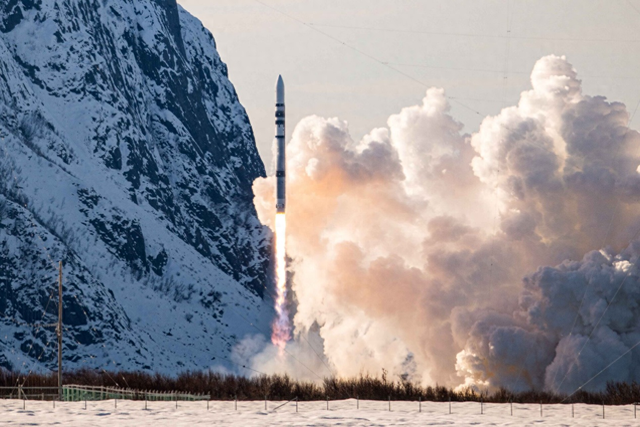
Core Insights - The global space industry experienced significant activity in 2025, with a total of 327 orbital launches, achieving a success rate of 97% [1] - China conducted 92 orbital launches, with 90 successful missions, highlighting its growing capabilities in space exploration [1] Group 1: Launch Successes and Failures - SpaceX's Falcon 9 rocket maintained its dominance with 165 successful launches out of 165 attempts, showcasing its reliability and efficiency [3] - The Starship-Superheavy program faced multiple setbacks, including several failed test flights due to engine issues and design challenges, leading to delays in its development [5][7] - Blue Origin's New Glenn rocket achieved a successful recovery of its first stage during its second flight, marking a significant milestone in reusable rocket technology [9] Group 2: International Developments - Russia's space program faced operational challenges, including the failure of the Soyuz MS-28 mission due to technical issues, raising concerns about its manned spaceflight capabilities [11] - India's GSLV rocket encountered issues with its NVS-02 satellite, which was left in an unusable orbit due to a failure in ground operations [13] - Japan's H3 F8 rocket experienced a catastrophic failure during its launch, resulting in the loss of the QZS-5 satellite, highlighting ongoing reliability issues in its space program [14] Group 3: China's Space Achievements - China's space program made significant strides, with the successful first flights of the Zhuque-3 and Long March 12甲 rockets, although both faced challenges in achieving recovery [16][21] - The Chinese manned space program is advancing towards lunar missions, with infrastructure developments nearing completion and ongoing tests for lunar landing systems [21] - The Tianwen-2 mission was launched, marking China's first attempt at asteroid sampling and comet exploration, indicating its ambitions in deep space exploration [27] Group 4: Future Prospects - The upcoming year, 2026, is expected to be another significant year for the space industry, with multiple planned launches and advancements in rocket technology [29] - The completion of the Zhuque-3 rocket's full capabilities and the launch of the Chang'e 7 lunar mission are among the anticipated highlights for the next year [29]
2026,中国航天将在“狂飙”与“悬念”中挺进深空
Guan Cha Zhe Wang· 2026-01-01 00:40
Core Insights - The global space industry experienced significant activity in 2025, with a total of 327 orbital launches, achieving a success rate of 97% [1] - China conducted 92 orbital launches, with 90 successful missions, highlighting its growing capabilities in space exploration [1] Group 1: Launch Successes and Failures - The Falcon 9 rocket achieved 165 successful launches out of 165 attempts, maintaining its position as the world's leading launch vehicle [3] - The Starship-Superheavy program faced multiple failures in 2025, including three significant incidents that resulted in explosions during test flights [3][4][5] - Blue Origin's New Glenn rocket successfully completed its second flight, marking it as the second company to recover an orbital-class rocket [9] Group 2: Challenges in Space Exploration - The Starship-Superheavy system's delays and reliability issues have raised concerns about its role in NASA's Artemis program, with critics suggesting it may require 20 to 40 launches to support a crewed lunar landing [7] - Russia's space program faced operational challenges, including the inability to launch crewed missions due to platform damage, raising questions about its future capabilities [11] - India's GSLV rocket faced a significant failure with the NVS-02 satellite, which was left in an unusable orbit due to a technical oversight [13][14] Group 3: Developments in Chinese Space Programs - China's space program made strides with the successful first flights of the Zhuque-3 and Long March 12 rockets, although both faced challenges during recovery attempts [16][21] - The Chinese manned space program is advancing towards lunar missions, with significant infrastructure developments nearing completion [21] - The Chinese space station encountered a major crisis when a spacecraft window was damaged, leading to an emergency rescue mission [22] Group 4: Future Prospects - The upcoming year, 2026, is anticipated to be another significant year for space exploration, with multiple planned launches and missions, including the Chang'e 7 lunar mission [29][30]
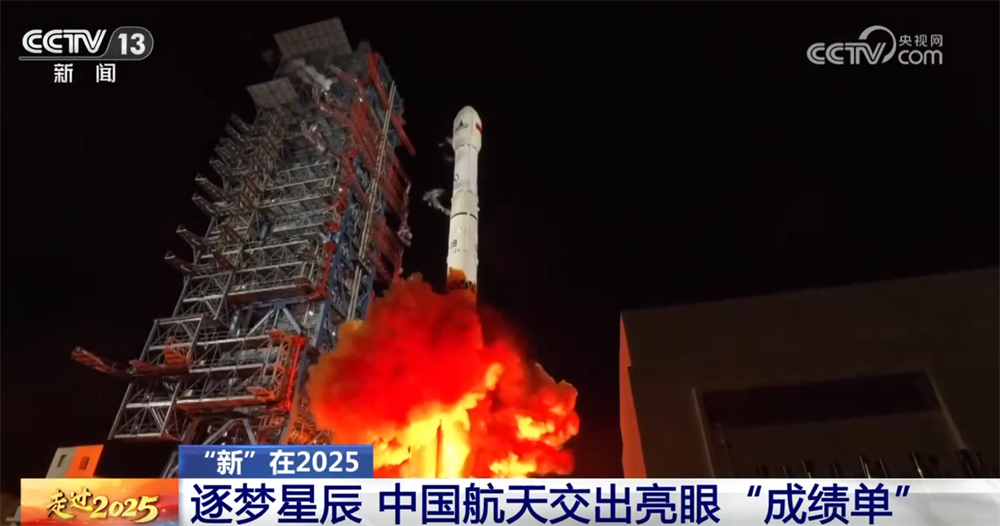
新认知、新能力、新活力、新蓝图 中国航天2025年交出亮眼“成绩单”
Yang Shi Wang· 2025-12-31 07:21
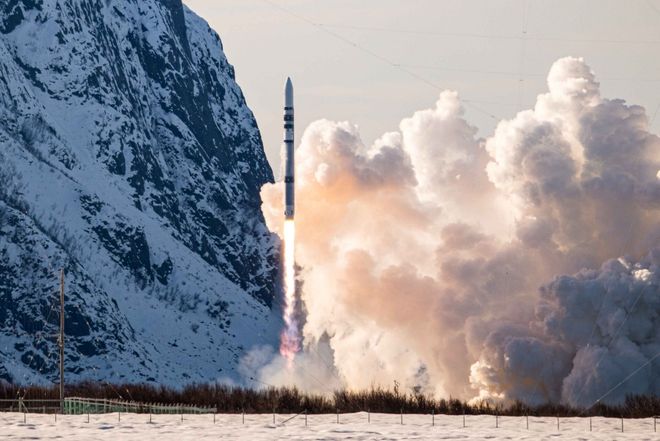
Core Insights - In 2025, China's space industry achieved a record of 92 launch missions, showcasing significant advancements in deep space exploration, manned spaceflight, and commercial space activities [1] Deep Space Exploration - The Tianwen-2 probe was successfully launched in May and is en route to the asteroid 2016 HO3, which will enhance understanding of new worlds [3] - Research on samples returned by the Chang'e 6 mission has led to groundbreaking discoveries, including the dating of lunar basalt to 2.823 billion years ago and the identification of hematite and magnetite, challenging previous lunar theories [5][7] Manned Spaceflight - In 2025, China's manned space program demonstrated enhanced emergency response capabilities, successfully executing a "16-day emergency launch" after detecting minor cracks in the Shenzhou-20 spacecraft's window, emphasizing the principle of "life first, safety paramount" [10] Commercial Space Activities - The commercial space sector showed robust growth in 2025, with the Hainan commercial launch site achieving ten successful missions, supporting high-frequency and commercial launch demands [9][13] - The successful maiden flights of the Zhuque-3 and Long March 12甲 rockets marked significant progress in reusable rocket technology [13] Future Plans - Upcoming missions include the Chang'e 7 probe, set to explore the lunar south pole for evidence of water ice, and the Shenzhou 23 and 24 missions, which will involve long-term stays by astronauts, indicating continued expansion into deeper space exploration [15]
长征十二甲虽未完全达到预定目标,多款可回收火箭将继续加速验证和实现突破
Orient Securities· 2025-12-30 01:00
Investment Rating - The report maintains a "Positive" outlook on the defense and aerospace industry, indicating a favorable investment environment [7]. Core Insights - The Long March 12甲 rocket, despite not achieving its primary recovery goal, has provided valuable experience and is a crucial step in China's development of reusable rocket technology [10][11]. - The Wenchang International Aerospace Forum has opened, signaling rapid advancement in the commercialization and industrialization of the aerospace sector in China [12]. - The report emphasizes continued optimism for commercial aerospace, unmanned systems, new combat capabilities, and military trade as key growth areas [13]. Summary by Sections 1.1 Long March 12甲 Rocket - The Long March 12甲 rocket's recent launch did not meet the recovery target for the first stage, but it successfully gathered critical data for future missions [10][11]. - The failure is seen as part of the iterative process necessary for achieving reusable technology, similar to the development path of SpaceX's Falcon 9 [11]. 1.2 Wenchang International Aerospace Forum - The forum aims to enhance the aerospace industry in Hainan, focusing on building a comprehensive ecosystem that includes rocket, satellite, and data services [12]. - The government is shifting its focus from merely launching rockets to developing downstream services and applications, indicating a move towards a more integrated aerospace industry [12]. 1.3 Future Outlook - As the 14th Five-Year Plan approaches, the report highlights the importance of new technologies in defense, including unmanned systems and deep-sea technology [13]. - The report suggests that military and civilian sectors will become significant growth drivers, with a focus on expanding military trade and high-end equipment exports [13]. Investment Targets - The report lists several investment targets in the commercial aerospace sector, including: - Aerospace Electronics (600879, Buy) - National Science and Technology Military Industry (688543, Not Rated) - Aerospace Power (600343, Not Rated) [13][14].


商业航天2025:拐点前夜的助攻、躁动与可回收验证冲刺
Tai Mei Ti A P P· 2025-12-29 00:08
Core Insights - The article discusses the rapid development and transformation of China's commercial space industry, highlighting the significant policy support and market dynamics that are shaping its future [2][4][6]. Policy Support - The Chinese government has introduced a series of "nuclear bomb" level policies to support the commercial space sector, marking 2025 as a pivotal year for the industry [4][6]. - The 14th Five-Year Plan identifies commercial space as a key strategic emerging industry, with the establishment of a 20 billion yuan national fund to support its development [6][9]. - Various local governments have also implemented targeted measures to promote the growth of the commercial space industry [10]. Market Dynamics - The commercial space sector is experiencing unprecedented capital market activity, with significant stock price increases and a surge in IPO applications from leading companies [11][12]. - The commercial space index has seen a remarkable increase of 60.12% in 2025, outperforming the Shanghai Composite Index [16][18]. - The number of registered commercial space-related companies in China has surged, with over 24,800 new registrations in 2025 alone, reflecting a 57.5% increase compared to the previous year [19]. Technological Challenges - Despite the excitement, the industry faces critical challenges, particularly in achieving cost reductions through rocket reuse, which remains a key hurdle [3][28]. - The successful implementation of reusable rocket technology is essential for reducing launch costs by approximately 38%-58% [28][44]. - The industry is also exploring advanced manufacturing techniques, such as 3D metal printing, to further reduce costs and improve production efficiency [31][32]. Competitive Landscape - The competition in the commercial space sector is intensifying, with a focus on low Earth orbit satellite constellations and space computing capabilities [37][45]. - The upcoming IPO of SpaceX, with a projected valuation of $1.5 trillion, is expected to set a new benchmark for the global commercial space industry, influencing domestic players [34][36]. - China's commercial space industry is characterized by a dual structure of state-owned and private enterprises, with private companies expected to fill the capacity gaps left by state-owned entities [42]. Future Outlook - The successful validation of reusable rocket technology and the establishment of a commercial closed-loop system are critical for the industry's long-term sustainability [44][46]. - The development of space computing capabilities is seen as a potential breakthrough for the commercial space sector, offering new revenue streams and competitive advantages [45][46].
