智慧仓储

Search documents
中储股份全球期货交割业务总部在沪揭牌
Qi Huo Ri Bao Wang· 2025-12-11 05:25
Core Viewpoint - The establishment of the Shanghai headquarters and the global futures delivery business headquarters of China Storage Development Co., Ltd. marks a significant step in enhancing the company's operational efficiency and its ability to respond to market demands, integrating global resources for futures delivery services [1][2]. Group 1: Company Developments - The Shanghai headquarters is a crucial move for China Storage to transition from a functional to an operational headquarters, allowing for better market responsiveness and service quality [2]. - The global futures delivery business headquarters signifies the company's entry into a new phase of domestic and international collaborative operations [1]. - China Storage has built a comprehensive delivery warehouse network covering major commodity categories across China, supporting various futures exchanges [1]. Group 2: Strategic Goals - The company aims to leverage Shanghai's advantages in international economy, finance, trade, shipping, and technology to drive innovation in smart warehousing and digital warehouse receipts [2]. - The goal is to create a modern service system that efficiently integrates domestic warehousing, commodity futures, and international cross-border operations [2]. - Enhancing global service capabilities in the bulk commodity sector is a priority, contributing to China's pricing influence in important commodities [2]. Group 3: Industry Impact - The unveiling of the global futures delivery business headquarters is seen as a new chapter for market cooperation, emphasizing the importance of logistics in the smooth operation of industries [3]. - The collaboration between China Storage and various exchanges aims to improve the efficiency of delivery channels, thereby supporting the real economy [3].

中储股份上海总部成立:全球期货交割业务总部揭牌
Xin Hua Cai Jing· 2025-12-09 12:57
Core Viewpoint - The establishment of the Shanghai headquarters of China Logistics' subsidiary, Zhongchu Development Co., Ltd., marks a significant step in the company's transformation from a functional to an operational headquarters, enhancing its ability to respond to market and customer needs in resource-rich and active regions like Shanghai [1] Group 1: Company Developments - Zhongchu Development's Shanghai headquarters aims to leverage the ecological advantages of Shanghai and Xuhui District in finance and technology to promote innovation in smart warehousing and digital warehouse receipts [1] - The company is focused on building a modern service system that ensures efficient domestic warehouse collaboration and seamless international cross-border operations, enhancing its global comprehensive service capabilities in the bulk commodity sector [1] Group 2: Regional Impact - The establishment of the headquarters is seen as a recognition of Xuhui District's business environment and development potential, providing an important opportunity for deepening cooperation with state-owned enterprises and supporting national strategies [1] - Xuhui District is committed to providing quality services, an open environment, and strong support to jointly create a "smart hub for bulk commodity supply chains" that is based in Shanghai, radiates nationwide, and connects globally [1]
黑河物流云谷·北安国际陆港正式投用
Sou Hu Cai Jing· 2025-11-15 14:41
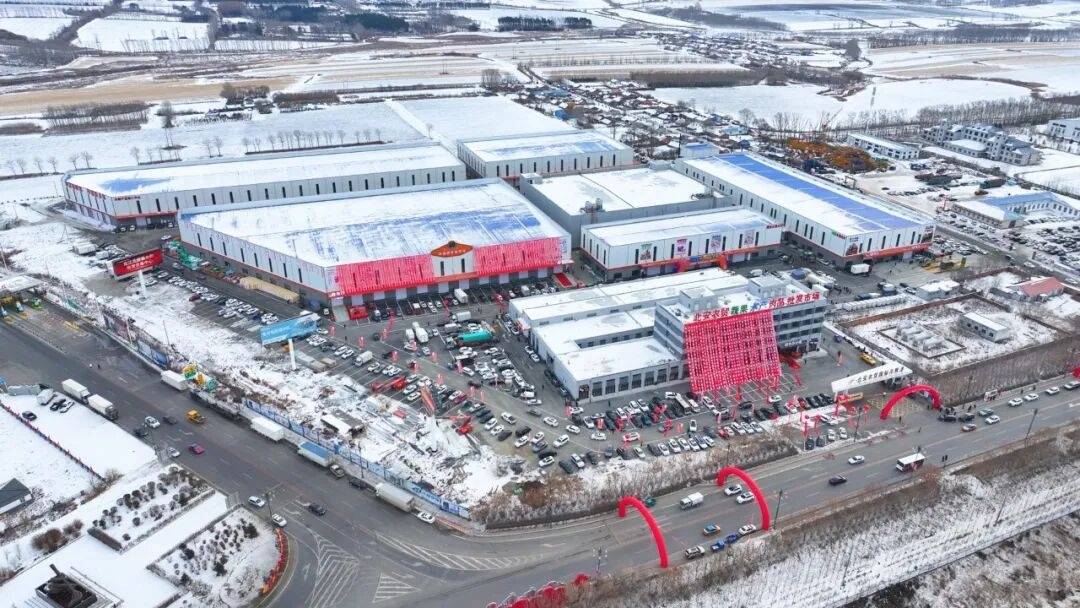
Core Insights - The Heihe Logistics Cloud Valley and Beian International Land Port officially commenced operations on November 15, marking a strategic transformation for Beian from a "geographical center" to a "functional center" [1] - The new logistics hub is expected to inject strong momentum into the economic development of the northern Heilongjiang region and reshape the regional commercial geography [1] Group 1 - The International Land Port features a bustling environment with smart scanning devices and busy workers handling goods, showcasing the vibrant activity of this comprehensive logistics hub [3] - The merchant occupancy rate at the port has reached 100%, covering a wide range of categories including fruits, vegetables, grains, seafood, snacks, and daily necessities [3] Group 2 - The project focuses on "functional integration," creating a comprehensive service platform that includes smart warehousing, bulk commodity distribution, agricultural product processing, trade transactions, and delivery [5] - The logistics park is equipped with a cold chain storage and distribution center with a total capacity of 12,000 cubic meters, allowing for precise temperature control across multiple zones [5] - The layout includes 59 vegetable trading stalls and 38 fruit trading stalls, along with an 8,000 square meter bulk commodity area, establishing a full-chain service system from storage to smart delivery [5] - By optimizing logistics resources and transportation routes, the International Land Port is expected to reduce logistics costs for merchants and decrease product loss, leading to a reduction in consumer prices by approximately 10% [5] Group 3 - The modern logistics hub serves as a "logistics heart" for Beian, covering a radius that includes 17 cities and counties, 11 farms, and serving nearly 3 million people [7]

打通物流业降本增效“经络”
Jing Ji Ri Bao· 2025-11-15 00:39
Core Viewpoint - During the "14th Five-Year Plan" period, China's logistics industry is experiencing a new pattern of simultaneous quantity and quality improvement, with a focus on internal connectivity and external collaboration. The need for structural optimization and institutional breakthroughs is emphasized to enhance efficiency and reduce costs in the logistics sector [1][2]. Group 1: Industry Development - The logistics scale is continuously increasing, with an expected average daily cargo transport volume of 160 million tons and express delivery volume reaching 175 billion pieces by 2024 [1]. - The logistics industry is witnessing improvements in operational efficiency and structural adjustments, with significant progress in multi-modal transport and hub transfer efficiency [1][2]. Group 2: Regional Initiatives - Various regions are leveraging their unique geographical advantages to enhance logistics capabilities through resource integration and digital transformation. For instance, Hebei and Shandong are integrating port resources through state-owned enterprises, while Jiangsu is establishing a mechanism for data sharing and collaborative scheduling across provinces [2][3]. - Despite advancements, there remains a gap in logistics efficiency compared to developed countries, with uneven regional development and a lack of coordinated mechanisms hindering high-efficiency industry chain interactions [2]. Group 3: Governance and Infrastructure - A modern logistics governance system is being established, focusing on intelligent, green, and safe logistics infrastructure planning, as well as aligning logistics facility standards with international norms [3]. - The promotion of multi-modal transport and innovative data-sharing mechanisms is crucial for enhancing the collaborative innovation capabilities of the logistics system [3]. Group 4: Service Quality Enhancement - Improving the logistics service quality, particularly in the "last mile," is essential. This includes integrating new business models and technologies to create a regional logistics service network that enhances efficiency [4]. - Establishing a modern logistics service standard system and a multi-dimensional evaluation framework is necessary to promote high-quality development in the logistics industry [4].
AI 机器“总动员”,打开保供新天地
Zhong Guo Neng Yuan Wang· 2025-10-11 09:59
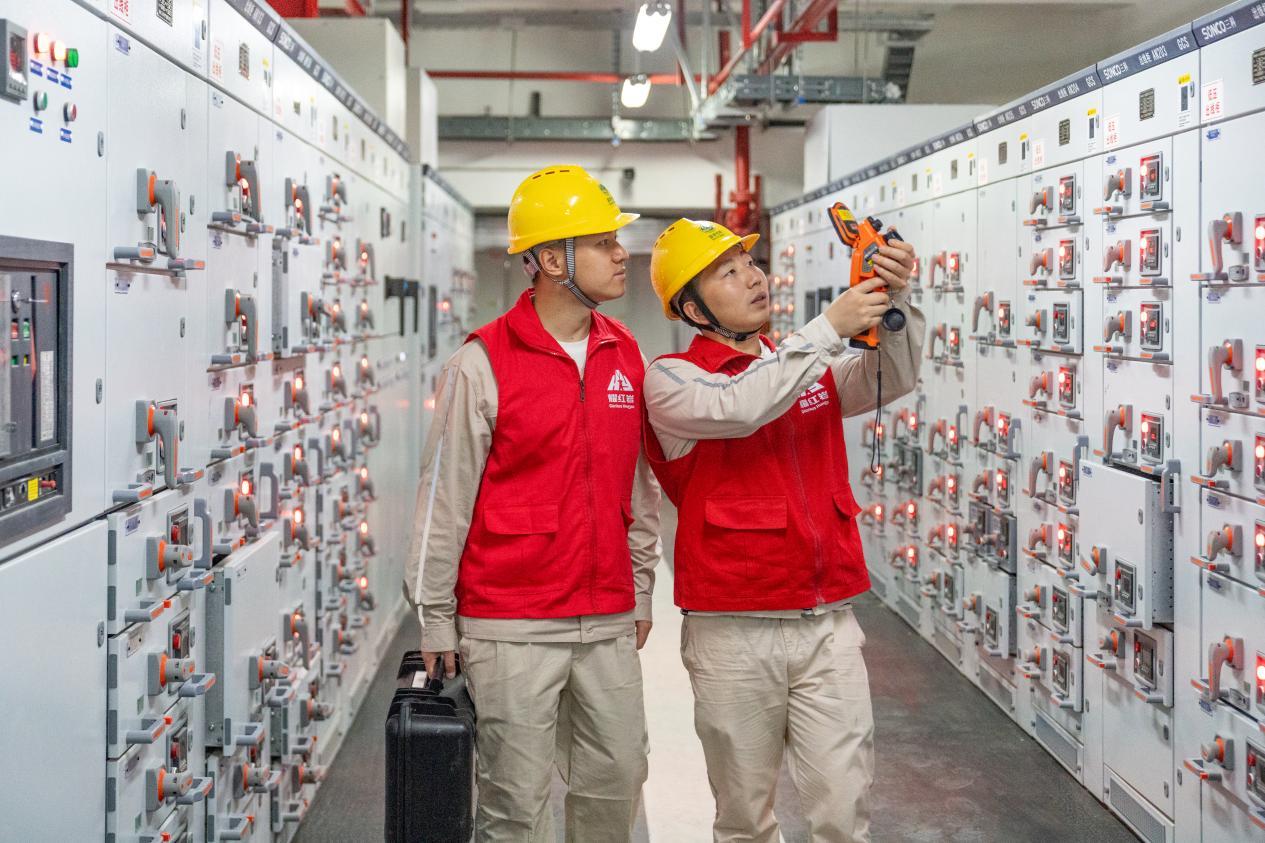
Core Viewpoint - The Chongqing Yongchuan Power Supply Company of State Grid is leveraging AI technologies, including drones and robotic dogs, to enhance power supply reliability and efficiency during peak summer demand, embodying its commitment to serving the public through innovative solutions [1][5][10]. Group 1: AI Drone Inspections - The company utilizes drones for high-frequency inspections in complex terrains, enabling real-time monitoring of power lines and substations, which helps in identifying load peaks and fault points [2][3]. - The integration of AI algorithms has optimized inspection routes, reducing flight distances in mountainous areas by 15% and allowing for real-time processing of 4K imagery to identify 30 types of obstacles [3]. - A comprehensive drone inspection system has been established, covering 1,516 square kilometers, with 25 fixed and 1 mobile airport, allowing for 24-hour autonomous inspections [3]. Group 2: Robotic Dog Applications - The robotic dog functions as a mobile inspection station, capable of completing inspections in 40 minutes that would typically take 2 hours manually, thus improving efficiency by 300% [6][10]. - It is equipped with multi-spectral cameras and infrared thermometers, enabling comprehensive monitoring of equipment conditions and safety hazards [6][7]. - The robotic dog operates autonomously with high-precision navigation and supports 5G data transmission for real-time data sharing, enhancing the overall inspection process [7]. Group 3: Smart Warehousing Solutions - The company has implemented a digitalized smart warehousing system that streamlines the entire material supply chain, significantly improving efficiency by approximately 50% during peak summer demand [9][10]. - The system automates inventory management, including real-time tracking and verification of materials, ensuring accuracy in supply and reducing manual errors [9][10]. - This smart warehousing initiative supports the operational backbone of the company, ensuring that material supply is efficient and reliable [10].
鼎汉技术(300011) - 鼎汉技术2025年09月15日参加“广州工控上市公司2025年半年度集体投资者会议“活动记录
2025-09-15 10:53
Company Overview - Beijing Dinghan Technology Group Co., Ltd. was established in June 2002, focusing on high-end equipment and intelligent information systems for rail transit [3] - The company went public on the Shenzhen Stock Exchange in 2009, becoming one of the first companies listed on the Growth Enterprise Market (stock code: 300011) [3] - Dinghan Technology has a presence in over 50 cities in China and several countries in Europe, with 7 R&D centers and 6 production bases [3] Business Segments - The company operates three main business segments: rail transit ground electrical equipment, rail transit vehicle electrical equipment, and intelligent solutions [4] - Recent product developments include new energy thermal management systems and various types of robots, expanding into new fields such as new energy and smart manufacturing [4] Financial Performance - In the first half of 2025, the company secured new orders worth 830 million yuan, a 23% increase compared to the previous year [12] - The top five customers contributed 46.18 million yuan, accounting for 64.70% of the main business revenue [10] R&D and Innovation - R&D investment in the first half of 2025 was 54.64 million yuan, representing 7.65% of main revenue [11] - The company holds 173 patents, including 62 invention patents, and has a dedicated R&D team of 340 employees [11] Market Strategy - Dinghan Technology aims to enhance its core competitiveness in intelligent operation and maintenance through AI and other emerging technologies [5] - The company is focusing on expanding into new markets, including industrial and new energy sectors, while leveraging its existing technology [13] Challenges and Responses - The rail transit industry faces structural overcapacity and intensified price competition, prompting the company to focus on high-value technology and lifecycle services [13] - The company plans to optimize its cost structure and enhance operational efficiency to mitigate rising costs, which increased by 2.15 percentage points year-on-year [11] Future Outlook - Dinghan Technology is committed to driving high-quality development through innovation and expanding its high-end manufacturing business model [8] - The company is also preparing for a private placement to strengthen its capital structure and support R&D efforts [9]

打造全国食品产业新标杆!中国国际食品城建成运营
Qi Lu Wan Bao Wang· 2025-07-23 10:36
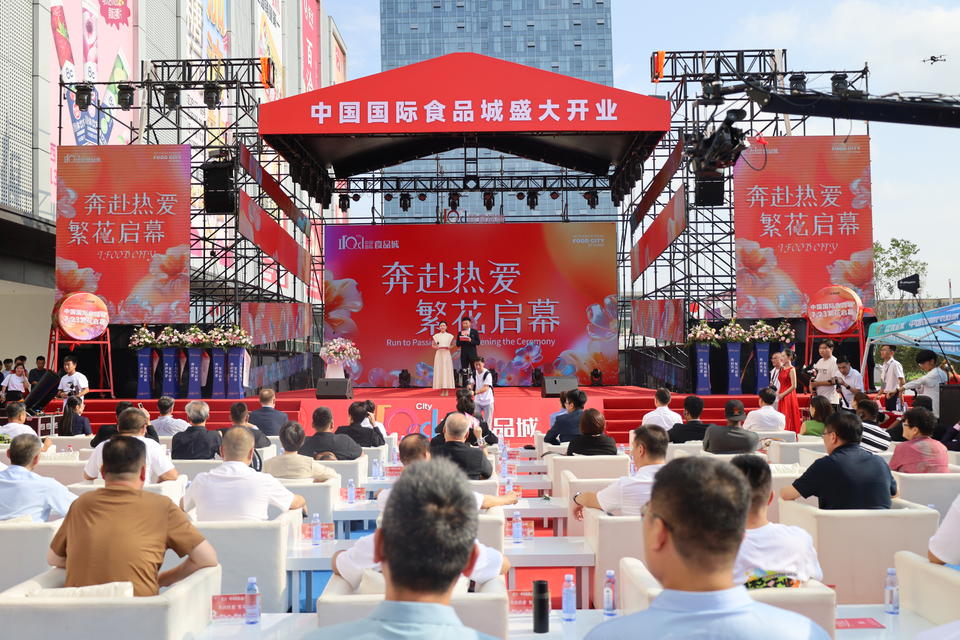
Core Insights - The China International Food City project officially commenced operations on July 23, marking a significant milestone in the modernization of the food industry [1][3]. Group 1: Project Overview - The project serves as a modern food industry aggregation platform, hosting various activities such as opening ceremonies, food exhibitions, industry forums, and business matchmaking events to foster collaboration among food enterprises, distributors, and manufacturers [3]. - It is expected to achieve an annual transaction volume exceeding 10 billion and create over 5,000 jobs, positioning itself as the largest and most comprehensive specialty food wholesale market in China [3][4]. Group 2: International Market Expansion - The project has successfully attracted the Malaysia National Pavilion, which will showcase Malaysian specialty foods, enhancing trade relations between China and Malaysia in the food sector [3][4]. Group 3: Structural and Functional Design - The project features a dual-zone differentiated positioning: the East Zone as a food industry distribution center with a five-story commercial complex, and the West Zone as a brand aggregation center for high-end product displays and e-commerce [4]. - It includes a 100,000 square meter intelligent parking facility and a direct access system for trucks to the underground parking, addressing traditional market parking challenges [4]. Group 4: Technological Integration - The project has developed an online smart information system for the food industry, promoting diversified and intelligent operations, and has established a logistics port to enhance efficiency and reduce costs [4][5]. - It aims to integrate domestic and international food display and trading, smart warehousing, modern logistics, cross-border e-commerce, and brand incubation into a cohesive modern food industry cluster [5]. Group 5: Future Development Goals - The project aims to leverage Linyi's robust food trade resources and logistics advantages to create a new benchmark for market transformation and industry development, focusing on the integration of commerce, tourism, exhibition, and e-commerce [5].
校企合作:百世集团深耕产教融合沃土,拓宽职教出海版图
Xin Lang Cai Jing· 2025-07-22 01:29
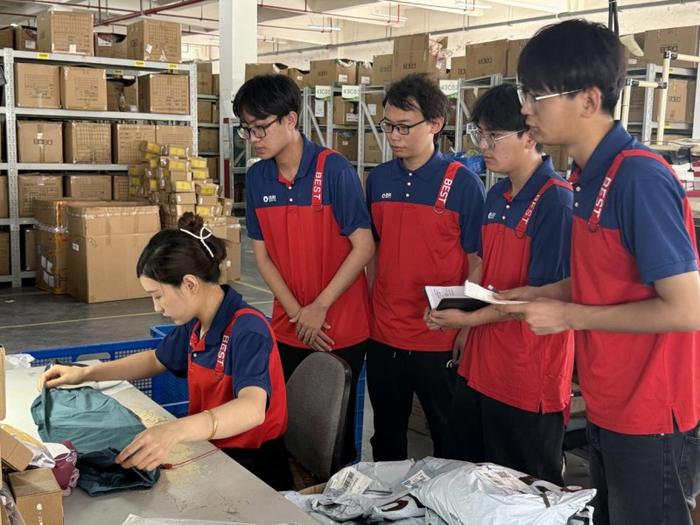
Core Insights - The article highlights the collaboration between Best Logistics and Yantai Vocational College to cultivate logistics talent through the "Golden Seed" program, emphasizing the integration of education and industry [1][3] - The Chinese government has identified the need for enhancing talent cultivation in the smart supply chain sector, with a projected shortage of 437,000 logistics-related positions by 2025, indicating a critical talent gap in the industry [3][4] - Best Logistics has established partnerships with over 200 higher education institutions across China to create a comprehensive talent development ecosystem, addressing the disconnect between classroom knowledge and job requirements [3][5] Domestic Development - Best Logistics has developed a closed-loop model for collaborative education, focusing on "course co-construction, practical co-cultivation, and position co-integration" to enhance the quality of logistics education [4][5] - The company has established the first "Best Logistics Technology Industry College" in collaboration with Tianjin Transportation Vocational College, aiming to create 10 production training centers nationwide that operate under a "school within a factory" model [5][6] - Through partnerships with leading companies like Geely and L'Oréal, Best Logistics is facilitating direct employment pathways for students, ensuring a precise match between talent supply and industry demand [5][6] International Expansion - As Chinese enterprises expand globally, Best Logistics is addressing the shortage of logistics talent by establishing overseas training bases in seven countries, including Vietnam and Malaysia, to provide practical training for both Chinese and local students [6][8] - The company has initiated the "National Smart Logistics and Supply Chain Industry-Education Integration Community" to foster resource sharing and collaboration among educational institutions, enterprises, and industry associations [6][8] - Best Logistics is actively involved in the Uzbekistan Luban Workshop project, focusing on logistics training and the development of bilingual teaching materials to meet modern enterprise needs [9]