智能四足机器人

Search documents
中科院博士、智驾领军人物余轶南押注消费级具身智能,一年内让机器狗走入千家万户!
混沌学园· 2026-02-03 11:57
Core Insights - The article discusses the journey of Dr. Yu Yinan, founder and CEO of Vbot, who is a pioneer in the AI 1.0 era and has transitioned from intelligent driving to robotics, focusing on consumer-grade robots [2][3][4]. Group 1: Background and Experience - Dr. Yu Yinan's academic journey began at the Chinese Academy of Sciences, where he studied artificial intelligence from 2007 to 2012, coinciding with the early stages of deep learning [9][12]. - After graduating, he joined Baidu and later became a founding member of Horizon Robotics, focusing on intelligent driving, which became a significant growth area for the company [9][33]. - In 2024, Horizon successfully went public, after which Dr. Yu founded Vbot to innovate in the robotics space [2][4]. Group 2: Business Insights - Dr. Yu emphasizes that hard-tech entrepreneurship is not gambling but requires precise judgment based on understanding, advocating for a strategy that "locks in the lower limit" to pursue an "infinite upper limit" [3][4]. - He differentiates between AI companies and tech companies, stating that the key distinction lies in the pursuit of Scaling Law, which enables unlimited growth [4][50]. - The future organization structure in the AI era should not rely on a large workforce but rather on a few top-tier "alchemists" and practical "furnace builders" [4][67]. Group 3: Market Dynamics - Vbot's first product, a quadruped robot, received significant market interest, with 6,540 pre-orders by January 10, indicating a successful entry into the consumer market [2][56]. - The article highlights the importance of seed users, suggesting that early adopters are more critical than technical barriers for long-term success [56][60]. - The B2B market for Vbot includes real estate companies, educational institutions, and various service sectors, indicating a broad application of their robotic solutions [60][61]. Group 4: Organizational Trends - The transition of professionals from the autonomous driving sector to robotics is attributed to the maturity of the autonomous driving industry and the emergence of new opportunities in robotics [62][66]. - Dr. Yu describes the ideal AI company structure as a "Taishang Laojun" model, where a small number of top experts drive innovation, contrasting with traditional tech companies that may not fully leverage AI's potential [67][70]. - The article suggests that the robotics industry must first refine its hardware before advancing AI technologies, indicating a two-phase development process [71][72].


云深处在深圳设立机器人公司
Qi Cha Cha· 2026-01-30 10:13
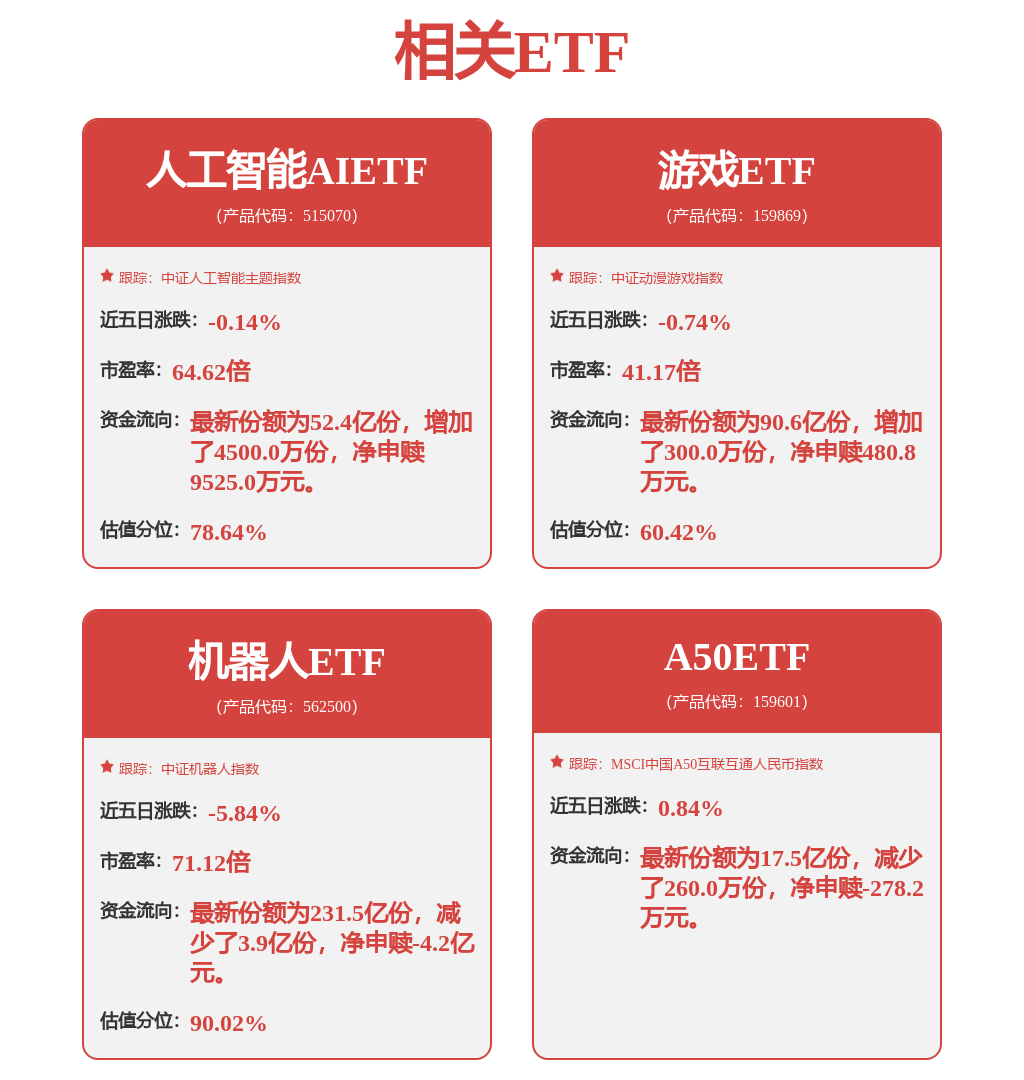
Group 1 - Shenzhen Yunshen Robot Co., Ltd. has been established, focusing on the research and sales of intelligent robots, industrial robot manufacturing, and smart basic manufacturing equipment [1] - The company is wholly owned by Hangzhou Yunshen Technology Co., Ltd., which is a leader in embodied intelligent technology innovation and application [1] - Hangzhou Yunshen Technology is the first in the world to develop intelligent quadruped robots specifically for power inspection applications, achieving fully autonomous inspections of substations in China [1] Group 2 - The AI ETF (product code: 515070) tracks the China Securities Artificial Intelligence Theme Index and has seen a slight decrease of 0.14% over the past five days [3] - The gaming ETF (product code: 159869) tracks the China Securities Animation and Gaming Index and has experienced a decline of 0.74% in the same period [3] - The AI ETF has a price-to-earnings ratio of 64.62, while the gaming ETF has a lower ratio of 41.17 [3] - The AI ETF has a recent share volume of 5.24 billion, with an increase of 45 million shares, resulting in a net inflow of 95.25 million yuan [3] - The gaming ETF has a total share volume of 9.06 billion, with a net inflow of 3 million shares, leading to a net inflow of 30 million yuan [3] - The valuation percentile for the AI ETF is at 78.64%, indicating a higher valuation compared to the gaming ETF, which stands at 60.42% [3]

【公告臻选】商业航天+人形机器人+eVTOL+大飞机!公司产品已应用于商用飞机、飞行器、火箭等
第一财经· 2025-12-29 14:35
Group 1 - The article emphasizes the importance of efficiently filtering key announcements to aid investment decisions, highlighting the service "Announcement Selection" that provides deep insights into complex terms and reveals investment opportunities [1] Group 2 - On December 28, the article noted that Zhejiang Rongtai's stock rose by 3.38% after being highlighted for its involvement in humanoid robots and partnerships with multiple robotics companies, with an intraday peak increase of over 7% [2] - The article also mentioned that Yuntian Lifai's stock increased by 4.78% after being selected for a 122 million yuan project related to AI inference chips and humanoid robots, with a peak intraday increase close to 9% [2] Group 3 - The article outlines various sectors including commercial aerospace, humanoid robots, eVTOL, and general aviation, indicating that the company's products are applied in civil and commercial aircraft, rockets, and other vehicles [3] - It also highlights the defense and military sector, where the company's intelligent quadruped robots are utilized in critical scenarios such as nuclear emergency response and radiation monitoring [3] - Additionally, the article discusses advancements in third-generation semiconductors and IGBT, noting that the company has successfully developed GaN chips, which are now entering the customer introduction phase [3]
聚焦三大赛道 启动“一中心”“三社区”建设
Mei Ri Shang Bao· 2025-12-18 22:29
Core Insights - The article highlights the significant advancements in the artificial intelligence (AI) sector in Qiantang, showcasing its transformation from abstract technology to practical applications [1][2][5] Group 1: AI Industry Development - Qiantang aims to establish itself as a core area in Hangzhou's trillion-level embodied intelligence industry cluster, leveraging its strong manufacturing base [2][3] - The "1533" strategic framework was introduced, focusing on one core goal, five key actions, and three specialized industrial ecosystems [2][3] - The region is prioritizing advancements in embodied intelligence, AI pharmaceuticals, and high-end chips, with specific targets for technological breakthroughs [2][3] Group 2: Policy Support and Implementation - Qiantang released 19 targeted policies to support high-quality development in the AI industry, addressing common challenges faced by enterprises [3][4] - A budget of 20 million yuan has been allocated for "computing power vouchers," offering up to 50% subsidies for companies purchasing computing power [3] - The establishment of the Hangzhou HeDa Smart Scene Innovation Co., Ltd. aims to facilitate the connection between technology and market applications [3] Group 3: Market Engagement and Project Signings - The event saw the signing of several high-quality AI projects, including "COIOS AI large model" and "intelligent quadruped robot," indicating strong market enthusiasm [4] - Companies like Guwei Technology and Pinlan Technology reported rapid project implementation and significant order volumes, reflecting confidence in Qiantang's supportive environment [4] Group 4: Institutional Development - The establishment of the Qiantang District AI Industry Association and the launch of the International AI Cooperation Center mark the transition from planning to execution in the AI sector [5] - Qiantang is focused on leveraging its manufacturing strengths to create competitive advantages in the smart era [5]
杭州“六小龙”强势崛起 谁在耐心陪跑?
Zheng Quan Ri Bao· 2025-11-16 16:44
Core Viewpoint - The article highlights the significant role of insurance capital in supporting technological innovation and the development of the "Six Little Dragons" in Hangzhou, showcasing a shift from traditional investment to a more integrated approach that combines capital with services [1][5][9]. Group 1: Investment Landscape - The "Six Little Dragons" of Hangzhou include several innovative tech companies that have attracted attention from capital markets, with plans for some to go public [2][3]. - Major insurance companies like China Life and Pacific Insurance are using indirect investment methods, becoming financial backers through a multi-layered investment structure involving private equity funds [2][3]. - Insurance capital has invested over 600 billion yuan in technology enterprises, reflecting a growing commitment to supporting the entire lifecycle of tech companies [5][6]. Group 2: Investment Models - Insurance funds primarily participate as limited partners in private equity funds, often collaborating with government or state-owned funds to invest in technology firms [4][5]. - The investment approach of insurance capital has evolved to include a mix of indirect equity investments and direct funding, aiming to balance safety and strategic value [4][8]. - The establishment of funds like the National SME Development Fund illustrates how insurance capital is leveraging government-led initiatives to invest in technology [3][4]. Group 3: Challenges and Solutions - Insurance capital faces challenges in aligning its traditional investment strategies with the high-risk, high-reward nature of technology innovation [7][8]. - To address these challenges, insurance asset management companies are innovating their investment models, such as using S-funds to better match long-term insurance capital with the needs of tech innovation [7][8]. - The shift towards a more proactive role as "active capital" reflects a broader trend of insurance funds becoming integral partners in the technology sector, moving beyond mere financial investors [9].


智能四足机器人公司云深处科技变更为股份制公司
Qi Cha Cha· 2025-11-04 06:21
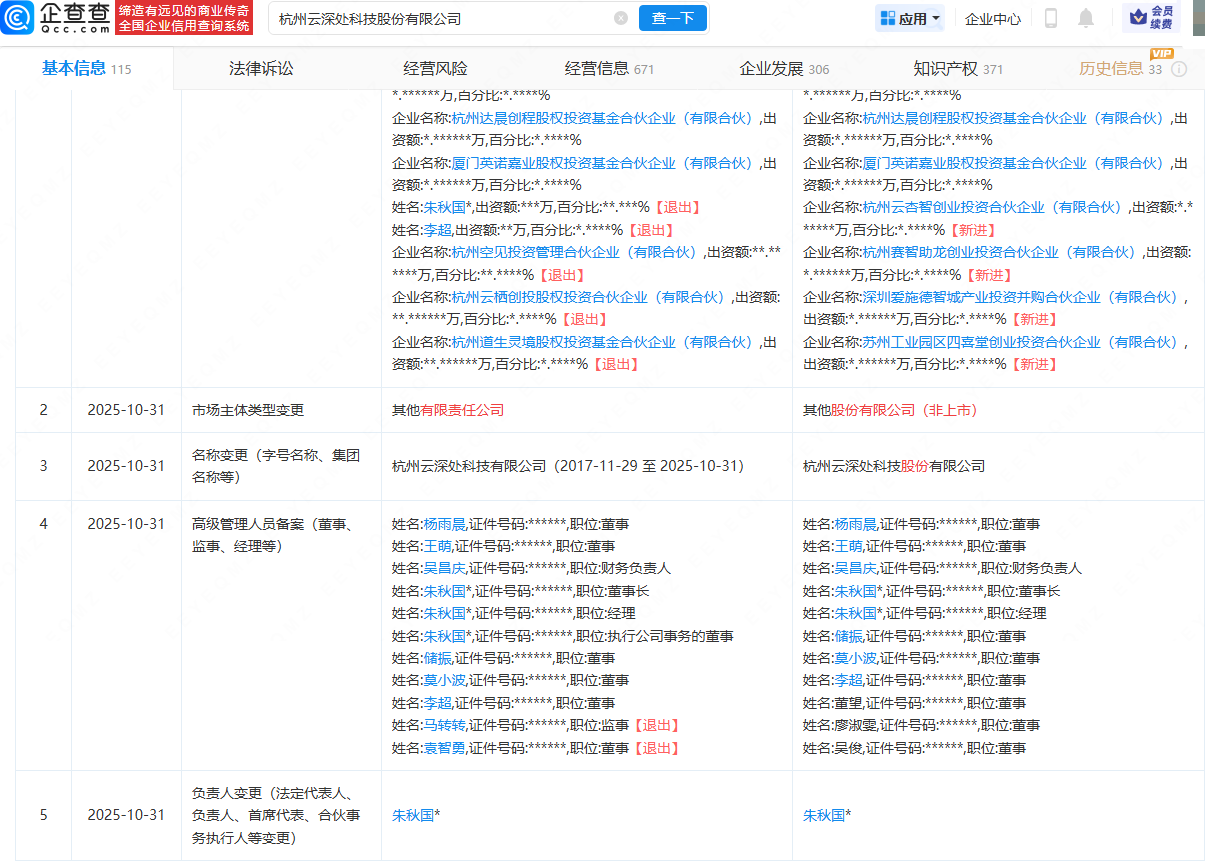
Core Insights - Hangzhou Yun Shen Chu Technology Co., Ltd. has undergone a business change, changing its name to Hangzhou Yun Shen Chu Technology Co., Ltd. and its market entity type to "other joint-stock company (non-listed)" [1] - Original shareholders Zhu Qiuguo and Li Chao have exited, with new shareholders including Shenzhen Aishide Zhicheng Industrial Investment and M&A Partnership (Limited Partnership) and Hangzhou Yunxing Zhichuang Investment Partnership (Limited Partnership) [1] - The company, established in November 2017, is one of the "Six Little Dragons" of Hangzhou, focusing on the research, sales, production, and technical services of intelligent quadruped robots [1] Company Changes - The company has changed its name from Hangzhou Yun Shen Chu Technology Co., Ltd. to Hangzhou Yun Shen Chu Technology Co., Ltd. [2] - The market entity type has been updated to "other joint-stock company (non-listed)" [2] - Key personnel changes have occurred, including the exit of original shareholders and the introduction of new investment partners [1][2] Shareholder Information - Original shareholders Zhu Qiuguo and Li Chao have exited the company [1] - New shareholders include Shenzhen Aishide Zhicheng Industrial Investment and M&A Partnership (Limited Partnership) and Hangzhou Yunxing Zhichuang Investment Partnership (Limited Partnership) [1] - The company is now backed by various investment partnerships, indicating a shift in its funding structure [1][2]
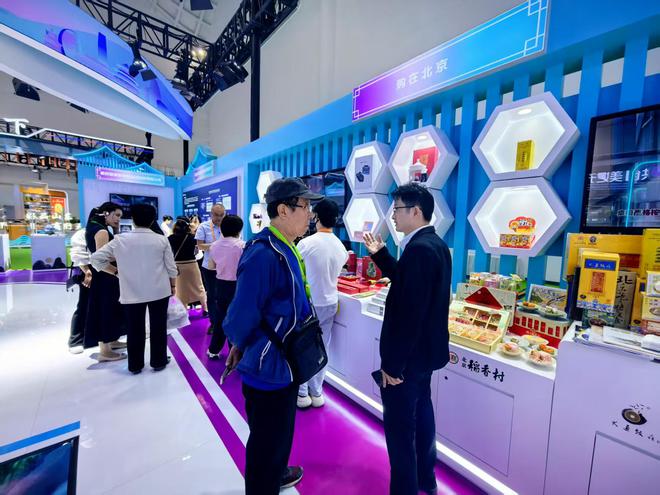
消博会北京主题日亮出优惠政策,诚邀企业共享消费市场新机遇
Xin Jing Bao· 2025-04-14 11:16
Group 1 - The fifth China International Consumer Products Expo (CICPE) has commenced, with Beijing serving as the first guest province, showcasing its achievements in becoming an international consumption center and promoting consumption incentive policies to attract global enterprises [1][9] - This year's expo features eight major exhibition halls, with Beijing's exhibition area expanding from 200 square meters last year to 400 square meters, highlighting a blend of traditional and modern elements [2][4] - Beijing has 137 Chinese time-honored brands and 274 local brands, which are innovating to revitalize their market presence, showcasing products like traditional Chinese medicine and modern technology at the expo [7][10] Group 2 - The expo includes a "Beijing Investment Reception Room" designed for business negotiations, providing a one-stop service for global merchants [8] - The Beijing government has introduced a series of consumption incentive policies, including subsidies for the replacement of automobiles and home appliances, and support for e-commerce development, with rewards up to 500 million yuan [10][11] - The 2025 Service Trade Fair will be held in September at Shougang Park, featuring a variety of activities and promoting a relaxed atmosphere for business exchanges [12]