
智能回收机

Search documents
今年北京将在3000个小区设置智能回收机
Xin Jing Bao· 2026-01-25 12:20
Group 1 - The core viewpoint of the articles highlights Beijing's efforts in improving waste management and urban governance, with a focus on increasing the recycling rate and enhancing community services [1][2] - In the past year, Beijing achieved a recycling rate of 43% for household waste and introduced property services to 380 old residential communities [1] - The government aims to enhance the recycling system by installing smart recycling machines in 3,000 communities and providing property services to 800 old residential areas this year [1] Group 2 - The implementation of the new waste management regulations has led to an increase in daily recyclable material collection from over 3,000 tons to over 7,450 tons over the past five years, surpassing the "14th Five-Year Plan" targets [1] - Approximately 16,000 communities in Beijing are actively exploring recycling initiatives, utilizing various methods such as door-to-door collection and community resource drop-off days to encourage residents to recycle [1] - Smart recycling machines in communities, such as in Guantong Community in Tongzhou District, have increased residents' participation by allowing them to receive direct monetary rewards for their recyclable materials [2]
城市废弃物,如何从“负担”变“资源”?
Xin Lang Cai Jing· 2026-01-20 19:55
Core Insights - The article highlights the transformation of waste management in Qingdao, where waste is being repurposed into valuable resources through various innovative methods, contributing to green development and sustainability [1] Group 1: Community Initiatives - The "Zero Waste Community" initiative in Qingdao has gained recognition, with 11 neighborhoods participating in a project that showcases effective waste management practices, contributing to the upcoming COP30 conference [2] - Community engagement is crucial, as residents actively participate in waste sorting and composting, leading to the establishment of a closed-loop system for organic waste [3] Group 2: Smart Recycling - Qingdao has implemented smart recycling machines in 2,276 neighborhoods, significantly improving the collection and recycling of waste materials, thus enhancing community participation [4][5] - The smart recycling model has led to a 10% reduction in household waste in the Liqing District, saving approximately 5.57 million yuan annually in transportation and environmental compensation costs [6] Group 3: Waste-to-Energy Solutions - Qingdao has transitioned to a waste-to-energy model, achieving zero landfill for primary waste since 2020, with seven incineration plants generating 1.32 billion kilowatt-hours of electricity annually, enough to power nearly 600,000 households [7] - The former landfill site has been transformed into an eco-friendly park, demonstrating the potential for repurposing waste management facilities into community resources [8]
服贸会上“绿色惊喜”多
Ren Min Ri Bao· 2025-09-22 22:47
Group 1: Environmental Initiatives - The 2025 China International Service Trade Fair showcased a stronger emphasis on green initiatives, highlighting the connection between ecological protection and daily life [1] - The Liangma River has undergone significant transformation, becoming a vital part of the Grand Canal Cultural Belt, with improvements enhancing its flood control capacity and creating a vibrant waterfront space [3][4] - The Liangma River's revitalization has led to the establishment of an 18-kilometer waterfront greenway and 6 kilometers of navigable tourism routes, promoting both ecological protection and cultural engagement [3] Group 2: Waste Management Innovations - The "Aihui Recycling" company introduced smart recycling machines at the fair, allowing users to earn money by recycling, thus promoting active participation in waste sorting [5][6] - As of now, 2,106 smart recycling machines have been deployed in Beijing, achieving a daily recycling volume of 150 tons and significantly improving waste utilization efficiency [6] - The company employs AI technology for efficient sorting of recyclable materials, enhancing user engagement and compliance with recycling practices [6] Group 3: Sustainable Economic Practices - Inner Mongolia Forest Industry Group showcased products like birch sap, emphasizing the economic potential of sustainable forestry practices [8] - The company has developed a sustainable harvesting strategy for birch sap, ensuring ecological balance while generating revenue [8] - Inner Mongolia Forest Industry Group is also involved in carbon trading and project development, contributing to environmental sustainability and economic growth [9]
外媒聚焦服贸会:看好中国潜力,企业“更有信心在这里扎根”
Zhong Guo Xin Wen Wang· 2025-09-16 08:03
Core Insights - The 2025 China International Fair for Trade in Services (CIFTIS) concluded on September 14, showcasing China's commitment to high-level openness and its significant growth potential, leading foreign businesses to express increased confidence in establishing roots in China [1][5]. Group 1: Event Overview - The CIFTIS attracted 2,000 participating companies, including Fortune 500 firms and industry leaders, highlighting advancements in artificial intelligence and green innovation [3]. - The event emphasized China's push towards sustainable development, with new energy storage technologies and smart recycling machines gaining attention [3][4]. Group 2: Foreign Perspectives - Foreign experts noted that China's institutional efforts to promote global service trade cooperation enhance its competitiveness and provide a platform for emerging economies to participate [5]. - The event demonstrated China's growing capabilities in providing high-quality innovative services, particularly in healthcare and inbound tourism, supported by modern technologies like mobile payment systems [5][6]. Group 3: Economic Implications - The CIFTIS served as a platform for cultural exchange and multilateral cooperation, reinforcing China's commitment to inclusive and forward-looking service trade [5]. - The openness of the Chinese market is crucial for countries reliant on international trade, as emphasized by foreign diplomats, who view China's market as a significant opportunity for exports and imports [6].

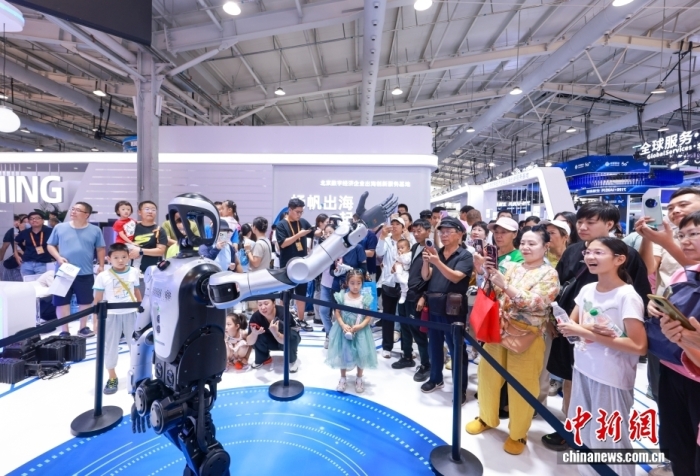
智绿融合助力低碳未来——来自2025年服贸会的观察
Xin Hua Wang· 2025-09-12 16:22
Group 1 - The 2025 Service Trade Fair highlights the integration of smart technology and green initiatives, showcasing products made from recycled materials [1] - The smart recycling machines operated by "Aihuishou" incentivize waste recycling by offering monetary rewards directly to users' WeChat wallets [1] - The fair emphasizes three core areas: new energy and low-carbon services, environmental ecological services and circular economy, and green low-carbon digital technologies [1] Group 2 - Inner Mongolia Forest Industry Group demonstrates the use of forest resources for carbon trading and project development [2] - Construction companies are adopting energy-efficient technologies and smart energy management platforms to enhance resource utilization and reduce energy consumption [2] - The fourth Ecological Environmental Industry Service "Dual Carbon" Strategy Forum focuses on technological innovation and the development of a green technology ecosystem [2] Group 3 - China's environmental technology patent applications reached approximately 100,000 in 2024, indicating significant progress in the transformation of ecological and environmental technology [3] - The role of technological innovation is emphasized as crucial in achieving China's "dual carbon" goals amid increasing global competition in green technology [3] - The shift from "follower" to "leader" in the environmental industry is highlighted, driven by advancements in carbon trading and monitoring technologies [3]
城市管理新科技登上服贸会,智能回收机“吞”废品返现金
Xin Jing Bao· 2025-09-11 22:41
Group 1: Event Overview - The 2025 China International Service Trade Fair is held from September 10 to 14 at Shougang Park in Beijing, featuring over 20 industry enterprises showcasing high-tech and AI applications in urban management [1] Group 2: Urban Management Technologies - The event highlights a "patrol spirit" robot designed for community gas inspection, capable of dynamic detection of gas pipelines in residential areas [2] - The urban lighting section presents comprehensive upgrade solutions for city lighting systems, including new streetlight designs and energy-saving modifications [2] - The energy security section showcases technologies such as virtual power plants, megawatt supercharging, and solid-state battery swapping [2] - The environmental sanitation section features innovations like AI smart incineration and autonomous sanitation vehicles, aimed at enhancing urban cleanliness and waste management [2] Group 3: Smart Recycling Initiatives - Smart recycling machines are deployed at multiple venues, allowing users to recycle items like plastic bottles and food containers for monetary rewards [3] - The smart recycling machines, operated by "Love Recycling," are designed to collect four main categories of recyclable materials, providing instant payment to users via WeChat [3] - In Beijing, there are currently 2,106 smart recycling machines, with a daily collection volume of 150 tons and a total of 11,000 tons recycled to date [3][4] Group 4: Recycling Process and Market Integration - Recyclables collected are temporarily stored at transfer stations before being sent to sorting centers, where they are categorized into over 80 types [4] - The sorted products are then sold to downstream resource utilization companies, maximizing market operation and revenue [4]