智能配件

Search documents
影石创新2025年营收同比增长76.85% 持续加码研发投入构建业务增长曲线
Zheng Quan Ri Bao· 2026-02-13 14:12
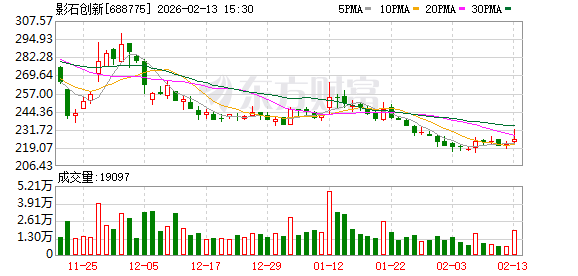
Core Viewpoint - Yingstone Innovation Technology Co., Ltd. reported a significant revenue increase of 76.85% year-on-year, reaching 9.858 billion yuan for the year 2025, marking a historical peak in revenue [2] Group 1: Financial Performance - The company achieved a total revenue of 9.858 billion yuan in 2025, a substantial increase of 76.85% compared to the previous year [2] - Research and development (R&D) investment reached 1.649 billion yuan in 2025, exceeding the total R&D investment from 2022 to 2024 [2] - The total year-end bonus for employees increased by 100% compared to the previous year, with nearly 30 million yuan allocated for additional project bonuses covering over 70% of staff [2] Group 2: Strategic Focus and Product Development - Yingstone Innovation is focusing on building a business growth curve, with new products like the handheld gimbal camera "Luna" being a key focus [3] - The company plans to accelerate the pace of product launches, with the number of new products in 2026 expected to exceed that of 2025 [3] - The company is positioning itself as a leader in the global panoramic camera market while expanding into action cameras, smart accessories, and drones [3] Group 3: Market Challenges and Long-term Outlook - The company faces challenges from raw material price fluctuations and intensified market competition, which may impact profitability [2][3] - Despite short-term challenges, the long-term growth logic for Yingstone Innovation remains clear, supported by strong core technology barriers and high R&D investment [3] - Analysts project a compound annual growth rate (CAGR) of 53% for the company's revenue from 2025 to 2030, driven by its advantages in imaging algorithms, AI capabilities, and ecosystem accessories [3]


鼎泰高科股价“狂飙”,安克创新实控人阳萌坐享“渔利”
Huan Qiu Lao Hu Cai Jing· 2025-10-28 12:21
Core Viewpoint - 鼎泰高科 reported strong financial performance in Q3, with revenue of 1.457 billion yuan, a year-on-year increase of 29.13%, and a net profit of 282 million yuan, up 63.94% year-on-year, driven by the rapid expansion of the AI server and switch markets [1][3]. Financial Performance - For the first three quarters, 鼎泰高科 achieved revenue of 1.457 billion yuan, a 29.13% increase year-on-year, and a net profit of 282 million yuan, reflecting a significant growth of 63.94% [1][3]. - The company's stock price has surged over 450% this year, closing at 116.50 yuan per share, with a market capitalization nearing 48 billion yuan [1][3]. Market Dynamics - The growth in 鼎泰高科's performance is attributed to the increasing demand for AI servers and the expansion of the switch market, with IDC forecasting the global AI server market to reach $125.1 billion in 2024 and $158.7 billion in 2025 [3]. - The global Ethernet switch market revenue reached $11.7 billion in Q1 2025, marking a year-on-year growth of 32.3% [3]. Industry Position - 鼎泰高科 is a leading player in the PCB drill bit sector, with a comprehensive product range that includes tools, smart CNC equipment, grinding and polishing materials, and functional film materials, serving industries such as PCB, molds, and new energy vehicles [4]. - The company is actively expanding its production capacity and global footprint, with successful production at its Thailand facility and plans for a localized service network in Europe [5]. Shareholder Insights - Major institutional investors, including 财通基金 and 汇安基金, have increased their holdings in 鼎泰高科, benefiting from the stock's strong performance [6][7]. - 阳萌, a notable shareholder and founder of 安克创新, holds 550,800 shares in 鼎泰高科, with an estimated market value of approximately 6.42 million yuan at the current stock price [1][7].

打“飞的”来华购物 美国人用行李箱给中国制造投票
Sou Hu Cai Jing· 2025-05-06 17:11
Group 1 - The phenomenon of American consumers flying to China with empty suitcases to purchase goods reflects the strong appeal of Chinese manufacturing in the global market [1][4] - The U.S. government's imposition of high tariffs, intended to protect domestic industries, has inadvertently led consumers to seek cheaper alternatives in China, resulting in significant price increases for certain products [1][4] - Data from Alipay indicates that spending by American tourists in China has doubled, highlighting the growing trend of "reverse purchasing" [1][3] Group 2 - Popular items among American consumers include electronics, creative goods from Yiwu, trendy clothing from Hangzhou, and smart accessories from Shenzhen, showcasing the diverse offerings of Chinese markets [3] - The perception of "Made in China" has evolved from being associated solely with low prices to encompassing quality, technology, and design, indicating a shift in consumer attitudes [4][8] - The U.S. consumer research institute estimates that the cancellation of the tax exemption for small packages from China could result in a combined loss of $47 billion for businesses and consumers annually [4] Group 3 - China's policies, such as the "buy and refund" Alipay tax refund service, have facilitated foreign tourists' shopping experiences, contrasting with the U.S. government's restrictive measures [6] - The increase in seized "personal use" Chinese goods at Los Angeles airport and the rising popularity of unique Chinese products illustrate the cultural and lifestyle influence of Chinese goods beyond mere transactions [6][8] - The "reverse purchasing" trend driven by tariffs not only highlights price motivations but also reflects the robust vitality and attractiveness of the Chinese market [8]
“中国游+中国购”并驾齐驱火热 境外游客带着“扫货清单”快乐“买买买”
Yang Shi Wang· 2025-05-04 07:42
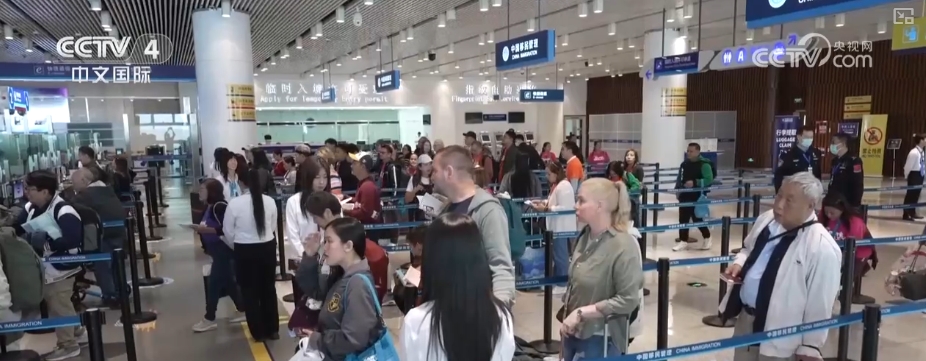
Group 1 - Multiple favorable policies are driving an increase in foreign tourists visiting China, particularly during the 2025 "May Day" holiday, with a notable rise in inbound tourist flow and the recovery of international cruise routes [1][4][7] - The first day of the "May Day" holiday saw three international cruise ships dock at Tianjin International Cruise Home Port, bringing over 2,000 foreign tourists, marking the largest batch of foreign visitors at Tianjin in recent years [4] - In Guangxi, foreign tourists are captivated by unique Chinese experiences, with Guilin receiving over 220,000 overnight international visitors in Q1 2025, a year-on-year increase of over 50% [9] Group 2 - The 137th Canton Fair coinciding with the holiday has led to an increase in foreign visitors, with convenient financial services and tax refund stores enhancing the shopping experience for international merchants [11] - Yiwu, known as the "world supermarket," is attracting a large number of foreign tourists with its "tourism + shopping" consumption model, becoming a key destination for "China shopping" [13] - The U.S. "tariff wall" has unexpectedly sparked a new trend in cross-border e-commerce, leading to a surge in "reverse purchasing," with some American consumers traveling to China specifically for shopping [16][18]
绕过关税,美国人“打飞的”来中国扫货
Zhong Guo Xin Wen Wang· 2025-05-03 12:23
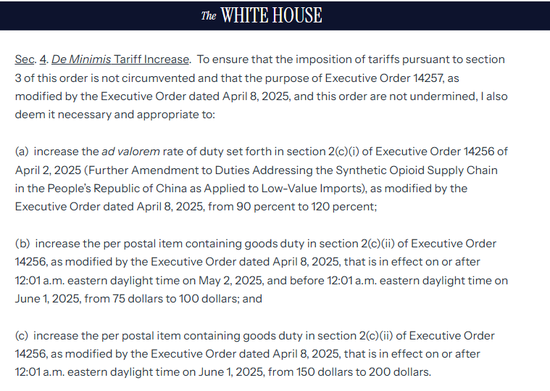
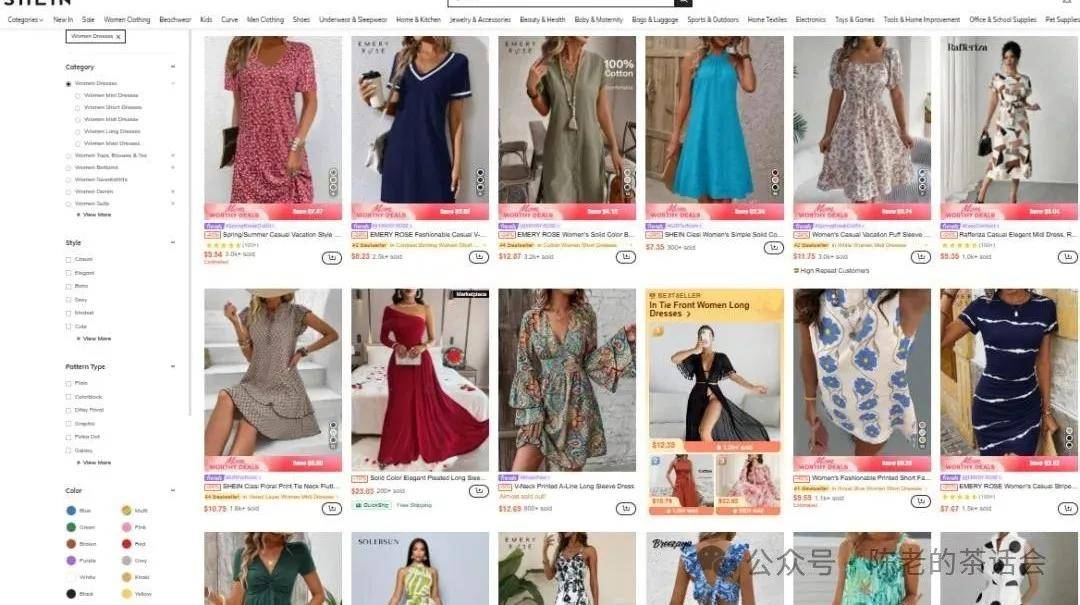
Core Viewpoint - The recent termination of the tariff exemption policy for small packages from China has not deterred American consumers; instead, it has sparked a "reverse purchasing" trend, indicating a strong demand for Chinese products despite increased costs [5][10]. Group 1: Tariff Policy Impact - The U.S. has ended the tariff exemption for small packages valued under $800 from China, imposing tariffs of 120% of the value or $100, effective May 2 [2]. - A dress priced at $18.47 on a Chinese e-commerce platform saw its price rise to $44.68 after a $26.21 import fee, reflecting a price increase of over 140% [3]. - Some products on the Shein platform experienced price surges of approximately 377% due to the new tariffs [3]. Group 2: Consumer Behavior - Despite the increased costs, American consumers are traveling to China to shop, leading to a surge in "reverse purchasing" [5]. - Data from Alipay indicates that spending by American tourists in China has doubled year-on-year, highlighting a significant increase in demand for Chinese goods [6]. - Social media discussions reveal that many American consumers are actively seeking ways to purchase Chinese products, with some expressing a desire for assistance in sourcing items from China [8]. Group 3: Market Dynamics - The phenomenon of reverse purchasing reflects a growing recognition of the value and quality of Chinese products among American consumers [10]. - The demand for Chinese goods is seen as a response to the structural impacts of tariff policies and the ongoing trade tensions between the U.S. and China [10]. - The increase in shipping costs due to tariffs has not deterred consumers, who are finding ways to navigate the challenges posed by the new trade environment [10].