杭州城市大脑

Search documents
东盟及中日韩政产研人士赴浙江 共探人工智能新发展
Zhong Guo Xin Wen Wang· 2025-10-20 13:37
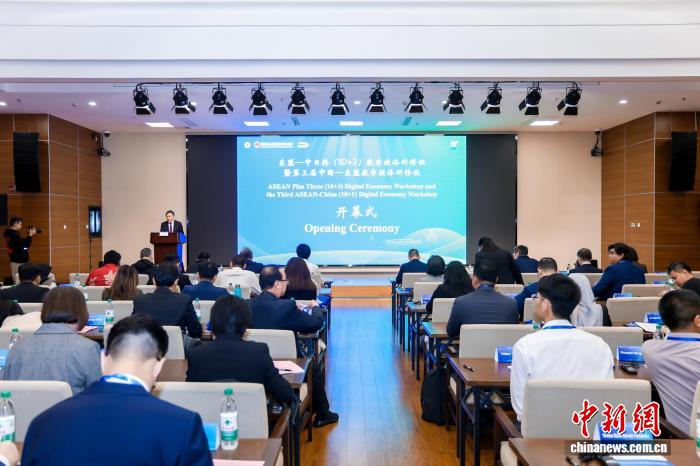
Group 1 - The core focus of the ASEAN-China-Japan-South Korea (10+3) Digital Economy Training Program is to enhance mutual learning and cooperation in the fields of digital economy and artificial intelligence among participating countries [1][2]. - The training program includes nearly 50 participants from various ASEAN countries, covering government, industry, and academic sectors, and aims to deepen collaboration and shared development in the digital economy [2][3]. - The program is part of China's initiative to train 1,000 digital talents for ASEAN countries over three years, with Zhejiang University having already trained nearly 200 participants in the past two years [2]. Group 2 - The training program is organized by Zhejiang University and supported by various governmental and academic institutions, highlighting the importance of regional cooperation in digital transformation [3][6]. - The curriculum focuses on artificial intelligence, digital economy, Internet of Things, digital infrastructure, and digital regulation, featuring experts from top universities and organizations [6]. - Participants will engage in case studies and site visits to leading companies in the digital sector, such as Alibaba Cloud and Tencent, to understand practical applications of digital technologies in governance and industry [6].

浙江(杭州)主场活动带你寻找身边的人工智能
Hang Zhou Ri Bao· 2025-08-28 02:19
Group 1 - The event "2025 National Science Popularization Month in Zhejiang (Hangzhou)" was launched with a performance featuring AI digital humans and elementary school students, highlighting the integration of technology into daily life [1] - The theme of the event is "AI in Zhejiang - Discovering Artificial Intelligence Around Us," focusing on four key areas: smart cities, health care, industrial upgrading, and green development [2] - Various activities such as youth explorations, live demonstrations, and science plays will showcase how AI is deeply integrated into life and industry, enhancing social progress [2] Group 2 - The Hangzhou "City Brain" initiative aims to improve traffic efficiency, while AI digital diagnosis at Lake Lab supports public health [2] - The newly recognized 28 "New Quality Productivity Science Popularization Halls" cover fields like smart manufacturing and future industries, promoting AI's role in societal advancement [2] - The Hangzhou Wensan Future Technology Experience Center offers immersive experiences with robots and AI models, breaking traditional one-way communication methods and enhancing public engagement with AI technology [3] Group 3 - A series of science-themed activities will be organized across the province, making "science" a popular term in Zhejiang this September [4] - The event is organized by the Zhejiang Provincial Office for the Implementation of the National Science Literacy Outline, with support from various local government and scientific associations [4]
浙数文化(600633.SH):积极探索相关人工智能开源大模型在垂类应用场景的部署运用
Ge Long Hui· 2025-08-06 09:44
Group 1 - The core viewpoint of the article is that Zhejiang Shuculture (600633.SH) is actively exploring the deployment of open-source AI models in specific application scenarios, including digital media, urban governance, and smart healthcare [2] - The company has established a technological foundation using open-source models for its projects such as the "Communication Brain," "Hangzhou City Brain," and "Zhejiang Smart Network Hospital" [2] - Zhejiang Shuculture signed an agreement for a strategic investment of 140 million yuan from the Zhejiang Provincial Industrial Fund in October 2024 [2] Group 2 - The company is closely monitoring capital market policies and industry dynamics, indicating potential future capital operations [2] - The company’s controlling shareholder, Zhejiang Newspaper Media Holding Group Co., Ltd., completed the issuance of convertible bonds on April 15, 2015 [2]

杭州城市大脑:打造智慧城市新典范(PPT)
Sou Hu Cai Jing· 2025-05-15 07:41
Core Insights - The Hangzhou City Brain project aims to enhance urban governance by integrating data sharing between government and enterprises, facilitating better decision-making and city management [2][4][7]. Group 1: Project Overview - The City Brain project was officially launched at the 2016 Yunqi Conference, marking a new chapter in smart city governance [2][7]. - The project focuses on optimizing urban public resources through real-time data utilization, leading to significant improvements in urban operation efficiency and citizen services [2][4]. Group 2: Achievements and Innovations - The City Brain has achieved breakthroughs in urban governance models, service models, and industrial development, providing new methodologies for smart city construction [2][20]. - The project has established a robust architecture for integrating various urban data resources, supporting intelligent management through advanced analytical techniques [3][4]. Group 3: Specific Applications - Event perception and intelligent processing have significantly increased the number of detected incidents while reducing average handling time [5]. - Traffic congestion indices have decreased in pilot areas, with travel times shortened through optimized traffic signal control based on comprehensive data analysis [5][31]. - Public transportation efficiency has improved, with reduced crowding and increased utilization rates through effective monitoring and adjustment of transport services [5][34].

从“电商之都”到“中国硅谷”:杭州与阿里巴巴何以互相成就
Zhong Guo Jing Ying Bao· 2025-04-01 10:33
Core Insights - Hangzhou's transformation from a picturesque tourist city to a global digital economy hub is highlighted as a remarkable achievement, often referred to as "China's Silicon Valley" [2] - The rise of Hangzhou is attributed to its deep interaction with Alibaba, which has fostered a symbiotic relationship that has redefined traditional business attraction logic into a model of institutional innovation [2][5] Group 1: Cultural and Institutional Factors - Hangzhou's unique cultural heritage, characterized by a "pro-business and talent-oriented" ethos, is identified as a core driver of its transformation [3] - The city has maintained the highest net inflow of talent among major cities in China since 2016, with local institutions like Zhejiang University and Alibaba serving as key innovation incubators [3][4] - The emphasis on commercial, educational, and lifestyle cultures has created a conducive environment for high-end talent and innovation [4] Group 2: Economic and Policy Framework - The development of Hangzhou as an AI city is a result of accumulated advantages in industrial foundation, policy support, talent ecosystem, and innovative environment [5] - The collaboration between the government and Alibaba has established a model of "proactive government + effective market," facilitating a dynamic adjustment for mutual benefit [5][6] - The strategic cooperation agreement between the Zhejiang government and Alibaba aims to create a new model for digital economy development in line with China's modernization goals [8] Group 3: Ecosystem and Innovation - Alibaba's presence has fostered a thriving ecosystem, allowing smaller enterprises to benefit from shared resources and innovation [7] - The "big tree" metaphor illustrates how Alibaba not only grows itself but also nurtures a diverse range of smaller companies, enhancing the overall innovation landscape [7] - The potential for Hangzhou to evolve from a regional hub to a global center for intelligent transformation is emphasized, with a focus on collaborative exploration of technology ethics and institutional innovation [9]