
核能电力

Search documents
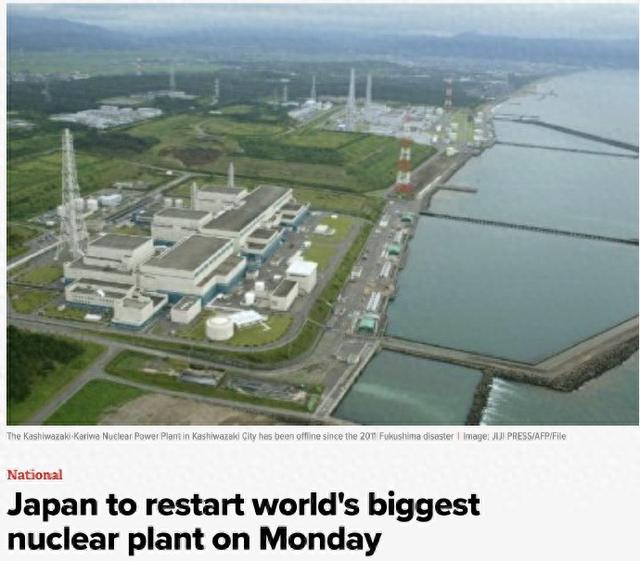
日本将重启世界最大核电站
Xin Lang Cai Jing· 2026-02-08 14:24
Core Viewpoint - Japan is set to restart the world's largest nuclear power plant, the Kashiwazaki-Kariwa Nuclear Power Plant, next week after a previous restart plan was halted due to a malfunction in the alarm system [1][3]. Group 1: Plant Operations - Tokyo Electric Power Company (TEPCO) had previously restarted one of the reactors at the Kashiwazaki-Kariwa plant on January 21, but it was shut down the next day due to an alarm triggered by a monitoring system [3]. - The alarm was caused by a configuration error in the system, which detected a minor change in current within a cable that was still within safe limits [3]. - The Kashiwazaki-Kariwa plant has the largest installed capacity globally, but only one of its seven reactors will be restarted this time [3]. Group 2: Energy Policy and Public Sentiment - As a resource-scarce nation, Japan is advancing its nuclear power revival plan to reduce dependence on fossil fuels [3]. - There is significant local opposition to the restart, with a survey conducted in September showing that approximately 60% of residents in Niigata Prefecture oppose the restart of the nuclear plant [3].

狂签6吉瓦,Meta成全球最大核能买家,囤电备战AI算力
Sou Hu Cai Jing· 2026-01-10 09:36
Core Insights - Meta has signed multiple significant nuclear power procurement agreements to meet the increasing power demands of AI, becoming the largest nuclear energy buyer globally with a total capacity of 6 gigawatts (GW) [1][2] Group 1: Strategic Goals - The large-scale energy procurement is aimed at supporting Meta's upcoming super-sized data centers, including the 1 GW Prometheus data center in Ohio expected to launch this year and the larger 5 GW Hyperion project in Louisiana planned for 2028 [1][2] Group 2: Energy Supply Strategy - Meta employs a combination strategy of traditional nuclear power plants and new startups for energy supply, with Vistra Corp providing 2,176 megawatts (MW) from its existing nuclear plants in Ohio [2] - Additionally, Meta has invested in two companies, Oklo and TerraPower, which are developing small modular reactor (SMR) prototypes [2] Group 3: Environmental Commitment - Meta's global energy head, Uvri Parekh, stated that the investment in nuclear energy is crucial for providing clean and reliable power, which is essential for advancing the company's AI ambitions [4]


Don’t Push for Growth in 2026, Push for Yield: The Case for 3 Top Dividend Stocks
Yahoo Finance· 2026-01-05 18:22
分组1 - PepsiCo has a strong dividend yield of 4% and a remarkable 53-year history of increasing dividends, indicating a solid defensive investment option [1] - The company has demonstrated significant pricing power, particularly in its snack business, leading to impressive gross margins of 53.6% and operating margins around 15% [2] - PepsiCo is a major player in the carbonated beverage and snack industry, benefiting from past acquisitions and a strong brand portfolio, making it a top choice for defensive investors [3] 分组2 - The macroeconomic environment for 2026 is expected to differ significantly from the previous year, with concerns about inflation and a slowing job market impacting growth stock performance [4] - Restaurant Brands, another defensive stock, has shown stable cash flows and growth potential, with a core dividend yield of 3.7% and expectations for continued growth despite market conditions [9][10] - Constellation Energy focuses on nuclear energy, which is increasingly in demand, and is expected to provide robust dividend distributions and growth potential in the medium to long term [12][13]


研报掘金丨海通国际:首予中国核电“优于大市”评级,目标价11.44元
Ge Long Hui A P P· 2026-01-05 08:48
Group 1 - The core viewpoint of the report highlights that China Nuclear Power, a major subsidiary of China National Nuclear Corporation, is a leading company in the nuclear power sector [1] - As of September 30, 2025, the company operates 26 nuclear power units with a total installed capacity of 25 GW [1] - The cumulative electricity generation for the first three quarters of 2025 reached 151.008 billion kWh, representing a year-on-year increase of 11.33% [1] - The cumulative on-grid electricity volume was 141.283 billion kWh, with a year-on-year growth of 11.44% [1] - The average utilization hours of nuclear power units stood at 6046 hours [1] - The nuclear business achieved a net profit attributable to shareholders of 7.467 billion yuan, reflecting a year-on-year increase of 2.81% despite some disruptions in profitability due to market electricity prices [1] Group 2 - The company has 19 nuclear power units under construction or planned, with an approximate installed capacity of 21.86 GW [1] - It is expected that 1 and 2 units will be put into operation in 2025 and 2026, respectively, with a concentrated commissioning after 2027 [1] - Based on the DCF model, the target price is set at 11.44 yuan, with an initial coverage rating of "outperform the market" [1]

海通国际发布中国核电研报:中国核电龙头,核电主业稳步推进
Mei Ri Jing Ji Xin Wen· 2026-01-05 07:57
Group 1 - The core viewpoint of the report is that Haitong International has given China Nuclear Power (601985.SH) an "outperform" rating with a target price of 11.44 yuan [1] - China Nuclear Power is a major subsidiary of China National Nuclear Corporation, primarily engaged in nuclear power generation and sales, and is one of the leading companies in the nuclear power sector in China [1] - As of September 30, 2025, the company will have 26 operational nuclear power units with a total installed capacity of 25 GW, and the cumulative electricity generation for the first three quarters of 2025 is expected to reach 151.008 billion kWh, representing a year-on-year increase of 11.33% [1] - The cumulative on-grid electricity volume is projected to be 141.283 billion kWh, with a year-on-year growth of 11.44%, and the average utilization hours of nuclear power units are estimated at 6046 hours [1] - The nuclear business is expected to achieve a net profit attributable to shareholders of 7.467 billion yuan, reflecting a year-on-year increase of 2.81%, indicating stable performance despite some market price fluctuations [1] Group 2 - The report highlights potential risks, including slower-than-expected progress in nuclear power capacity construction, declining market prices for nuclear power transactions, and reduced profitability in the renewable energy sector [1]
日本加速重启核电风险剧增
Jing Ji Ri Bao· 2026-01-04 22:14
Core Viewpoint - Japan's Niigata Prefectural Assembly has approved a supplementary budget to restart the Kashiwazaki-Kariwa Nuclear Power Plant, with Tokyo Electric Power Company planning to restart one reactor by January 20, 2026, despite significant domestic opposition and international concerns regarding safety [1][2]. Group 1: Domestic Concerns - There is a strong local opposition to the restart of the Kashiwazaki-Kariwa Nuclear Power Plant, with a poll indicating that 60% of residents believe the conditions for restarting are not yet mature, and nearly 70% express concerns about Tokyo Electric Power Company's operational capabilities [2]. - The history of Tokyo Electric Power Company includes incidents of concealing accidents and manipulating data related to nuclear contamination, raising doubts about its reliability [2]. Group 2: Safety Risks - Japan's push to restart nuclear power plants is seen as risky due to aging facilities, management issues, and inadequate regulation, particularly for the Kashiwazaki-Kariwa plant, which is located on an active seismic fault line and has previously been exposed for safety vulnerabilities [1]. - The recent leak of radioactive water from the decommissioned "Fugen" reactor highlights ongoing safety concerns and operational deficiencies within Japan's nuclear facilities [2]. Group 3: International Perspective - The international community is urged to remain vigilant regarding Japan's nuclear safety practices, as the decision to restart the largest nuclear power plant reflects serious flaws in the country's nuclear safety regulatory system and a lack of responsibility towards both domestic and neighboring populations [3].
质疑声中,日本加速重启核电
Huan Qiu Shi Bao· 2025-12-25 23:01
Core Viewpoint - Japan's nuclear power sector is facing renewed scrutiny and public concern following a radioactive water leak incident at the "Puxian" reactor, coinciding with the government's plan to restart the Kashiwazaki-Kariwa nuclear power plant, the largest in the country, amid ongoing safety debates [1][2]. Group 1: Nuclear Power Restart Plans - The Kashiwazaki-Kariwa nuclear power plant is set to restart on January 20, 2024, with commercial operations expected to begin on February 26, 2024, marking the first restart of a nuclear unit since the Fukushima disaster in 2011 [1]. - The Japanese government is accelerating the nationwide push for nuclear power restarts to enhance energy security and manage rising living costs, driven by a significant increase in electricity demand from AI data centers [2]. Group 2: Economic Implications - Japan's reliance on fossil fuels has surged, with these sources accounting for 70% of the country's electricity needs, leading to a substantial import expenditure of 10.7 trillion yen (approximately 100 billion USD) on liquefied natural gas and coal last year [2]. - The high costs of fossil fuel imports are contributing to domestic inflation and posing challenges to the ruling Liberal Democratic Party's public support [2]. Group 3: Safety Concerns and Geographical Risks - Experts warn of significant geological risks associated with the Kashiwazaki-Kariwa nuclear power plant, which is located on a seismic fault line, raising concerns about the suitability of the site for nuclear facilities [3]. - There are unresolved issues regarding earthquake risks and the lack of credible evacuation plans, which remain critical challenges for Japan's nuclear safety management [3].
日本重启核电站 引发当地大量民众反对
Yang Shi Xin Wen Ke Hu Duan· 2025-12-24 03:10
Core Viewpoint - The Niigata Prefectural Assembly approved a supplementary budget to restart the Kashiwazaki-Kariwa Nuclear Power Plant, Japan's largest nuclear facility, despite significant public opposition [1] Group 1: Public Opposition - The assembly meeting was marked by protests from local residents, who expressed their anger and concerns about the decision to restart the nuclear plant [1] - Many protesters held signs stating that the decision should be made by local residents and reminded others not to forget the lessons from the Fukushima disaster [1] - A survey conducted in October revealed that approximately 60% of residents believe the conditions for restarting the plant are not yet met, and about 70% feel uneasy about the plant's operator, Tokyo Electric Power Company [1] Group 2: Background of the Nuclear Plant - The Kashiwazaki-Kariwa Nuclear Power Plant, located in Niigata Prefecture, has a total installed capacity of approximately 8.212 million kilowatts, making it the largest nuclear power plant in Japan [1] - The plant was shut down in 2012 following the Fukushima Daiichi nuclear disaster triggered by the Great East Japan Earthquake on March 11, 2011, which led to a nationwide halt of nuclear reactors [1]
“勿忘福岛教训”:数百名日本民众手举标语集会,反对日本最大核电站重启
Xin Jing Bao· 2025-12-23 08:50
Group 1 - The core viewpoint of the article highlights public opposition to the restart of Japan's largest nuclear power plant, the Kashiwazaki-Kariwa Nuclear Power Plant, following a vote by the Niigata Prefectural Assembly to approve a supplementary budget for its restart [1] - Hundreds of Japanese citizens gathered outside the Niigata Prefectural Assembly building to protest, emphasizing the need for residents to decide on the plant's restart and recalling the lessons from the Fukushima disaster [1] - The assembly meeting saw disruptions from attendees expressing dissent, leading to a chaotic scene where security personnel had to intervene [1]
【环球财经】日本最大核电站将重启
Xin Hua She· 2025-12-22 06:09
Core Viewpoint - The Niigata Prefectural Assembly has approved a supplementary budget to restart the Kashiwazaki-Kariwa Nuclear Power Plant, Japan's largest nuclear facility, which has been offline since 2012 following the Fukushima disaster [1]. Group 1 - The Kashiwazaki-Kariwa Nuclear Power Plant has a total installed capacity of approximately 8.212 million kilowatts [1]. - The plant is located in Niigata Prefecture, spanning the cities of Kashiwazaki and Kariwa [1]. - All nuclear reactors in Japan were shut down after the Fukushima Daiichi nuclear disaster in March 2011, leading to the closure of the Kashiwazaki-Kariwa plant in 2012 [1].