
欣安立适

Search documents
跨国药企濒临3000亿美元专利悬崖
Guo Ji Jin Rong Bao· 2026-02-27 23:50
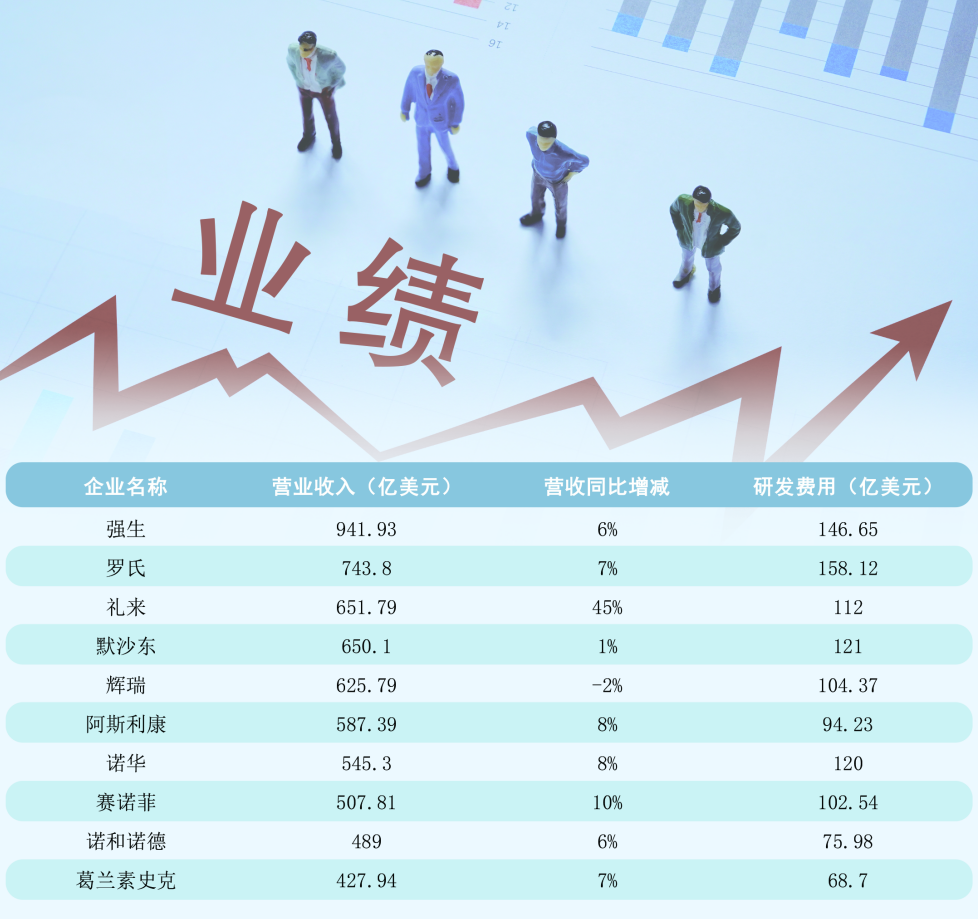
Core Insights - Major multinational pharmaceutical companies, including Johnson & Johnson, Roche, and Eli Lilly, have reported their 2025 earnings, showcasing a mix of growth and challenges in the industry [1][2][4][6][9]. Company Performance - **Johnson & Johnson**: Achieved total revenue of $94.193 billion, a 6% year-over-year increase, with the innovative pharmaceutical segment contributing 64% of total revenue [1][6]. The oncology sector generated $25.38 billion, growing at 22.1% [6]. - **Roche**: Reported revenue of $74.38 billion, up 7% year-over-year, with the pharmaceutical division earning $57.63 billion, a 9% increase [1][9]. Oncology remains a key revenue driver, contributing $28.963 billion [9]. - **Eli Lilly**: Emerged as a standout performer with $65.179 billion in revenue, a remarkable 45% increase, driven primarily by the success of the tirzepatide products [1][4]. The company anticipates 2026 revenue between $80 billion and $83 billion, reflecting a growth forecast of 23%-28% [4]. - **Merck (MSD)**: Reported $65.01 billion in revenue, a modest 1% increase, with Keytruda sales reaching $31.7 billion, growing only 7% [1][12]. The company is facing challenges with declining sales of its HPV vaccine [12]. - **Novartis**: Achieved $54.53 billion in revenue, an 8% increase, with significant growth in its oncology and cardiovascular segments [1][14]. The CEO's compensation rose significantly, reflecting the company's strong stock performance [15]. - **Novo Nordisk**: Reported revenue of approximately $48.9 billion, a 6% increase, driven by the strong performance of semaglutide products [1][17]. However, the company has lowered its 2026 outlook due to patent cliff concerns [17]. - **AstraZeneca**: Generated $58.739 billion in revenue, an 8% increase, with oncology contributing 44% of total revenue [1][18]. The company plans to invest significantly in China, viewing it as a key market [18]. - **Sanofi**: Reported revenue of approximately $50.78 billion, a 9.9% increase, with Dupixent being a major growth driver [1][20]. The company is focusing on reducing dependency on Dupixent and expanding its product pipeline [21]. - **Pfizer**: Reported $62.579 billion in revenue, a 2% decline, but a 6% increase when excluding COVID-19 product impacts [1][22]. The company is focusing on R&D in key therapeutic areas for future growth [24]. Industry Trends - The pharmaceutical industry is experiencing stable growth overall, but faces significant challenges from patent expirations, with nearly 200 drugs expected to lose patent protection in the coming years, potentially resulting in over $300 billion in lost sales [2].



2025年带状疱疹疫苗行业推荐:老龄化趋势叠加慢病负担,带状疱疹疫苗技术驱动型企业盘点
Tou Bao Yan Jiu Yuan· 2026-01-23 12:06
Investment Rating - The report recommends investment in the shingles vaccine industry, highlighting its growth potential driven by aging population and chronic disease burden [1]. Core Insights - The shingles vaccine market in China is entering an accelerated cultivation phase due to the expansion of the elderly population, increased awareness of pain and complications, and improvements in adult immunization services [4]. - The market is transitioning from a single high-end supply model to a layered supply and multi-scenario penetration approach, with a focus on commercial capabilities such as channel coverage and service efficiency [4]. - The industry is expected to grow significantly, with the market size projected to reach 56.68 billion yuan by 2030, growing at a compound annual growth rate (CAGR) of 29.08% from 2024 [9]. Market Background - The shingles vaccine industry is defined as encompassing the development of antigens and adjuvants, production quality management, cold chain logistics, vaccination services, and public health education [5]. - The industry has evolved from the initial development of live attenuated vaccines to the emergence of recombinant subunit vaccines, leading to a diversified and upgraded market structure [6][7]. Market Status - The market size for shingles vaccines in China was 3.998 billion yuan in 2024, with a significant increase in demand driven by the aging population and chronic disease burden [9][10]. - The introduction of high-efficacy vaccines like GSK's Shingrix has created a new consumption category, while domestic vaccines like Changchun Baku's live attenuated vaccine have entered the market, marking a dual-product competition era [9]. Market Competition - The competitive landscape features a tiered structure, with leading companies including Baike Biological, Jifei Biological, and Jiachen Xihai, while others like Lvzhu Biological and Ruike Biological follow [17][21]. - The report emphasizes the importance of product and technology platform positioning, supply chain certainty, and commercialization capabilities in determining competitive advantages [13][14][15]. Development Trends - The aging trend and immune decline are expected to drive sustained demand for adult vaccinations, with the elderly population projected to exceed 400 million by 2035 [32]. - The self-paid nature of shingles vaccines influences market penetration, with domestic vaccines offering more accessible pricing compared to imported options [33]. - The evolution of vaccination channels and service systems, including integrated vaccination networks and digital follow-ups, is crucial for improving vaccination completion rates [34]. - The internationalization of vaccine manufacturing and supply chain capabilities will play a significant role in the future development of the industry [35].


大跳水!这种国产疫苗从1300多元降到不足500元,进口疫苗“买一送一”!接种率不到1%,为啥大家不愿打?
Mei Ri Jing Ji Xin Wen· 2025-12-25 09:05
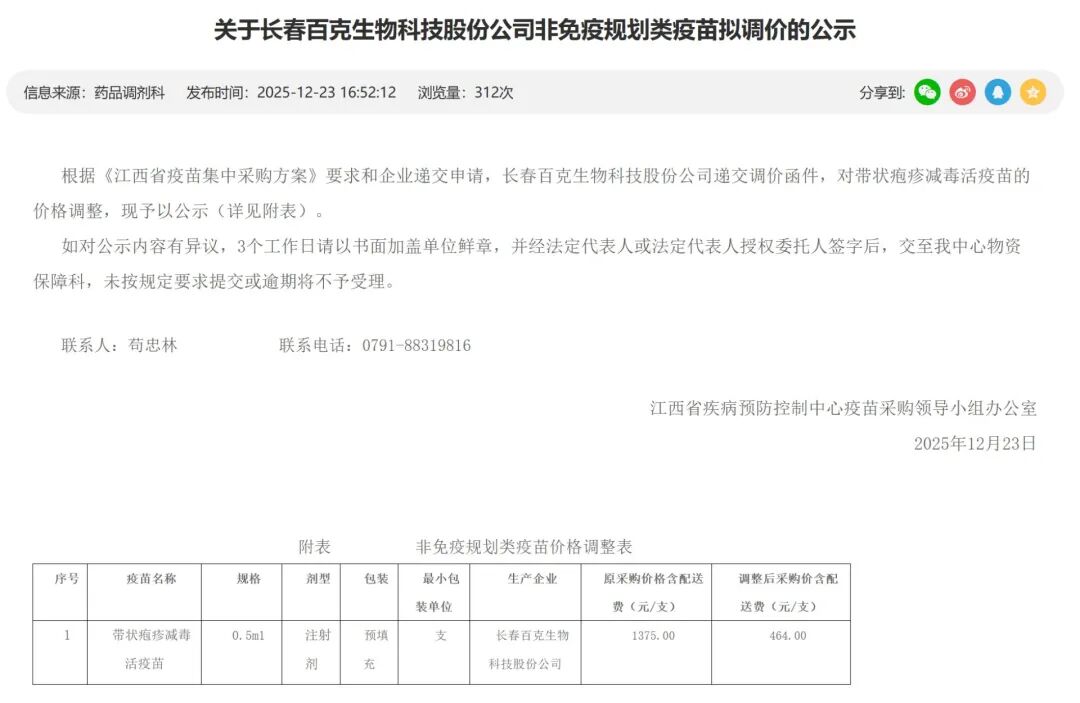
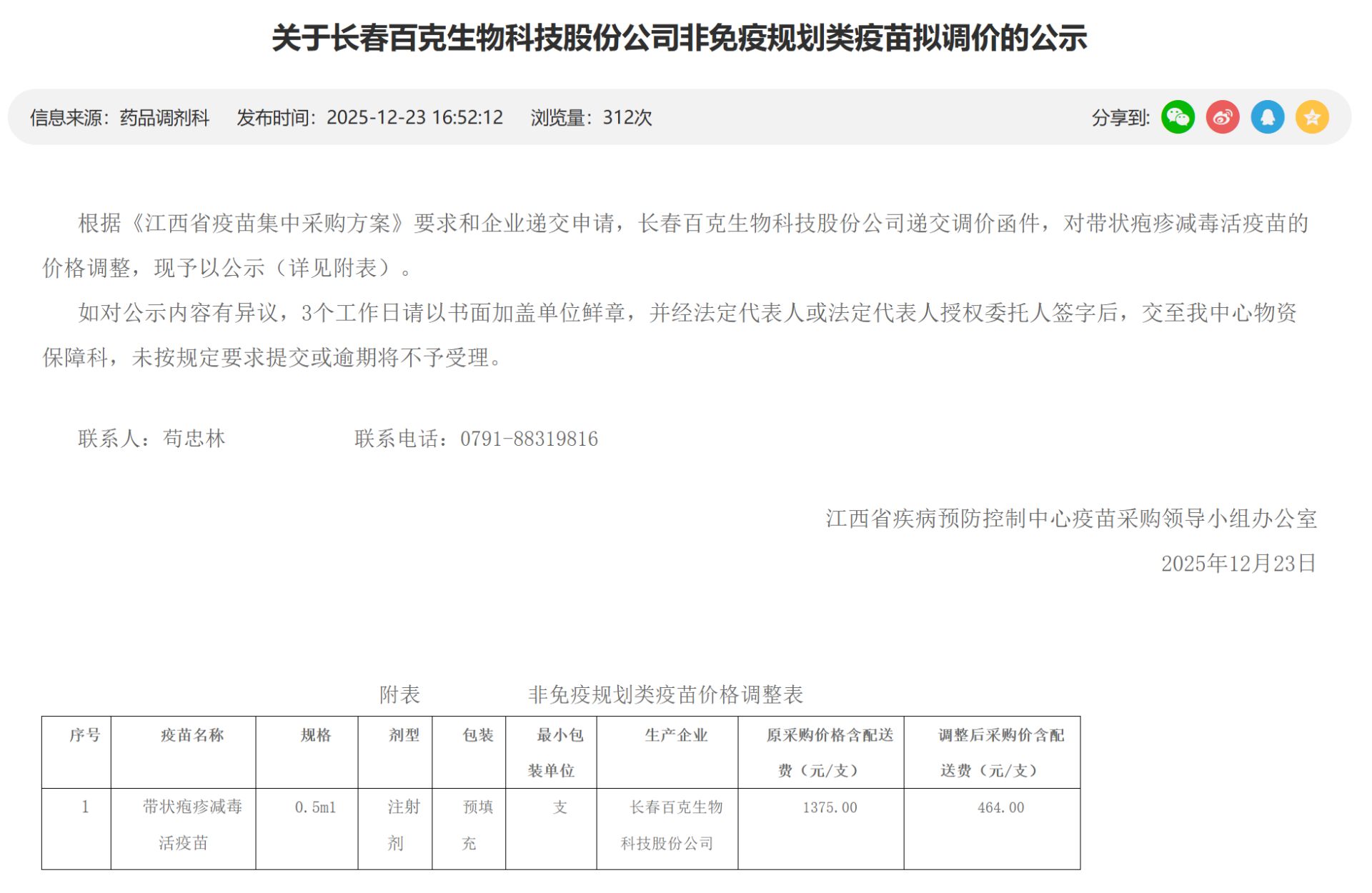
Core Viewpoint - The price reduction of the varicella-zoster vaccine by Baike Biotech has drawn public attention, with the procurement price dropping from 1375 yuan to 464 yuan, a decrease of approximately 66% [1][4]. Group 1: Vaccine Pricing and Market Dynamics - Baike Biotech's varicella-zoster vaccine, which is a live attenuated vaccine, has seen its price significantly reduced, making it more accessible compared to the imported vaccine "Shingrix," which is priced around 1650 yuan even with promotional offers [4][5]. - The imported vaccine "Shingrix" has been offering a "buy one get one free" promotion since Q2 2023, but the total cost remains high compared to the newly priced domestic vaccine [5][10]. - The price reduction aims to enhance vaccination rates among the elderly population, who have shown low willingness to get vaccinated due to high costs and lack of awareness about the disease [7][8]. Group 2: Market Potential and Industry Challenges - The varicella-zoster vaccine market in China is still in its early stages, with only two vaccines currently available: the imported "Shingrix" and Baike Biotech's domestic vaccine [4][10]. - Despite the price drop, Baike Biotech reported a significant decline in revenue, with a 53.8% year-on-year decrease in revenue to 470 million yuan and a net loss of 160 million yuan in the first three quarters of the year [10][11]. - The company is focusing on increasing public awareness and accessibility of the vaccine through promotional activities and partnerships with healthcare providers to improve market penetration [11].
降价66%!国产带状疱疹疫苗大降价,进口疫苗“买一送一” 爸妈为什么还在纠结?
Mei Ri Jing Ji Xin Wen· 2025-12-25 05:13
Core Viewpoint - The price of the varicella-zoster virus vaccine produced by Changchun Baike Biotechnology Co., Ltd. has been reduced by approximately 66%, from 1375 yuan to 464 yuan per dose, aiming to increase vaccination rates among the elderly population [1][4]. Company Summary - Changchun Baike Biotechnology is the only domestic company with a varicella-zoster vaccine currently on the market, and its stock price is 19.19 yuan with a market capitalization of 7.938 billion yuan [1]. - The company reported a significant decline in revenue, with a 53.8% year-on-year decrease to 470 million yuan in the first three quarters, and a net loss of 160 million yuan, primarily due to product returns and price reductions [10][11]. - The company has initiated a discount pricing strategy to enhance public awareness and accessibility of the vaccine, aiming to improve market penetration and correct misconceptions about the disease [11]. Industry Summary - The varicella-zoster vaccine market in China is still in its early stages, having transitioned from a nascent phase (2019-2022) to a growth phase in 2023 with the introduction of domestic vaccines [4]. - The market currently has low penetration rates, with vaccination rates for the varicella-zoster vaccine among the target population being less than 1% [7]. - The competitive landscape is not yet clearly defined, with few domestic players involved, including Baike Biotechnology and others [10]. - The imported vaccine "Shingrix" has also been active in the market, offering promotions such as "buy one, get one free," but remains significantly more expensive than the newly priced domestic vaccine [4][5].
寒潮下慢病隐患凸显,如何破解防控难题?
2 1 Shi Ji Jing Ji Bao Dao· 2025-12-12 09:02
Core Viewpoint - A new wave of cold weather is impacting China, leading to significant temperature drops and increased health risks for chronic disease patients, particularly those with diabetes, who are more susceptible to complications such as shingles due to weakened immune systems [1][2]. Group 1: Health Risks and Challenges - The average daily temperature in most regions of China is expected to drop by 6 to 10 degrees Celsius, with some areas experiencing drops exceeding 14 degrees Celsius [1]. - Diabetes patients face heightened risks during cold weather, as low temperatures can cause blood vessel constriction, leading to blood sugar fluctuations and decreased immunity [1]. - The risk of shingles is 60% higher in diabetes patients compared to the general population, creating a dangerous cycle of pain and elevated blood sugar levels [2]. Group 2: Vaccination and Awareness - Despite high awareness of shingles (80%-90%) and vaccine knowledge (60%-80%), the vaccination rate in China remains low at only 1%-2% [3]. - Community health initiatives, such as personalized vaccine education prescriptions, are being implemented to encourage proactive health measures among chronic disease patients [3]. Group 3: Market Potential and Industry Growth - The domestic shingles vaccine market was valued at 3.73 billion yuan in 2022 and is projected to reach 5.63 billion yuan by the end of 2025, with a compound annual growth rate of 16.4% [4]. - The approval of new shingles vaccines, including one specifically for high-risk groups, indicates a growing market and increasing competition among pharmaceutical companies [4][5]. - Local governments are introducing policies to reduce vaccination costs, further promoting vaccine uptake and addressing the "knowledge-action gap" in vaccination [5].
专家提醒:当“三高”遇上“缠腰龙”,多病叠加风险不容小觑
2 1 Shi Ji Jing Ji Bao Dao· 2025-12-08 04:55
Group 1 - The article highlights the increasing prevalence of chronic diseases, particularly hypertension, diabetes, and hyperlipidemia, among the aging population in China, with a notable trend of younger individuals being affected [1][2] - The National Health Commission plans to develop a comprehensive service model focusing on chronic diseases during the 14th Five-Year Plan, emphasizing the integration of prevention, treatment, rehabilitation, and management [1][2] - The article discusses the rising incidence of infectious diseases, such as shingles and influenza, among chronic disease patients, necessitating a shift from traditional single-disease management to a multi-disease collaborative management approach [2][3] Group 2 - The approval of a new indication for the recombinant shingles vaccine marks a significant step in protecting adults with weakened immune systems from shingles, which is crucial for managing infectious diseases [3][4] - Chronic disease patients, particularly those with diabetes, have a significantly higher risk of developing shingles, with diabetes patients facing a 60% increased risk compared to the general population [5][6] - The article emphasizes the importance of vaccination as a standard practice in managing chronic diseases, as it can reduce the incidence of shingles and its complications, thereby alleviating the burden on healthcare resources [6][7] Group 3 - The market for shingles vaccines in China is projected to grow significantly, with the market size expected to reach 5.63 billion yuan by the end of 2025, reflecting a compound annual growth rate of 16.4% [8] - Community health services are increasingly promoting vaccine prescriptions to enhance accessibility and encourage adult vaccination, which has shown positive results in increasing vaccination rates [8]
当带状疱疹疫苗开始“买一送一”
3 6 Ke· 2025-11-26 12:15
Core Insights - The article discusses the competitive landscape of the shingles vaccine market in China, highlighting the unexpected price war initiated by GSK's vaccine, Shingrix, which is being promoted through a "buy one get one free" offer [1][2][4]. Market Dynamics - Shingrix's original price for two doses is 3,260 yuan, but with the promotion, the cost is reduced to 1,652 yuan, effectively a 50% discount [2]. - The vaccine has shown exceptional efficacy, reducing the risk of shingles by 97.2% in individuals aged 50 and above, and offers long-lasting immunity [2][7]. Competitive Landscape - Following GSK's price reduction, domestic competitor, Baike Biological, has also adjusted its pricing strategy, with its vaccine now priced around 1,400 yuan, and further discounts being offered [4]. - The domestic market for shingles vaccines has not met expectations, with Baike Biological reporting a significant drop in sales and revenue due to high return rates and low demand [8]. Consumer Behavior and Market Potential - Despite the high demand for shingles vaccines among the elderly population, the uptake has been low, with only 0.1% vaccination rate among those aged 50 and above in 2021 [9][11]. - The mismatch between the high cost of the vaccine and the financial capability of the target demographic is a significant barrier to market growth [11]. Challenges in Market Expansion - The competitive landscape in China is more fragmented compared to overseas markets, with both imported and domestic vaccines vying for market share, complicating the expansion efforts for Shingrix [11][13]. - There is a lack of awareness and understanding of the vaccine among the target demographic, which hinders its adoption [12][13].
药械巨头竞逐慢病赛道
21世纪经济报道· 2025-11-08 23:30
Core Viewpoint - The article emphasizes the strategic opportunities in China's pharmaceutical and healthcare sector, particularly in the context of the "14th Five-Year Plan" and the upcoming "15th Five-Year Plan," highlighting the importance of health in national development and the need for enhanced public health initiatives [1]. Policy and Strategic Initiatives - The "15th Five-Year Plan" proposes a health-first development strategy, aiming to increase the average life expectancy in China from 79 years in 2024 to around 80 years [1]. - The 8th China International Import Expo (CIIE) showcased cutting-edge technologies and innovative products in the healthcare sector, indicating a strong response from the industry to policy initiatives [1]. Chronic Disease Management - Cardiovascular diseases remain a significant health threat in China, with over 330 million patients, and low awareness and treatment rates for blood lipid management [3]. - Collaborative efforts, such as the "Super Consultation" event by Tencent News and Novartis, aim to address public misconceptions about LDL-C and improve cardiovascular disease management [3]. Innovations in Disease Prevention - GSK is focusing on product innovation and health education to promote the prevention of diseases closely related to chronic conditions, such as shingles, which poses increased risks for patients with cardiovascular diseases [4][5]. - Bayer introduced a new product for chronic constipation management, addressing a prevalent health issue among adults in China [5]. Retail Health Services - The retail sector is crucial in connecting healthcare services with public health, with initiatives to extend health services from hospitals to homes [7]. - Novo Nordisk and the China Pharmaceutical Commerce Association launched a health management standard for obesity in retail pharmacies, aiming to enhance patient support [7][9]. AI in Healthcare - AI technology is increasingly integrated into healthcare, enhancing clinical diagnosis and patient management, as demonstrated by various companies at the CIIE [13]. - The launch of AI-driven platforms, such as Boston Scientific's medical knowledge graph, aims to improve clinical education and decision-making [13][14]. Ecosystem Collaboration - The CIIE serves as a platform for collaboration among healthcare companies, fostering partnerships that enhance innovation and market access [18]. - Companies like Merck and Medtronic are focusing on local partnerships to accelerate the introduction of innovative products in China [19][20]. Conclusion - The healthcare sector in China is undergoing significant transformation driven by policy support, technological advancements, and collaborative efforts among industry players, aiming to improve public health outcomes and enhance the overall healthcare ecosystem [1][18].




进博观察:药械巨头竞逐慢病赛道,AI赋能、生态共建成破局关键
2 1 Shi Ji Jing Ji Bao Dao· 2025-11-08 12:25
Core Insights - The Chinese healthcare sector is entering a strategic opportunity period, integrating deeply into the "Healthy China" initiative and the global biopharmaceutical competition landscape [1] - The "14th Five-Year Plan" has set a goal to increase the average life expectancy of the Chinese population from 79 years in 2024 to around 80 years by 2029, requiring multi-faceted efforts for achievement [1] - The 8th China International Import Expo (CIIE) showcased cutting-edge technologies and innovative products in the healthcare sector, emphasizing the importance of high-quality development in the pharmaceutical and medical device industries [1] Policy and Strategic Initiatives - The "15th Five-Year Plan" emphasizes a health-first development strategy, aiming to enhance public health and healthcare services [1] - The National Health Commission aims to improve public awareness and management of chronic diseases, particularly cardiovascular diseases, which affect over 330 million people in China [2][3] Disease Prevention and Management - Cardiovascular diseases remain a significant health threat, with a focus on improving public knowledge about blood lipid management to combat related health issues [2] - GSK is promoting a comprehensive management model that integrates chronic disease prevention, including shingles, which poses increased risks for patients with cardiovascular conditions [3][4] Retail Health Services - The retail sector is crucial in connecting healthcare services with public health, with initiatives to extend health services from hospitals to homes [5][6] - Novo Nordisk and other companies are collaborating with retail pharmacies to establish standardized obesity management services, addressing the rising obesity rates in China [5][6] AI in Healthcare - AI technology is increasingly being integrated into healthcare, enhancing clinical diagnosis, medical education, and consumer health management [8][9] - Companies like Philips and Boston Scientific are leveraging AI to improve healthcare delivery and patient outcomes, with significant acceptance among healthcare professionals and patients [11] Ecosystem Collaboration - The CIIE serves as a platform for collaboration among global and local companies, fostering innovation and resource sharing in the healthcare sector [12][13] - Bayer and other companies are utilizing the expo to introduce innovative medical products and enhance local partnerships, aiming to improve healthcare accessibility in China [12][13] Localized Innovation - Merck and Medtronic are focusing on local partnerships to accelerate the introduction of innovative healthcare solutions in China, reflecting the country's growing market potential [13][14] - The "Marco Polo Plan 3.0" by the Cassi Group aims to enhance collaboration across various sectors, promoting medical innovation and accessibility [14][15]
GSK深化“医防协同”实践:如何实现慢病管理与带疱预防的“双向奔赴”?
2 1 Shi Ji Jing Ji Bao Dao· 2025-11-08 01:06
Core Viewpoint - The 8th China International Import Expo (CIIE) showcased GSK's commitment to the Chinese market with its innovative health solutions, particularly highlighting the newly approved shingles vaccine, which targets high-risk groups [1][2][3]. Group 1: GSK's Vaccine Innovations - GSK's shingles vaccine, Xinanlis, is the first and only shingles vaccine approved by the NMPA for high-risk adults aged 18 and above [1][3]. - The vaccine's approval for expanded indications aims to protect individuals with immune deficiencies or immunosuppression, reflecting a shift towards proactive immunization across all life stages [1][3]. - GSK emphasizes the integration of vaccine prevention into chronic disease management, particularly for high-risk groups such as those with hypertension, diabetes, and cardiovascular diseases [2][3][11]. Group 2: Market Potential and Growth - The adult vaccine market in China is projected to grow significantly, with the shingles vaccine market expected to reach 5.63 billion yuan by 2025 and exceed 10 billion yuan by 2031 [9]. - With over 500 million chronic disease patients in China, achieving a 5% to 10% vaccination rate could translate to a market size in the hundreds of billions [9][10]. - The increasing prevalence of chronic diseases and an aging population are key drivers for the growth of the adult vaccine market [9]. Group 3: Challenges and Strategies - Despite high awareness of shingles (80%-90%) and vaccine knowledge (60%-80%), the vaccination rate remains low at 1%-2% [5]. - GSK is addressing this "knowledge-action gap" by implementing "vaccine prescriptions" to enhance accessibility and conversion rates for vaccinations [5][6]. - The company is developing a multi-tiered adult vaccine management system, aiming to integrate vaccine management with chronic disease management [6][10]. Group 4: Future Directions - GSK plans to extend its focus from cardiovascular and diabetes management to include other chronic diseases like COPD, promoting a comprehensive approach to disease management [12]. - The company is committed to leveraging its innovative research and development capabilities to enhance public health in China, particularly through the introduction of new vaccines [12].