
疫苗市场竞争

Search documents
预亏超百亿,智飞生物“爆雷”了
Hu Xiu· 2026-01-22 04:34
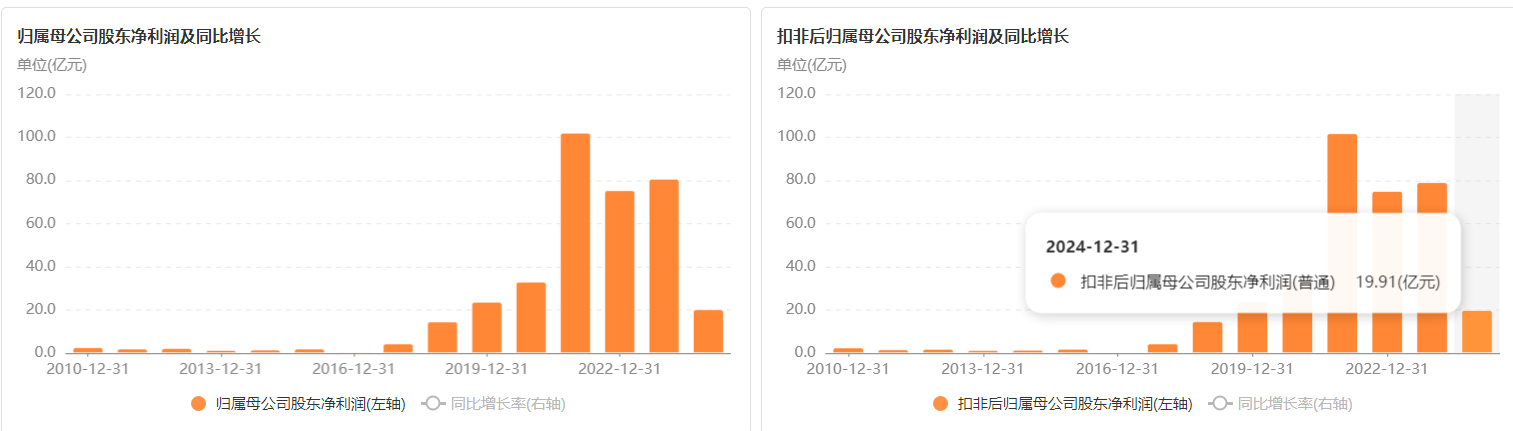
Core Viewpoint - Zhifei Biological, a leading domestic vaccine company, has reported its worst performance forecast since its listing, with an expected net profit loss of between 10.698 billion to 13.726 billion yuan for 2025, marking a year-on-year decline of 630% to 780% [1][2]. Revenue Structure - Over 90% of Zhifei's revenue comes from agency products, with agency product revenue accounting for 98.05% and 94.61% in 2023 and 2024, respectively [6]. - The main source of agency revenue is the HPV vaccine, which is crucial for the company's performance in 2026 [6]. Market Competition - The HPV vaccine market has become increasingly competitive with the introduction of domestic vaccines, breaking the monopoly previously held by Merck [6][8]. - The price of HPV vaccines has significantly dropped, with the 2-valent HPV vaccine priced at 27.5 yuan per dose, a decrease of about 90% from over 300 yuan in 2022 [8]. Sales Decline - Zhifei's sales of the 4-valent HPV vaccine saw a dramatic decline, with a 95.49% drop in batch issuance in 2024, and a complete halt in 2025 [10]. - The company faces inventory issues, with stock levels rising to 20.246 billion yuan, a 125% increase from the previous year, leading to potential asset impairment risks [10]. New Product Development - Zhifei has four self-developed products expected to launch in 2026, including flu and rabies vaccines, but these are not classified as first-class applications [15][16]. - The competitive landscape for these products is intense, with many companies already established in the market, making it difficult for Zhifei to gain significant market share [15][19]. Financial Pressure - The company has signed a loan agreement for up to 10.2 billion yuan, indicating potential financial strain as it seeks to expand its self-developed product line [22]. - The reliance on agency products and the challenges in launching new products may continue to pressure Zhifei's financial performance in the coming years [21][22].


北交所疫苗第一股,临床试验欠费停摆,公司账面仅剩百万元,已巨亏超17亿
Xin Lang Cai Jing· 2026-01-18 07:56
Core Viewpoint - 康乐卫士 is facing significant financial difficulties, leading to the suspension of its Phase III clinical trials for the three-valent and nine-valent HPV vaccines due to a lack of funding [1][2][4][5][6][20]. Financial Performance - For the first three quarters of 2025, 康乐卫士 reported total revenue of 1.2763 million yuan and a net loss of 22.9 million yuan, worsening from a loss of 14.7 million yuan in the first half of the year [1][20]. - The company's net profit margin is extremely low at -18,000%, indicating a loss of 180 yuan for every 1 yuan of revenue [1][20]. - Cumulative losses since 2020 exceed 1.7 billion yuan, impacting operational capabilities [20]. Clinical Trial Suspension - The suspension of the Phase III trials for the three-valent and nine-valent HPV vaccines is due to overdue clinical trial funding, which has led to a halt in necessary gynecological visits [5][6][19]. - The three-valent HPV vaccine has reached the required pathological endpoint for its Phase III trial, and its application for marketing approval was accepted in April 2025, suggesting limited impact on its approval timeline [6][19]. - The nine-valent HPV vaccine is in a critical data collection phase, and prolonged suspension could adversely affect its market entry [6][19]. Industry Context - The HPV vaccine market in China is experiencing intense competition, transitioning from a growth phase to a more selective competition phase [21]. - Domestic vaccines face challenges from imported products, with the market for two-valent vaccines being particularly pressured due to lower public trust in their efficacy [21][22]. - The market is characterized by high inventory levels and a significant gap in research and development progress compared to international competitors [22][23]. Broader Industry Challenges - The industry is witnessing a price war, with significant price drops for two-valent HPV vaccines, from 329 yuan to 27.5 yuan, reflecting a more competitive landscape [23][27]. - Many companies are experiencing cash flow issues due to long R&D cycles and high costs, leading to a reliance on external funding [24][26]. - The global vaccine market is projected to grow, with the Chinese market expected to reach approximately 300 billion yuan by 2035, but domestic companies hold a small share of this market [27].
成大生物一月内终止6个疫苗项目,核心产品市占率与价格双降,业绩连跌如何破局?
Xin Lang Cai Jing· 2025-12-25 09:40
Core Viewpoint - Liaoning Chengda Biological Co., Ltd. has announced the termination of its "Hib vaccine" development, marking the sixth vaccine project termination this month, amidst increasing competition in the domestic vaccine market and challenges including declining core product revenues, a shrinking R&D pipeline, and three consecutive years of declining performance [1][7]. Strategic Shift - Chengda Biological has terminated six projects in January, shifting its R&D focus towards combination vaccines. The company raised net funds of 4.341 billion yuan during its 2021 IPO, planning to cover 20 sub-projects under "human vaccine R&D." However, as of October 31, 2025, only 482 million yuan has been invested, with recent terminations attributed to intense market competition, insufficient product differentiation, and unclear commercialization prospects for some projects [2][8]. - The company is reallocating resources towards high-value projects such as the "high-dose influenza virus split vaccine" and "high-priced pneumococcal polysaccharide conjugate vaccine," indicating a strategic shift from broad coverage to focused breakthroughs on products with higher market potential [2][8]. Core Product Pressure - Chengda Biological has heavily relied on its human rabies vaccine, which accounted for over 93% of total revenue from 2020 to 2023. However, its market share has plummeted from 73.08% in 2019 to 36.29% in 2024, while the product price has dropped significantly from 215.6 yuan per dose in 2020 to approximately 61.18 yuan in 2024 [3][9]. - The presence of 23 marketed human rabies vaccines and 19 in clinical stages has intensified competition, leading to widespread price-cutting strategies among companies. The risk of a single product structure, previously highlighted in the company's prospectus, is now materializing [3][9]. Financial Performance Decline - Chengda Biological's financial performance has deteriorated since 2022, with revenue dropping from 1.815 billion yuan in 2022 to 1.675 billion yuan in 2024, and net profit shrinking from 714 million yuan to 343 million yuan during the same period [4][10]. - In the first three quarters of 2025, the company reported a 15.88% year-on-year revenue decline and a significant 50.01% drop in net profit, attributing these changes to intensified competition in the domestic vaccine market [4][10]. Conclusion - Chengda Biological is currently facing pressures from stagnant growth of its flagship product, a strategic contraction in its R&D pipeline, and ongoing performance declines. The company's attempts to pivot towards combination vaccines and high-priced products in response to market challenges are fraught with uncertainty, making the success of new product development a key focus for investors [5][11].

大跳水!这种国产疫苗从1300多元降到不足500元,进口疫苗“买一送一”!接种率不到1%,为啥大家不愿打?
Mei Ri Jing Ji Xin Wen· 2025-12-25 09:05
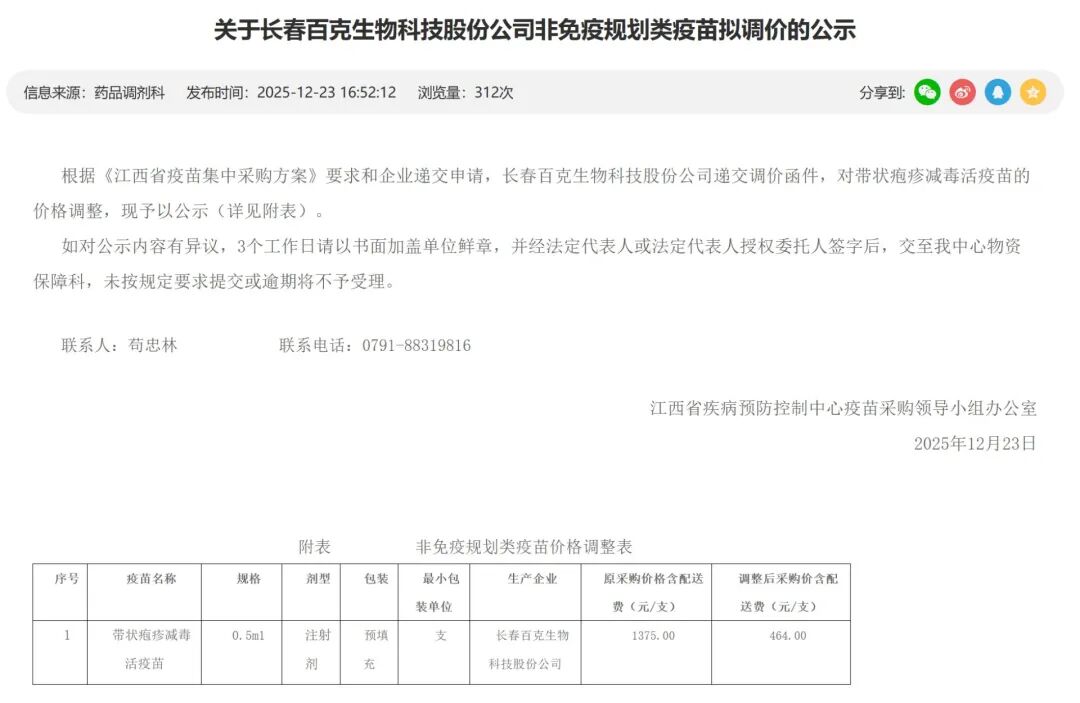
Core Viewpoint - The price reduction of the varicella-zoster vaccine by Baike Biotech has drawn public attention, with the procurement price dropping from 1375 yuan to 464 yuan, a decrease of approximately 66% [1][4]. Group 1: Vaccine Pricing and Market Dynamics - Baike Biotech's varicella-zoster vaccine, which is a live attenuated vaccine, has seen its price significantly reduced, making it more accessible compared to the imported vaccine "Shingrix," which is priced around 1650 yuan even with promotional offers [4][5]. - The imported vaccine "Shingrix" has been offering a "buy one get one free" promotion since Q2 2023, but the total cost remains high compared to the newly priced domestic vaccine [5][10]. - The price reduction aims to enhance vaccination rates among the elderly population, who have shown low willingness to get vaccinated due to high costs and lack of awareness about the disease [7][8]. Group 2: Market Potential and Industry Challenges - The varicella-zoster vaccine market in China is still in its early stages, with only two vaccines currently available: the imported "Shingrix" and Baike Biotech's domestic vaccine [4][10]. - Despite the price drop, Baike Biotech reported a significant decline in revenue, with a 53.8% year-on-year decrease in revenue to 470 million yuan and a net loss of 160 million yuan in the first three quarters of the year [10][11]. - The company is focusing on increasing public awareness and accessibility of the vaccine through promotional activities and partnerships with healthcare providers to improve market penetration [11].

当带状疱疹疫苗开始“买一送一”
3 6 Ke· 2025-11-26 12:15
Core Insights - The article discusses the competitive landscape of the shingles vaccine market in China, highlighting the unexpected price war initiated by GSK's vaccine, Shingrix, which is being promoted through a "buy one get one free" offer [1][2][4]. Market Dynamics - Shingrix's original price for two doses is 3,260 yuan, but with the promotion, the cost is reduced to 1,652 yuan, effectively a 50% discount [2]. - The vaccine has shown exceptional efficacy, reducing the risk of shingles by 97.2% in individuals aged 50 and above, and offers long-lasting immunity [2][7]. Competitive Landscape - Following GSK's price reduction, domestic competitor, Baike Biological, has also adjusted its pricing strategy, with its vaccine now priced around 1,400 yuan, and further discounts being offered [4]. - The domestic market for shingles vaccines has not met expectations, with Baike Biological reporting a significant drop in sales and revenue due to high return rates and low demand [8]. Consumer Behavior and Market Potential - Despite the high demand for shingles vaccines among the elderly population, the uptake has been low, with only 0.1% vaccination rate among those aged 50 and above in 2021 [9][11]. - The mismatch between the high cost of the vaccine and the financial capability of the target demographic is a significant barrier to market growth [11]. Challenges in Market Expansion - The competitive landscape in China is more fragmented compared to overseas markets, with both imported and domestic vaccines vying for market share, complicating the expansion efforts for Shingrix [11][13]. - There is a lack of awareness and understanding of the vaccine among the target demographic, which hinders its adoption [12][13].
中新健康丨HPV疫苗市场争夺白热化 政策调整对企业影响几何?
Zhong Guo Xin Wen Wang· 2025-09-12 15:21
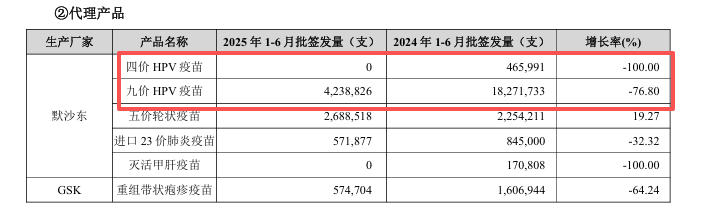
Core Viewpoint - The Chinese government is set to include HPV vaccination services for eligible girls in the national immunization program, which may positively impact the competitive landscape of the vaccine industry [1][3]. Group 1: Market Dynamics - The HPV vaccine market in China is transitioning from a "blue ocean" to a "red ocean," indicating increased competition among vaccine manufacturers [3]. - The introduction of domestic two-valent HPV vaccines has improved accessibility and affordability, breaking the previous monopoly of imported nine-valent vaccines [2][3]. - Financial data shows significant revenue declines for major players: Watson Bio's revenue dropped by 19.47% to 1.154 billion yuan, WanTai Bio's revenue fell by 38.25% to 844 million yuan, and Zhifei Biological's revenue decreased by 73.06% to 4.919 billion yuan in the first half of 2025 [3][4]. Group 2: Product and Pricing Information - WanTai Bio's nine-valent HPV vaccine "Xinkening®9" is priced at 499 yuan per dose, approximately 40% lower than imported alternatives [2]. - The batch issuance of Merck's four-valent HPV vaccine was zero in the first half of 2025, while the nine-valent vaccine saw a 76.8% decline in issuance compared to the previous year [4][5]. Group 3: Future Prospects - There is a strong possibility that the two-valent HPV vaccine will be included in the national immunization program, which could significantly boost sales [7]. - The male HPV vaccine market is also becoming competitive, with Merck expanding its HPV vaccine indications to males aged 9-26, while domestic companies are conducting clinical trials for male indications [8].


HPV疫苗将纳入国家免疫规划,疫苗企业业绩承压,政策红利或带来行业拐点?
3 6 Ke· 2025-09-12 11:16
Group 1: HPV Vaccine Inclusion in National Immunization Program - The National Health Commission announced the inclusion of HPV vaccination services for eligible girls in the national immunization program to enhance women's health protection [1][2] - Since 1978, China's immunization program has expanded from 4 vaccines to 14 vaccines preventing 15 infectious diseases [1] - HPV is a major cause of cervical cancer, and vaccination is a primary preventive measure, with existing vaccines effectively preventing over 70% of cervical cancer cases [1][2] Group 2: Cervical Cancer Statistics - In 2022, China reported 151,000 new cervical cancer cases, ranking fifth among female cancers, with 56,000 deaths, ranking sixth in female cancer mortality [2] Group 3: Free Vaccination Initiatives - Several regions have initiated free HPV vaccination programs, with Beijing starting free vaccinations for girls entering the first year of junior high school in 2025 [3] - As of August 2023, 18 provinces and several cities have included HPV vaccination in government initiatives, covering approximately 60% of eligible girls [3] Group 4: Market Dynamics and Company Performance - The inclusion of HPV vaccines in the national program is expected to improve public awareness and accessibility, potentially stabilizing sales for vaccine companies [4][5] - Companies like Watson Bio and Zhifei Biological have faced performance pressures due to declining public willingness to vaccinate and increased competition [7] - Watson Bio reported a revenue of 1.154 billion yuan in the first half of the year, down 19.47%, while Zhifei Biological's revenue was 4.919 billion yuan, down 73.06% [7] Group 5: Pricing and Competition - The first domestic two-valent HPV vaccine was priced at 499 yuan per dose, significantly lower than imported alternatives, which were priced over 1,300 yuan per dose [8] - The market for nine-valent HPV vaccines has become competitive, with companies like Zhifei Biological reducing prices and offering promotions to maintain market share [9]
二价不灵,九价宫颈癌疫苗能否拯救万泰生物?
Xin Lang Cai Jing· 2025-07-28 02:30
Core Viewpoint - Wantaibio (603392.SH) is facing its first loss since its listing, with a projected net profit loss of between 130 million to 160 million yuan for the first half of 2025, following a significant decline in performance since 2022 [3][4]. Financial Performance Summary - In 2022, Wantaibio achieved a peak revenue of 11.185 billion yuan and a net profit of 4.736 billion yuan, primarily driven by its vaccine products [4]. - The company's revenue dropped by 50.73% in 2023, with a net profit decline of 73.65%, and continued to decrease in 2024, with revenues of 5.511 billion yuan and 2.245 billion yuan, and net profits of 1.248 billion yuan and 106 million yuan respectively [3][4]. - In Q1 2025, Wantaibio reported a loss of 52.7769 million yuan, indicating a significant downturn in financial health [4]. Product Dependency and Market Challenges - The decline in Wantaibio's performance is attributed to its heavy reliance on a single product, the bivalent HPV vaccine, which has seen a drop in sales following the introduction of competing products from Merck [3][6]. - The company increased its production and inventory of the bivalent vaccine in 2022, but faced a 41.94% drop in sales volume in 2023, while inventory levels rose by 91.62% [8]. New Product Launch - Wantaibio has launched a new nine-valent HPV vaccine, "Xinkening 9," priced at 499 yuan per dose, significantly lower than Merck's offering at 1320 yuan [9]. - Despite the competitive pricing, the late entry into the market poses challenges, as Merck's nine-valent vaccine has already established a foothold, and other domestic competitors are also advancing in this space [9][10].
实控人正筹划控制权变更,康华生物业绩下滑困局待解
Xin Jing Bao· 2025-07-15 11:44
Core Viewpoint - Kanghua Biotech is undergoing a potential change in control as its major shareholder and actual controller, Wang Zhentao, is planning to transfer control, which may lead to a change in the company's major shareholder and actual controller [1][2][4] Company Performance - Kanghua Biotech's performance has declined in 2024, with revenue and net profit attributable to shareholders decreasing by 9.23% and 21.71% respectively [3] - In Q1 2024, revenue and net profit attributable to shareholders fell by 55.7% and 86.15% respectively [3] - The company's core product, the human diploid cell rabies vaccine, saw a dramatic drop in batch issuance by 43.83% in 2024 [6][8] Shareholder Situation - Wang Zhentao and his associated entity, Aokang Group, hold a combined 22.8% of Kanghua Biotech's shares, with 79.9% of their holdings pledged as collateral [3] - Wang Zhentao has also pledged 99.08% of his shares in Aokang International, indicating significant financial pressure [3] Market Competition - Kanghua Biotech's main product faces increasing competition, particularly from Kangtai Biotech, which launched a competing human diploid cell rabies vaccine in April 2024 [8] - The market for human rabies vaccines is becoming more competitive, with other companies like Chengda Biotech and Zhifei Biological also entering the market [9] Product Pipeline and Future Prospects - Kanghua Biotech is heavily reliant on its human diploid cell rabies vaccine, which accounted for over 97% of its revenue in 2024 [5] - The company has seven projects in its research pipeline, including vaccines for norovirus and meningococcal disease, but only one has received approval for clinical trials [10][11] - The company is exploring various strategies to enhance its product pipeline, including partnerships, investments, and acquisitions [11]
HPV疫苗市场争夺战升级:二价失宠,国产九价获批,千亿蛋糕如何切割?
2 1 Shi Ji Jing Ji Bao Dao· 2025-06-04 08:18
Core Viewpoint - HPV infection is a significant public health issue globally, and vaccination is the best preventive measure against it. The market for HPV vaccines in China is facing challenges, particularly for bivalent vaccines, due to increased competition and the expansion of the age range for the nine-valent vaccine, impacting sales and revenue for companies like Wantai Biological Pharmacy [1][2][3]. Company Performance - Wantai Biological reported a 2024 revenue of 2.245 billion yuan, a year-on-year decline of 59.25%, and a net profit of 106 million yuan, down 91.49%, which fell short of analyst expectations [1]. - The decline in revenue and profit is attributed to market fluctuations, government procurement policies, and the competitive landscape with the nine-valent vaccine [1]. Market Dynamics - The HPV vaccine market in China is projected to grow from 135 billion yuan in 2020 to 690 billion yuan by 2030, with a compound annual growth rate of 17.7% [4]. - The nine-valent vaccine is expected to capture a significant market share due to its higher efficacy in preventing cervical cancer compared to bivalent and quadrivalent vaccines [4][5]. Competitive Landscape - Merck holds over 80% market share in the HPV vaccine sector, with its nine-valent vaccine being the only one that meets clinical trial efficacy standards [7][8]. - Domestic companies, including Wantai Biological, are developing their own nine-valent vaccines, with expectations for market entry around 2025 [7][11]. Regulatory and Clinical Developments - Wantai Biological's nine-valent HPV vaccine has been approved for use in women aged 9-45, with different dosing schedules based on age [3]. - The approval and market entry of domestic nine-valent vaccines are anticipated to intensify competition and potentially lead to price wars [11]. Public Health Impact - The World Health Organization reports an increase in HPV vaccination coverage among girls globally, indicating a growing acceptance and demand for HPV vaccines [4][5]. - There is significant room for improvement in vaccination rates in China, suggesting potential for market expansion [5][10]. Future Outlook - The HPV vaccine market in China is expected to experience rapid growth due to supportive government policies and increasing public health awareness [10][12]. - Companies are encouraged to invest in research and development for higher-valent vaccines and improve their market strategies to enhance their competitive positions [12][13].