感维

Search documents
2025年带状疱疹疫苗行业推荐:老龄化趋势叠加慢病负担,带状疱疹疫苗技术驱动型企业盘点
Tou Bao Yan Jiu Yuan· 2026-01-23 12:06
Investment Rating - The report recommends investment in the shingles vaccine industry, highlighting its growth potential driven by aging population and chronic disease burden [1]. Core Insights - The shingles vaccine market in China is entering an accelerated cultivation phase due to the expansion of the elderly population, increased awareness of pain and complications, and improvements in adult immunization services [4]. - The market is transitioning from a single high-end supply model to a layered supply and multi-scenario penetration approach, with a focus on commercial capabilities such as channel coverage and service efficiency [4]. - The industry is expected to grow significantly, with the market size projected to reach 56.68 billion yuan by 2030, growing at a compound annual growth rate (CAGR) of 29.08% from 2024 [9]. Market Background - The shingles vaccine industry is defined as encompassing the development of antigens and adjuvants, production quality management, cold chain logistics, vaccination services, and public health education [5]. - The industry has evolved from the initial development of live attenuated vaccines to the emergence of recombinant subunit vaccines, leading to a diversified and upgraded market structure [6][7]. Market Status - The market size for shingles vaccines in China was 3.998 billion yuan in 2024, with a significant increase in demand driven by the aging population and chronic disease burden [9][10]. - The introduction of high-efficacy vaccines like GSK's Shingrix has created a new consumption category, while domestic vaccines like Changchun Baku's live attenuated vaccine have entered the market, marking a dual-product competition era [9]. Market Competition - The competitive landscape features a tiered structure, with leading companies including Baike Biological, Jifei Biological, and Jiachen Xihai, while others like Lvzhu Biological and Ruike Biological follow [17][21]. - The report emphasizes the importance of product and technology platform positioning, supply chain certainty, and commercialization capabilities in determining competitive advantages [13][14][15]. Development Trends - The aging trend and immune decline are expected to drive sustained demand for adult vaccinations, with the elderly population projected to exceed 400 million by 2035 [32]. - The self-paid nature of shingles vaccines influences market penetration, with domestic vaccines offering more accessible pricing compared to imported options [33]. - The evolution of vaccination channels and service systems, including integrated vaccination networks and digital follow-ups, is crucial for improving vaccination completion rates [34]. - The internationalization of vaccine manufacturing and supply chain capabilities will play a significant role in the future development of the industry [35].


大跳水!这种国产疫苗从1300多元降到不足500元,进口疫苗“买一送一”!接种率不到1%,为啥大家不愿打?
Mei Ri Jing Ji Xin Wen· 2025-12-25 09:05
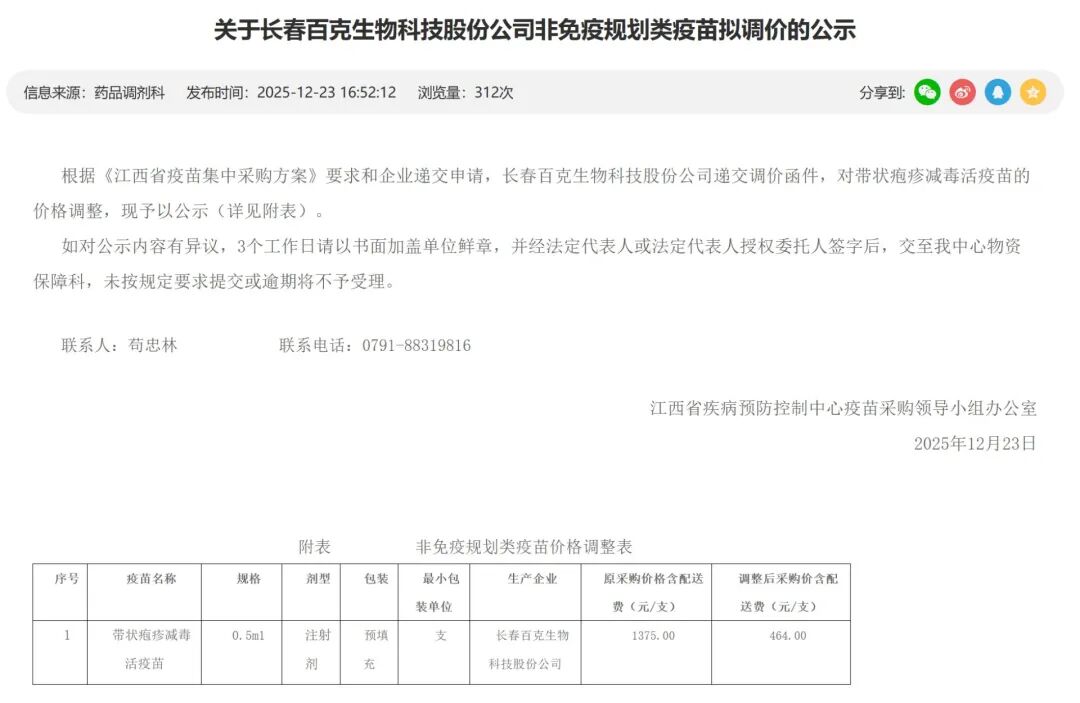
Core Viewpoint - The price reduction of the varicella-zoster vaccine by Baike Biotech has drawn public attention, with the procurement price dropping from 1375 yuan to 464 yuan, a decrease of approximately 66% [1][4]. Group 1: Vaccine Pricing and Market Dynamics - Baike Biotech's varicella-zoster vaccine, which is a live attenuated vaccine, has seen its price significantly reduced, making it more accessible compared to the imported vaccine "Shingrix," which is priced around 1650 yuan even with promotional offers [4][5]. - The imported vaccine "Shingrix" has been offering a "buy one get one free" promotion since Q2 2023, but the total cost remains high compared to the newly priced domestic vaccine [5][10]. - The price reduction aims to enhance vaccination rates among the elderly population, who have shown low willingness to get vaccinated due to high costs and lack of awareness about the disease [7][8]. Group 2: Market Potential and Industry Challenges - The varicella-zoster vaccine market in China is still in its early stages, with only two vaccines currently available: the imported "Shingrix" and Baike Biotech's domestic vaccine [4][10]. - Despite the price drop, Baike Biotech reported a significant decline in revenue, with a 53.8% year-on-year decrease in revenue to 470 million yuan and a net loss of 160 million yuan in the first three quarters of the year [10][11]. - The company is focusing on increasing public awareness and accessibility of the vaccine through promotional activities and partnerships with healthcare providers to improve market penetration [11].

降价66%!国产带状疱疹疫苗大降价,进口疫苗“买一送一” 爸妈为什么还在纠结?
Mei Ri Jing Ji Xin Wen· 2025-12-25 05:13
Core Viewpoint - The price of the varicella-zoster virus vaccine produced by Changchun Baike Biotechnology Co., Ltd. has been reduced by approximately 66%, from 1375 yuan to 464 yuan per dose, aiming to increase vaccination rates among the elderly population [1][4]. Company Summary - Changchun Baike Biotechnology is the only domestic company with a varicella-zoster vaccine currently on the market, and its stock price is 19.19 yuan with a market capitalization of 7.938 billion yuan [1]. - The company reported a significant decline in revenue, with a 53.8% year-on-year decrease to 470 million yuan in the first three quarters, and a net loss of 160 million yuan, primarily due to product returns and price reductions [10][11]. - The company has initiated a discount pricing strategy to enhance public awareness and accessibility of the vaccine, aiming to improve market penetration and correct misconceptions about the disease [11]. Industry Summary - The varicella-zoster vaccine market in China is still in its early stages, having transitioned from a nascent phase (2019-2022) to a growth phase in 2023 with the introduction of domestic vaccines [4]. - The market currently has low penetration rates, with vaccination rates for the varicella-zoster vaccine among the target population being less than 1% [7]. - The competitive landscape is not yet clearly defined, with few domestic players involved, including Baike Biotechnology and others [10]. - The imported vaccine "Shingrix" has also been active in the market, offering promotions such as "buy one, get one free," but remains significantly more expensive than the newly priced domestic vaccine [4][5].
寒潮下慢病隐患凸显,如何破解防控难题?
2 1 Shi Ji Jing Ji Bao Dao· 2025-12-12 09:02
Core Viewpoint - A new wave of cold weather is impacting China, leading to significant temperature drops and increased health risks for chronic disease patients, particularly those with diabetes, who are more susceptible to complications such as shingles due to weakened immune systems [1][2]. Group 1: Health Risks and Challenges - The average daily temperature in most regions of China is expected to drop by 6 to 10 degrees Celsius, with some areas experiencing drops exceeding 14 degrees Celsius [1]. - Diabetes patients face heightened risks during cold weather, as low temperatures can cause blood vessel constriction, leading to blood sugar fluctuations and decreased immunity [1]. - The risk of shingles is 60% higher in diabetes patients compared to the general population, creating a dangerous cycle of pain and elevated blood sugar levels [2]. Group 2: Vaccination and Awareness - Despite high awareness of shingles (80%-90%) and vaccine knowledge (60%-80%), the vaccination rate in China remains low at only 1%-2% [3]. - Community health initiatives, such as personalized vaccine education prescriptions, are being implemented to encourage proactive health measures among chronic disease patients [3]. Group 3: Market Potential and Industry Growth - The domestic shingles vaccine market was valued at 3.73 billion yuan in 2022 and is projected to reach 5.63 billion yuan by the end of 2025, with a compound annual growth rate of 16.4% [4]. - The approval of new shingles vaccines, including one specifically for high-risk groups, indicates a growing market and increasing competition among pharmaceutical companies [4][5]. - Local governments are introducing policies to reduce vaccination costs, further promoting vaccine uptake and addressing the "knowledge-action gap" in vaccination [5].
专家提醒:当“三高”遇上“缠腰龙”,多病叠加风险不容小觑
2 1 Shi Ji Jing Ji Bao Dao· 2025-12-08 04:55
Group 1 - The article highlights the increasing prevalence of chronic diseases, particularly hypertension, diabetes, and hyperlipidemia, among the aging population in China, with a notable trend of younger individuals being affected [1][2] - The National Health Commission plans to develop a comprehensive service model focusing on chronic diseases during the 14th Five-Year Plan, emphasizing the integration of prevention, treatment, rehabilitation, and management [1][2] - The article discusses the rising incidence of infectious diseases, such as shingles and influenza, among chronic disease patients, necessitating a shift from traditional single-disease management to a multi-disease collaborative management approach [2][3] Group 2 - The approval of a new indication for the recombinant shingles vaccine marks a significant step in protecting adults with weakened immune systems from shingles, which is crucial for managing infectious diseases [3][4] - Chronic disease patients, particularly those with diabetes, have a significantly higher risk of developing shingles, with diabetes patients facing a 60% increased risk compared to the general population [5][6] - The article emphasizes the importance of vaccination as a standard practice in managing chronic diseases, as it can reduce the incidence of shingles and its complications, thereby alleviating the burden on healthcare resources [6][7] Group 3 - The market for shingles vaccines in China is projected to grow significantly, with the market size expected to reach 5.63 billion yuan by the end of 2025, reflecting a compound annual growth rate of 16.4% [8] - Community health services are increasingly promoting vaccine prescriptions to enhance accessibility and encourage adult vaccination, which has shown positive results in increasing vaccination rates [8]
当带状疱疹疫苗开始“买一送一”
3 6 Ke· 2025-11-26 12:15
Core Insights - The article discusses the competitive landscape of the shingles vaccine market in China, highlighting the unexpected price war initiated by GSK's vaccine, Shingrix, which is being promoted through a "buy one get one free" offer [1][2][4]. Market Dynamics - Shingrix's original price for two doses is 3,260 yuan, but with the promotion, the cost is reduced to 1,652 yuan, effectively a 50% discount [2]. - The vaccine has shown exceptional efficacy, reducing the risk of shingles by 97.2% in individuals aged 50 and above, and offers long-lasting immunity [2][7]. Competitive Landscape - Following GSK's price reduction, domestic competitor, Baike Biological, has also adjusted its pricing strategy, with its vaccine now priced around 1,400 yuan, and further discounts being offered [4]. - The domestic market for shingles vaccines has not met expectations, with Baike Biological reporting a significant drop in sales and revenue due to high return rates and low demand [8]. Consumer Behavior and Market Potential - Despite the high demand for shingles vaccines among the elderly population, the uptake has been low, with only 0.1% vaccination rate among those aged 50 and above in 2021 [9][11]. - The mismatch between the high cost of the vaccine and the financial capability of the target demographic is a significant barrier to market growth [11]. Challenges in Market Expansion - The competitive landscape in China is more fragmented compared to overseas markets, with both imported and domestic vaccines vying for market share, complicating the expansion efforts for Shingrix [11][13]. - There is a lack of awareness and understanding of the vaccine among the target demographic, which hinders its adoption [12][13].
主力疫苗再破局:GSK欣安立适扩龄至风险增加成人,百亿市场迎新增量
2 1 Shi Ji Jing Ji Bao Dao· 2025-11-05 12:47
Core Viewpoint - The approval of the expanded indication for GSK's recombinant shingles vaccine, Shingrix (RZV), to include adults aged 18 and above with increased risk of shingles due to known diseases or treatments marks a significant advancement in the prevention of shingles in high-risk populations in China [1][2]. Group 1: Vaccine Approval and Market Impact - The National Medical Products Administration (NMPA) in China has officially approved the expanded indication for Shingrix, allowing its use in adults aged 18 and above who are at increased risk of shingles due to immunocompromising conditions [1]. - This approval expands the vaccine's protective coverage from the initial target group of adults aged 50 and above, thereby creating new growth opportunities for GSK in both the global and Chinese vaccine markets [1][5]. - The approval represents a breakthrough in the prevention of shingles for high-risk groups, as it is the first and only shingles vaccine approved for this demographic in China [2][4]. Group 2: Clinical Need and Disease Burden - Shingles, caused by the varicella-zoster virus, poses a significant disease burden, particularly among individuals aged 50 and above, with approximately 1.56 million new cases reported annually in this age group in China [3]. - The risk of shingles increases with age, and certain conditions such as HIV infection and malignancies further elevate this risk, with immunocompromised individuals facing a 2.3 to 4.0 times higher risk compared to the general population [3]. Group 3: Market Potential and Growth - The domestic shingles vaccine market in China is projected to grow significantly, with a market size of 3.73 billion yuan in 2022 expected to reach 5.63 billion yuan by the end of 2025, reflecting a compound annual growth rate (CAGR) of 16.4% [6]. - GSK's Shingrix vaccine targets a population of approximately 340 million people aged 50 and above in China, with potential market space estimated at around 65 billion yuan if penetration rates reach 10% [6][7]. - The newly approved indication for high-risk adults represents an untapped market segment with substantial growth potential, driven by a large patient base and a strong demand for preventive measures [6][8]. Group 4: Competitive Landscape - Currently, there are two approved shingles vaccines in China: GSK's Shingrix and Baike Biotech's vaccine, which utilize different technological approaches [9]. - Shingrix has established itself as a core growth engine for GSK's vaccine business, demonstrating strong revenue stability with sales of 3.364 billion pounds in 2024 [9][10]. - Continuous investment in research and development is crucial for maintaining the competitive edge of Shingrix, with GSK planning further studies to assess the vaccine's efficacy and safety in high-risk populations [10].

主力疫苗再破局:GSK欣安立适扩龄至风险增加成人,百亿市场迎新增量
21世纪经济报道· 2025-11-05 12:40
Core Viewpoint - The approval of the recombinant zoster vaccine (RZV) for adults aged 18 and above with increased risk of herpes zoster marks a significant expansion of its market potential in China, providing new growth momentum for GSK's vaccine sales [1][2][4]. Group 1: Vaccine Approval and Market Expansion - GSK's RZV has been approved by the National Medical Products Administration (NMPA) for use in adults aged 18 and above who are at increased risk of herpes zoster due to known diseases or treatments that cause immune deficiency [1][2]. - This approval expands the vaccine's protective range, which was initially limited to individuals aged 50 and above since its launch in June 2020 [1][3]. - The vaccine is the first and only one approved in China for this specific high-risk group, addressing a significant clinical gap in prevention [2][4]. Group 2: Disease Burden and Risk Factors - Herpes zoster, commonly known as "shingles," is a significant health burden in China, particularly among individuals aged 50 and above, with approximately 1.56 million new cases reported annually in this age group [2][3]. - The risk of developing herpes zoster increases with age, and certain conditions such as HIV infection and malignancies further elevate this risk, with affected individuals being 2.3 to 4.0 times more likely to contract the disease [3][6]. Group 3: Market Potential and Growth - The domestic herpes zoster vaccine market is projected to grow significantly, with a market size of 3.73 billion yuan in 2022 expected to reach 5.63 billion yuan by 2025, reflecting a compound annual growth rate (CAGR) of 16.4% [5]. - GSK's vaccine targets a population of 340 million people aged 50 and above in China, and with an estimated peak penetration rate of 10%, the market potential could reach approximately 65 billion yuan [5][6]. - The newly approved indication for high-risk adults represents an untapped market segment with substantial growth potential, driven by a large population base and a strong demand for preventive measures [5][6]. Group 4: Competitive Landscape - Currently, there are two approved herpes zoster vaccines in China: GSK's RZV and Baike Biological's "Ganwei," which utilize different technological approaches [8]. - GSK's RZV, as a recombinant vaccine, has established itself as a core growth engine for the company's vaccine business, demonstrating strong revenue stability and market competitiveness [8][9]. - Continuous investment in research and development is crucial for maintaining the competitive edge of RZV, with ongoing studies aimed at assessing its efficacy and safety in high-risk populations [9].

核心带疱疫苗或在明年上市,能否将绿竹生物-B(02480)拖出“流动性陷阱”?
智通财经网· 2025-05-07 01:36
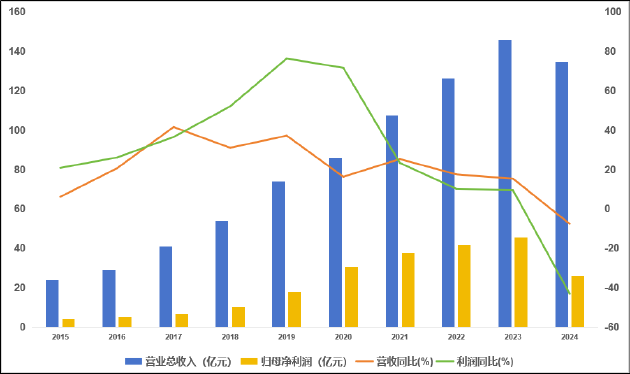
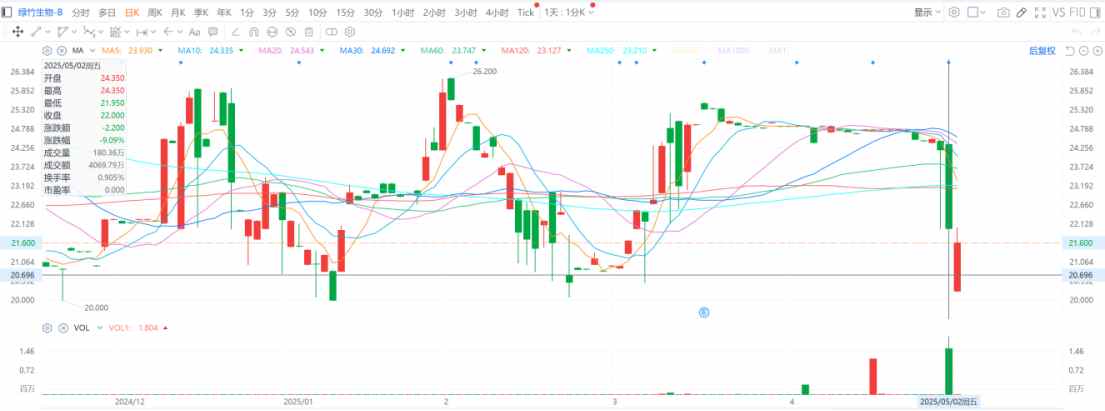
Group 1: Company Performance - Baike Bio reported a revenue of approximately 1.229 billion RMB for 2024, a year-on-year decline of 32.64% [1] - The net profit attributable to shareholders was around 232 million RMB, down 53.67% year-on-year [1] - The decline in performance is primarily attributed to reduced sales of the shingles vaccine [1] Group 2: Green Bamboo Bio's Situation - Green Bamboo Bio's stock price fell by 9.09% on May 2, leading to significant sell-offs, with a trading volume of 1.8036 million shares, the highest since 2024 [2] - The company has experienced a drastic decline in liquidity, with 10 months in the past 17 months having a monthly trading volume of less than 200,000 shares [2] - Green Bamboo Bio's market capitalization is currently around 4.1 billion HKD, below the 7 billion HKD threshold required for inclusion in the Hang Seng Index [4] Group 3: Financials of Green Bamboo Bio - Green Bamboo Bio reported a net loss of 168 million RMB for the year, a reduction of 32.5% compared to the previous year's loss of 249 million RMB [4] - The company has not yet commercialized any products, with total revenue remaining at zero [4] - Research and development expenses decreased by 21.7% to 135 million RMB [4] Group 4: Product Development - Green Bamboo Bio's core product, the recombinant shingles vaccine LZ901, has completed Phase III clinical enrollment and submitted a Biologics License Application (BLA) [6] - LZ901 is expected to be the first shingles vaccine with a tetrameric molecular structure, targeting adults aged 50 and above [6] - The vaccine is positioned to compete with GSK's Shingrix, which has seen significant sales growth, reaching 3.446 billion GBP in 2023 [8] Group 5: Market Dynamics - The domestic vaccine industry is facing structural adjustment pressures, with a decline in consumer willingness to receive vaccinations and a significant drop in demand for self-paid vaccines [10] - The competition in the vaccine market is intense, with over 10 manufacturers competing in areas like rabies and influenza vaccines [10] - The market for shingles vaccines is currently less competitive, with only Baike Bio's Ganwei and GSK's Shingrix available, providing an opportunity for LZ901 if it commercializes as expected [10] Group 6: Challenges Ahead - Despite the potential of LZ901, the company may struggle to significantly improve its financial structure and fundamentals due to market education challenges and profit margin pressures [11] - The current vaccination rate for shingles in China is only 0.1%, significantly lower than in developed countries, indicating a need for market education [10]
长春高新业绩跳水背后:短效水针集采影响显现 带状疱疹疫苗高开低走
Xin Lang Zheng Quan· 2025-04-23 02:34
Core Viewpoint - Changchun High-tech's financial performance has significantly declined, with a 7.55% drop in revenue and a 43.01% plunge in net profit for 2024, marking the company's darkest period in its 28-year history [1][2]. Financial Performance - In 2024, Changchun High-tech reported a total revenue of 13.466 billion yuan, down 7.55% year-on-year, and a net profit of 2.583 billion yuan, down 43.01% year-on-year [2]. - The first quarter of 2025 continued the downward trend, with revenue decreasing by 5.66% and net profit falling by 44.95% [2]. Subsidiary Performance - Key subsidiaries include Jinsai Pharmaceutical, Baike Biological, Huakang Pharmaceutical, and Gaoxin Real Estate, with Jinsai Pharmaceutical and Baike Biological being the main revenue contributors [4]. - Jinsai Pharmaceutical generated revenue of 10.671 billion yuan in 2024, a decrease of 3.73%, and a net profit of 2.678 billion yuan, down 40.67% [4]. - Baike Biological's revenue was 1.229 billion yuan, down 32.64%, with a net profit of 232 million yuan, down 53.67% [4]. Market Dynamics - The decline in performance is primarily attributed to the significant drop in profits from Jinsai Pharmaceutical, which accounted for 99.60% of Changchun High-tech's net profit in 2023 [5]. - Jinsai Pharmaceutical's core products include various growth hormone products, with approximately 90% of Changchun High-tech's total revenue coming from this subsidiary [5]. Competitive Landscape - Jinsai Pharmaceutical held an 84.2% market share in the growth hormone industry in 2023, but competition has intensified due to the impact of centralized procurement [6]. - The introduction of centralized procurement for short-acting water injections in 2024 is expected to further affect the company's performance [7]. Vaccine Performance - Baike Biological's shingles vaccine initially showed strong growth, with a revenue increase of 70.30% in 2023, but faced a significant decline in 2024, with revenue dropping by 32.64% [8]. - The shingles vaccine revenue fell to 251 million yuan in 2024, a decrease of 71.54%, with sales volume down by 69.8% [8].