氯虫苯甲酰胺

Search documents
农药展会调研电话会议汇报-库存低位-核心品种价格传导顺畅
2026-03-20 02:27
Summary of Agricultural Chemicals Industry Conference Call Industry Overview - The agricultural chemicals industry has entered a cyclical recovery phase after 3-4 years of downturn, with manufacturers showing a strong reluctance to sell due to rising oil prices that bolster cost support and translate to demand [1][2] - Overall inventory across the supply chain is at historical lows, with safety stock at approximately 20%, and overseas inventory significantly lower than in 2023-2024, indicating a strong need for replenishment despite high prices [1][2] Key Price Movements - Glyphosate prices increased by 9.59% to 27,000 CNY/ton, with a target price of 30,000 CNY/ton set by companies; new capacity in 2026 is expected to be only 50,000 tons, maintaining a favorable supply-demand balance [1][9] - Mancozeb prices surged by 7.4% to 30,000 CNY/ton, driven by supply disruptions from Dow Chemical and UPL's production halt in India [1][12] - Chlorantraniliprole prices rose from 190,000 CNY to 230,000-250,000 CNY/ton, reflecting a 20%-30% increase due to regulatory hurdles and shutdowns of illegal capacities [1][16] Market Dynamics - The agricultural chemicals market is significantly influenced by rising oil prices, which increase production costs and subsequently elevate agricultural product prices, enhancing planting intentions and catalyzing demand for agricultural chemicals [2] - The market sentiment is cautious, with many manufacturers choosing to halt quotations and distributors reluctant to sell existing stock, anticipating further price increases [2] Competitive Landscape - Chinese agricultural chemicals have a competitive edge over Indian products due to supply chain advantages and lower production costs, despite India having some strengths in pyrethroid products [7][8] - The South American market presents opportunities for Chinese companies as multinational firms lose market share due to high prices and local purchasing habits favoring cost-effective products [8] Inventory and Order Status - Domestic and overseas inventories are low, with overseas multinational companies also reluctant to stockpile, indicating that any price spikes due to unexpected events will not deter replenishment needs [4][5] - During the recent trade fair, actual order volumes were low, but there was a high level of intent orders, particularly from South American clients, despite reduced participation due to geopolitical tensions [5] Product Substitution and Pricing Strategies - Clear substitution relationships exist among various agricultural chemicals, necessitating careful monitoring of competitors' pricing strategies [6] - Leading companies are currently cautious in their pricing strategies, assessing market conditions before making adjustments [6] Future Outlook - The glyphosate market is expected to maintain upward price momentum if demand remains stable, with companies optimistic about future price trends [10] - The mancozeb market is also viewed positively, with significant price increases anticipated due to supply constraints and shifting consumer preferences towards traditional fungicides [12][13] - Chlorantraniliprole's price outlook remains strong due to supply chain challenges and regulatory issues affecting production [15][16] Conclusion - The agricultural chemicals industry is poised for a recovery phase, driven by low inventory levels, rising prices, and favorable supply-demand dynamics. Chinese companies are well-positioned to capitalize on opportunities in both domestic and international markets, particularly in South America, while navigating competitive pressures from Indian producers.
中农立华20260309
2026-03-10 10:17
Summary of Conference Call Notes Industry Overview - The pesticide industry is currently at the bottom of its cycle, influenced by rising crude oil costs, raw material supply disruptions, and seasonal demand. Key products like chlorantraniliprole and glyphosate have seen significant price increases, with chlorantraniliprole exceeding 255,000 RMB/ton and glyphosate rising to 26,000 RMB/ton, expected to reach 28,000 RMB/ton during the CAC exhibition [2][3] - The industry's "anti-involution" initiative aims to establish guiding prices for products like chlorantraniliprole to ensure prices cover full production costs, although variations in cost structures among companies complicate this effort [2][12] Company Insights - The company maintains a high cash dividend policy, with the second-largest shareholder planning to reduce their stake by up to 2% to enhance liquidity. The CAC exhibition from March 17-19 is seen as a critical point for order placement and price trends [3][12] - The company adheres to a light asset model, focusing on channel and end-user services, with external acquisitions prioritized for expanding overseas C-end markets and domestic supply chain collaborations [2][18] Market Dynamics - Global inventory levels, particularly overseas, are low, leading to cautious replenishment strategies. The market is transitioning from destocking to restocking cycles, but supply-side constraints persist due to excess capacity in raw materials [4] - The recent price surge in chlorantraniliprole is attributed to upstream supply disruptions and seasonal demand peaks, with a notable lack of available stock in the market [5][6] Pricing and Competition - Chlorantraniliprole's price increase is expected to influence other products, with competitors like abamectin and methomyl also experiencing tight supply and potential price hikes [8] - Glyphosate, as the leading pesticide, is crucial for the sector, with recent market sentiment influenced by strategic resource classifications in the U.S. and ongoing legal cases involving Bayer [9] Regulatory and Strategic Actions - The "anti-involution quality inspection" initiative aims to curb low-price competition and establish guiding prices, though challenges remain due to differing production costs among manufacturers [12][13] - The company is exploring overseas expansion through acquisitions, recognizing the complexities of entering traditional markets like Europe and North America [16] Financial Management - The company emphasizes maintaining a high cash dividend ratio and has a strict inventory management policy, with a focus on liquidity and turnover rates [17][23] - Recent adjustments in export tax policies have sparked market interest, particularly regarding glyphosate, but the overall impact on industry profits remains limited [20][21] Upcoming Events - The CAC exhibition is anticipated to be a significant event for order placements and price direction, with many major manufacturers and listed companies participating [26]

农药涨价品种及龙头企业分析
2026-03-01 17:23
Summary of Key Points from Conference Call Records Industry Overview - The conference call discusses the pesticide industry in China, focusing on price trends, supply-demand dynamics, and regulatory impacts for 2025 and 2026 [1][2][5][32]. Price Trends and Key Products - **Acetochlor and Chlorantraniliprole**: Prices significantly increased in 2025 due to supply-side shocks, with acetochlor rising from over 80,000 to 160,000 yuan, primarily due to a 50% capacity reduction from an accident at a company in Ningxia [2][3]. - **Glyphosate**: Experienced a notable price drop in 2025, with fluctuations peaking at over 23,000 yuan and stabilizing around 23,000 yuan by year-end. Future price recovery is anticipated to reach around 26,000 yuan, influenced by overseas policies and domestic supply constraints [3][23]. - **Pyrethroids**: Prices for high-efficiency chlorfluazuron and chlorfluazuron are at a decade low, with potential upward movement dependent on capacity control measures [8]. - **Metsulfuron-methyl**: Short-term price expectations suggest an increase to over 90,000 yuan, with long-term projections reaching 100,000 yuan [9]. Supply-Demand Dynamics - The pesticide industry in 2025 is characterized by a mismatch where production capacity growth outpaces revenue growth, leading to overall price declines despite some product price increases [2][4]. - **Structural Overcapacity**: Products like imidacloprid and certain fungicides are facing structural oversupply due to continued capacity expansions despite stagnant or declining demand [4]. - **Regulatory Impact**: Following safety incidents in early 2026, regulatory bodies are expected to enforce stricter controls on production capacity, particularly targeting companies with sales under 1 billion yuan [5][32]. Regulatory Environment - The regulatory landscape is shifting towards stricter governance, with a focus on controlling production capacities and ensuring compliance among smaller firms. The expectation is for a more significant enforcement phase starting in 2027 [5][32]. - The cancellation of export tax rebates post-April 1, 2026, is anticipated to support price increases for glyphosate, glufosinate, and other products, potentially leading to a "rush to export" behavior [32]. Competitive Landscape - Leading companies in the pesticide sector are expected to face increased pressure, particularly those with revenues below 1 billion yuan, as regulatory measures aim to consolidate the industry and promote larger, more compliant firms [5][32]. - **Jiangshan Co.**: Plans to increase glyphosate production capacity to 120,000 tons, transitioning from liquid to solid forms to reduce logistics costs [16][25]. Conclusion - The pesticide industry is navigating a complex landscape of price volatility, regulatory scrutiny, and competitive pressures. Key products are experiencing varied price trends influenced by supply chain disruptions and regulatory changes, with a clear shift towards consolidation and capacity control expected in the coming years [1][5][32].

未知机构:氯虫苯甲酰胺大幅涨价行业自律促进价格持续上调中泰建材化工孙颖团队-20260228
未知机构· 2026-02-28 02:55
Summary of Key Points Industry Overview - The documents focus on the chlorantraniliprole industry, specifically the price increase of chlorantraniliprole and its key intermediate, k-amine [1][2]. Core Insights and Arguments - On February 26, the price of chlorantraniliprole was raised by 23,500 CNY to 210,000 CNY per ton, reflecting a daily increase of 12.6% [1]. - The Ministry of Emergency Management has initiated nationwide inspections to eliminate illegal production sites for hazardous chemicals, particularly targeting the k-amine precursor involved in a recent accident [1]. - The production of k-amine is complicated by high-risk nitration processes, leading to compliance challenges and the emergence of illegal production enterprises [1]. - The explosion at Youdao Chemical in 2025 has resulted in the shutdown of its 5,000-ton k-amine capacity, causing downstream companies to rely on illegal k-amine production to ensure their operations [1]. Supply and Demand Dynamics - The tightening control over k-amine intermediates is expected to exacerbate supply shortages, as compliant production capacity is scarce [2]. - Currently, only a few leading companies, such as Hongyang, possess the self-sufficient k-amine production capacity required for chlorantraniliprole, while most companies must source it externally [2]. - The China Pesticide Industry Association has mandated that chlorantraniliprole companies cannot sell below the average production cost of 233,000 CNY per ton and must procure raw materials from compliant channels [2]. Investment Recommendations - Companies to watch include: - Hongyang (2,000 tons of chlorantraniliprole and k-amine capacity) - Huilong Co. (2,000 tons of chlorantraniliprole production) - Zhongqi Co. (1,500 tons of chlorantraniliprole production) - Yaben Chemical (2,000 tons of k-acid intermediate) - Lianhua Technology (5,000 tons of k-amine, supplying to FMC) [2]. Risk Factors - Potential risks include lower-than-expected demand and the resumption of production by previously shut-down companies [3].
利尔化学2026年1月19日涨停分析:业绩增长+产能释放+农药需求
Xin Lang Cai Jing· 2026-01-19 03:24
Core Viewpoint - Lier Chemical (SZ002258) experienced a limit-up on January 19, 2026, with a price of 16.38 yuan, marking a 10.01% increase, and a total market capitalization of 13.111 billion yuan [1] Group 1: Company Performance - Lier Chemical reported exceptional performance in 2025, with a net profit growth of 189.07% year-on-year in the third quarter, and an annual net profit forecast growth of 113.62% to 132.19% [2] - The company's operating cash flow increased by 322.30% year-on-year, indicating significant improvement in operational quality and profitability [2] Group 2: Production and Market Demand - The company launched a 20,000 tons/year enzymatic glyphosate project in Hunan, solidifying its position as the largest raw material producer in China [2] - With glyphosate prices remaining low, the cost-effectiveness of products has significantly improved, leading to sustained growth in market demand [2] - Lier Chemical is expected to benefit directly from the increasing demand for glyphosate alternatives, as it continues to expand its market share and receive good orders [2] Group 3: Industry Trends - The recent cessation of glyphosate production and sales by Bayer, a major player in the seed industry, has increased market demand for glyphosate alternatives, positively impacting related stocks [2] - On January 19, there was a noticeable inflow of funds into the pesticide and fertilizer sector, with multiple stocks, including Lier Chemical, hitting their limit-up, indicating a correlated market response [2] Group 4: Technical Analysis - The MACD indicator for Lier Chemical formed a golden cross in early January, and the stock price broke through short-term resistance levels, suggesting a bullish trend [2] - Data from Dongfang Caifu shows a continuous increase in net buying from large orders between January 18 and 19, reflecting strong confidence from major investors in the company [2]

农药退税新政或推动“反内卷”,有望提振价格长期加速转型
Guotou Securities· 2026-01-15 07:08
Investment Rating - The industry investment rating is "Outperform the Market - A" and the rating is maintained [5]. Core Insights - The new pesticide export tax rebate policy is expected to drive a "reverse involution" in the industry, potentially boosting prices and accelerating long-term transformation [1]. - The cancellation of the export tax rebate for certain pesticide products will increase export costs, leading companies to have a strong willingness to maintain prices [2]. - The policy aims to accelerate the elimination of low-quality production capacity and guide the industry towards a high-quality development direction by shifting the export structure from raw materials to formulations [3]. Summary by Sections Short-term Outlook - The upcoming spring farming season and the cancellation of the export tax rebate will provide dual support for pesticide prices, as companies may increase prices to maintain profitability [2]. Long-term Outlook - The domestic pesticide industry is experiencing high growth in investment and new projects, with an expected increase in production capacity of approximately 1.4 million tons per year from 2021 to 2024 [3]. - The policy is expected to improve capacity utilization rates, which are currently low at 66% compared to the national average for large-scale industries [3]. Industry Performance - The industry has shown strong relative performance with a 1-month return of 8.2%, a 3-month return of 10.1%, and a 12-month return of 26.1% [8].
利尔化学(002258) - 002258利尔化学投资者关系管理信息20251224
2025-12-25 03:30
Group 1: Industry Overview - The pesticide industry remains highly competitive, with major pesticide product prices stabilizing at low levels, but global inventory levels are returning to normal, leading to signs of demand recovery and price increases for some products [2] - The market for glyphosate is expected to grow due to increasing product registrations and market promotions, with the company being the largest domestic producer [2][3] Group 2: Product Development and Market Strategy - The company has a 20,000 tons/year enzymatic glyphosate project in Hunan that has commenced production, with normal operational conditions [3] - The company plans to enhance its market share by improving product cost-effectiveness and expanding market demand through new product development [3] Group 3: Future Outlook and Strategic Initiatives - The company is optimistic about the market prospects for chlorantraniliprole and is actively optimizing production processes while constructing production facilities [3] - Future development plans include technological upgrades to existing products, cost reduction, and increasing new profit sources through market expansion and new product launches [3] Group 4: Shareholder Changes - The controlling shareholder, Jiuyuan Group, has announced plans to transfer part of its shares through a public solicitation process, pending approval from relevant authorities, which introduces uncertainty regarding the timing and feasibility of the transfer [3]
创制农药行业专题:中国创制农药有望迎来“Me too ”到“Me better ”跨越
Guoxin Securities· 2025-12-12 11:21
Investment Rating - The report rates the pesticide industry as "Outperform the Market" [1][5] Core Insights - The Chinese pesticide industry is expected to transition from "Me too" to "Me better" in terms of innovation and product development [1][2] - The global pesticide market is projected to reach approximately $77.2 billion in 2024, with a compound annual growth rate (CAGR) of 2.35% over the next decade [1][13] - Non-patented pesticides dominate the market, accounting for 93% of the global pesticide market share, while patented pesticides hold only 7% [1][14] Summary by Sections Pesticide Market Overview - The global pesticide market is expected to be approximately $77.2 billion in 2024, with agricultural pesticides making up $70.1 billion and non-agricultural pesticides $7.1 billion [1][13] - The market share of herbicides, fungicides, and insecticides in the global crop protection market is 47.20%, 24.96%, and 24.97% respectively [1][13] New Pesticide Development Challenges - The difficulty of developing new pesticides has increased significantly, with the average cost of bringing a new pesticide to market now around $300 million and taking approximately 12 years [1][45] - The number of new active ingredients introduced globally every decade has decreased, indicating a growing challenge in pesticide innovation [1][43] China's Pesticide Industry Strength - China has become the world's largest pesticide producer and exporter, with nearly 70% of global active ingredient production and 90% of its production being exported [2][2] - From 2020 to 2024, China accounted for 51.61% of the new pesticides developed globally, establishing itself as a key player in pesticide innovation [2][2] Investment Recommendations - The report recommends focusing on domestic pesticide companies that are actively advancing new pesticide development, including: - Yangnong Chemical: Holds 12 new pesticides with complete independent intellectual property rights [3][4] - Lier Chemical: Promoting patented plant immune activator [3][4] - Limin Chemical: Collaborating with BASF to apply AI in pesticide development [3][4] - Jiangshan Chemical: Preparing for the industrialization of a new herbicide [3][4] Key Company Profit Forecasts - Yangnong Chemical: Rated "Outperform the Market" with an estimated EPS of 3.33 in 2025 and a PE ratio of 19.7 [4] - Lier Chemical: Rated "Outperform the Market" with an estimated EPS of 0.62 in 2025 and a PE ratio of 21.0 [4] - Limin Chemical: Rated "Outperform the Market" with an estimated EPS of 1.26 in 2025 and a PE ratio of 12.7 [4] - Jiangshan Chemical: Rated "Outperform the Market" with an estimated EPS of 1.41 in 2025 and a PE ratio of 16.1 [4]


利尔化学(002258) - 002258利尔化学投资者关系管理信息20251210
2025-12-11 05:50
Group 1: Industry Overview - The pesticide industry remains highly competitive, with major pesticide product prices stabilizing at low levels, but global inventory levels are returning to normal, leading to a slight recovery in demand and prices [2] - The market for glyphosate is expected to grow due to increasing product registrations, market promotions, and production technology improvements [2] Group 2: Company Insights - The company is the largest producer of glyphosate in China, with increasing market share and sales year-on-year [2] - The company is actively pursuing global market registrations for glyphosate, with approvals being obtained progressively [2] Group 3: Product Development and Future Plans - The company is optimistic about the market prospects for chlorantraniliprole, with significant efforts in market layout and production process optimization [3] - Future development plans include continuous technological upgrades, cost reduction, and enhancing product competitiveness, alongside expanding market demand through new product development [3] Group 4: Shareholder Changes - The controlling shareholder, Jiuyuan Group, has announced plans to transfer part of its shares through a public solicitation process, pending approval from relevant authorities [3] - The timeline and certainty of the transfer process remain unclear, and the company will ensure compliance with information disclosure regulations [3]
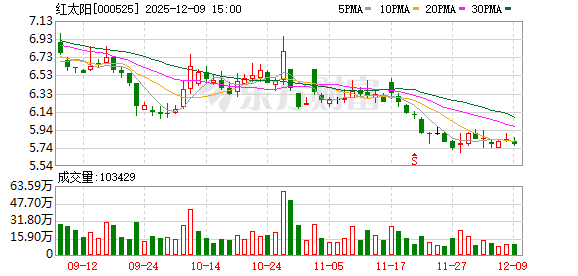
红太阳:努力为股东创造长期稳定回报
Zheng Quan Ri Bao· 2025-12-09 09:41
Core Viewpoint - The company emphasizes its long-term value creation through various strategic initiatives and core competencies [2] Group 1: Core Products and Market Position - The company possesses global influence and technical barriers with core products such as pyridine, paraquat, glyphosate, and chlorantraniliprole [2] Group 2: Technological Advancements and Efficiency - The company is continuously advancing technological upgrades and capacity enhancements to improve industry chain efficiency and cost advantages [2] Group 3: New Energy and Sustainability Initiatives - The company is actively investing in biomanufacturing and biomass new energy sectors, aligning with the national "dual carbon" strategy [2] Group 4: Governance and Compliance - The company is committed to improving its governance structure, enhancing compliance operations, and internal control supervision to lay a foundation for sustainable development [2] Group 5: Focus on Core Business - The company will continue to focus on its main business, enhance operational quality, and strive to create long-term stable returns for shareholders [2]