水滴筹

Search documents
水滴保陷“误触”扣费风波,信任基石正被侵蚀
Xin Lang Cai Jing· 2026-01-13 03:37
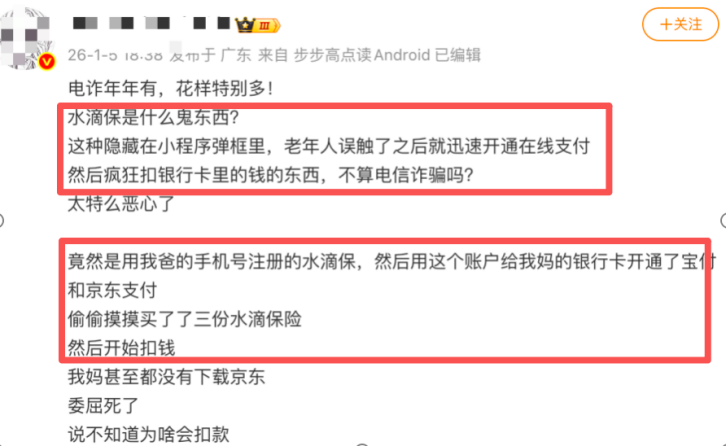
Core Viewpoint - Waterdrop Insurance is facing significant backlash due to complaints about unauthorized deductions from users, particularly affecting elderly individuals who are less digitally savvy [5][7][23]. Group 1: Incident Overview - A recent incident highlighted a middle-aged woman who was charged 194 yuan for an insurance policy she never purchased, leading to widespread outrage on social media [2][21]. - Complaints about Waterdrop Insurance have surged, with over 2,200 complaints reported on the Black Cat Complaints platform, primarily concerning unauthorized charges and automatic renewals [5][23]. - Many users reported similar experiences where elderly family members inadvertently activated online payments through accidental clicks on ads or links, resulting in multiple insurance charges [7][25]. Group 2: User Rights and Challenges - Consumers face significant challenges in reclaiming unauthorized charges, often struggling to reach customer service for assistance [8][26]. - In some cases, banks have stepped in to help customers recover funds, demonstrating the need for better consumer protection mechanisms [8][26]. - The methods through which users are inadvertently signed up for Waterdrop Insurance include clicking on marketing links and being misled by promotional offers [8][26]. Group 3: Business Model Analysis - Waterdrop's business model consists of three main components: Waterdrop Fundraising (crowdfunding), Waterdrop Insurance, and medical services, with the fundraising aspect serving as a traffic generator [9][27]. - As of mid-2025, Waterdrop Insurance generated 13.97 billion yuan in revenue, accounting for 87.74% of total revenue, with a year-on-year profit increase of 27.85% [10][28]. - The company collaborates with over 100 insurance providers, offering nearly 2,000 products, which has significantly reduced customer acquisition costs [10][28]. Group 4: Financial Performance and Market Response - Despite negative publicity, Waterdrop's financial performance remains strong, with a net revenue of 9.75 billion yuan and a net profit of 1.58 billion yuan in Q3 2025 [11][29]. - Insurance-related revenue reached 8.7 billion yuan, marking a 44.8% year-on-year increase, attributed to the integration of AI technology across various operational aspects [12][30]. - However, the company's stock price has plummeted over 80% since its IPO, indicating a disconnect between financial performance and market perception [12][30]. Group 5: Regulatory Pressures and Compliance Issues - Waterdrop Insurance is under increasing regulatory scrutiny, with the Shanghai Consumer Protection Committee highlighting several issues related to its insurance products [13][31]. - The company has faced penalties for misleading marketing practices, including discrepancies between advertised and actual policy terms [14][32]. - Recent fines for false business information further indicate systemic compliance issues within the company [15][33]. Group 6: Industry Reflection and Future Challenges - The internet insurance sector is undergoing significant changes, with new regulations raising entry barriers and prompting the removal of several products from the market [17][35]. - Waterdrop faces the challenge of balancing commercial interests with social responsibility, as its business model blurs the lines between charity and profit [17][35]. - The company's reliance on AI technology for operational efficiency is juxtaposed with ongoing consumer complaints, raising questions about the ethical implications of its business practices [17][35].

收割老人钱包?水滴保陷“乱扣费”质疑
Feng Huang Wang Cai Jing· 2026-01-12 12:29
Core Viewpoint - Waterdrop Insurance is facing significant public backlash due to complaints about unauthorized charges, particularly affecting elderly users, raising questions about its business practices and customer trust [1][3][15] Group 1: Customer Complaints - A viral post on social media highlighted that an elderly individual was charged multiple insurance fees after accidentally activating a payment feature on the Waterdrop app [1] - The complaints are not isolated, with over 2,200 reports on consumer platforms regarding issues like unauthorized charges and automatic renewals [5] - Many users reported similar experiences, often linked to accidental clicks on marketing links or ads while using other services [10][11] Group 2: Business Performance - Waterdrop Insurance, part of Waterdrop Inc., generated 1.397 billion RMB in revenue from its insurance segment in the first half of 2025, contributing 87.74% to the company's total revenue [11] - The operating profit for the insurance business reached 322 million RMB, reflecting a year-on-year growth of 27.85% [11] - Despite the financial success, the company faces challenges in maintaining customer trust due to increasing complaints and regulatory scrutiny [15] Group 3: Regulatory and Operational Challenges - Waterdrop Insurance has been criticized for its marketing practices, including misleading promotional claims that led to regulatory fines [15] - The operational costs for the company were reported at 1.418 billion RMB in the first half of 2025, with insurance costs accounting for 75.73% of total expenses [15] - The company has seen a decline in user satisfaction, dropping from 95% in 2020 to 60% in 2024, indicating a growing disconnect between its charitable image and business operations [15]
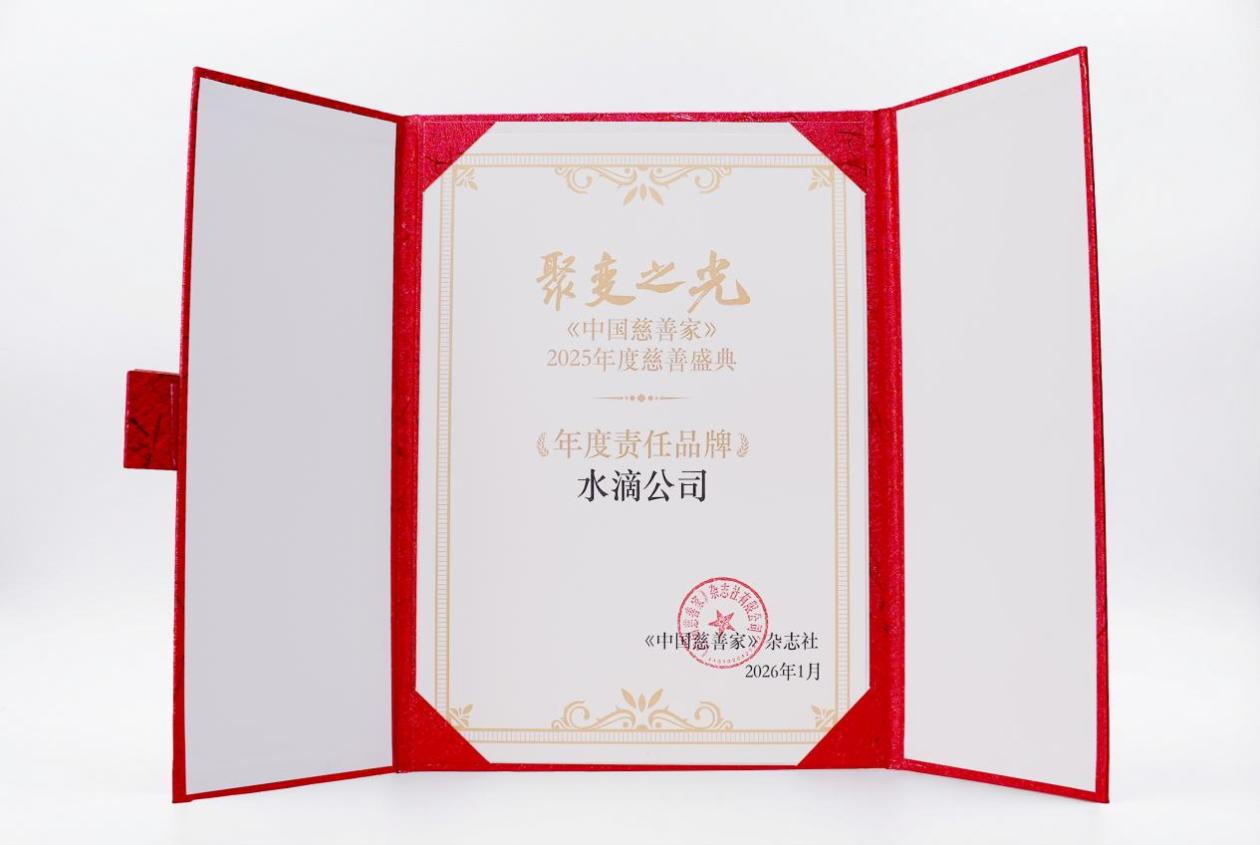
水滴公司荣获2025年度慈善盛典年度责任品牌奖
Huan Qiu Wang· 2026-01-12 10:18
Core Insights - Waterdrop Inc. was awarded the "Annual Responsible Brand" at the "Fusion Light" 2025 Charity Gala, recognizing its ongoing commitment to social responsibility [1] Group 1: Company Overview - Waterdrop Inc. is a leading insurance technology and healthcare platform in China, dedicated to providing health protection solutions to the public [3] - The company focuses on AI technology innovation to enhance user experience and has actively responded to emergencies such as the Tibet earthquake and North China floods [3] Group 2: Social Impact and Initiatives - As of September 2025, Waterdrop Fund has assisted 3.61 million patients, raising 71.2 billion yuan in aid, supported by 485 million caring individuals [4] - The company has partnered with 119 public charitable organizations, launching over 15,500 charity projects and raising more than 1.383 billion yuan for various social issues [4] Group 3: Technological Advancements - Since 2019, Waterdrop has utilized AI to address supply-side deficiencies in insurance, developing the "Waterdrop AI Insurance Expert" capable of engaging in natural dialogue for up to 50 minutes [5] - The company has introduced diverse inclusive products targeting specific groups such as the elderly and those with pre-existing conditions, enhancing accessibility and affordability of insurance [5]
专家访谈:多方共治是实现大病筹款行业可持续发展的必然选择
Yang Guang Wang· 2025-12-31 02:48
Core Viewpoint - The roundtable discussion focused on the high-quality development path of the serious illness fundraising industry, emphasizing the importance of information authenticity, fund security, and responsibility allocation in the context of the implementation of the "Management Measures for Personal Assistance Online Service Platforms" [1][2]. Group 1: Industry Development and Challenges - Experts believe that serious illness fundraising is a beneficial supplement to the social assistance system and medical security construction, with multi-party governance being essential for sustainable development [1][9]. - The implementation of the management measures has highlighted the need for authenticity verification of fundraising information and fund security as baseline requirements for compliance [1][2]. - A case involving a fraudulent fundraising attempt on the Waterdrop platform raised concerns about the authenticity of fundraising information and the platform's responsibility in verifying such information [2][3]. Group 2: Information Verification and Responsibility - Experts reached a consensus on the need for clear boundaries of responsibility among government, platforms, the public, and third-party audits, but noted that the core responsibility for information verification often falls excessively on the platforms [2][3]. - Suggestions for improving information verification include establishing a cross-departmental information sharing mechanism and utilizing social networks for public supervision [3][4]. Group 3: Fund Security and Transparency - Waterdrop has implemented a fund custody agreement with Ping An Bank to ensure that donations are managed separately from the platform's own funds, enhancing fund security [5][6]. - Despite these measures, tracking the use of funds for treatment remains a challenge, leading to suggestions for requiring users to provide receipts and implementing batch payments [6][7]. - The platform has also engaged in soliciting donor opinions regarding the allocation of remaining funds after a fundraising campaign, demonstrating a commitment to transparency and donor engagement [7][8]. Group 4: Trust Building and Multi-Party Cooperation - Building trust in the serious illness fundraising sector requires information transparency and collaboration among various stakeholders, including government, platforms, and social organizations [8][9]. - Experts emphasized the importance of integrating serious illness fundraising with public medical and assistance systems to enhance the effectiveness of the sector [8][9]. - The industry should focus on creating mechanisms for problem-solving rather than striving for risk-free operations, as collaboration is key to fostering a healthy ecosystem [8][9]. Group 5: Insurance and User Awareness - Discussions also highlighted the growing awareness of insurance needs among the public, with experts suggesting that platforms should provide adequate insurance options and respect users' rights to information and choice [10]. - The integration of commercial and charitable efforts is seen as a structural transformation in the industry, with platforms encouraged to meet user needs through innovative insurance solutions [10].
专家访谈:多方共治是实现大病筹款行业可持续发展的必然选择
Yang Guang Wang· 2025-12-26 08:40
Core Viewpoint - The roundtable discussion focused on the high-quality development path of the major illness fundraising industry, emphasizing the importance of information authenticity, fund security, and the division of responsibilities among stakeholders [1][2]. Group 1: Regulatory Framework and Implementation - The "Management Measures for Personal Assistance Network Service Platforms" was implemented in December 2023, establishing operational norms and regulatory requirements for platforms like Waterdrop Fundraising [1]. - The past year has highlighted the verification of fundraising information authenticity and fund security as essential compliance requirements for the industry [1][2]. Group 2: Challenges in Information Verification - A case involving a fundraiser who misrepresented their financial situation raised concerns about ensuring the authenticity of fundraising information [2]. - Experts noted that while the theoretical responsibilities of government, platforms, and third-party audits are clear, practical challenges exist due to the lack of access to comprehensive data across various departments [3]. Group 3: Solutions for Information Verification - Suggestions for improving information verification include establishing a cross-departmental information sharing mechanism and utilizing social networks for public oversight [4]. - Waterdrop Fundraising has implemented a "verification" and "reporting" mechanism, requiring fundraisers to be verified by acquaintances before withdrawing funds [4]. Group 4: Fund Security and Transparency - Waterdrop Fundraising has a fund custody agreement with Ping An Bank, ensuring that donations are kept in a separate account for secure management [5][6]. - Experts discussed the challenges of tracking whether funds are used for intended medical treatments, suggesting that platforms should require users to provide receipts and consider phased payments [6]. Group 5: Ethical Considerations in Fund Allocation - In a case where funds remained after a patient's death, Waterdrop Fundraising sought the opinions of 140,000 donors to determine the allocation of remaining funds, highlighting the importance of donor consent [7]. - Experts expressed differing views on whether remaining funds could be used for other family needs, emphasizing the need for collaborative solutions rather than rigid rules [7]. Group 6: Building Trust through Transparency - Trust in the major illness fundraising sector relies on information transparency and collaboration among various stakeholders, including government, platforms, and third-party audits [8]. - The industry plays a crucial role in addressing the "last mile" of patient assistance, with nearly 4 million patients incurring out-of-pocket medical expenses exceeding 50,000 yuan annually [8]. Group 7: Insurance and Risk Awareness - Discussions included the potential for fundraising platforms to offer insurance products, enhancing public awareness of insurance needs related to major illnesses [10]. - Experts emphasized the importance of informing users about insurance options and respecting their rights to make informed choices [10].
水滴公司20251204
2025-12-04 15:36
Summary of Waterdrop Inc. Conference Call Company Overview - Waterdrop Inc. operates in three main segments: insurance technology, critical illness crowdfunding, and pharmaceutical services. The insurance technology segment includes three consumer brands: Waterdrop Insurance, Deep Blue Insurance, and Waterdrop Financial. The crowdfunding segment is primarily represented by Waterdrop Crowdfunding, while the pharmaceutical services segment is provided through Yifan Pharmaceutical, offering B2B services [2][4]. Key Financial Highlights - As of Q3 2025, Waterdrop Inc. reported revenues of 975 million yuan, with a net profit margin of 16.3%, resulting in a net profit of 158 million yuan, marking the highest quarterly revenue in the company's history. 88% of the revenue comes from insurance operations, with the remainder from crowdfunding and digital clinical trials. The company has been profitable for 15 consecutive quarters, with cash reserves of 3.51 billion yuan [2][11]. Business Model and Revenue Generation - The insurance technology segment generates revenue primarily through two channels: commissions from insurance sales and technology service fees for digital marketing, risk control, and claims assistance. Waterdrop Crowdfunding charges a platform service fee of 6% on the amount raised, with a cap of 8,000 yuan per case. Yifan Pharmaceutical charges recruitment service fees based on the number of successfully enrolled patients [6][11]. Market Position and Growth - Waterdrop Crowdfunding holds a 90% market share in the critical illness crowdfunding sector, having assisted 3.61 million patients in raising a total of 71.012 billion yuan. The insurance technology segment has served over 100 million users, with more than 30 million purchasing policies [2][5]. Strategic Focus and Future Directions - The company's strategic goal is to cover the entire lifecycle of user needs, enhancing awareness of insurance through the "Waterdrop Crowdfunding to Insurance" model. Waterdrop aims to optimize service levels and user experience while increasing customer acquisition investments and exploring mergers and acquisitions in mainland China, Hong Kong, and overseas markets. The company anticipates revenue and profit growth exceeding 20% for the year [3][12][13]. Industry Insights - The Chinese life insurance market is valued at approximately 4 trillion yuan, with new premiums around 1.4 trillion yuan annually. The penetration rate of third-party intermediaries in life insurance sales is below 10%, indicating significant growth potential. The market is expected to continue evolving towards more precise targeting of specific user groups and the introduction of more inclusive insurance products [7][16]. AI and Technology Integration - Waterdrop is focusing on AI integration across its operations, enhancing efficiency in customer service, sales, and underwriting processes. The company has launched the WorldDrop platform to facilitate rapid deployment of consumer applications with low-code or no-code solutions, improving marketing and customer service efficiency [10][14]. Regulatory Impact - The "reporting and operation integration" policy, effective from Q2 2024, has led to significant commission reductions for life insurance products. However, the overall impact on Waterdrop's business is expected to be limited due to its diversified product offerings, which include short-term and long-term health insurance [19][20]. User Segmentation and Profitability - Waterdrop's user segmentation strategy includes targeting different demographics with tailored products. The company aims to maintain positive margins on new policies while enhancing profitability through cross-selling and upgrading existing customer coverage. The balance between new and existing business will influence annual profit levels, with expectations for increased revenue and profit in 2026 [22][23].
水滴公司获2025全球最佳案例品牌奖 坚持科技创新赋能普惠保障
Cai Jing Wang· 2025-12-01 13:34
Core Insights - The third "Management Change and Corporate Sustainable Development" international academic conference was held, focusing on "AI Development and Corporate Continuous Innovation" with nearly 300 experts and representatives attending [1] - Waterdrop Company won the Global Best Case Brand Award for its contributions in the field of inclusive protection, with 11 companies recognized out of over 100 nominees [1][4] - Waterdrop Company is a leading insurance technology and healthcare platform in China, established in 2016, aiming to provide health protection solutions [2] Company Overview - Waterdrop Company operates multiple businesses including Waterdrop Fundraising, Waterdrop Insurance, Yifan Medicine, Waterdrop Finance, and Luhang Wuyou, creating a diverse service ecosystem [2] - Since 2019, Waterdrop has invested nearly 300 million yuan annually in technology research and development to address supply-side issues in insurance using AI [2] - By the end of 2024, Waterdrop had applied for 48 patents related to its self-developed "Waterdrop Water Guardian Model" and had over 100 authorized patents in AI [2] Product Innovation - The "Waterdrop Water Guardian Model" enhances the insurance service chain by providing professional, accurate, and easy-to-understand advice for insurance agents and users [3] - Waterdrop has launched inclusive products like "Good Pregnancy" and "Medical Insurance" to meet the differentiated protection needs of elderly, sick, and pregnant groups [3] - As of 2025, Waterdrop Insurance had launched 214 sick body insurance products, with 34 being domestic firsts, and an average of 1.14 days to launch a new product [3] Social Impact - Waterdrop Fundraising has facilitated medical assistance, with approximately 4.8 billion people donating around 70 billion yuan to over 3.54 million patients by June 2025 [3] - The company aims to create user value through inclusive protection and plans to focus more on this area while leveraging AI technology [4]
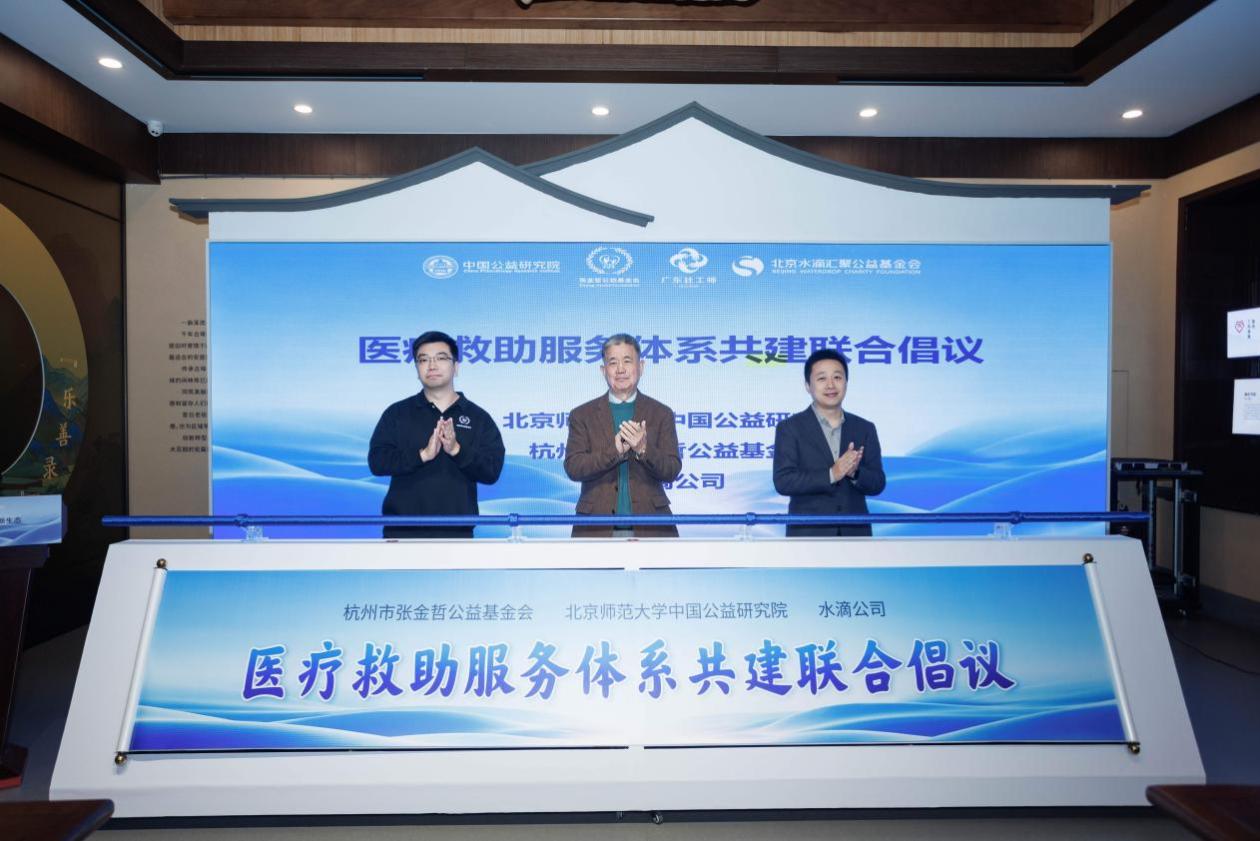
水滴公司联合多方发起医疗救助共建联合倡议 推动医疗救助服务升级
Huan Qiu Wang· 2025-11-26 09:51
Core Viewpoint - The seminar on "New Ecology of Medical Assistance Services from a Multi-Party Cooperation Perspective" was held in Hangzhou, focusing on the current status and future of the medical assistance service system in China [1][3] Group 1: Medical Assistance System - Medical assistance is a crucial part of China's multi-tiered medical security system, aimed at alleviating the medical burden on disadvantaged groups and preventing poverty due to illness [3] - The "Joint Initiative for Co-Building the Medical Assistance Service System" was launched, emphasizing three core action directions: conducting industry research, promoting collaborative discussions among stakeholders, and enhancing patient and family services in medical institutions [1][5] Group 2: Innovations and Practices - Waterdrop Company has been innovating in the medical assistance field for nine years, establishing a model called "JinQing Help" that effectively connects government, social organizations, and hospitals for precise assistance [5] - The initiative aims to address the "last mile" of assistance services by providing policy consultation and application support for patients through service stations in hospitals [5] Group 3: Challenges and Future Directions - Experts highlighted the need to focus on the risks of high medical expenses for low- and middle-income populations, advocating for stronger collaboration among government, social organizations, and healthcare providers to integrate resources [7] - The seminar provided a platform for stakeholders to discuss challenges such as the lack of coordination within hospitals and the fragmentation of assistance resources, aiming to upgrade the medical assistance service system towards professionalism and collaboration [8]
北京女CEO带队,轻松健康要敲钟了
Sou Hu Cai Jing· 2025-10-18 09:02
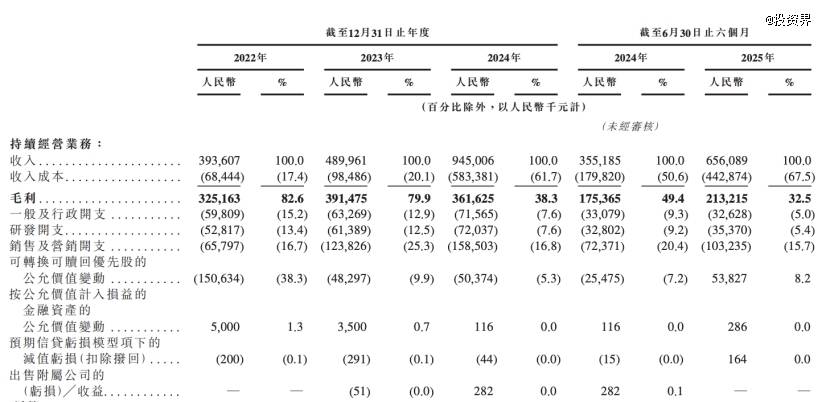
Core Viewpoint - The company "轻松健康集团" (Easy Health Group) has received approval from the China Securities Regulatory Commission for its IPO, paving the way for its listing in Hong Kong. The company, previously known for its crowdfunding platform "轻松筹" (Easy Fundraising), has shifted its focus towards providing comprehensive digital health services and health insurance solutions [1][5]. Company Overview - Founded by Yang Yin, who previously worked at IDG Inc., the company initially focused on crowdfunding for medical expenses, leveraging social media to connect those in need with potential donors [2][3]. - The company has rebranded itself as "轻松健康集团" and has expanded its services beyond crowdfunding to include health insurance and comprehensive health services [3][5]. Financial Performance - The revenue figures for the company are as follows: - 2022: 394 million RMB - 2023: 490 million RMB - 2024: 945 million RMB - 2025 (first half): 656 million RMB - Adjusted net profits for the same periods were: - 2022: 149 million RMB - 2023: 146 million RMB - 2024: 84.4 million RMB - 2025 (first half): 51.2 million RMB [5][6]. Business Model and Services - The company positions itself as a one-stop platform for digital health services, offering screening, medical appointment services, and health insurance products. The insurance services have contributed significantly to the company's revenue, accounting for 81.5% in 2022 and decreasing to 22.9% by 2025, while health services have increased from 15.2% to 65.3% during the same period [5][6][7]. Market Position and User Base - As of now, the company has 170 million registered users and collaborates with 86 pharmaceutical partners, offering a total of 294 insurance products from 58 insurance companies [7]. - The company has completed eight rounds of financing, raising approximately 126 million USD, with notable investors including IDG Capital and Tencent [7]. Industry Context - The crowdfunding model has evolved significantly since its inception, with increased competition and regulatory scrutiny. The company has adapted by shifting its focus from post-event fundraising to preventive health management [9][10].
一位北京女CEO要敲钟了!
3 6 Ke· 2025-10-18 08:48
Core Viewpoint - Recently, Easy Health Group has received approval from the China Securities Regulatory Commission for its IPO, paving the way for its listing in Hong Kong. The company, previously known for its crowdfunding platform "Qing Song Chou," has evolved its business model and is now focused on providing comprehensive health services and insurance solutions [1][5]. Company Overview - Easy Health Group was founded by Yang Yin, who transitioned from a career at IDG Inc. to entrepreneurship in 2014, capitalizing on the mobile internet trend. The company initially focused on crowdfunding for medical expenses, which gained traction through social media [2][4]. - The company has rebranded from "Qing Song Chou" to "Easy Health Group" and has expanded its services beyond crowdfunding to include health insurance and comprehensive health services [5][8]. Financial Performance - The revenue figures for Easy Health Group are as follows: - 2022: 394 million RMB - 2023: 490 million RMB - 2024: 945 million RMB - 2025 (first half): 656 million RMB - Adjusted net profits for the same periods were: - 2022: 149 million RMB - 2023: 146 million RMB - 2024: 84.4 million RMB - 2025 (first half): 51.2 million RMB [6][7]. Business Model and Services - Easy Health Group positions itself as a one-stop platform for digital health services and health insurance solutions. Its health services include screening, medical appointment services, and health products, while its insurance services offer various health insurance products from partner companies [6][8]. - The insurance service has been a significant revenue contributor, accounting for 81.5% of total revenue in 2022, while health services have seen an increase in revenue contribution from 15.2% in 2022 to 65.3% in 2024 [8]. User Base and Partnerships - The company boasts a user base of 170 million registered users and collaborates with 86 pharmaceutical partners, offering a total of 294 insurance products from 58 insurance companies [9]. Investment and Ownership - Prior to the IPO, Yang Yin holds a 23.93% stake in the company through a holding company, making her the largest single shareholder [10]. The company has completed eight rounds of financing, raising approximately $126 million, with notable investors including IDG Capital and Tencent [9].