汽车智驾系统

Search documents
AI“犯错” 谁来负责?
Yang Shi Xin Wen· 2026-01-31 19:46
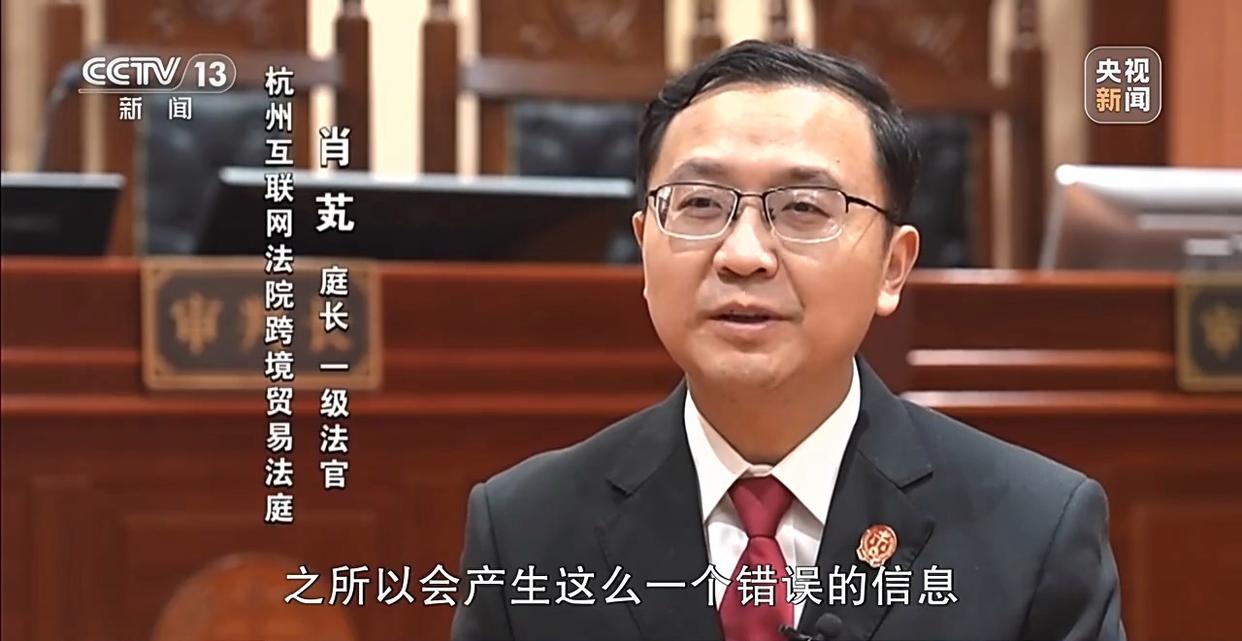
Group 1 - AI is increasingly integrated into various aspects of life and work, but it can make errors, leading to questions about accountability, especially in critical fields like healthcare and finance [1][11] - The case of Liang, who was misled by AI regarding a non-existent school, marks the first legal instance addressing AI's "hallucination" issue, raising questions about who is responsible for AI-generated misinformation [1][3] - The court determined that AI's compensation promise does not equate to the service provider's liability, categorizing AI-generated information as a service rather than a product, thus applying fault liability principles [5][7] Group 2 - In the medical field, the integration of AI raises concerns about misdiagnosis and the responsibility for errors, with experts emphasizing that AI should assist rather than replace human judgment [11][19] - The current legal framework does not clearly define AI's role in medical decision-making, leading to calls for regulations that clarify the responsibilities of doctors and AI developers [21][22] - The introduction of AI in healthcare is seen as a tool to enhance efficiency, but there are fears that over-reliance on AI could diminish the diagnostic skills of future medical professionals [15][17] Group 3 - In the automotive sector, the transition from L2 to L3 autonomous driving systems necessitates a reevaluation of liability, with current regulations still placing primary responsibility on human drivers [23][24] - As L3 systems are tested, the responsibility for accidents may shift to manufacturers under certain conditions, but drivers must remain vigilant and ready to take control [26][29] - The complexity of liability in L3 autonomous driving scenarios highlights the need for clear legal definitions and frameworks to address potential accidents involving AI systems [30][32]

关于汽车“智驾”系统,公安部提醒
中汽协会数据· 2025-07-23 09:05
Core Viewpoint - The article emphasizes the importance of understanding the limitations of current "smart driving" systems in vehicles, which are still in the assisted driving phase and do not possess true autonomous driving capabilities [1][2]. Group 1: Strengthening Management - The government will enhance management of automotive companies by urging them to fulfill their responsibilities, conduct comprehensive testing of assisted driving systems, and adhere to advertising laws to prevent exaggeration and false claims [1]. - Companies are expected to provide proper training for new users to ensure they understand the functionalities and limitations of assisted driving systems [1]. Group 2: Legal Framework Enhancement - There is a push to refine the Road Traffic Safety Law and related regulations to clarify the legal status of Level 0 to Level 2 assisted driving systems, promoting the development of reliable technology and safety standards [2]. - The initiative includes integrating autonomous driving classification standards and operational norms into driver education and testing [2]. Group 3: Public Awareness Campaigns - The article highlights the need for public awareness regarding the distinction between assisted driving and autonomous driving, stressing that drivers remain the primary responsible party for safety [2]. - Various forms of communication will be employed to ensure drivers are fully informed about the functionalities and operational boundaries of assisted driving systems [2].
新造车“紧箍咒”
Bei Jing Shang Bao· 2025-05-11 07:25
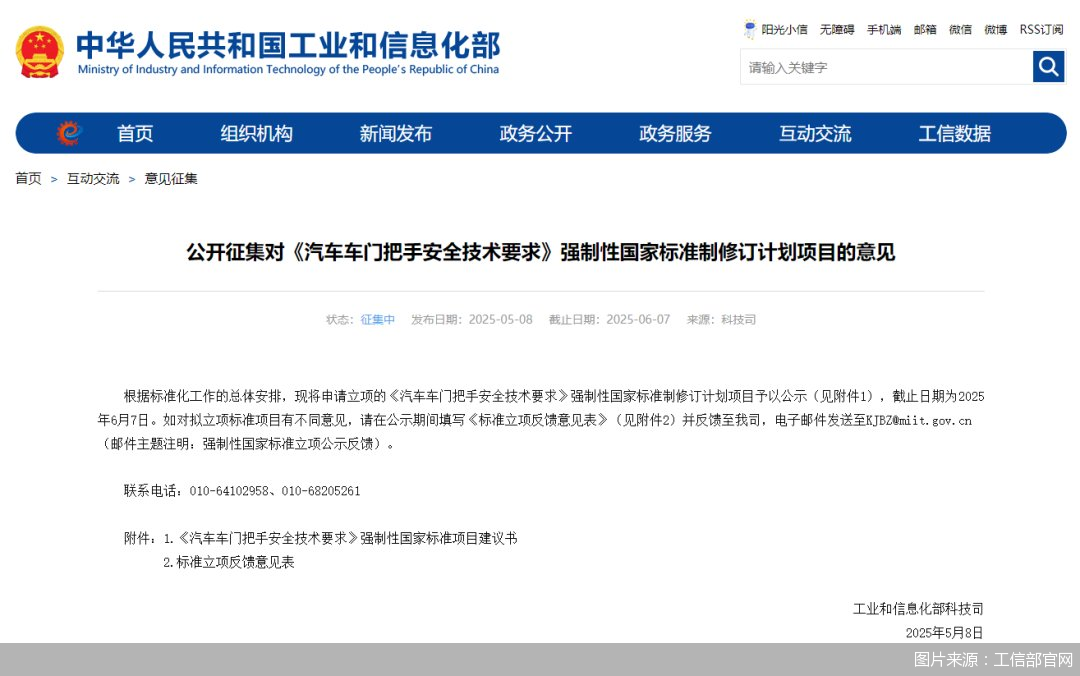
Group 1 - The automotive industry is undergoing a transformation driven by electrification and intelligence, which is reshaping product definitions and competition rules, but these innovations also expose safety vulnerabilities [1][4][5] - The Ministry of Industry and Information Technology (MIIT) is taking action to regulate the new car manufacturing chaos, including soliciting opinions on mandatory national standards for car door handle safety [3][4][11] - The new standards address various safety requirements for car door handles, including installation, strength, and emergency operation, as current standards do not adequately cover electric and hidden door handles [4][5][8] Group 2 - Hidden door handles are increasingly popular due to their aesthetic appeal and technological features, but they also present risks such as insufficient strength and operational difficulties in emergencies [5][8][9] - The MIIT has emphasized the need for safety measures in hidden door handles, including mechanical or power failure protection to ensure functionality during accidents [8][9][10] - The MIIT has also halted misleading advertising related to intelligent driving, requiring companies to clarify the levels of driving automation and adhere to safety standards [10][11][12] Group 3 - The new battery safety requirements for electric vehicles will be implemented next year, focusing on impact resistance and safety during fast charging [12] - The industry is urged to prioritize safety in the development of new technologies to ensure healthy and orderly growth [12]