湿地保护

Search documents
海南5年营造红树林两千余公顷
Zhong Guo Zi Ran Zi Yuan Bao· 2026-02-13 06:26
Group 1 - Since 2020, Hainan has planted 2031 hectares and restored 3322 hectares of mangroves, exceeding national targets and achieving simultaneous increases in both area and quality [1] - The total area of mangroves in Hainan has reached 7862.58 hectares, with significant optimization in community structure and a notable increase in biodiversity, enhancing ecosystem service functions and stability [1] - By 2025, Hainan achieved major breakthroughs in mangrove protection technology, including patented techniques for seed storage and breeding of rare mangrove species, significantly improving the success rate of seedling cultivation [1] Group 2 - Hainan is accelerating academic exchanges and international cooperation in mangrove protection, hosting an international seminar in September 2025 that attracted 23 officials and experts from six countries [2] - The 12th China Mangrove Academic Seminar was held in Haikou in November 2025, providing important academic support and an efficient communication platform for the innovative development of mangrove protection in Hainan and nationwide [2] - Hainan is deepening cooperation with international conservation foundations and steadily advancing public welfare projects for mangrove protection and restoration, promoting China's solutions for wetland protection globally [2]
划清三条线,让湿地成为诗意之地
Zhong Guo Zi Ran Zi Yuan Bao· 2026-02-04 03:36
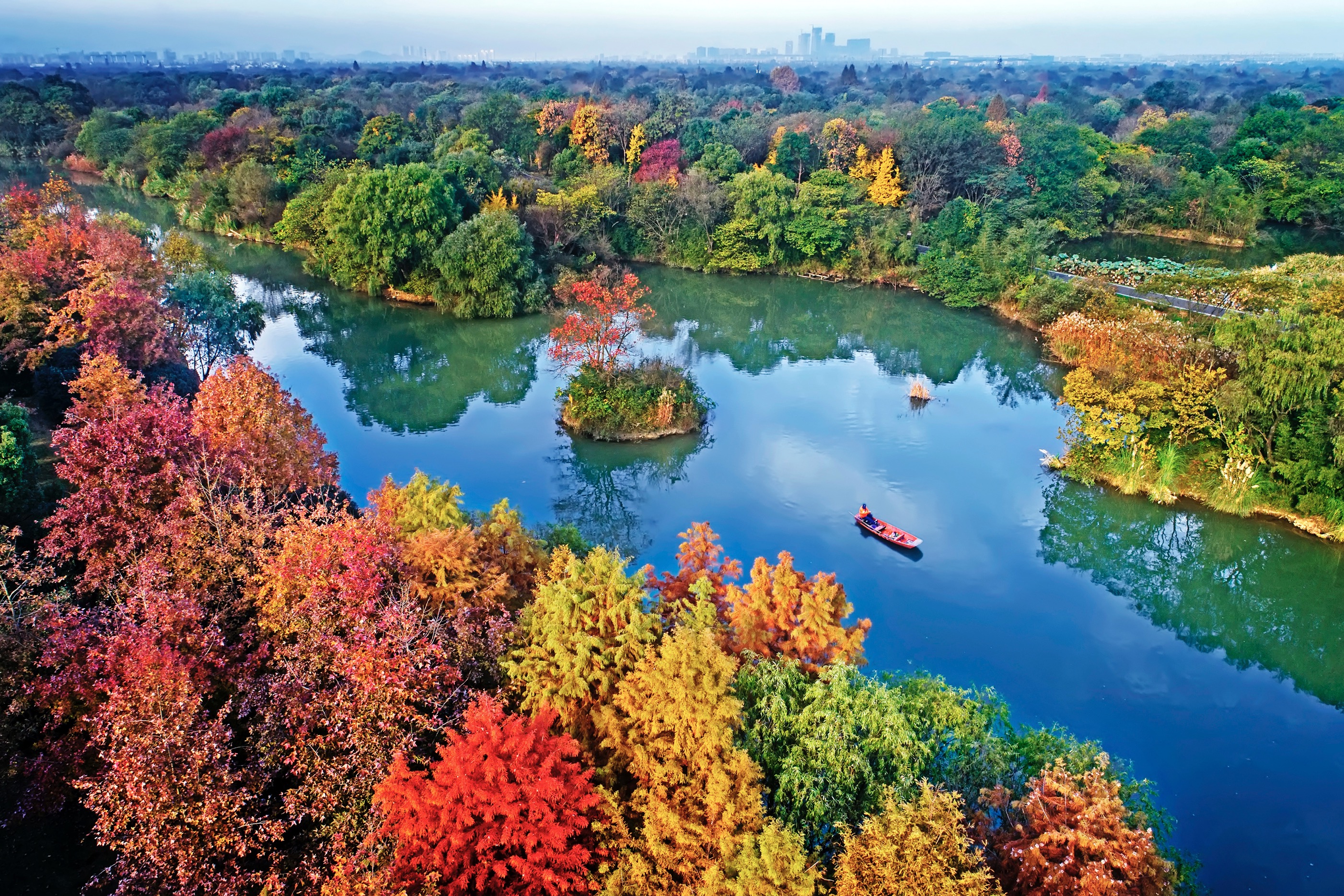
Core Viewpoint - The newly revised Wetland Protection Regulations in Zhejiang Province, effective from February 2, 2023, represent a significant overhaul of the previous regulations established in 2012, aiming to enhance wetland conservation and management in the region [3][5]. Summary by Sections Definition and Scope of Wetlands - The revised regulations provide a clear definition of wetlands, encompassing natural or artificial areas with significant ecological functions that are seasonally or permanently waterlogged, excluding rice fields and aquaculture areas [5]. - Thirteen types of wetlands are specifically listed for protection, including shallow sea areas, coastal mudflats, mangroves, rivers, lakes, reservoirs, ponds, ditches, inland mudflats, forest swamps, shrub swamps, marshes, and marsh grasslands [5]. Management and Responsibilities - The new regulations clarify management responsibilities, designating forestry departments as the lead agency and outlining specific duties for natural resources, water conservancy, and construction departments [8]. - A coordination mechanism is mandated for governments at the county level and above, ensuring effective management of wetlands [8]. Focus on Small and Coastal Wetlands - The regulations emphasize the protection of small wetlands, such as community ponds and rural water storage areas, encouraging their development into parks and educational bases [8]. - Strict controls are placed on coastal wetlands and mangroves, requiring ecological restoration measures for any approved coastal projects [8]. Balancing Protection and Utilization - The core philosophy of the regulations is to delineate boundaries for protection while allowing for sustainable use, promoting ecological benefits for the community [9]. Regulatory Framework - The regulations introduce a tiered management system with "red lines" for prohibited actions, "yellow lines" for controlled activities requiring strict approval, and "green lines" for encouraged activities that comply with protection standards [11]. - Six prohibited actions are explicitly listed, including land reclamation, unauthorized water diversion, and pollution [11]. Technological Integration - The regulations highlight the use of modern technology, such as artificial intelligence, for ecological monitoring and management, aiming for a more precise and efficient approach to wetland protection [13]. - A shared expert database is being established to support wetland conservation efforts across various fields [13]. Institutionalization of Success - The regulations aim to institutionalize the successful experiences of cities like Hangzhou and Wenzhou in wetland management, promoting the creation of more "International Wetland Cities" in Zhejiang [14].

广东启动世界湿地日暨湿地保护宣传周活动
Nan Fang Ri Bao Wang Luo Ban· 2026-02-03 08:13
Core Viewpoint - The Guangdong Province is actively promoting wetland protection and restoration, particularly focusing on mangrove ecosystems, as part of its commitment to environmental sustainability and biodiversity conservation [1][2]. Group 1: Wetland Protection Initiatives - The Guangdong Province launched the 2026 World Wetlands Day and Wetland Protection Awareness Week in Shenzhen, showcasing typical cases of mangrove protection and restoration, along with a list of pilot projects for "Micro Wetland+" and "Wetland Park+" [1]. - Shenzhen has approximately 34,700 hectares of wetlands, with a wetland rate of 15.67%, including 296.18 hectares of mangroves [1]. - Guangdong is one of the richest provinces in China in terms of wetland resources, with over 1.82 million hectares of wetlands, including about 11,600 hectares of mangroves, ranking first in the country [1]. Group 2: Regulatory and Monitoring Framework - The Guangdong Forestry Bureau has been enhancing wetland protection regulations and monitoring key areas such as important wetlands, wetland parks, and mangroves [2]. - During the 14th Five-Year Plan period, the province added 2 international important wetlands, 1 national important wetland, and 68 provincial important wetlands [2]. - A comprehensive monitoring network for mangrove protection has been established, focusing on early detection and remediation of issues such as damage and mortality [2]. Group 3: Future Plans and Goals - The province aims to deepen the active transmission of traditional knowledge related to "people-water coexistence" in wetlands and strengthen compliance with international wetland conventions [2]. - Guangdong is committed to supporting the high-standard construction and operation of the International Mangrove Center and advancing the application for International Wetland City status [2]. - The goal is to create exemplary wetland ecosystems in Guangdong that can serve as innovative models for ecological restoration and collaborative governance worldwide [2].
北京湿地面积达6.12万公顷 湿地保护率83.15%
Ren Min Wang· 2026-02-03 06:42
Core Insights - Beijing has established a wetland protection system that includes nature reserves, wetland parks, and supplementary nature reserve communities, which supports nearly 50% of plant species and 76% of wildlife species in the capital [1][2] Group 1: Wetland Area and Protection Rate - As of now, Beijing's wetland area has reached 61,200 hectares, with a protection rate of 83.15% [1][3] - The classified wetland area includes various types such as shrub swamps, inland mudflats, forest swamps, marsh grasslands, and marshes [3] Group 2: Wetland Protection and Restoration Efforts - During the 14th Five-Year Plan period, Beijing adheres to principles of prioritizing protection, strict management, systematic governance, scientific restoration, and rational utilization [2] - The city has implemented a comprehensive ecological restoration strategy, focusing on natural recovery and combining it with artificial restoration [2][3] - Key projects include the restoration of the Yeyahu International Important Wetland and the Fangshan Changgou Spring National Wetland Park, promoting the "Wetland+" model to integrate wetlands with tourism and rural revitalization [2] Group 3: Future Plans and Regulations - The city plans to enhance wetland restoration, particularly in areas with severely degraded ecological functions, and promote the construction and restoration of micro-wetlands in urban communities [3] - The wetland classification management system will be improved, and efforts will be made to explore high-quality wetland ecological products, making wetlands accessible green spaces for the public [3]
近6年海南累计营造红树林逾2000公顷
Hai Nan Ri Bao· 2026-02-03 04:34
Group 1 - Hainan has cumulatively planted over 2,000 hectares of mangroves and restored approximately 3,322 hectares since 2020, exceeding national targets and enhancing both the area and quality of mangroves [1] - The total area of mangroves in Hainan has reached 7,862.58 hectares, with significant improvements in community structure and biodiversity, enhancing ecosystem services and stability [1] - By 2025, Hainan is expected to achieve major breakthroughs in mangrove protection technologies, including seed storage and breeding techniques, which will significantly improve the success rate of rare mangrove plant propagation [1] Group 2 - The ecological environment of Hainan's mangroves and wetlands is continuously improving, with new species records being documented, such as the white-breasted kingfisher and the gray crane [2] - Hainan is accelerating academic exchanges and international cooperation in mangrove protection, hosting international seminars and workshops to share knowledge and best practices [2] - The province is deepening collaborations with international foundations to promote mangrove protection and restoration projects, showcasing China's approach to wetland conservation on a global scale [2]
市民代表开启与珍稀鸟类的邂逅之旅
Xi An Ri Bao· 2026-02-03 04:06
Core Viewpoint - The event held on World Wetlands Day in Xi'an aimed to promote wetland conservation and traditional knowledge, engaging citizens, volunteers, and students in various activities to foster a collective commitment to protecting wetland ecosystems [1][2]. Group 1: Event Overview - The event was organized by multiple local authorities and organizations, including the Xi'an Forestry Bureau and the Xi'an Wetland Protection Management Center, highlighting a collaborative effort in wetland conservation [1][2]. - Xi'an Chanba National Wetland Park was awarded the title of "Xi'an Wetland Protection Science Popularization Education Base," recognizing its significant achievements in ecological education and wetland awareness [1]. Group 2: Conservation Initiatives - The event featured the awarding of titles to various organizations, including the Xi'an Wild Bird Protection Association, which was named a "Co-Building Unit for Wetland Wild Bird Monitoring," enhancing collaborative efforts in bird conservation [2]. - Six major initiatives for wetland protection were announced, urging citizens to refrain from harmful activities such as land reclamation and pollution, emphasizing the importance of wetlands for human health [2]. Group 3: Educational Activities - Following the award ceremony, a guided exploration of the wetland park took place, where staff acted as "nature mentors," leading participants through the park and providing insights into the ecosystem [3][4]. - Participants observed various bird species, including the rare Spoon-billed Sandpiper, which has become a regular inhabitant of the wetland, illustrating the success of conservation efforts [3]. Group 4: Ecological Importance - The event served as an educational platform, detailing the critical roles of wetlands in flood control, climate regulation, and water purification, while also highlighting the protection of rare bird species [4]. - Future plans include deepening the "Ecology + Education" model in Xi'an, aiming to conduct more grassroots scientific activities to embed wetland conservation concepts in the community [4].

我省举办“世界湿地日”宣传活动
Liao Ning Ri Bao· 2026-02-03 01:06
Core Viewpoint - The article emphasizes the importance of wetland protection and the implementation of the "Liaoning Province Wetland Protection Regulations" to promote legal and systematic management of wetlands in the province [1] Group 1: Event Overview - February 2 marks the 30th "World Wetlands Day," with the theme "Wetlands and Traditional Knowledge: A Tribute to Cultural Heritage" [1] - A promotional launch event for the "Liaoning Province Wetland Protection Regulations" was held in Panjin, recognized as an "International Wetland City" [1] Group 2: Activities and Discussions - The event was organized by the Provincial Forestry and Grassland Bureau and the Panjin Municipal Forestry and Wetland Bureau, facilitating exchanges on experiences and challenges in wetland protection [1] - Participants visited the Red Beach Wetland Science Museum and the Crane Breeding Base, and attended lectures on the new regulations and wetland ecosystem restoration [1] Group 3: Regulatory Framework - The newly enacted "Liaoning Province Wetland Protection Regulations" came into effect on February 1, providing a legal basis for the protection, governance, and scientific utilization of wetlands in the province [1] - The province has made significant progress in ecological restoration, species protection, and technological governance related to wetland conservation [1]
“十四五”广州累计营造与修复红树林234.2公顷
Zhong Guo Xin Wen Wang· 2026-02-02 13:45
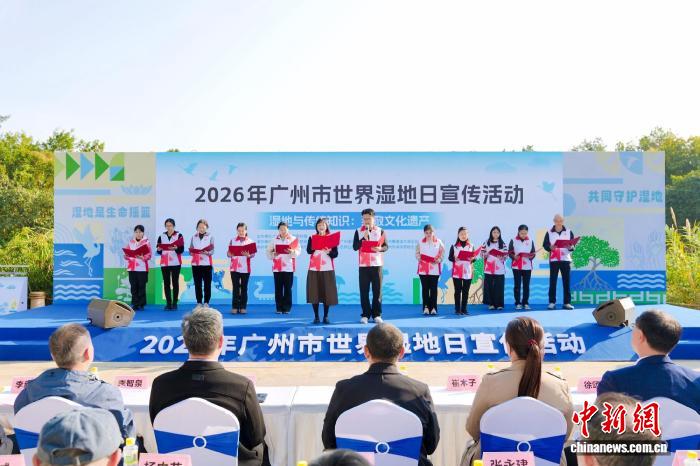
Core Points - Guangzhou has cumulatively created and restored 234.2 hectares of mangroves during the "14th Five-Year Plan" period, along with the construction of 1548 kilometers of greenways [1][3] - The city has approximately 67,500 hectares of wetland, with 25 wetland parks and 32 various protected areas established, including one internationally recognized important wetland [3][4] - Guangzhou integrates wetland ecological protection with traditional knowledge and natural education, aiming to create a robust ecological barrier and a habitat for migratory birds [3][4] Group 1 - Guangzhou emphasizes wetland protection as a key aspect of ecological civilization construction [3] - The city has developed a multi-level protection network for wetlands, forming a spatial layout of "three zones, six corridors, three cores, and nine centers" [3] - The city promotes natural education through wetland schools and educational programs, enhancing public awareness and engagement in wetland conservation [4] Group 2 - The event showcased premium natural education destinations, including wetland parks and botanical gardens, to promote ecological education [4] - Interactive exhibits allowed citizens to engage with wetland ecology, including bird protection and conservation achievements [4] - The Nansha Wetland serves as a natural classroom, offering immersive educational experiences and a comprehensive curriculum throughout the seasons [4]
科技赋能湿地保护 洞庭湖湿地长出“智能眼”
Xin Lang Cai Jing· 2026-02-02 12:49
Group 1 - The 30th World Wetlands Day in Hunan Province was celebrated with a focus on the theme "Wetlands and Traditional Knowledge: Promoting Cultural Heritage" [3] - The event highlighted Hunan's rich wetland resources, which include 2 international wetland cities, 5 international important wetlands, 5 national important wetlands, 47 provincial important wetlands, and 70 national wetland parks, maintaining a stable wetland area of 20.33 million acres [3] - Hunan has revised the "Hunan Wetland Protection Regulations," establishing a legal framework for wetland management, resulting in the restoration of 2,861.02 hectares of wetland and the distribution of 10.5 million yuan in ecological compensation benefiting 5,429 residents [3] Group 2 - The monitoring results for wintering waterbirds in Hunan Province showed a record of 484,300 individuals across 73 species, the highest number recorded to date, with 474,100 of these in the Dongting Lake area [3] - The event included the signing of a "Wetland Monitoring Experiment" agreement among various organizations, indicating a collaborative effort in wetland protection and monitoring [4]

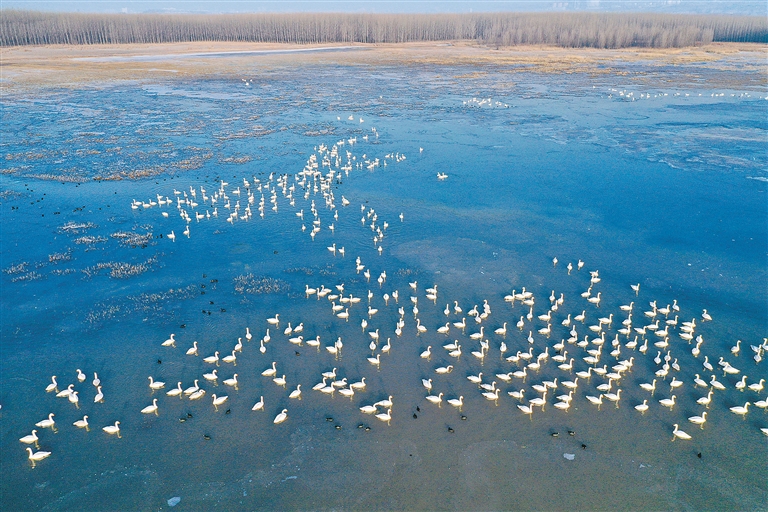
我们为什么需要湿地?——河南践行“两山”理念守护湿地生态纪实
He Nan Ri Bao· 2026-02-01 23:31
Core Viewpoint - The importance of wetlands is emphasized as vital ecosystems that support biodiversity, regulate climate, and provide essential services for both wildlife and human livelihoods [2][3]. Group 1: Wetland Significance - Wetlands are referred to as the "kidneys of the Earth," playing a crucial role in water conservation, climate regulation, and providing habitats for wildlife [2]. - Henan Province has a wetland area of 12.8455 million acres, ranking 15th in the country, and serves as a key ecological barrier in the Yellow River basin [2]. Group 2: Legal Framework and Protection Measures - A comprehensive legal framework for wetland protection has been established in Henan, including various regulations and management measures at both provincial and local levels [3]. - The province has created 12 natural protection zones and 122 wetland parks, with the Minquan Yellow River ancient channel wetland recognized as an internationally important wetland [3]. Group 3: Restoration Efforts - Since 2021, Henan has implemented 195 wetland protection and restoration projects, restoring a total of 45,000 acres of wetlands through various ecological measures [3][4]. - The Minquan Yellow River ancient channel wetland has become a rare habitat for the critically endangered blue-headed pochard, with a current population of 404 individuals [4]. Group 4: Ecological and Economic Synergy - Wetland protection in Henan is framed as a dual effort of ecological conservation and economic development, enhancing both biodiversity and local livelihoods [4][5]. - Initiatives in areas like Jia County and Song County have improved water quality and transformed polluted rivers into recreational spaces, demonstrating the economic benefits of ecological restoration [4][5]. Group 5: Long-term Commitment - The commitment to wetland protection is framed as a long-term endeavor, with Henan aiming to maintain the vitality of its wetlands as part of its ecological civilization construction [5].