生态优势转化

Search documents
青海让绿水青山酿出国际甜
Xin Lang Cai Jing· 2026-02-25 17:54
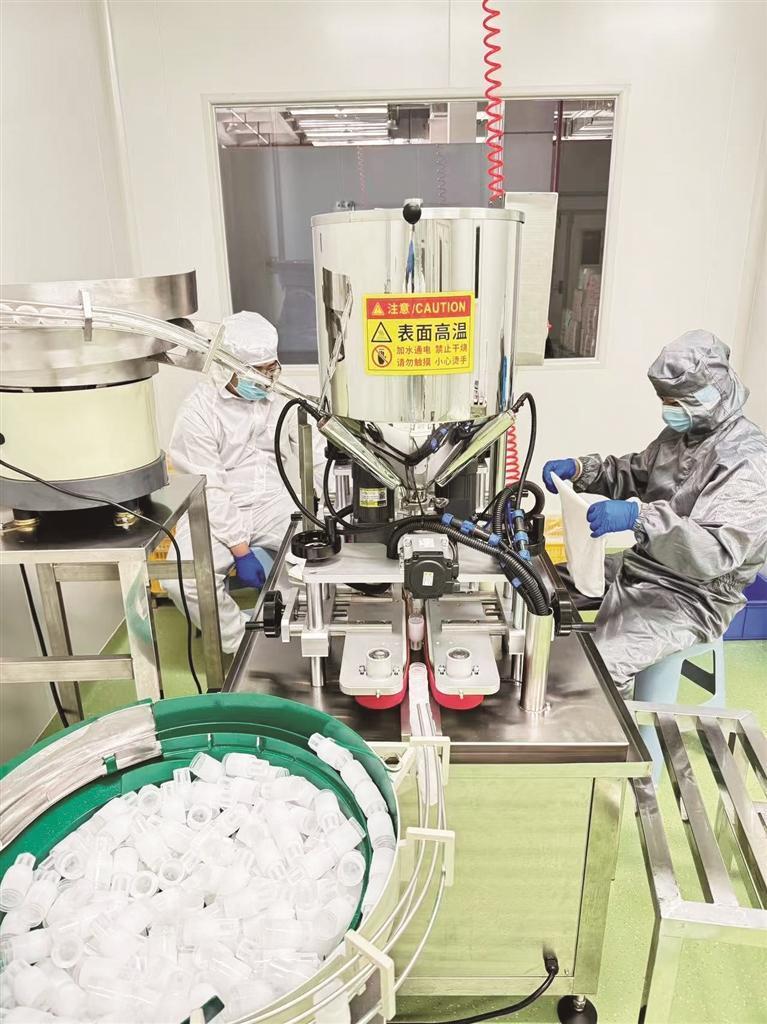
Core Viewpoint - The honey industry in Qinghai is leveraging its unique ecological advantages to produce high-quality honey and expand its market presence both domestically and internationally [9][10][11]. Group 1: Production and Quality - Qinghai's honey benefits from a unique ecological environment, with an average altitude of over 2800 meters, resulting in honey with an amylase value exceeding national standards by five times [9][10]. - The company has established a "joint beekeeping farm" model to ensure quality and traceability, addressing local bee population shortages while maintaining high standards [10]. - The annual output value of the Mengyuan honey industry has surpassed 13 million yuan, with successful branding efforts leading to increased product value [10]. Group 2: Market Expansion - The company has successfully exported honey products to markets such as Japan and Hong Kong, achieving an export volume of over 5 tons annually since starting its export business in 2023 [11]. - Plans are underway to build a new factory to meet growing demand, with expansions into markets in South Korea and Thailand [11]. - The company is also focusing on deep processing of bee products and developing derivative products for personal care, further enhancing product value [11]. Group 3: Innovation in Product Offerings - Qinghai Bairong Biotechnology Co., Ltd. is innovating with a new product called "honey cap," which allows consumers to easily mix honey with water, transforming traditional honey consumption [12][13]. - The company has developed various flavors for the honey cap, integrating high-quality honey with local plant flavors, enhancing the consumer experience [13][14]. - The production facility adheres to GMP standards, ensuring high-quality production environments and processes that meet international standards [14]. Group 4: Support for Export and Market Development - The Qinghai Provincial Department of Commerce and Xining Customs are collaborating to enhance the export of local agricultural products, including honey, by providing policy support and improving logistics [15][16]. - Initiatives include establishing a comprehensive service system to facilitate the export process, ensuring quality control from production to delivery [16]. - The focus on building a strong brand image for "Qinghao" agricultural products is aimed at increasing their international market presence [15][16].

厚植八桂生态优势 壮美广西更加秀丽
Zhong Guo Huan Jing Bao· 2026-02-06 04:09
Core Viewpoint - The news highlights the significant progress made by Guangxi in ecological environment protection and sustainable development during the year 2025, emphasizing the integration of ecological advantages into economic growth and the promotion of high-quality development through various environmental initiatives [2][3][4][5][6][7]. Group 1: Ecological Environment Protection Achievements - In 2025, Guangxi's air quality improved significantly, achieving a 96.1% rate of good air quality days and a PM2.5 concentration of 25.9 micrograms per cubic meter [4]. - The region completed the rectification of 128 out of 154 environmental risk points in the Lijiang River basin, with a total of 394 out of 432 environmental risk points addressed across various river basins [4]. - Guangxi's surface water quality and coastal water quality were reported at 99.1% and 94.9% respectively, ranking among the best in the country [4]. Group 2: Pollution Prevention and Control - Guangxi identified 1,919 sources of heavy metal pollution, with 1,564 already rectified and 355 included in long-term management plans [3]. - The region's soil pollution control projects under the national "14th Five-Year Plan" were successfully completed, contributing to the overall stability of soil and groundwater quality [5]. Group 3: Biodiversity and Natural Resource Management - Guangxi established 223 natural protected areas and reported the discovery of 249 new species, ranking third in biodiversity richness in China [6]. - The population of endangered species such as the white-headed leaf monkey increased from over 300 in the 1980s to over 1,400 in 2025 [6]. Group 4: Economic Development and Ecological Integration - Guangxi's ecological environment department has created 22 national ecological civilization demonstration zones and 9 "Green Water and Green Mountains are Golden Mountains and Silver Mountains" innovation bases, leading in the western region [7]. - The region's ecological health industry is expected to thrive, with the ecological environment department planning to implement a three-year action plan for the "Ecological Environment and Big Health" brand [8]. Group 5: International Cooperation and Engagement - The 2025 China-ASEAN Environmental Cooperation Forum was held in Beihai, focusing on practical cooperation in ecological governance and sustainable development [12]. - Various thematic forums during the event discussed climate resilience, green value chains, and environmental technology innovation, enhancing international collaboration [13]. Group 6: Future Directions and Strategic Goals - The ecological environment system in Guangxi aims to fully implement the spirit of the 20th National Congress of the Communist Party of China, focusing on the harmonious coexistence of political and natural ecologies [17]. - The region is set to continue its efforts in carbon reduction, pollution control, and green expansion, striving for a sustainable and beautiful Guangxi [17].
把生态优势深度融入现代化产业体系
Xin Lang Cai Jing· 2026-01-25 22:24
Core Viewpoint - The article emphasizes the need for integrating ecological advantages into modern industrial systems in Guizhou, promoting a green transformation of the economy and society through innovative and sustainable practices [2]. Group 1: Transformation of Ecological Advantages - The key to transforming ecological advantages into industrial advantages lies in finding scientific and sustainable pathways, leveraging technology to enhance product value and meet market demands [2]. - Development of integrated scenarios such as "Ecology + Health Care," "Ecology + Research Learning," and "Ecology + Cultural Experience" is essential to make ecological resources the core of consumer experiences [2]. - Strategic emerging industries such as new energy, green manufacturing, electric vehicles, and biomanufacturing should be actively cultivated to build a modern industrial system that is green, low-carbon, and circular [2]. Group 2: Challenges in Economic Transformation - The current bottleneck in Guizhou's transformation is the lack of a robust mechanism for realizing the value of ecological products, characterized by short industrial chains and low added value [3]. - Issues such as poor market connection for value certification, absence of unified assessment standards, and a lack of skilled talent and technical support are prevalent [3]. Group 3: Policy and Mechanism Improvements - There is a need to accelerate the establishment of an ecological product value accounting system and improve cross-regional ecological compensation and market trading mechanisms [3]. - Policies should be integrated across ecology, industry, technology, and finance to support key links in the industrial chain and technological research and development [3]. Group 4: Balancing Development and Protection - A rigid ecological constraint must be established as a baseline, with clear delineation of ecological carrying thresholds as prerequisites for industrial project approvals [3]. - Digital monitoring networks should be utilized to track resource and environmental indicators in real-time, implementing restrictions on over-exploited areas [3]. Group 5: Differentiated Industrial Development - Industrial development should be based on local resource characteristics and potential, creating specialized and differentiated development paths [4]. - A cross-regional industrial collaboration platform is necessary to promote division of labor and complementarity in the industrial chain, avoiding low-level homogeneous competition [4]. Group 6: Brand Protection and Value - Strict brand certification, usage, and regulatory rules should be established, creating a collaborative supervision system involving government, industry, and third parties [4]. - Policies should incentivize long-term brand value appreciation, discouraging short-term profit-seeking behaviors [4]. Group 7: Enhancing Industrial Growth Quality - A development model that integrates green transformation, innovation-driven approaches, and digital empowerment is essential for achieving synergy between industrial growth and ecological protection [5]. - Traditional industries should undergo a comprehensive green transformation, promoting clean production and resource recycling in high-energy-consuming and high-emission sectors [5]. - New emerging industries should be supported through collaborative efforts in research and development, optimizing production processes with big data and IoT, and exploring "Industry + Carbon Sink" models [5].
从“生态好”走向“能转化、可持续、有支撑”
Xin Lang Cai Jing· 2026-01-12 19:03
Core Viewpoint - Qinghai is at a crucial stage of ecological civilization construction, aiming to transform its ecological advantages into institutional, market-oriented, and industrialized benefits, thereby enhancing sustainable governance and high-quality development [1] Group 1: Institutional Framework for Ecological Advantages - The focus is on establishing a rigorous institutional framework to institutionalize ecological advantages, emphasizing the importance of ecological protection as a national priority [1] - Key measures include implementing strict land use regulations, ecological protection red lines, and a natural protection area system to minimize ecological fragmentation and disorderly development [1] - The approach also involves integrated protection and systematic governance of ecosystems, transitioning from point-based restoration to comprehensive regional management [1] Group 2: Marketization of Ecological Advantages - The article highlights the need for market mechanisms and compensation systems to address the cost-benefit mismatch in ecological services, facilitating the realization of ecological product values [2] - It emphasizes the importance of ecological product value assessment and management, converting ecological contributions into measurable values for policy-making and funding allocation [2] - The development of trading mechanisms for ecological resources, such as carbon credits and water rights, is essential to create positive incentives for conservation behaviors [2] Group 3: Industrialization of Ecological Advantages - The transformation of ecological advantages into a modern industrial system is crucial, focusing on converting ecological resources into products and services while driving industrial upgrades through green constraints [3] - The establishment of a high-quality, low-impact ecological experience and education sector is proposed, leveraging national parks to create a new growth point for ecological branding [3] - The article advocates for a robust supply system for green organic agricultural products, enhancing local transformation capabilities and market credibility [3]
吉林省生态文明建设显成效 生态优势向发展优势转化
Zhong Guo Xin Wen Wang· 2026-01-10 01:10
Core Viewpoint - Jilin Province has achieved significant recognition in ecological civilization construction, leading the Northeast region with 15 designated ecological civilization demonstration zones and 8 "Green Water and Green Mountains are Golden Mountains and Silver Mountains" innovation bases [1][2] Group 1: Ecological Achievements - Jilin Province has been awarded 15 ecological civilization demonstration zones and 8 innovation bases, ranking first among the three northeastern provinces [1] - By December 25, 2025, Jilin Province will have 6 areas recognized in the national list of ecological civilization demonstration zones and innovation bases [1] - Tonghua City has become the first city in Jilin Province to receive full recognition as an ecological civilization demonstration zone [1] Group 2: Economic Integration and Development - Jilin Province is promoting deep integration of "ecology + agriculture" and "ecology + cultural tourism," focusing on comprehensive utilization of livestock waste and straw [1] - The province aims to transform ecological advantages into economic, developmental, and competitive advantages [1] Group 3: Specific Regional Developments - Tongyu County's new energy capacity accounts for approximately 28% of the province's total, with improving air quality [2] - Dongchang District of Tonghua City has achieved an annual output value of over 2.1 billion yuan in the pharmaceutical industry [2] - Linjiang City is developing specialty agriculture, including blueberries and cold-water fish, contributing to increased income for farmers and village collectives [2] - Longjing City is projected to receive 4.5637 million tourists in 2025, generating a total income of 4.379 billion yuan [2] Group 4: Regulatory and Environmental Oversight - Jilin Province has established a collaborative regulatory framework for verifying, investigating, compensating, supervising, and holding accountable for ecological issues [2] - The province has conducted remote sensing interpretation of human activities in important ecological spaces and has completed rectification of key issues in national nature reserves [2] - Ongoing assessments of ecological restoration projects are being conducted to monitor ecological status and changes [2]
北京密云推动生态优势转化为发展优势
Zhong Guo Jing Ji Wang· 2025-11-28 08:01
Group 1 - The core viewpoint emphasizes the ecological development strategy of Miyun District, highlighting its achievements in ecological civilization and environmental quality [1][2] - Miyun District has been recognized as a "natural oxygen bar" and a "national forest city," with its ecological environment quality index and wetland area ranking first in Beijing for four consecutive years [1] - The district is actively transforming ecological advantages into developmental benefits, establishing a mechanism for realizing the value of ecological products, and launching the first local standard for ecological product certification in China [1] Group 2 - In terms of ecological agriculture, Miyun District focuses on local specialties, achieving organic certification for "Miyun Reservoir Fish" and maintaining the largest scale of the bee industry in Beijing [2] - The district has been designated as the only core area for the tomato specialty industry cluster in Beijing and has received national recognition as an agricultural modernization demonstration zone [2] - Ecotourism is being developed with over 50 premium tourism routes, and the district has hosted various events, leading to a significant increase in tourism revenue, reaching 10.2 billion yuan, which is three times the revenue at the end of the 13th Five-Year Plan [2]
广东省持续发力打造人与自然和谐共生的绿美样板
Zhong Guo Fa Zhan Wang· 2025-11-10 09:17
Core Viewpoint - Guangdong Province is accelerating the comprehensive green transformation of economic and social development, aiming to build a beautiful China through ecological construction and sustainable practices [1] Group 1: Ecological Construction Initiatives - Guangdong has implemented six major actions for ecological construction, including precise enhancement of forest quality and urban-rural greening, leading to a stable increase in forest resources [2][9] - The province's forest area has surpassed 14 million acres, with significant achievements in forest optimization and nurturing, including 6.3 million acres of forest improvement completed in 2023 [2][9] - The province is home to 1,052 species of terrestrial vertebrates and 6,658 species of higher plants, making it one of the richest provinces in biodiversity in China [2][10] Group 2: Economic Development through Forestry - The oil tea industry is projected to stabilize at over 3.5 million acres by 2025, with an expected production capacity of 60,000 tons of tea oil and a total output value exceeding 10 billion yuan [4] - The total output value of Guangdong's forestry industry has surpassed 940 billion yuan, with the development of under-forest economies covering over 32 million acres [4][10] - The province is exploring new business models integrating forestry with tourism and health, promoting innovative development across the forestry sector [6] Group 3: Community Engagement and Participation - Over 411 million participants have engaged in various tree planting activities through the "Internet + Volunteer Tree Planting" initiative, showcasing strong community involvement in ecological efforts [2][10] - The establishment of green beautification projects in rural areas has led to significant improvements in living environments, with over 43 million trees planted in towns and villages [3][9] Group 4: Policy and Institutional Reforms - The implementation of the collective forest rights system reform aims to clarify ownership and enhance the value realization of forestry ecological products, with a focus on sustainable management [5][6] - The province is advancing integrated reforms in ecological construction, with pilot projects in various cities and counties to enhance the effectiveness of green initiatives [9]
“定力”崇明生态之路迎来厚积薄发 海工产业之“蓝”、农业硅谷之“绿” 书写生态优势向发展优势转化故事
Jie Fang Ri Bao· 2025-11-07 01:37
Core Viewpoint - The completion of the tunnel for the Chongming Line (Metro Line 22) marks a significant milestone for Chongming's development during the 14th Five-Year Plan, symbolizing the island's commitment to ecological progress and sustainable development [1][2]. Group 1: Ecological Development Strategy - Chongming's development is firmly rooted in ecological principles, with a consensus among local officials and residents that all growth must be ecologically friendly [2]. - The island has shifted away from traditional, resource-intensive economic models, focusing instead on an "ecological island" development path that aligns with Shanghai's broader ecological strategy [2]. - Chongming's commitment to ecological preservation is evident in its rejection of short-term gains and adherence to strict ecological boundaries during the 14th Five-Year Plan [2][3]. Group 2: Investment in Ecological Projects - During the 14th Five-Year Plan, Chongming invested billions in wetland protection and water environment management, resulting in a stable population of over 12 species of waterbirds and more than 380 bird species overall [3]. - The island has developed two modern ecological industry clusters that align with its ecological identity, including a leading shipbuilding base on Changxing Island with annual output values surpassing 500 billion and 800 billion [3]. - Chongming is also advancing modern green agriculture, establishing various agricultural groups and projects that contribute to the development of a "Silicon Valley" for agriculture in the Yangtze River Delta [3]. Group 3: Achievements and Future Prospects - Chongming has achieved notable recognition, including the designation of the Shanghai Chongming Dongtan migratory bird habitat as a UNESCO World Heritage site and receiving international wetland city certification [4]. - The island is hosting high-profile sports events, enhancing its visibility and attractiveness as a destination [4]. - Future infrastructure developments, such as the Chongming Line and the Hu-Yu-Cheng high-speed rail, will strengthen connections between Chongming and Shanghai, facilitating resource flow and regional integration [5].
崇明获“国际湿地城市”认证 “世界级生态岛”成色越来越足 正加快推动生态优势向发展优势转化
Jie Fang Ri Bao· 2025-07-25 01:35
Core Viewpoint - The successful certification of Chongming District as an "International Wetland City" highlights its ecological achievements and potential for sustainable development, transforming ecological advantages into economic and social benefits [1][4]. Group 1: Wetland Resources and Protection - Chongming District boasts rich and diverse wetland resources, with a total wetland area of approximately 278,000 hectares and a wetland rate of 68.8% [2]. - The protected wetland area in Chongming is 168,800 hectares, resulting in a wetland protection rate of 60.73% [3]. - Significant ecological restoration efforts have been made since 2013 to control invasive species and enhance bird habitats, leading to an increase in migratory bird populations, with over one million waterbirds visiting annually [3]. Group 2: Economic and Social Benefits - The certification as an International Wetland City presents an opportunity to convert ecological benefits into economic and social gains [4]. - Chongming is developing wetland ecological tourism and agricultural initiatives, attracting over 5.89 million visitors to its A-level scenic spots in 2024 [6]. - The district is promoting a regional public brand for its agricultural products, focusing on green and organic farming, and exploring wetland carbon trading as a means to realize ecological value [6]. Group 3: Future Development and Sustainability - Chongming aims to establish a carbon trading system for wetland ecosystems, which includes monitoring and evaluating carbon sequestration [6]. - The district plans to support industrial development through a green low-carbon transition, ensuring that its ecological foundation underpins future growth [6].