
波导片

Search documents
水晶光电(002273) - 2026年3月11日投资者关系活动记录表
2026-03-12 05:24
Financial Performance - The company achieved a compound annual growth rate (CAGR) of 18.14% in revenue and 23.48% in profit over the past five years (2020-2024) [2][3] - In 2024, the company reported revenue of CNY 6.278 billion, a year-on-year increase of 23.67%, and a net profit of CNY 1.03 billion, up 71.57% [2][3] - The gross profit margin for 2024 was 31.09%, an increase of 3.28% from the previous year [2][3] Research and Development - The average R&D expenditure over the past five years accounted for 7.11% of revenue, totaling CNY 1.618 billion [2][3] - As of the end of 2024, the company held 92 invention patents, 377 utility model patents, and 56 design patents [4] Global Strategy - The company has established six manufacturing bases across various regions, including Taiwan, Jiangxi, Dongguan, and Vietnam, to support its global strategy [3] - A new office was opened in Seattle, USA, in 2025 to better serve North American clients [3] Core Competencies - The company has developed eight core technologies, enabling it to provide comprehensive solutions from components to modules [4] - High automation levels and a strong international market presence enhance the company's competitive edge [6] Growth Strategies - The company is focusing on three growth curves: consumer electronics and automotive optics, AR optics, and AI optics [5][6] - The consumer electronics segment is driven by innovations in camera optics and domestic market replacements [14] Investor Relations and Governance - The company emphasizes investor protection through transparent information disclosure and regular communication [7][8] - A consistent cash dividend policy has been maintained for ten consecutive years, reflecting a commitment to shareholder value [7][8] Organizational Changes - The company is undergoing an organizational restructuring to enhance quality control, operational efficiency, and technical collaboration [11] - The new chairperson, Li Xiayun, is expected to lead the company towards strategic growth while maintaining cultural continuity [9]

舜宇光学20251217
2025-12-17 15:50
Summary of the Conference Call for Sunny Optical Technology Group Co., Ltd. Industry Overview - The automotive lens market has significant growth potential, with an expected average of 4.3 cameras per vehicle by 2025, and over 10 cameras in new energy vehicles [2][3] - The XR (Extended Reality) sector shows mixed performance, with weak demand in the VR market but strong performance in smart glasses, particularly driven by a major North American client launching four smart glasses in September 2025 [2][5] - The smartphone market is saturated, with expected shipment volumes in 2025 remaining flat or showing low single-digit growth [2][6] Key Points and Arguments Automotive Sector - Sunny Optical's shipments in the automotive market grew nearly 28% from January to November 2025, driven by the increasing demand for Advanced Driver Assistance Systems (ADAS) [3] - The company has developed ADAS products with 17 to 18 million pixels, positioning itself as a technology leader [2][3] - Future trends include miniaturization and self-cleaning features for automotive lenses, with expectations of over 20% revenue growth in automotive lenses and modules by 2025 [2][4] XR Sector - The smart glasses market is expected to see an increase in the number of cameras per device, potentially exceeding 10, as applications and functionalities expand [2][5] - Despite the VR market's underperformance, the XR-related business revenue is expected to remain stable compared to the previous year [2][5] Smartphone Sector - The company is focusing on high-end product lines, anticipating a 5% to 10% revenue growth in smartphone lenses and modules, with average selling prices (ASP) and gross margins improving [2][6] - The ASP is projected to achieve double-digit growth for the year, with module gross margins expected to be between 8% and 10% [6] Collaboration and Strategic Initiatives - Sunny Optical collaborates with GoerTek in the waveguide segment, focusing on AR technology, although the AR market's slow development has not yet translated into significant performance improvements [2][7] - The partnership involves resource concentration through asset swaps and capital increases, with specific roles still under discussion [7] Future Business Guidance - The company is optimistic about future developments across its business segments, although specific guidance is not yet available due to budget considerations [7][8] - The company is exploring emerging automotive business areas such as LiDAR and HUD smart headlights, with a significant project in LiDAR exceeding 1.5 billion RMB in the first half of 2025 [3][8] Production and Supply Chain - The production capacity is primarily domestic, with a focus on improving utilization rates, especially in smartphone modules, which are expected to reach 80-90% in the second half of 2025 [11] - Geopolitical factors have limited impact on production and supply chains, with existing production bases in Vietnam and India allowing flexibility to meet international client demands [12][10] Financial Considerations - The company is considering increasing dividend payouts and share buyback plans, balancing these with R&D investments and operational funding [14] Additional Important Insights - The company has seen a doubling in revenue from wave-speed hybrid lenses in the first half of 2025, indicating strong market demand for high-end products [13] - The company is prepared to respond quickly to expansion needs, with existing facilities ready for equipment procurement [11]

联想创新加速器与浦软孵化器共同打造产业化落地“快车道”
3 6 Ke· 2025-11-14 08:29
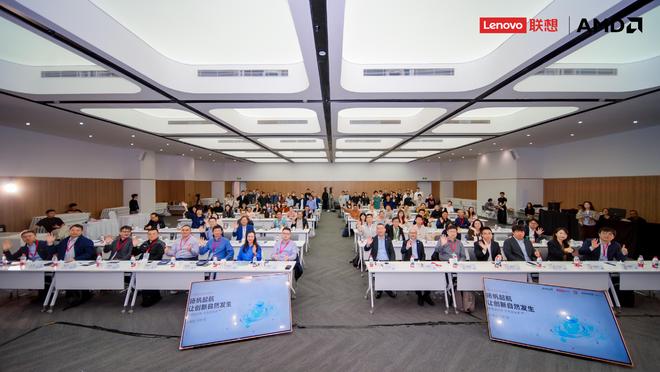
Core Insights - Lenovo is positioning itself as a leader in the AI and AIPC (AI-Powered Computing) field, emphasizing the importance of ecosystem collaboration for innovation to thrive [1][5][24] - The launch of the "Lenovo Innovation Accelerator" aims to empower small and medium enterprises (SMEs) through a comprehensive innovation system [1][3] - A memorandum of understanding was signed between Lenovo and the Puxin Incubator to enhance support for SMEs within the industrial chain [3][5] Group 1: Event Highlights - The "New Business Innovation Ecosystem Roadshow" in Shanghai showcased 10 high-potential projects, focusing on verifiable technologies and practical solutions [1][16] - Key industry leaders, including Lenovo, AMD, and Puxin Incubator, shared insights on the future of AI ecosystems [1][11] - The top three projects selected during the roadshow will receive significant support, including expert consultations and opportunities for collaboration with Lenovo [16][18] Group 2: Strategic Collaborations - Lenovo will open its business scenario needs and supply chain resources to the Puxin Incubator, allowing qualifying projects to access Lenovo's industrial ecosystem [3][22] - The collaboration aims to drive the growth of "hard technology" projects, facilitating their market value realization [3][20] Group 3: Entrepreneurial Perspectives - Entrepreneurs expressed the need for long-term value and support from ecosystem leaders like Lenovo to navigate the challenges of innovation [22][24] - The roadshow provided a platform for startups to showcase their products and engage with industry peers, fostering collaboration opportunities [18][22] - Participants highlighted the importance of aligning technology development with market needs to ensure successful commercialization [18][20]


魔飞光电:预计2028-2030年,全球AR眼镜年出货量将达数千万
Tai Mei Ti A P P· 2025-09-12 07:09
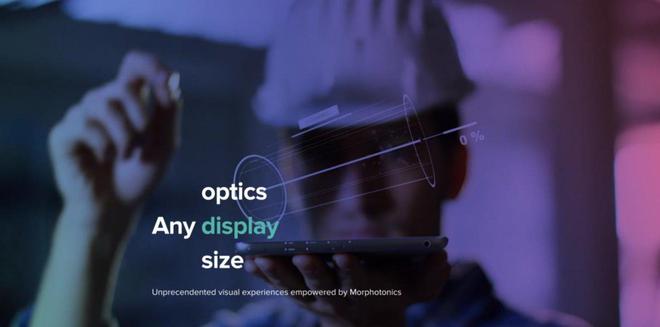
Core Insights - The AI/AR glasses market is experiencing significant growth, with a projected shipment of 262,000 units in the first half of 2025 in China, representing a 73% year-on-year increase, and an expected total shipment of 900,000 units for the year, a 133% increase [2] - The market is expected to exceed 100 billion yuan in three years, driven by advancements in technology and cost reductions [2] Industry Trends - Light guide AR glasses are anticipated to become the dominant form due to their lightweight and integrated design, gradually replacing heavier models [3] - The BirdBath technology is positioned for the budget segment, while light guide technology is gaining traction among manufacturers, spurred by AI advancements [3] - Major suppliers like GoerTek and Lens Technology are increasing investments in the supply chain to support the growth of AR glasses [3] Market Opportunities - The global new display industry is projected to grow by 17% in 2024, reaching $219.8 billion, with China accounting for approximately half of this market at around $108 billion [3] - Morphotonics, a Dutch company specializing in large-area nanoimprint technology, has established a subsidiary in Suzhou, China, to enhance its local presence and focus on cost reduction, capacity increase, and rapid response [3] Technological Challenges - Current wafer-level technology faces challenges such as high costs and low production capacity, while roll-to-roll nanoimprint technology struggles with precision and yield [4] - The roll-to-plate nanoimprint technology combines advantages of both methods, offering higher production capacity while meeting precision requirements [4] Production Capacity - Morphotonics has commercialized products like the Portis series for small-scale production and the Aurora series for large-scale manufacturing, with plans to introduce a new device, 'Cypris', capable of producing 6 million light guides annually [4] - A recent production run achieved a yield of 93%, with a target of maintaining yields between 90%-95% for large-scale production [4] Future Projections - The global annual shipment of AR smart glasses is expected to reach tens of millions by 2028 to 2030, contingent on reducing production costs [5] - Initial price increases of 20%-40% may be acceptable, but long-term market acceptance will require further price reductions [5]
国盛证券:维持水晶光电“买入”评级,三大业务板块稳健发展
Xin Lang Cai Jing· 2025-08-28 06:20
Group 1 - The core viewpoint of the report indicates that Crystal Optoelectronics has achieved steady growth in the first half of the year, with continuous optimization of its industrial structure and gradual improvement in profitability [1] - The company focuses on three core business directions: consumer electronics, automotive optics, and AR/VR, expanding its product matrix from single components to a combination of components, modules, and solutions [1] - In the consumer electronics sector, the company deepens collaboration with industry leaders to develop innovative optical products [1] Group 2 - In the AR/VR field, the company emphasizes technological research and development, having established a business layout that includes waveguide plates, 3D modules, core optical components, diffraction wafers, and reflective plates, as well as other 2D and 3D optical products required for smart head-mounted devices [1] - The company aims to collaborate with industry leaders to tackle optical challenges in the AR/VR sector and promote industry development [1] - The report maintains a "buy" rating for the company [1]
研报掘金丨国盛证券:维持水晶光电“买入”评级,三大业务板块稳健发展
Ge Long Hui A P P· 2025-08-28 06:20
Group 1 - The core viewpoint of the report indicates that Crystal Optoelectronics has achieved steady growth in the first half of the year, with continuous optimization of its industrial structure and gradual improvement in profitability [1] - The company focuses on the optical sector, targeting three core business directions: consumer electronics, automotive optics, and AR/VR [1] - The product matrix has expanded from a single component to include components, modules, and solutions, indicating a diversified approach to product offerings [1] Group 2 - In the consumer electronics field, the company deepens collaboration with industry leaders to develop innovative optical products [1] - In the AR/VR sector, the company emphasizes technological research and development, having established a business layout that includes waveguide plates, 3D modules, core optical components, diffraction wafers, and reflective plates, as well as other 2D and 3D optical products required for smart head-mounted devices [1] - The company aims to collaborate with industry leaders to tackle optical challenges in the AR/VR field and promote industry development [1]