AI加速芯片

Search documents
黄仁勋:“信心十足”
财联社· 2026-03-18 01:14
Core Viewpoint - Nvidia's CEO Jensen Huang has stated that the previously mentioned $1 trillion annual sales target for AI accelerated chips does not include other product lines, indicating that total revenue could exceed this figure as the company enters new markets [3][6]. Group 1: AI Accelerated Chips - Huang confirmed that by the end of 2027, Nvidia's next-generation AI accelerated chips are expected to generate at least $1 trillion in revenue [3]. - The company is confident in achieving and delivering over $1 trillion in business, with Huang expressing strong confidence in reaching this revenue target [6]. Group 2: Market Demand and Competition - Huang noted that demand is accelerating at a significant scale, and the company is prepared to support this demand through supply [7]. - Despite the ambitious revenue forecast, analysts on Wall Street are concerned that this prediction does not indicate an acceleration in Nvidia's revenue growth compared to potential competitors [7]. Group 3: Data Center Sales - Nvidia previously projected that by the end of 2026, data center equipment sales would reach $500 billion; the latest forecast extends this timeline by one year while doubling the cumulative scale [8]. Group 4: Shareholder Returns - Nvidia plans to allocate more cash for shareholder returns in the second half of the year, including stock buybacks and dividends [9]. - CFO Colette Kress stated that after completing planned investments, approximately 50% of free cash flow will be used for shareholder returns [10].



英伟达:公司明年营收或突破万亿美元 计划与优步扩大合作
Sou Hu Cai Jing· 2026-03-18 00:36
Core Viewpoint - NVIDIA's CEO Jensen Huang stated that the previously mentioned $1 trillion annual sales target for AI accelerated chips does not include other product lines, indicating that total revenue could exceed this figure as the company enters new markets [1] Group 1: AI Accelerated Chips - Huang announced at the GTC annual developer conference that NVIDIA's next-generation AI accelerated chips are expected to generate at least $1 trillion in revenue by the end of 2027 [1] - The statement suggests a broader revenue potential for NVIDIA beyond just AI chips as the company expands into new markets [1] Group 2: Partnerships and Market Impact - Uber and NVIDIA announced an expansion of their partnership in autonomous driving, with plans to launch related vehicles by 2028 [1] - Following the announcement, Uber's stock price increased by over 4%, and shares of another ride-hailing company, Lyft, also saw a rise [1]
黄仁勋称2027年底英伟达AI加速芯片要创收1万亿美元
Sou Hu Cai Jing· 2026-03-17 09:56
Group 1 - The core message of the article is that NVIDIA expects its next-generation AI chips to generate at least $1 trillion in revenue by the end of 2027, reflecting the rapid growth of the AI infrastructure market [1][3]. - NVIDIA's main AI chip products, Blackwell and Rubin, are projected to collectively generate at least $1 trillion in revenue by the end of 2027, up from a previous estimate of $500 billion by the end of 2026 [3]. - The CEO of NVIDIA, Jensen Huang, stated that the AI inference market has reached a turning point, with demand for inference computing power experiencing exponential growth [5]. Group 2 - NVIDIA plans to collaborate with the startup "Grok" to launch AI server systems focused on low-cost, low-latency inference computing, supporting a trillion-level computing market [5]. - New products were showcased, including chip modules for space AI computing, aimed at deploying data center-level AI computing capabilities to satellites and orbital data centers [5]. - NVIDIA introduced the OpenClaw intelligent agent platform and the NemoClaw toolchain to promote the safe, controllable, and scalable implementation of AI agents in various scenarios, including industrial, office, and home environments [5].
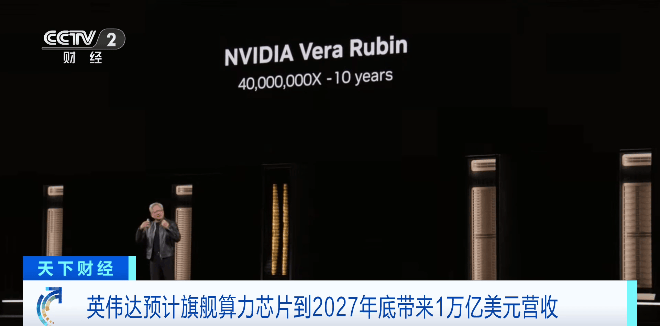
英伟达押注下一个万亿级机遇,入局AI服务器系统
第一财经· 2026-03-17 09:18
Core Insights - NVIDIA's CEO Jensen Huang announced that the company's next-generation AI acceleration chips are expected to generate at least $1 trillion in revenue by the end of 2027 [1] - Huang emphasized that the AI inference market has reached a turning point, transitioning from training to inference and execution, with demand for inference computing power experiencing exponential growth [1] - NVIDIA plans to collaborate with the startup "Grok," which focuses on inference technology, to launch AI server systems aimed at enhancing its presence in the low-cost, low-latency inference computing sector, supporting a trillion-level computing power market [1]

研判2026!全球及中国AI加速芯片行业发展历程、发展现状、细分市场及未来发展趋势研判:云端主导推理突围,细分赛道释放巨大市场空间[图]
Chan Ye Xin Xi Wang· 2026-02-25 01:13
Core Insights - AI acceleration chips are specialized integrated circuits designed for optimizing artificial intelligence algorithms, significantly enhancing performance in AI core computing tasks across various deployment scenarios [1][2][3] - China's AI acceleration chip industry is experiencing explosive growth, driven by strong demand for training and inference chips, supported by government policies and a robust industrial ecosystem [1][9] Industry Overview - AI acceleration chips are categorized into three main types based on technology architecture: GPU, ASIC, and FPGA, each serving different functions and deployment scenarios [3][4] - The development of China's AI acceleration chip industry can be divided into four stages: reliance on imports before 2015, initial domestic development from 2016 to 2018, accelerated domestic substitution from 2019 to 2022, and a focus on high-end computing capabilities from 2023 onwards [5][6] Policy Support - The Chinese government has implemented multiple policies to support the AI acceleration chip industry, focusing on strategic planning, infrastructure development, and technological innovation, which collectively foster a stable environment for high-quality growth [6][9] Market Analysis - The global AI acceleration card market is projected to grow from $119.03 billion in 2024 to $525.77 billion by 2028, reflecting a compound annual growth rate (CAGR) of over 50% [7][8] - In China, the AI acceleration card market is expected to expand from 12.25 billion yuan in 2020 to 216.48 billion yuan in 2024, with a CAGR of 105.01%, and is projected to reach 1,107.65 billion yuan by 2028 [9][11] Segment Analysis - The cloud-based AI acceleration card market is expected to dominate, growing from $107.87 billion in 2024 to $452.40 billion by 2028, accounting for over 80% of the overall market [10] - The inference segment is anticipated to grow significantly, with the market size expected to increase from $47.61 billion in 2024 to $325.62 billion by 2028, reflecting a CAGR of 61.71% [10] Future Trends - The Chinese AI acceleration chip industry is set to focus on high-end technology breakthroughs and architectural innovations, aiming to enhance product performance and efficiency [11][12] - There will be a shift towards customized chips for specific application scenarios, with leading companies expanding their presence across various sectors while smaller firms target niche markets [12][14]


协同共生,智能跃迁的算力“密码”
Xin Lang Cai Jing· 2026-01-27 12:25
Core Insights - The evolution of artificial intelligence (AI) is increasingly reliant on computational power, which transcends its traditional role as a mere tool, becoming essential for the realization and development of intelligent forms [1][9] - The emergence of intelligent paradigms is fundamentally rooted in the specific "computational space-time" provided by computational power, which shapes the boundaries of intelligent possibilities [1][9] Group 1: Computational Power as the "Possibility Space" for Intelligence - The emergence of intelligence can be viewed as a complex optimization activity within a high-dimensional parameter space, where computational power defines the radius of AI's cognitive capabilities [2][10] - As parameter scales increase from millions to billions, there is not only a quantitative accumulation but also a qualitative leap in the complexity of intelligence [2][10] - Models with trillions of parameters can accommodate richer knowledge graphs and establish more complex connections between knowledge, enabling AI to exhibit remarkable creativity in reasoning processes [2][11] Group 2: The Transition of AI Learning Paradigms Driven by Computational Power - AI learning has evolved from supervised learning to self-supervised learning and then to generative learning, revealing that qualitative changes in computational supply drive transformations in learning paradigms [4][13] - The limitations of supervised learning, which requires extensive manual labeling, can hinder the speed and breadth of intelligent development, while self-supervised learning allows systems to autonomously discover patterns in vast amounts of unlabeled data [4][13] - Breakthroughs in generative AI, such as diffusion models and generative adversarial networks, rely on modeling high-dimensional data distributions, necessitating substantial computational resources for iterative generation and discrimination [4][13] Group 3: The "Co-evolution" of Computational Power and Algorithms - The history of intelligent development is characterized by the mutual adaptation and co-evolution of algorithms and computational power, continuously driving technological advancement [7][16] - Innovations in computational architecture influence algorithm design, as seen with the rise of the Transformer architecture due to the effective utilization of GPU parallel computing [7][16] - The demand for algorithms also propels innovations in computational architecture, leading to the development of AI acceleration chips and high-bandwidth memory technologies [7][16] Group 4: Future "Ecological Evolution" - The deep coupling of intelligent technologies and computational resources is leading to an exponential increase in computational demand and the formation of an intelligent ecosystem [8][17] - This ecosystem exhibits multi-layered characteristics, with new computing architectures like quantum and optical computing exploring breakthroughs beyond traditional limits [8][17] - Future competition will not be about individual technologies but rather about entire ecosystems, where entities with complete technology stacks capable of end-to-end optimization will hold advantageous positions in the intelligent era [8][17]

台积电“560亿”豪赌引爆市场:AI芯片行情再燃,阿斯麦市值冲破5000亿美元
Jin Rong Jie· 2026-01-16 09:08
Core Viewpoint - TSMC's recent earnings report exceeded market expectations, igniting a new wave of AI-themed market enthusiasm, with a record capital expenditure plan of up to $56 billion by 2026, boosting confidence across the semiconductor industry [1] Group 1: Impressive Earnings - TSMC's Q4 2025 revenue reached approximately $33.7 billion, with a net profit of $16 billion, showing significant year-on-year growth [2] - The gross margin increased to 62.3%, indicating strong pricing power and technological advantages in advanced processes [2] - High-performance computing revenue, including CPU, GPU, and AI acceleration chips, grew significantly, accounting for 55% of total revenue, surpassing smartphone business for the first time [2] - The 3nm and 5nm processes contributed over 60% of revenue, demonstrating the financial returns from technological leadership [2] Group 2: Bold Future Investments - TSMC provided an optimistic revenue growth forecast of nearly 30% for 2026 and raised its capital expenditure plan to $52 billion to $56 billion, a nearly 30% increase from the previous year [3] - This investment decision was made after extensive discussions with major clients like NVIDIA, Apple, and AMD, aimed at addressing confirmed long-term structural demand driven by AI [3] - A significant portion of the capital expenditure (10%-20%) will be allocated to advanced packaging technology to enhance AI chip production capacity [3] Group 3: Industry Chain Revaluation - TSMC's positive outlook has triggered a value reassessment across the semiconductor supply chain, particularly benefiting semiconductor equipment manufacturers [4] - ASML, the sole supplier of extreme ultraviolet lithography machines, saw its market value soar past $500 billion following TSMC's report, becoming one of Europe's highest-valued tech companies [4] - The optimistic sentiment spread to the broader chip sector, with stocks of companies like NVIDIA, AMD, and Micron Technologies rising [4] Group 4: Evolving AI Demand - The underlying logic supporting TSMC and the industry's confidence is the qualitative shift in AI demand, moving from model training to inference needs driven by widespread application [5][6] - As AI transitions from experimental phases to various industries, the demand for computing power is expected to grow exponentially, indicating a more sustainable demand base [6] Group 5: Challenges Ahead - Despite the optimism, there are cautious voices regarding the sustainability of high profitability and capital returns amid geopolitical pressures and cyclical risks [7] - TSMC's $56 billion capital expenditure requires sustained high customer orders over several years to avoid potential overcapacity risks [7] - The high costs of building fabs in regions like the U.S., Japan, and Europe compared to Taiwan pose long-term profitability challenges [7]

昆仑芯赴港IPO,中金、海通给出500亿美元估值预期
Ge Long Hui· 2026-01-08 08:38
Group 1 - The core point of the article is that Baidu's AI chip subsidiary Kunlun Chip is set to be spun off and listed, with a potential valuation of around $50 billion, reflecting the growing interest in core chip assets within the domestic computing power industry [1] - Multiple institutions, including CICC and Haitong International, have provided positive assessments of Kunlun Chip, with CICC estimating its value based on AI cloud infrastructure and Haitong International comparing it to domestic GPU manufacturer Muxi, suggesting Kunlun Chip could reach three times Muxi's value [1] - IDC data indicates that Kunlun Chip is expected to rank third in China's AI accelerator chip market in 2024 with a shipment volume of 69,000 units, surpassing notable competitors like Cambricon and Muxi [1] Group 2 - The market's re-evaluation of Kunlun Chip is prompting a reassessment of Baidu's overall valuation logic, with Goldman Sachs and Macquarie highlighting the spin-off as a key step in "unlocking value" for Baidu [2] - As contributions from chips, cloud infrastructure, and related AI businesses continue to grow, Kunlun Chip is positioned to be a significant factor in reshaping market perceptions of Baidu's long-term growth potential [2]
刚刚,暴涨超118%!
Zhong Guo Ji Jin Bao· 2026-01-02 02:38
Core Viewpoint - Wall Street's first stock of the new year, Birran Technology, saw a significant increase of over 118% on its debut in the Hong Kong Stock Exchange, indicating strong market interest and investor confidence in the company [2][4]. Group 1: Company Overview - Birran Technology, established in 2019, is a Chinese high-performance general-purpose computing chip company headquartered in Shanghai, focusing on the development of general-purpose GPUs and AI acceleration chips [4]. - The company aims to provide computing power solutions for AI training, inference, and high-performance computing [4]. Group 2: IPO Details - Birran Technology's shares were priced at HKD 19.60, raising approximately HKD 55.83 billion, making it the largest fundraising project since the implementation of Chapter 18C of Hong Kong's listing rules [4]. - The IPO attracted 471,000 retail investors, marking it as the most sought-after new stock in the Hong Kong market over the past year [4]. Group 3: Market Position and Projections - As of 2024, Birran Technology holds a market share of 0.16% in China's intelligent computing chip market and 0.20% in the GPGPU market, with expectations to capture about 0.2% of the projected USD 50.4 billion market by 2025 [4]. - The company has secured sales agreements valued at approximately RMB 1.241 billion as of December 15, 2025 [4]. Group 4: Financial Performance - Revenue projections for Birran Technology from 2022 to 2024 are as follows: RMB 0.5 million, RMB 62.03 million, and RMB 337 million, with adjusted net losses of RMB 1.038 billion, RMB 1.051 billion, and RMB 767 million respectively [7]. - For the first half of 2025, the company reported revenue of RMB 58.9 million and an adjusted net loss of RMB 552 million [7]. Group 5: Innovation and Intellectual Property - As of June 30, 2025, Birran Technology has submitted 1,158 self-developed invention patent applications, ranking first among Chinese GPGPU companies, and has received 388 invention patents with a 100% authorization rate [8].

刚刚,暴涨超118%!
中国基金报· 2026-01-02 02:32
Core Viewpoint - Wallen Technology, a Chinese high-performance general-purpose computing chip company, made its debut on the Hong Kong Stock Exchange on January 2, 2024, with a significant price increase of over 118% from its opening price [2][5][8]. Group 1: Company Overview - Wallen Technology, established in 2019 and headquartered in Shanghai, focuses on the research and development of general-purpose GPUs and AI acceleration chips, aiming to provide computing power solutions for AI training, inference, and high-performance computing [5][6]. - The company is recognized as one of the "Four Little Dragons" of domestic GPUs in China [4][8]. Group 2: IPO Details - The IPO was priced at HKD 19.60 per share, raising approximately HKD 5.583 billion, and attracted 471,000 retail investors, marking it as the most subscribed new stock in the Hong Kong market over the past year [5][12]. - This IPO is the largest fundraising project since the implementation of Chapter 18C of Hong Kong's listing rules [5]. Group 3: Market Position and Projections - As of 2024, Wallen Technology holds a market share of 0.16% in China's intelligent computing chip market and 0.20% in the GPGPU market, with expectations to capture approximately 0.2% of the market by 2025, which is projected to reach USD 50.4 billion [6][12]. - The company has secured sales agreements valued at approximately RMB 1.241 billion and plans to launch its next-generation flagship data center chip, the Wallen™ 20X series, by 2026 [7]. Group 4: Financial Performance - Wallen Technology's revenue from 2022 to 2024 is projected to be RMB 0.5 million, RMB 62.03 million, and RMB 337 million, with adjusted net losses of RMB 1.038 billion, RMB 1.051 billion, and RMB 767 million respectively [12]. - As of the first half of 2025, the company reported revenue of RMB 58.9 million and an adjusted net loss of RMB 552 million [12]. Group 5: Investment and Support - The IPO attracted 23 cornerstone investors, including prominent firms such as Qiming Venture Partners and Ping An Life Insurance, providing strong backing for the company [10][11].