波尔多葡萄酒

Search documents
G7对华挂出免战牌,马克龙带头对话中国:可以跟金砖握手言和
Sou Hu Cai Jing· 2026-01-09 14:12
Group 1 - French President Macron's call for G7 to stop being an "anti-China club" and to consider inviting China to the G7 summit reflects a significant shift in diplomatic strategy [1][4] - The G7 is facing internal divisions and economic challenges, with the group's collective paralysis highlighted by the inability to issue a joint statement at the 2025 summit in Canada due to disagreements among members [3][5] - The economic performance of France is struggling, with a GDP growth rate of only 0.7% in 2025 and an unemployment rate of 8%, prompting Macron to seek opportunities in the Chinese market [5][13] Group 2 - Japan's strong opposition to Macron's invitation to China stems from fears of losing its unique position as the only Asian member of the G7, which has historically allowed it to act as a regional representative [7] - NATO's involvement in G7 economic matters indicates a deeper U.S. pressure to maintain unity against China, despite internal divisions within NATO regarding its role in the Asia-Pacific region [9] - The BRICS nations are expanding, with Indonesia joining in 2025, leading to a significant increase in their global economic influence, which is approaching that of the G7 [11][14] Group 3 - Macron's outreach to China is driven by economic interests, as French companies like Airbus and wine producers heavily rely on the Chinese market for their business [11][13] - The unilateral actions of the Trump administration have alienated European allies, pushing France to advocate for "strategic autonomy" and to engage in dialogue with China to address global economic imbalances [13] - The G7's declining moral authority is evident in its inconsistent responses to global issues, which contrasts with the BRICS nations' focus on practical cooperation and development [14][16]


好特卖全国多地关店,部分城市新加盟叫停
新浪财经· 2025-12-16 10:30
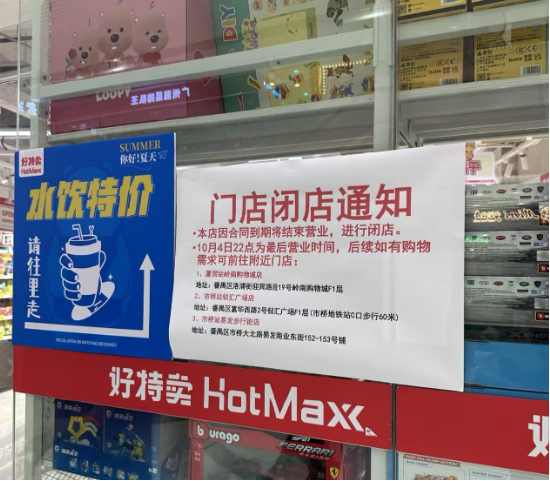
Core Viewpoint - The article highlights the recent trend of store closures by the discount retail brand "好特卖" (Hao Te Mai) in major cities, attributing this to issues such as high rental costs, lease expirations, and poor performance of certain stores [2][5][9]. Expansion and Franchise Model - In April 2023, 好特卖 transitioned to a franchise model, aiming to open around 600 new stores within the year, but the actual number of new openings has significantly decreased to just a few dozen [3][10]. - The company had over 500 stores across 32 cities at the time of the franchise launch, with plans to double its store count and achieve a gross merchandise volume (GMV) exceeding 4 billion yuan [8][10]. - The franchise investment for opening a store is approximately 800,000 to 900,000 yuan, including various fees and costs [10][12]. Store Closures and Reasons - The closures are primarily due to three reasons: high rental costs, lease expirations, and underperforming stores [9][10]. - Many of the closed stores were early direct-operated outlets that could not meet current operational needs, leading to a systematic optimization and closure process [9][10]. Market Position and Consumer Base - 好特卖 has positioned itself as a low-cost retail option, attracting young consumers with competitive pricing on various products [14]. - Data indicates that 65.5% of the consumers of discount food products are aged 19-35, highlighting the brand's appeal to younger demographics [14]. Quality Control Issues - The brand faces significant quality control challenges, with numerous complaints regarding expired or substandard products, leading to administrative penalties for mislabeling and selling expired goods [15][19]. - The proportion of near-expiry products has decreased from nearly 100% at the start to between 5% and 30% currently, as the company seeks to diversify its product offerings [19].
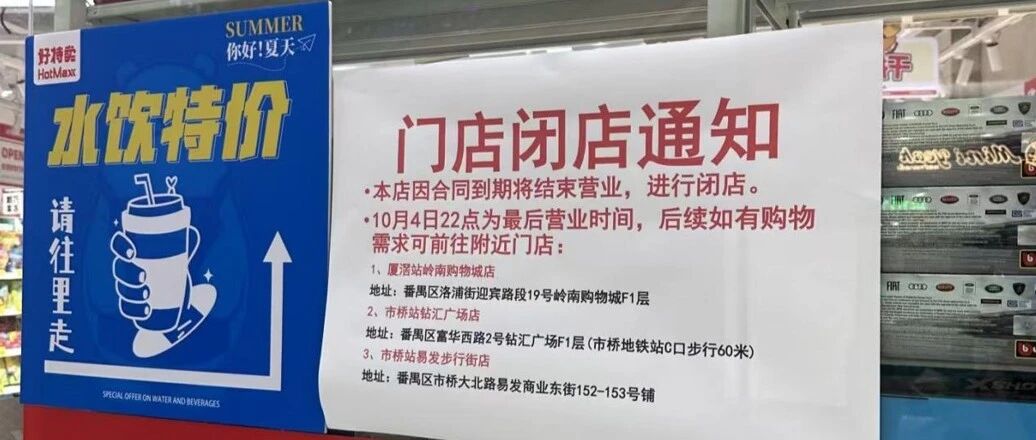
好特卖全国多地关店,部分城市新加盟叫停
Xin Lang Cai Jing· 2025-12-16 09:54
Core Insights - The company is closing stores in major cities such as Guangzhou, Changsha, Hangzhou, and Beijing due to issues related to rental costs, lease expirations, and poor performance of some locations [2][3][19] - Over the past year, the company's expansion has significantly slowed down, with plans to open around 600 new stores in 2023 being drastically reduced to only a few dozen [2][18] - Founded in 2020, the company has raised five rounds of funding from various investors and initially experienced rapid growth, becoming a prominent player in the discount retail sector [2][18] Store Closures - The closures are primarily attributed to three factors: high rental costs, lease expirations, and underperforming stores [19] - Many of the closed stores were early direct-operated locations that no longer met operational needs, prompting a systematic optimization process [19] - The company is also adjusting its strategy to focus on relocating stores to better positions and controlling costs [19] Franchise Model Shift - In April 2023, the company transitioned to a franchise model, which initially led to rapid growth, doubling the number of stores and achieving a gross merchandise volume (GMV) exceeding 4 billion yuan [6][18] - However, the expansion strategy has shifted significantly, with a focus now on supporting existing franchisees rather than aggressively recruiting new ones [22] - The average investment to open a franchise store is around 800,000 to 900,000 yuan, including various fees and costs [20] Sales Performance - The average daily sales per store can exceed 10,000 yuan, with some locations in Beijing achieving monthly sales of 440,000 yuan [22] - The company is now prioritizing the development of existing franchisees who typically own multiple stores, rather than pursuing new franchise opportunities [22] Quality Control Issues - The company has faced criticism regarding product quality, with numerous complaints about expired or substandard items [23][25] - It has been penalized multiple times for issues related to labeling and selling expired products, with fines ranging from 5,000 to 50,000 yuan [25] - The proportion of near-expiry products has decreased from nearly 100% at the start to between 5% and 30% currently, as the company diversifies its product offerings [25]
一起波尔多:老牌产区如何破解市场、气候与年轻消费难题?
Sou Hu Cai Jing· 2025-11-04 04:16
Core Insights - Bordeaux is at the intersection of tradition and innovation, responding to global market fluctuations, climate change, and new consumer demands with a unified approach centered around the slogan "Join the Bordeaux Crew" [1][2][5] Brand Innovation - The Bordeaux Wine Industry Council (CIVB) launched a new brand slogan aimed at younger consumers, promoting Bordeaux wines as "young, easy to drink, and shareable" [2][5] - The "The Bordeaux Experience" event showcased innovative tasting formats, including cocktails made from Bordeaux rosé and white wines, and interactive games to engage participants [2][5] - CIVB aims to transform Bordeaux's image from a "high-end symbol" to an accessible "everyday partner" through diverse experiences and social media outreach [5][7] Market Adjustment - Bordeaux's wine exports to China peaked at 80 million bottles in 2017 but have since declined to 30 million bottles due to inventory digestion and demand shifts [9][11] - China is now the second-largest export market for Bordeaux bottled wine, and there is optimism for future growth as consumer education and market confidence improve [11][13] Climate Response - The CIVB is leading a comprehensive innovation in response to climate change, including adjusting cultivation methods and introducing drought-resistant grape varieties [14][16] - Bordeaux aims to diversify its grape varieties and has begun reintroducing indigenous old varieties while collaborating with research institutions for scientific support [16][18] Product Diversification - Bordeaux is expanding its product range beyond red wine to include white, sparkling, and rosé wines, with plans to introduce two new appellations by 2025 [19][21] - The region is adapting its winemaking techniques to meet modern consumer preferences, such as reducing alcohol content while maintaining flavor [21][23] Future Outlook - Bordeaux's transformation focuses on integrating tradition with contemporary lifestyles, ensuring the preservation of its terroir while becoming part of modern living [24]

中美相互取消91%的关税!90天内暂停24%关税
Sou Hu Cai Jing· 2025-05-13 04:32
Group 1: US-China Trade Talks - The US and China achieved a historic breakthrough in trade talks, with both sides reporting "substantial progress" [1][3] - The US committed to canceling 91% of tariffs imposed on Chinese goods, while China reciprocated by canceling 91% of its retaliatory tariffs [3] - The agreement includes a 90-day suspension of 24% of the tariffs, with 10% of the tariffs remaining in place [3] Group 2: Wine Industry Developments - Château Lafite Rothschild has launched its 2024 vintage at a price approximately 30% lower than previous years, making it the lowest-priced Lafite vintage currently on the market [4][6] - The merger between Accolade Wines and Pernod Ricard's wine business has resulted in the formation of a new company, Vinarchy, which will phase out about 50 brands over the next two years [8][9] - Tmall International has seen a 38% increase in sales of Bordeaux wines, with over 700,000 Chinese consumers purchasing Bordeaux wines through the platform [13] - IWSR predicts that global online wine sales will exceed $36 billion by 2028, with a projected growth of 20% over the next five years [16] - Treasury Wine Estates is collaborating with CSIRO to cultivate new grapevine varieties that are more resilient to climate change and have disease-resistant traits [19]