
海豹07

Search documents
比亚迪 | 2025整装待发 2026出口加电【国联民生汽车 崔琰团队】
汽车琰究· 2026-03-30 01:21
Core Viewpoint - The company is expected to see revenue growth in the coming years, with a projected revenue of 921.9 billion yuan in 2026, reflecting a 14.7% increase from 2025, despite a decline in net profit for 2025 [10][11]. Revenue and Delivery - In Q4 2025, the company's revenue was 237.7 billion yuan, a year-on-year decrease of 13.5% but a quarter-on-quarter increase of 21.9%, primarily due to a significant rise in sales volume [3]. - The sales volume in Q4 2025 reached 1.342 million vehicles, down 11.9% year-on-year but up 20.5% quarter-on-quarter, with export sales showing a remarkable increase of 191.7% year-on-year [3]. Profitability - The overall gross margin in Q4 2025 was 17.4%, with a year-on-year increase of 0.4 percentage points, while the automotive and battery gross margin was 21.6%, up 1.8 percentage points year-on-year [4]. - The net profit attributable to the parent company in Q4 2025 was 9.29 billion yuan, down 38.2% year-on-year but up 18.6% quarter-on-quarter [5]. Electric Vehicle Technology - The company launched its second-generation blade battery and flash charging technology, achieving record charging speeds, which addresses key challenges in electric vehicle charging [6]. Export Growth - The company is expected to maintain its position as the leading exporter of Chinese electric vehicles, with exports in January-February 2026 reaching 201,000 units, a year-on-year increase of 50.8% [7]. Production and Sales - The company is making steady progress in building overseas factories, with significant milestones achieved in Brazil and Thailand, enhancing its global supply chain capabilities [8]. High-End Product Strategy - The company has seen a doubling in sales of its high-end brands, with continued strong performance in early 2026, indicating a successful high-end product strategy [9].



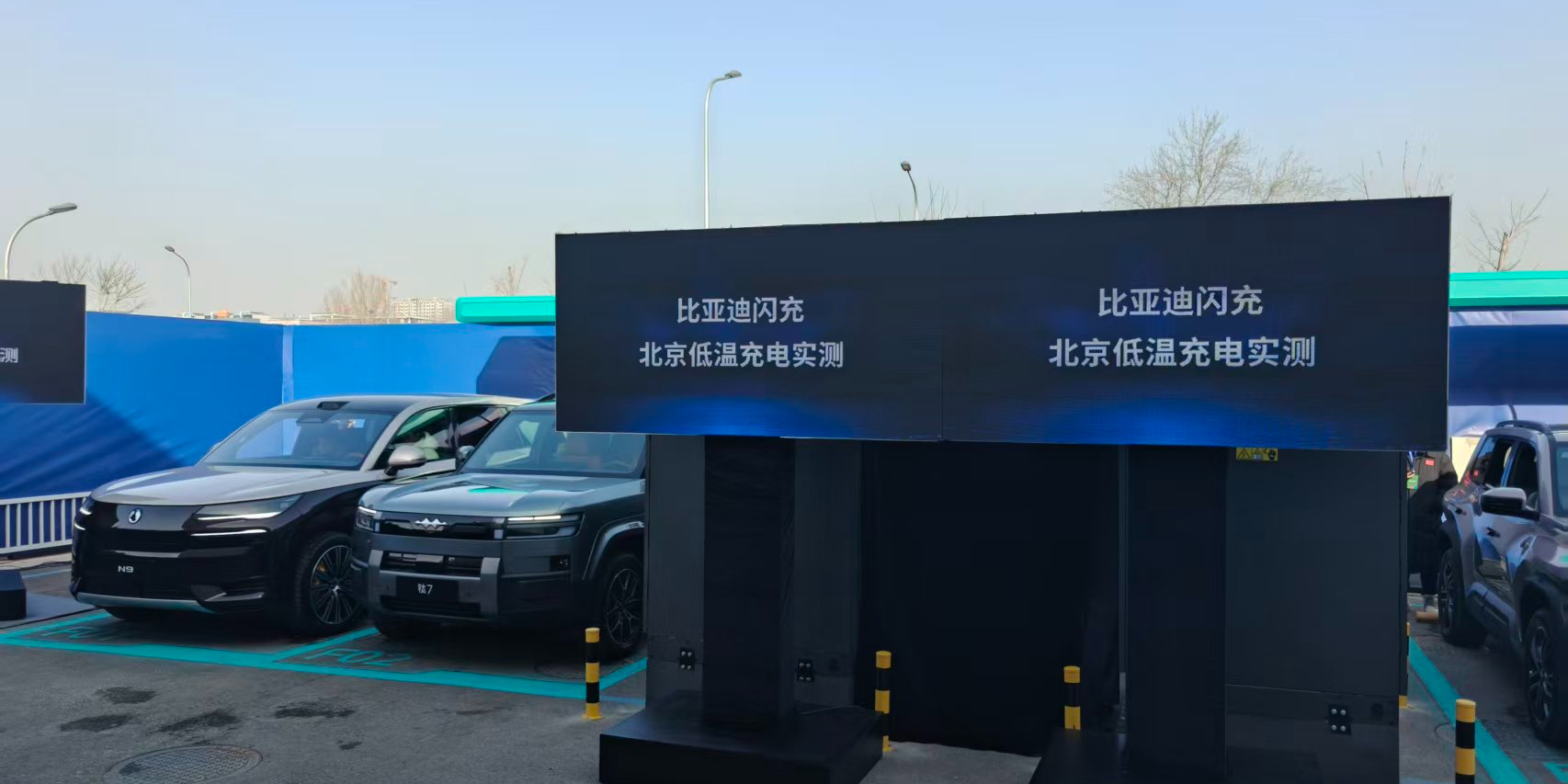
比亚迪第二代闪充北京实测:无“虚标”,充满最快9分42秒
Jing Ji Guan Cha Wang· 2026-03-17 02:52
Core Viewpoint - BYD's second-generation fast charging technology claims to charge an electric vehicle in 5 minutes for a partial charge and 9 minutes for a full charge, even in low temperatures, marking a significant advancement in charging efficiency [2] Group 1: Technology Performance - The second-generation fast charging technology was tested in Beijing on February 10, showcasing its performance in winter conditions with temperatures around zero degrees [2] - Eight BYD models participated in the test, with starting battery levels around 20%, charging to 97% capacity [2] - The fastest charging time recorded was 9 minutes and 42 seconds for the Song Ultra model, while the longest was 10 minutes and 22 seconds for the Tengshi N9 model [2][6] Group 2: Industry Impact - The second-generation fast charging technology addresses the common issue of long charging times for electric vehicles, especially in winter when charging efficiency typically decreases [2] - This technology significantly reduces charging anxiety for electric vehicle owners, bringing charging times closer to traditional fuel refueling times [7] - The advancement is expected to promote the growth of the electric vehicle industry, particularly increasing market penetration in northern regions [7]
汽车行业内卷有多严重?一线销售聊聊真实情况
车fans· 2025-06-10 00:29
Core Viewpoint - The automotive industry is facing significant challenges, including price wars and disordered competition, leading to a decline in sales and income for many companies and sales personnel [1] Group 1: Sales and Income Trends - Sales income in first-tier cities has decreased significantly, with some reporting declines of up to 40% compared to last year [3] - The average transaction price for vehicles has dropped by over 10,000 yuan compared to last year, indicating a tough market environment [3] - Many brands are reducing staff and facing severe layoffs, with stricter hiring processes in place [3] Group 2: Pricing Strategies and Discounts - Price reductions have been frequent, with some models seeing discounts of 20,000 to 30,000 yuan [5][8] - The competition among brands has intensified, leading to aggressive pricing strategies and frequent adjustments in promotional policies [5][8] - Some brands are experiencing a lack of effective promotional results, leading to customer dissatisfaction [8] Group 3: Product and Quality Adjustments - There have been no significant changes in product quality, but some brands have started to reduce configurations to cut costs [4][8] - New models are being introduced with slight price adjustments, but overall quality complaints remain low [4][11] - Brands are focusing on enhancing product features and technology to attract customers, with some emphasizing their unique selling propositions [15] Group 4: Inventory and Production - Inventory levels are reported to be unhealthy for some brands, leading to pressure on sales teams [5][13] - Companies are adopting order-based production strategies to manage inventory more effectively [15] - The inventory coefficient for some brands is reported to be healthy, indicating a more controlled approach to stock management [15]
