腾势N9

Search documents
【比亚迪(002594.SZ)/比亚迪股份(1211.HK)】2025业绩披露,全球化加速推进——2025年年报业绩点评(倪昱婧/邢萍)
光大证券研究· 2026-03-29 23:05
Core Viewpoint - The article discusses BYD's performance in 2025, highlighting revenue growth, profit decline, advancements in battery technology, and expansion in overseas markets [4][5][6]. Financial Performance - In 2025, BYD's total revenue increased by 3.5% year-on-year to 804 billion yuan, while net profit attributable to shareholders decreased by 19.0% to 32.6 billion yuan [4]. - The fourth quarter of 2025 saw a revenue decline of 13.5% year-on-year but a sequential increase of 21.9%, reaching 237.7 billion yuan [4]. - The net profit for Q4 2025 dropped by 38.2% year-on-year but increased by 18.7% sequentially to 9.3 billion yuan [4]. Product and Technology Development - BYD's total sales of new energy passenger vehicles in 2025 rose by 7.7% to 4.6 million units, with pure electric vehicle sales increasing by 27.9% to 2.26 million units [5]. - The second-generation blade battery technology was officially launched in March 2026, addressing key industry challenges such as slow charging and low-temperature charging [5]. - The company is enhancing its multi-brand strategy, with significant growth in high-end brands, including a 109% increase in sales for mid-to-high-end brands [5]. Global Market Expansion - BYD's export sales surged by 150.7% in 2025, reaching 1.046 million units, with Latin America becoming a key growth market [6]. - The company is benefiting from a diversified product matrix that includes both pure electric and plug-in hybrid models, particularly in Europe where low tariffs and fuel efficiency are advantageous [6]. - BYD is advancing its global localization strategy with production capabilities in countries like Brazil, Cambodia, and Hungary, while also enhancing brand presence through international partnerships [7].


比亚迪(002594):/比亚迪股份(1211.HK)2025年年报业绩点评:2025业绩披露,全球化加速推进
EBSCN· 2026-03-29 11:09
Investment Rating - The report maintains a "Buy" rating for both A-shares and H-shares of BYD, with current prices at 105.30 CNY and 106.50 HKD respectively [5]. Core Insights - In 2025, BYD's total revenue increased by 3.5% year-on-year to 804 billion CNY, while net profit attributable to shareholders decreased by 19.0% to 32.6 billion CNY [1]. - The company achieved a total sales volume of 4.6 million new energy passenger vehicles in 2025, a year-on-year increase of 7.7%, with pure electric vehicle sales rising by 27.9% to 2.26 million units [2]. - BYD's export sales surged by 150.7% year-on-year to 1.046 million units, with significant growth in Latin America and Europe [3]. Summary by Sections Financial Performance - In Q4 2025, BYD's revenue was 237.7 billion CNY, down 13.5% year-on-year but up 21.9% quarter-on-quarter. Net profit for the same quarter was 9.3 billion CNY, a decrease of 38.2% year-on-year [1]. - The company's revenue for 2026E is projected to reach 911.8 billion CNY, with a net profit of 37.7 billion CNY, reflecting a growth rate of 15.6% [4]. Product and Technology Development - BYD launched its second-generation blade battery and fast-charging technology in March 2026, addressing key industry challenges such as slow charging and low-temperature charging [2]. - The company is enhancing its multi-brand strategy, with significant sales growth in its high-end brands, which saw a combined increase of 109% in 2025 [2]. Market Expansion - BYD's overseas sales are expected to become a core growth driver, benefiting from a diversified product matrix that includes both pure electric and plug-in hybrid models [3]. - The company is advancing its global localization strategy, with production capabilities being established in countries like Brazil and Hungary [3].
新能源汽车销量稳居全球榜首,比亚迪2025年营收超8000万元
Ju Chao Zi Xun· 2026-03-28 11:11
Core Viewpoint - BYD has demonstrated strong operational resilience and growth vitality, maintaining its position as the global leader in electric vehicle sales for four consecutive years and entering the top five global automotive groups in 2025 [2] Financial Performance - In 2025, BYD achieved an operating revenue of approximately 803.97 billion yuan, a year-on-year increase of 3.46% [2] - The net profit attributable to shareholders was approximately 32.62 billion yuan [5] - The net profit after deducting non-recurring gains and losses was about 29.45 billion yuan [5] - The net cash flow from operating activities was 59.14 billion yuan [5] - Basic and diluted earnings per share were both 3.58 yuan [5] - The weighted average return on net assets was 15.31% [5] Business Segments - Revenue from automotive and related products was approximately 648.65 billion yuan, reflecting a year-on-year growth of 5.06% [4] - BYD's total vehicle exports exceeded one million units for the first time, achieving a year-on-year growth of 140% [4] - The company has established a global presence in 119 countries and regions, with a market strategy characterized by leadership in Latin America, breakthroughs in Europe, and diversified growth in Asia-Pacific [4] Brand Development - BYD's high-end brand strategy has shown significant results, with sales from its three high-end brands—Yangwang, Tengshi, and Fangchengbao—reaching nearly 400,000 units, significantly increasing their share of total passenger vehicle sales [5] - Fangchengbao's annual sales grew by 316%, successfully transitioning from a niche to a mainstream market [6] Research and Development - BYD's R&D investment reached 63.4 billion yuan in 2025, a year-on-year increase of 17%, with cumulative R&D investment exceeding 240 billion yuan [6] - The company employs over 120,000 R&D engineers and has filed more than 71,000 patents globally, with over 42,000 patents granted [6] Technological Advancements - BYD launched the world's first mass-produced passenger vehicle with a full-domain kilovolt high-voltage architecture, addressing industry challenges such as slow charging and low-temperature charging difficulties [6] - The company introduced the "Universal Intelligent Driving" strategy and the "Tianshen Eye" technology matrix, leading the automotive industry's shift towards intelligent technology [6] - In March 2026, BYD unveiled the second-generation blade battery and fast-charging technology, setting a new record for the fastest charging speed in mass production, marking the entry into the "fast-charging era" for electric vehicles [6]
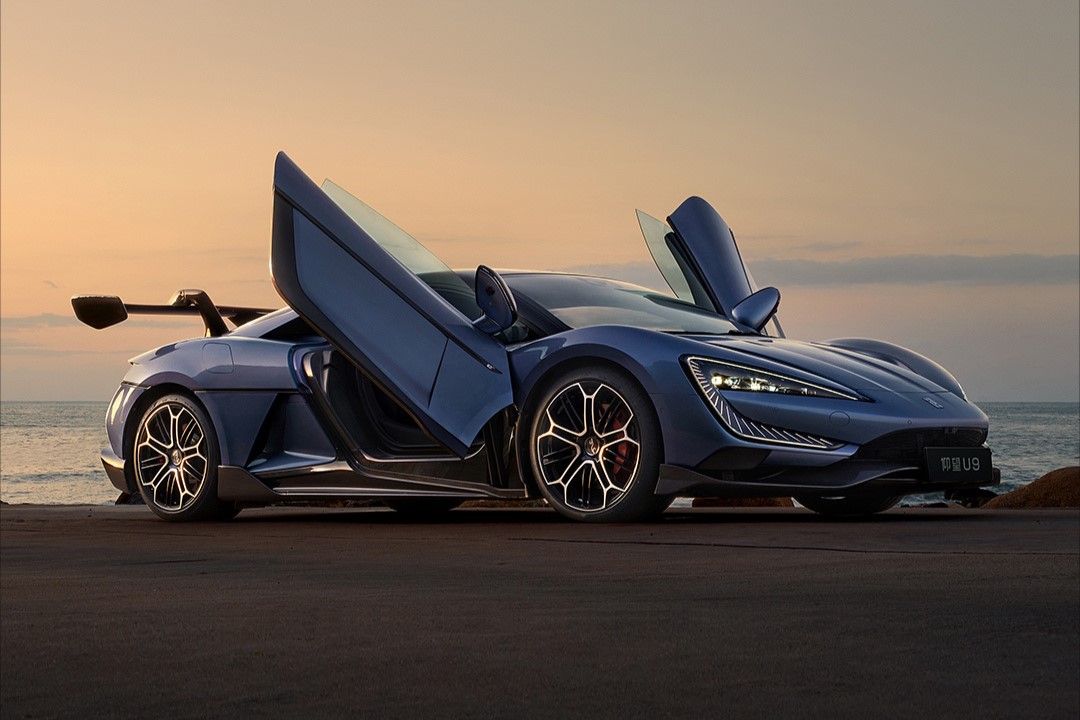
跻身全球汽车集团销量第五,比亚迪(002594.SZ)2025年营业收入达8039.65亿元
智通财经网· 2026-03-27 15:59
Core Insights - BYD reported a revenue of 803.965 billion yuan for 2025, marking a year-on-year increase of 3.46% [1] - The net profit attributable to shareholders was 32.619 billion yuan, with a net profit of 29.446 billion yuan after excluding non-recurring gains and losses [1] - The company proposed a cash dividend of 3.58 yuan per share to all shareholders [1] Group 1: Sales and Market Position - BYD maintained its position as the global leader in electric vehicle sales for four consecutive years and ranked fifth among global automotive groups, improving one position from the previous year [2] - The company's total vehicle exports exceeded one million units for the first time, representing a year-on-year growth of 140% [2] - The sales of high-end brands such as Yangwang, Tengshi, and Fangchengbao reached nearly 400,000 units, significantly increasing their share of the total passenger vehicle sales compared to 2024 [2] Group 2: Technological Advancements and Global Expansion - BYD launched the world's first mass-produced passenger vehicle with a full-domain kilovolt high-voltage architecture, enhancing travel efficiency [3] - The company expanded its global footprint, with operations in 119 countries and regions, leading the Chinese automotive industry in overseas market coverage [3] - The company achieved significant sales growth in key overseas markets, including Latin America, Europe, and Southeast Asia, with local production bases entering new phases of operation [3]
跻身全球汽车集团销量第五,比亚迪2025年营业收入达8039.65亿元
智通财经网· 2026-03-27 15:56
Core Insights - BYD reported a revenue of 803.965 billion yuan for 2025, representing a year-on-year growth of 3.46% [1] - The net profit attributable to shareholders was 32.619 billion yuan, with a net profit excluding non-recurring items of 29.446 billion yuan [1] - The company proposed a cash dividend of 3.58 yuan per share to all shareholders [1] Group 1: Sales and Market Position - BYD maintained its position as the global leader in electric vehicle sales for four consecutive years and ranked fifth among global automotive groups, improving one position from the previous year [2] - The company's total vehicle exports exceeded one million units for the first time, marking a year-on-year increase of 140% [2] - The sales of high-end brands such as Yangwang, Tengshi, and Fangchengbao reached nearly 400,000 units, significantly increasing their share of the total passenger vehicle sales compared to 2024 [2] Group 2: Technological Advancements and Global Expansion - BYD launched the world's first mass-produced passenger vehicle with a full-domain kilovolt high-voltage architecture, enhancing travel efficiency [3] - The company is expanding its global footprint, with operations in 119 countries and regions, leading among Chinese automotive companies [3] - The market performance is characterized by strong growth in Latin America, breakthroughs in Europe, and robust sales in Southeast Asia and emerging markets [3]
比亚迪,大涨!
DT新材料· 2026-03-23 16:05
Group 1 - BYD's stock price showed strong performance, rising by 4.46% to close at 107.63 yuan on March 23 [1] - Recent positive developments for BYD include the launch of the second-generation blade battery and fast-charging technology, which offer improvements in charging speed, energy density, lifespan, and safety compared to the first generation [2] - BYD plans to release 10 new models equipped with the second-generation blade battery, including the Yangwang U7, Tengshi N9, and others [4] Group 2 - BYD's overseas sales are projected to exceed 1 million units by 2025, accounting for approximately 20% of total sales, with significant orders from Argentina and Mexico marking a key step in its Latin American market strategy [4] - The company is expanding its workforce significantly, with over 1,000 operational positions and more than 1,100 technical positions available, offering competitive salaries [4] - BYD's employee count has surpassed 900,000, making it the largest automotive company by employee number in the A-share market [4] Group 3 - BYD is committed to solid-state battery development, facing significant scientific challenges but aiming to maintain its lead in liquid battery technology while advancing solid-state research [3]

比亚迪第二代闪充北京实测:无“虚标”,充满最快9分42秒
Jing Ji Guan Cha Wang· 2026-03-17 02:52
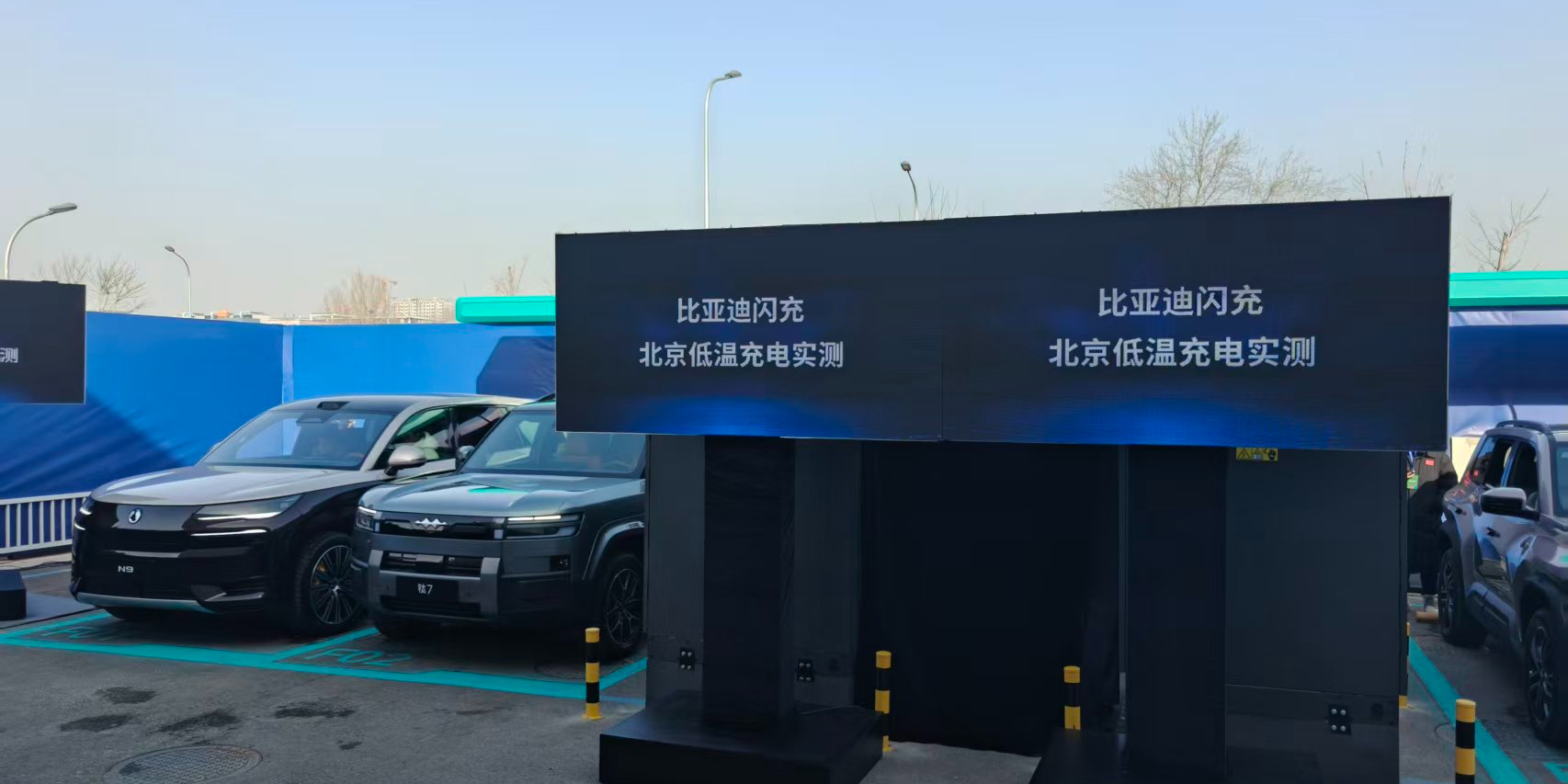
Core Viewpoint - BYD's second-generation fast charging technology claims to charge an electric vehicle in 5 minutes for a partial charge and 9 minutes for a full charge, even in low temperatures, marking a significant advancement in charging efficiency [2] Group 1: Technology Performance - The second-generation fast charging technology was tested in Beijing on February 10, showcasing its performance in winter conditions with temperatures around zero degrees [2] - Eight BYD models participated in the test, with starting battery levels around 20%, charging to 97% capacity [2] - The fastest charging time recorded was 9 minutes and 42 seconds for the Song Ultra model, while the longest was 10 minutes and 22 seconds for the Tengshi N9 model [2][6] Group 2: Industry Impact - The second-generation fast charging technology addresses the common issue of long charging times for electric vehicles, especially in winter when charging efficiency typically decreases [2] - This technology significantly reduces charging anxiety for electric vehicle owners, bringing charging times closer to traditional fuel refueling times [7] - The advancement is expected to promote the growth of the electric vehicle industry, particularly increasing market penetration in northern regions [7]
比亚迪两地 “闪充”实测观察丨第二代刀片电池充电时长压缩至10分钟级
Cai Jing Wang· 2026-03-16 04:06
Core Viewpoint - The recent charging tests conducted by BYD in Beijing and Harbin demonstrate significant improvements in electric vehicle charging efficiency in low-temperature environments, addressing a major pain point for northern users during winter [1][5][13]. Group 1: Charging Performance in Low Temperatures - In Beijing's low-temperature environment, 8 models charged from 19%-20% battery level in a time range of 9 minutes 42 seconds to 10 minutes 22 seconds, with the Song Ultra taking 9 minutes 42 seconds and the Tengshi N9 taking 10 minutes 22 seconds [3][9]. - In Harbin at -20°C, 10 models charged from 18%-20% battery level to 97% in 10 minutes 21 seconds to 11 minutes 34 seconds, with the Song Ultra at 10 minutes 21 seconds and the Tengshi N9 at 11 minutes 34 seconds [3][9]. - The tests indicate a shift from "hour-level" to "minute-level" charging efficiency, significantly reducing the time cost for winter charging, making it comparable to refueling traditional gasoline vehicles [3][10]. Group 2: Testing Methodology and Sample Diversity - The tests were designed to simulate real-world conditions, with vehicles left in extreme cold for 24 hours to ensure batteries were fully frozen, reflecting the worst-case scenarios for northern users [5][8]. - The testing included a diverse range of models from BYD's various brands, enhancing the reliability of the results and showcasing the performance consistency across different vehicle types [8][9]. Group 3: Technological Integration and User Experience - The improvement in charging efficiency is attributed to the integration of the second-generation blade battery and flash charging technology, which together form the core of the low-temperature fast charging capability [10][11]. - The T-type flash charging station design addresses user pain points by simplifying the charging process and reducing physical strain, thus enhancing the overall user experience in harsh winter conditions [11][13].
招商证券:比亚迪股份二代刀片电池实现5分钟快充 维持“增持”评级
Zhi Tong Cai Jing· 2026-03-09 09:47
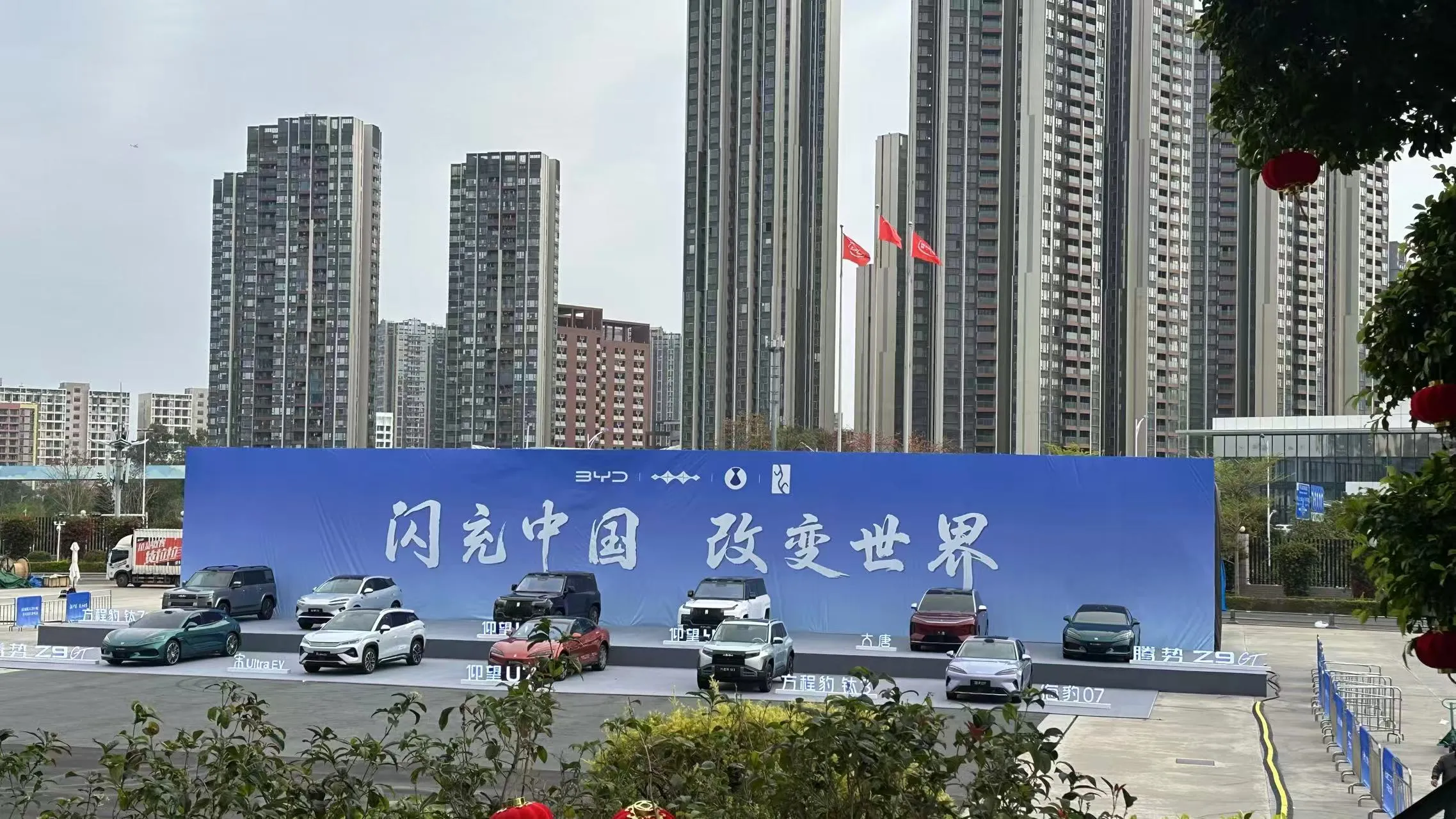
Core Viewpoint - BYD has launched its second-generation blade battery and fast-charging technology, significantly enhancing charging speed and efficiency, which is expected to strengthen its competitive advantage in the electric vehicle market [1][2] Group 1: Battery Technology - The new battery allows charging from 10% to 70% in 5 minutes and from 10% to 97% in 9 minutes, setting a new record for mass-produced vehicles [1] - The battery will be featured in 10 models, including the BYD Dynasty and Ocean series, with the Tengshi Z9GT achieving a range of 1,036 kilometers [1] - Performance improvements include enhanced charging in low temperatures, with charging from 20% to 97% taking about 12 minutes at -20 degrees Celsius [1] Group 2: Safety and Infrastructure - The new battery passed rigorous safety tests, including a 10-fold impact test without catching fire or exploding, and successfully completed 500 fast-charging cycles [1] - The company plans to implement the "Fast Charge China" strategy, aiming to build approximately 20,000 fast-charging stations by the end of 2026, with 4,239 already established [1] Group 3: Competitive Advantage - The significant technological advancements are expected to enhance BYD's competitive edge by improving charging efficiency and reducing the gap with fuel vehicles [2] - The vertical integration in battery technology, vehicle platforms, and charging networks is likely to strengthen BYD's technological moat and accelerate the launch of high-end models [2] - The new battery technology and product cycle are anticipated to improve market expectations and help BYD regain a differentiated competitive advantage amid temporary sales pressures [2]

车长五米四,新能源车还能再大点吗?
远川研究所· 2026-02-05 13:13
Core Viewpoint - The article discusses the trend of larger SUVs in the Chinese automotive market, highlighting the shift towards three-row SUVs that cater to family needs and the growing consumer preference for spacious vehicles [5][10][30]. Group 1: Market Trends - The introduction of the Tesla Model YL and the success of large three-row SUVs have significantly impacted Tesla's delivery volumes, indicating a strong consumer preference for larger vehicles [5][7]. - The trend of larger vehicles is evident, with new models like the Denza N9 and N8L showcasing lengths exceeding 5 meters, which aligns with the growing demand for spacious SUVs [7][10]. - The market share of mid-to-large SUVs has seen a notable increase, with mid-large SUVs maintaining a market share of 3%-4% since September 2022, while large SUVs remain below 2% [12][13]. Group 2: Consumer Preferences - The demand for larger SUVs is driven by family-oriented needs, where consumers prioritize space and comfort for both daily use and family outings [26][30]. - The average vehicle ownership in China is projected to reach 52.9 vehicles per 100 households by 2025, indicating a strong market for family-sized vehicles [28]. - The article emphasizes that the preference for larger vehicles is not unique to China, as similar trends are observed globally, particularly in the U.S. and Europe [33]. Group 3: Technological Factors - The increase in vehicle size is attributed to the design of electric vehicles, which require more space for battery placement, leading to wider and longer vehicle dimensions [20][21]. - Advances in battery technology have allowed for larger battery capacities in SUVs, with many new models featuring batteries exceeding 80 kWh, enhancing their range and appeal [23][24]. - The integration of battery technology into vehicle design has improved the overall space within the cabin, allowing for more comfortable seating arrangements and features [30].