
灵石3.0

Search documents
为什么物业公司都在用机器人?
36氪· 2026-01-04 09:10
Core Viewpoint - The property management industry is increasingly adopting robots to reduce costs and improve efficiency, with a focus on both internal use and commercialization of robotic solutions [4][13][62]. Group 1: Adoption of Robots in Property Management - Property companies are replacing human workers with robots for repetitive and labor-intensive tasks, as labor costs typically account for over 70% of their expenses [7][13]. - Companies like Greentown Service and Country Garden are collaborating with leading robotics firms to enhance their operational efficiency through robotic solutions [8][17]. - The introduction of robots is seen as a way to shift from labor-intensive to technology-intensive operations, which is crucial for maintaining competitive advantage in a saturated real estate market [13][14]. Group 2: Commercialization and Development of Robotics - The industry consensus indicates that while property robots are moving towards commercialization, significant challenges remain, including the need for diverse application scenarios and effective human-robot collaboration [9][10]. - As per research, a significant drop in hardware costs is expected as the annual shipment of certain robots increases from 1,000 to 10,000 units, potentially leading to a pivotal moment for property robots by 2025 [10]. - Companies are exploring two main pathways: applying robots in their own operations to enhance efficiency and customer satisfaction, and commercializing their developed robotic solutions to other property firms [15][16]. Group 3: Technological Advancements and Integration - The development of advanced algorithms and AI capabilities is enhancing the functionality of property robots, allowing for better task execution and interaction with users [32][44]. - Companies like Wanwu Cloud are focusing on creating a comprehensive AI system that integrates various robotic functions, aiming to improve operational efficiency and reduce costs [27][66]. - The introduction of the Lingstone 3.0 system by Wanwu Cloud is a significant step towards creating a unified platform for robotic operations, which can adapt to various property management needs [44][66]. Group 4: Challenges and Future Directions - The path to large-scale commercialization of property robots is fraught with challenges, including the need for standardized operating procedures (SOPs) and effective integration with existing systems [50][62]. - Companies are recognizing the importance of training personnel to work alongside robots, which is essential for achieving effective human-robot collaboration [52][53]. - Future business models may shift towards "robot as a service" (RaaS) and data value-added services, emphasizing the need for a robust platform that can manage various robotic systems and their interactions [70][71].


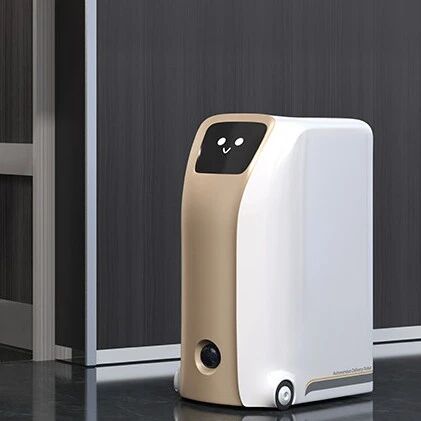
万物云(02602.HK):“灵石3.0”迭代升级 场景商业化加速落地
Ge Long Hui· 2025-12-16 12:53
Company Overview - The company showcased its third-generation Lingstone product at the second "Rui Jian" conference held on December 12 in Shanghai [1] - The chairman emphasized the themes of "smart driving for vehicles and smart control for buildings" while presenting Lingstone 3.0, which serves as an intelligent control brain for real estate allocation [1] Product Evolution - Lingstone 1.0 started with a camera cluster to utilize algorithms for work order scheduling [1] - Lingstone 2.0 linked energy hardware clusters for smart control of air conditioning, elevators, and lighting, and established a microgrid for energy savings [1] - Lingstone 3.0 has begun deploying distilled large models, integrating into robots like cleaning and patrol vehicles, creating a comprehensive ecosystem that includes software, robotics, low carbon solutions, and value-added services [1] Commercialization and Impact - Lingstone has achieved commercialization in 44 scenarios, with over 800 external projects implemented, including notable projects like Chengdu Tianhui City and Sun Yat-sen University Shenzhen Campus [1] - For instance, in the Tianhui City project, Lingstone products helped reduce inspection labor costs by 20% and energy consumption by 19.6% [1] Pricing and Growth Strategy - The full-featured version of the Lingstone product is priced between 13,000 to 29,000 yuan per month, with contract durations ranging from 3 to 10 years [2] - The company plans to accelerate product promotion to further enhance its growth momentum [2] Profit Forecast and Valuation - The company maintains its profit forecast and continues to rate the stock as outperforming the industry, with a target price of 27.5 HKD per share, corresponding to a 12x core P/E for 2025 and a 41.5% upside potential [2] - The stock is currently trading at 8.2x core P/E for 2025 and offers a dividend yield of 9.8%, assuming an 80% payout of the core net profit for 2025 [2]
“躺赚”时代结束,大型物业公司进入差异化发展深水区
Di Yi Cai Jing· 2025-12-16 11:32
Group 1: Industry Trends - The property management industry is undergoing a transformation from basic services to specialized and differentiated offerings, creating competitive advantages through professionalization [1] - Companies are shifting from a focus on traditional property management to asset management, with an emphasis on enhancing service value and establishing business moats [1][5] - The industry is moving away from homogeneous competition towards differentiated development based on core competencies, with opportunities in vertical market exploration [1] Group 2: Company Strategies - Poly Property has introduced the "All-Domain Scenic City" model, integrating property services with cultural tourism to create new profit models [1][4] - Poly Property is enhancing its service offerings in scenic areas like Xichong by transitioning from basic services to operational management, including ticketing and event planning [2][3] - Wanwu Cloud is transitioning from traditional property management to asset services and AI solutions, aiming to address pain points in asset management through its "Lingstone 3.0" system [5][6] - Country Garden Services is focusing on basic services and old community management, establishing a separate brand "Yuebaijia" to provide modern property services in aging neighborhoods [7][9] Group 3: Operational Improvements - Poly Property's operational improvements in Xichong have led to a 78% increase in secondary consumption and enhanced visitor experience within six months [3] - Wanwu Cloud's "Lingstone" system has improved inspection efficiency by 95% and reduced traffic congestion by 70% in various projects [6] - Country Garden Services is implementing diverse value-added services in old communities, such as community retail and home services, to achieve sustainable profitability [9][10]
地产经纬丨AI加速渗透房地产行业 “数据孤岛”瓶颈亟待突破
Xin Hua Cai Jing· 2025-12-15 11:23
Core Insights - The real estate industry is transitioning from incremental development to stock operation, with AI technology providing new pathways for efficiency and quality improvement [2][3] - Experts believe that the integration of AI into the real estate sector has led to innovative practices and enhanced productivity, but challenges such as technology implementation and value conversion remain [2][3] AI Applications in Real Estate - AI technology is penetrating various stages of the real estate industry, from intelligent home-buying decisions to asset operation efficiency [3][4] - A structured data and knowledge base has been developed by real estate platforms, enabling multi-dimensional analysis of properties to assist buyers [3] - AI is becoming a core engine for enhancing space value in asset operations, with products like "Lingstone 3.0" improving operational efficiency by over 30% [4] Industry Trends and Challenges - The AI transformation in the real estate sector is still in its early stages but shows clear development trends, with a focus on deepening the understanding and practical application of AI [5] - Scene selection is critical for the successful implementation of AI, requiring deep integration of technology with business [5] - The industry is leaning towards domestic solutions and private deployment due to concerns over data security and privacy [5] Data Bottlenecks and Solutions - Data quality is identified as a major barrier to AI implementation in the real estate sector, with many companies facing challenges related to data silos and unstructured data [7][8] - The dual dilemma of "having data but not being able to use it" and "wanting to use data but fearing security risks" hampers AI application [7][8] - To unlock AI's potential, companies need to elevate data governance and transform data from "silos" into "assets" [8]

万物云旗下核心科技产品“灵石3.0”启动商业化进程
Zhong Zheng Wang· 2025-12-15 02:58
Core Insights - Wanwu Cloud officially announced the commercialization of its core technology product "Lingstone 3.0" and introduced a pioneering "digital employee" leasing model to enhance smart property management and low-carbon upgrades [1][3] - The company has established the Lingstone Ecological Alliance with several leading robotics and technology firms, signing strategic cooperation agreements with 21 well-known enterprises [1][3] Product Development - The first generation of Lingstone focused on connecting hardware clusters in real estate, transitioning from "people finding tasks" to "tasks finding people" using AI algorithms [2] - The second generation further integrated energy hardware clusters for smart control of air conditioning, elevators, and lighting, while also establishing a microgrid for energy management [2] - The third generation has begun deploying distilled large models and integrating Lingstone into robotic systems, creating a comprehensive ecosystem that includes software, robotics, low-carbon solutions, and value-added services [2] Market Application - Lingstone has achieved commercialization in 44 scenarios and aims to provide ESG labels and carbon services for real estate, enhancing efficiency and reducing costs for property owners [3] - The company is transitioning from a "service red ocean" to a "computing blue ocean" strategy by equipping each property with Lingstone [3] - The strategic partnerships formed during the conference with companies like China Railway Construction, Huazhu Hotel Group, and Hikvision aim to promote the application of Lingstone in various spatial scenarios [3]
万物云董事长朱保全:不动产应像汽车一样拥有“自动驾驶”系统
Bei Ke Cai Jing· 2025-12-13 14:17
Group 1 - The core viewpoint emphasizes the transformation of real estate into intelligent assets, akin to cars with "autonomous driving" systems, as highlighted by the chairman of Wanwu Cloud, Zhu Baoquan [1] - In 2024, Wanwu Cloud plans to transition from traditional property management to asset services, AI services, and low-carbon services, marking a significant shift in its business model [1] - The current office market is facing high vacancy rates and declining rental prices, with average national office rents decreasing by approximately 3% and premium office rents dropping by around 38% [1] Group 2 - Wanwu Cloud announced the commercial launch of its core technology product, "Lingstone 3.0," which introduces a "digital employee" leasing model to enhance smart property management and low-carbon upgrades [2] - The third generation of Lingstone has begun deploying distilled large models and has evolved into a comprehensive ecosystem that includes software, robotics, low-carbon solutions, and value-added services [2] - Lingstone enables real estate to possess cognitive capabilities, allowing for the creation of ecological clusters [2]
像“汽车智驾”般实现“楼宇智控”?不动产行业进入AI新时代
Xin Hua Cai Jing· 2025-12-12 16:46
Core Insights - The real estate industry is shifting from incremental development to stock operation, facing challenges such as rising vacancy rates in office buildings and increasing labor and energy costs, making traditional management methods unsustainable [1] - The introduction of AI and low-carbon technologies is seen as a solution to help asset holders achieve lean operations and enhance asset returns during the new urbanization cycle [1] Company Developments - Wanwuyun announced the commercial launch of its core technology product "Lingstone 3.0," which aims to transform real estate into intelligent entities with perception and cognitive abilities, similar to an "autonomous driving" system in cars [1] - "Lingstone" integrates various data streams, including video, energy, geographic information, and computational power, connecting existing hardware like cameras and air conditioning systems with new robotic solutions [1] - The third generation of "Lingstone" has begun deploying distilled large models and has evolved into edge devices embedded in cleaning and patrolling robots, creating a comprehensive ecosystem that includes software, robotics, low-carbon solutions, and value-added services [1] Industry Trends - "Lingstone" has achieved commercialization in 44 different scenarios and plans to incorporate computational services to create ESG labels for real estate and provide carbon services for enterprises [2] - Intelligent technologies, represented by "Lingstone," are becoming the core engine to activate real estate value, facilitating the industry's transition from scale expansion to quality and efficiency, thereby contributing to sustainable urban development [2]