烟酸

Search documents
市场拉开涨价序幕,维生素与抗生素一马当先
摩尔投研精选· 2026-03-31 10:08
Group 1 - The core reason for the strengthening of the US dollar since March is the relatively smaller impact on the US economy amid the Middle East conflict, leading to a return of funds to dollar assets, but this is not indicative of a liquidity crisis [1] - The narrative of a "weak dollar" has ended, reversing the previous trend of funds flowing from dollar assets to physical and other financial assets due to the US-Iran conflict [1] - Recent trends indicate that the strength of the US dollar may be nearing its end, with a potential confirmation of price bottoms for physical and non-US assets [1] Group 2 - Since late February, the vitamin market in Europe and domestically has experienced significant price volatility due to escalating Middle East conflicts and energy cost pressures, with Vitamin A prices increasing by nearly 82% and Vitamin E by over 75% [2] - The pharmaceutical team at Zhongyou Securities notes that the market space for related products may see effective recovery due to the combination of reversed supply-demand dynamics and geopolitical catalysts [2] - The raw material drug sector is currently driven by a dual momentum of "fundamental turning point + price increase expectations," with limited new capital expenditure in the past three years and a significant recovery potential for specific products like sartans and statins [3]


港股概念追踪 | 中东战火点燃化工行情 巴斯夫再发提价公告 化工品有望迎景气上行(附概念股)
智通财经网· 2026-03-18 23:17
Group 1 - BASF announced price increases for all products in its home care, industrial and institutional cleaning, and industrial formulation business in Europe, with increases up to 30% for some selected products, effective immediately [1] - The price hikes are attributed to significant fluctuations in key raw material prices and supply, along with rising logistics, packaging, and energy costs [1] - The German Chemical Industry Association (VCI) warned that the ongoing conflict in Iran and potential closure of the Strait of Hormuz could severely impact the chemical industry, raising concerns about supply bottlenecks for ammonia, phosphate fertilizers, helium, and sulfur [2] Group 2 - Domestic chemical products maintain a global cost advantage, and with the exit of high-energy-consuming facilities in Europe and North America, along with economic growth in Asia, Africa, and Latin America, bulk chemical products are expected to see an upturn in 2026 [2] - The current global energy landscape is undergoing significant adjustments, highlighting the importance of modern coal chemical technology in China, which is expected to lead to high-quality overseas expansion [3] - China Petroleum & Chemical Corporation (Sinopec) is constructing a leading global refining and intelligent refining base, with a network covering 30,000 gas stations and over 28,000 convenience stores, supporting high-quality development in the midstream sector [4] - Sinopec Oilfield Service is actively expanding its overseas market business, leveraging group resources for investments and services in oil and gas resources, refining, and chemical products [4] - Shanghai Petrochemical Company, a subsidiary of Sinopec, is a major integrated refining and chemical enterprise in China, producing synthetic fibers, resins, plastics, and petrochemical products [5]

供给持续优化下26年景气有望上行
HTSC· 2026-03-17 02:45
Investment Rating - The report maintains an "Overweight" rating for the basic chemicals and oil & gas sectors [6]. Core Insights - The overall price gap in the industry has reached a low point, indicating potential recovery in 2026 as supply continues to optimize [1][11]. - The capital expenditure growth in the chemical industry has been declining since June 2025, suggesting a nearing inflection point for supply-side adjustments [2][22]. - The demand for chemical products is shifting from real estate to consumer goods, infrastructure, and emerging technologies, with exports becoming a significant growth driver [10][15][20]. Summary by Sections Supply Side - As of February 2026, the CCPI-raw material price gap was 2470, the lowest since 2012, indicating a potential recovery in profitability for the chemical sector [1][11]. - The capital expenditure in the chemical raw materials and products sector showed a cumulative year-on-year decline of 8.0% in 2025, reflecting reduced investment willingness among companies [2][22]. Demand Side - The domestic PMI for February 2026 was reported at 49, indicating a transition in demand drivers from real estate to consumer products and infrastructure [10][15]. - Exports in January and February 2026 totaled $656.6 billion, a year-on-year increase of 22%, highlighting the competitive advantages of domestic chemical products in global markets [20]. Price Trends - Prices for certain chemical products, such as dispersants and urea, have increased due to tight supply and strong pricing intentions from leading companies [3][43]. - Conversely, prices for products like overseas natural gas and butanol have decreased due to seasonal demand and ample supply [3][43]. Investment Strategy - The report suggests focusing on the recovery potential of bulk chemicals and companies with growth in new technologies, as the industry is expected to see an upward trend in 2026 [4][42]. - Recommendations include high-dividend companies and those benefiting from the geopolitical situation in the Middle East, which may lead to rising oil prices [4][42]. Key Recommendations - Specific stocks recommended for investment include: - Yuntianhua (600096 CH) with a target price of 44.66 and a "Buy" rating - Senqilin (002984 CH) with a target price of 26.16 and a "Buy" rating - Sailun Tire (601058 CH) with a target price of 19.63 and a "Buy" rating - Juhua Co. (600160 CH) with a target price of 42.56 and a "Buy" rating - China Petroleum & Chemical Corporation (3983 HK) with a target price of 3.06 and a "Buy" rating [8].
Cell:肠道细菌通过产生烟酸,保护结肠细胞免受损伤
生物世界· 2026-03-11 04:13
Core Viewpoint - The study published in Cell reveals that the gut microbiome produces nicotinic acid, which controls the regional identity of colon cells and their susceptibility to injury, particularly highlighting the diminished protective identity in the proximal colon of Crohn's disease patients [2][4][6]. Group 1 - The research indicates that different regions of the colon are regulated by the gut microbiome, with specific bacteria producing high levels of nicotinic acid, a member of the vitamin B3 family, which helps convert food into energy and supports cell health [4][6]. - The study compared mice with and without microbiomes, finding that bacteria in the proximal colon induce the expression of PPARα, establishing the identity of "proximal colon cells" and protecting the tissue from damage and disease [4][7]. - Human colon tissue samples exhibited similar regionalization patterns to those observed in mice, but this protective mechanism was weakened or lost in samples from Crohn's disease patients [4][6]. Group 2 - The findings fundamentally explain the differing functions and disease risks of various colon regions, linking the gut microbiome, tissue cell identity, and disease susceptibility, thus providing new perspectives for understanding gut diseases and developing targeted therapies [6][7].

中瑞药业因安全生产违法被罚
Qi Lu Wan Bao· 2025-08-25 08:21
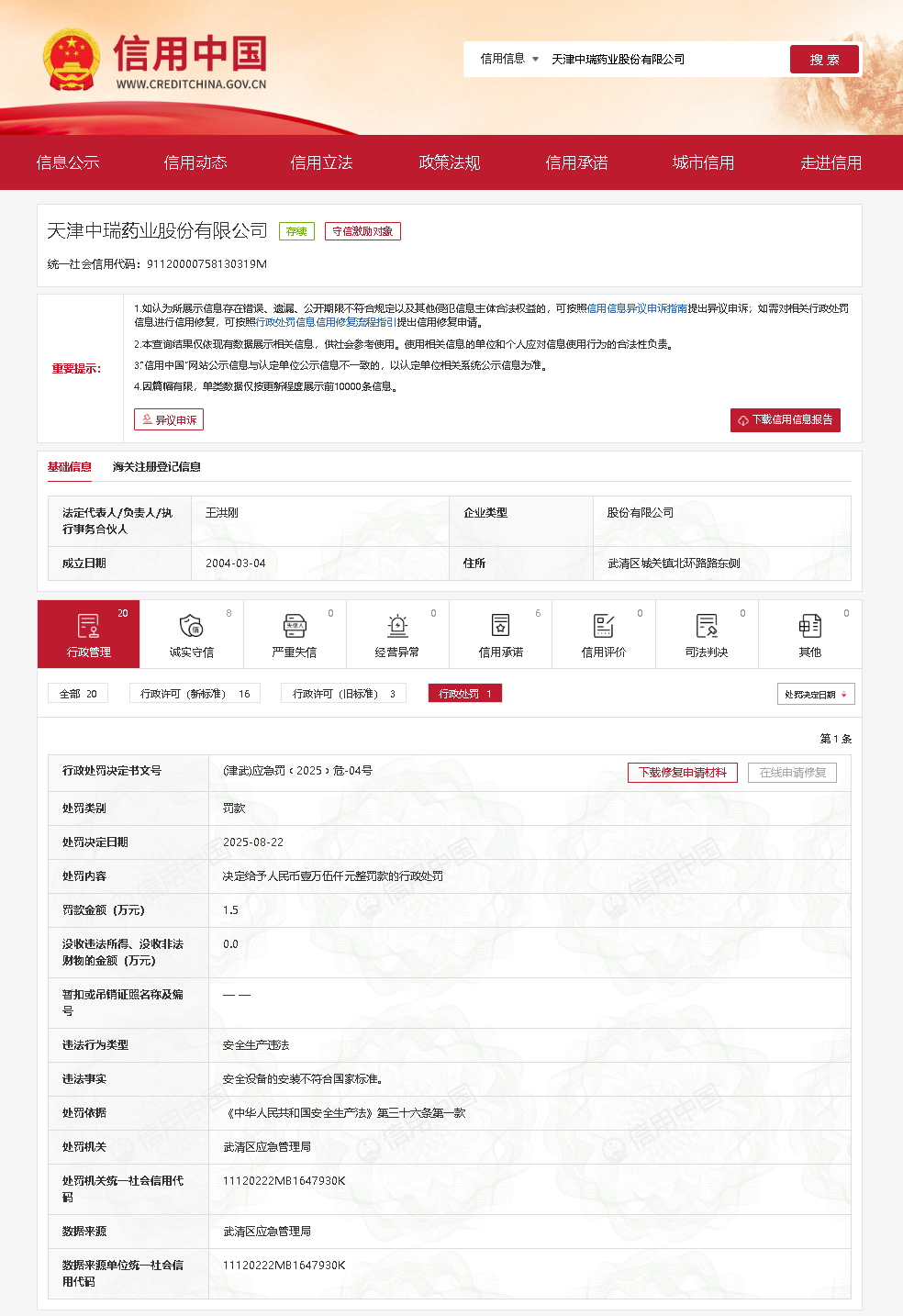
Core Viewpoint - Tianjin Zhongrui Pharmaceutical Co., Ltd. was fined 15,000 RMB due to safety production violations, specifically for the installation of safety equipment not meeting national standards [1][2]. Company Information - Tianjin Zhongrui Pharmaceutical Co., Ltd. is a high-tech enterprise established in March 2004, with a registered capital of 26 million RMB [2]. - The company specializes in the production of chemical raw materials, pharmaceutical excipients, and food additives, with key products including niacin, niacinamide, and hydrochloride drugs [2]. Regulatory Action - The fine was imposed by the Wuqing District Emergency Management Bureau, citing violations of the Production Safety Law of the People's Republic of China [2]. - The penalty decision was documented under the administrative penalty decision number (津武)应急罚《2025》危-04号 [2].
2025年中国烟酰胺行业生产方法、产业链、市场规模、竞争格局及未来前景:随着食品、医药和化妆品等下游需求持续增长,行业将迎来更广阔的发展空间[图]
Chan Ye Xin Xi Wang· 2025-07-11 01:26
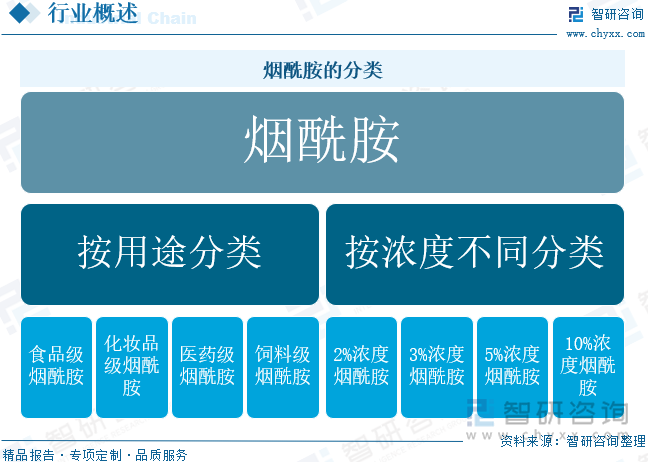
Core Insights - Nicotinamide, an important member of the B-vitamin family, has diversified applications in the food, pharmaceutical, and cosmetic industries, driven by its nutritional enhancement and functional characteristics [1][15] - The market size of the nicotinamide industry in China is projected to reach approximately 2.535 billion yuan in 2024, with a year-on-year growth of 17.26% [1][15] - The industry is expected to benefit from the ongoing "Healthy China" strategy and the increasing consumer demand for functional products, indicating a broader development space in the future [1][15] Industry Overview - Nicotinamide, also known as niacinamide, is a white crystalline powder with a molecular weight of 122.125, primarily used in clinical settings for the prevention and treatment of various health issues [3] - The industry can be segmented into food-grade, cosmetic-grade, pharmaceutical-grade, and feed-grade nicotinamide, with varying concentrations available [3] Production Methods - Three main production methods for nicotinamide include oxidation of β-methylpyridine to niacin, dehydration of niacin with ammonium hydroxide, and a reaction involving niacin, boric acid, and ammonia [5][11] Applications and Benefits - Nicotinamide is recognized for its anti-acne, anti-inflammatory, whitening, and anti-aging properties, making it a popular ingredient in skincare products [7][8] - In the pharmaceutical sector, it is crucial for treating conditions related to niacin deficiency, while in cosmetics, it enhances skin barrier function and moisture retention [9][12] Industry Chain - The nicotinamide industry chain includes upstream raw material supply, midstream production and processing, and downstream applications in pharmaceuticals, cosmetics, and food [9] - Key raw materials include 3-cyanopyridine, niacin, ammonia, and solvents, with production methods involving chemical synthesis or fermentation [9] Market Dynamics - The global nicotinamide industry exhibits a tiered competitive landscape, with leading companies like Lonza, Vantiv, and Brother Technology dominating the market [17][19] - Brother Technology is identified as a leading domestic player, focusing on the production and sales of nicotinamide and niacin products across various sectors [19][21] Future Trends - The industry is shifting towards high-value products, with a focus on technological innovation and product upgrades to enhance purity and bioavailability [26][28] - The application of nicotinamide is expanding into new areas such as oral beauty products and functional foods, driven by consumer trends and interdisciplinary research [27][28]