
玄铁系列

Search documents
马云钦定的“平头哥”赶上市潮,真武芯片打前锋
Sou Hu Cai Jing· 2026-01-29 07:06
Core Viewpoint - Alibaba's newly launched AI chip "Zhenwu 810E" marks the official unveiling of its self-developed PPU, part of the "Tongyun Ge" AI ecosystem, which aims to create a supercomputing platform integrating chips, cloud services, and models for maximum efficiency in AI applications [2][3] Group 1: Product and Technology - The "Zhenwu" PPU chip, developed since 2020, is designed for specific tasks like AI model training and gaming simulations, achieving higher efficiency and energy savings compared to traditional CPUs and GPUs [3] - The chip features a 96G HBM2e memory and an inter-chip bandwidth of 700 GB/s, making it suitable for AI training, inference, and autonomous driving applications [3] - The performance of the "Zhenwu" PPU reportedly exceeds that of Nvidia's A800 and mainstream domestic GPUs, being comparable to Nvidia's H20 [3] Group 2: Strategic Developments - The collaboration between Pingtouge, Alibaba Cloud, and Tongyi Qianwen creates a unique "chip-cloud integration" advantage, facilitating rapid commercialization of AI technologies [4] - The potential independent listing of Pingtouge signals a significant strategic shift for Alibaba, moving towards capitalizing on its technological advancements in the chip sector [7] - The decision to support Pingtouge's IPO process is driven by competitive pressures, technological maturity, and the need for substantial funding for AI initiatives [8] Group 3: Market Impact - If successful, Pingtouge's IPO could disrupt the AI chip market, which is currently dominated by Nvidia, by leveraging its integrated advantages and Alibaba's backing to reduce application costs in various sectors [9]


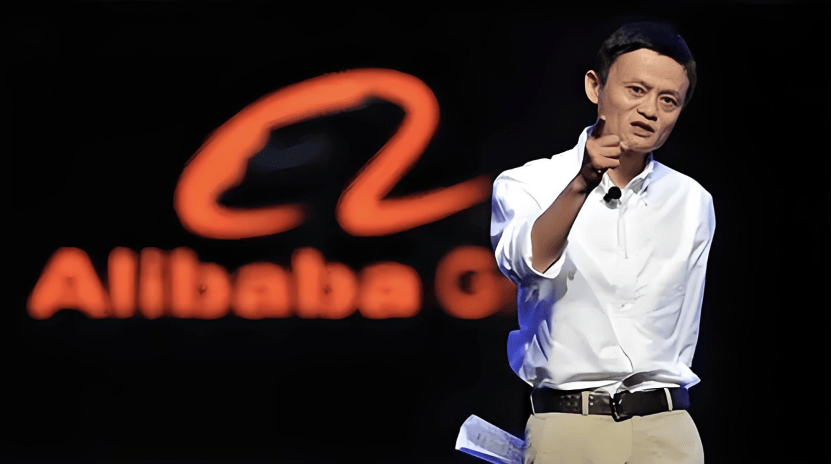
瞄准英伟达 H20,阿里平头哥要上市
3 6 Ke· 2026-01-23 09:46
Core Viewpoint - Alibaba has decided to support its chip subsidiary, T-Head, for an independent IPO, marking a significant development in the AI chip sector after eight years of preparation [1][3]. Group 1: Market Reaction - Following the IPO news, Alibaba's stock surged over 5% in pre-market trading in the US, increasing its market value by more than 200 billion RMB in a single day [2]. - In Hong Kong, Alibaba's shares jumped approximately 4% at the market opening on January 23, becoming a market highlight [2]. Group 2: T-Head's Background - T-Head was established in 2018 through the integration of the acquired Zhongtian Micro and Alibaba's self-developed chip team, positioning it as a significant player in the AI chip market [5][6]. - The company has primarily served Alibaba's internal needs, focusing on enhancing the efficiency and cost-effectiveness of Alibaba Cloud's data centers through self-developed chips [6][8]. Group 3: Product Development - T-Head's first-generation general-purpose GPU, PPU, has been reported to match NVIDIA's H20 in performance, with specifications indicating it could outperform older models like the A100 [10][12]. - Other notable products include the Yitian 710 server CPU, which has been deployed at scale in Alibaba Cloud, and the Xuantie series, which has achieved significant market penetration through licensing [12][13]. Group 4: Competitive Landscape - T-Head occupies a unique position among domestic fabless chip companies, excelling in design capabilities but facing challenges in direct comparisons with competitors like Huawei and Baidu [13][16]. - The PPU emphasizes energy efficiency and cost-effectiveness for high-concurrency inference scenarios, contrasting with competitors that focus on large-scale training capabilities [15][16]. Group 5: IPO Challenges - T-Head's IPO journey may face hurdles due to its fabless model, which relies on external manufacturing partners, exposing it to risks associated with supply chain uncertainties [19][21]. - The AI chip market has seen inflated valuations, raising expectations for T-Head, which may lead to increased scrutiny and pressure to meet high market demands [24][25][29].

英伟达被批准入股英特尔 联手重塑全球芯片产业格局
Zhong Guo Jing Ying Bao· 2025-12-21 13:58
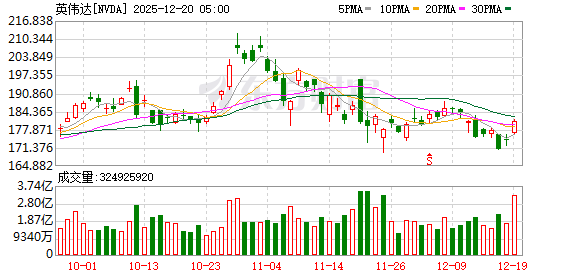
Group 1 - The core viewpoint of the news is that the FTC's approval of NVIDIA's $5 billion strategic investment in Intel is seen as a significant regulatory milestone that will accelerate the development of next-generation AI chips and reshape the global semiconductor industry amid increasing US-China tech competition [3][4]. - Following the announcement, Intel's stock rose to $36.82 per share, reflecting a 74.67% increase over the past six months, while NVIDIA's stock reached $180.99 per share, with a market capitalization of $4.4 trillion [1][6]. - The collaboration between NVIDIA and Intel involves the joint development of customized CPUs based on the x86 architecture, integrating NVIDIA's NVLink technology with GPUs to create a new heterogeneous computing platform for data centers and AI PCs [2][4]. Group 2 - The investment allows NVIDIA to reduce its reliance on TSMC for GPU manufacturing by potentially integrating Intel's capabilities, which could serve as a backup production route amid rising US-China tech decoupling risks [6]. - The partnership is expected to enhance Intel's manufacturing and transformation efforts under its "IDM 2.0" strategy, with the development of x86+RTX SoCs potentially marking its return to the high-performance computing market [6]. - AMD and ARM ecosystems are likely to face challenges as they may be excluded from the next generation of AI PCs and servers due to the deep integration of NVIDIA and Intel's technologies [5][7]. Group 3 - The approval of the investment by the FTC reflects a strategic endorsement of the collaboration, although there may be regulatory conditions to prevent the formation of new technological barriers [4]. - China's response to this partnership could involve regulatory scrutiny, as the Chinese market regulator has initiated an antitrust investigation into NVIDIA, which may limit the collaboration's scope in China [7][8]. - China is actively promoting its own semiconductor ecosystem, focusing on RISC-V architecture and domestic AI chip development, indicating a competitive landscape that extends beyond performance to standards and ecosystems [7][8].
亮相“湾芯展”,国产RISC-V将迎商用加速
Xuan Gu Bao· 2025-10-12 15:11
Industry Overview - The 2025 Bay Area Semiconductor Industry Ecosystem Expo (referred to as "Bay Chip Expo") will be held from October 15-17 in Shenzhen, focusing on the RISC-V ecosystem and showcasing achievements in domestic open-source chip architecture [1] - The RISC-V ecosystem area, organized by the RISC-V Ecosystem Alliance, will gather partners from the entire domestic industry chain, displaying a full range of layouts from IP cores to EDA software and terminal chips [1] - Over 600 companies are expected to participate in the expo, leveraging the advantages of the Greater Bay Area to facilitate connections within the RISC-V industry chain and promote capital cooperation [1] Company Highlights - Chipone Technology, through its wholly-owned acquisition of Chiplet Technology, will participate in the expo [1] - Yuntian Lifeng, as an AI inference chip company, will join a joint exhibition area with several other companies to showcase its achievements based on self-developed neural network processors and chip technologies [1] - Alibaba's Damo Academy and other leading companies like Chiplet Technology and Jindie Space will exhibit high-performance processors and edge AI chips, with Damo Academy potentially revealing the latest developments in the Xuantie series [1] Forum and Discussions - The concurrent RISC-V Ecosystem Development Forum will focus on architectural innovation and industrial implementation, with experts discussing technological breakthroughs, IP design challenges, and commercialization cases [1] - The forum aims to accelerate the commercialization of domestic RISC-V technologies in AIoT and high-performance computing sectors [1]

