
百度昆仑

Search documents
昆仑芯春节后路演,优先百度股东
是说芯语· 2026-02-15 04:01
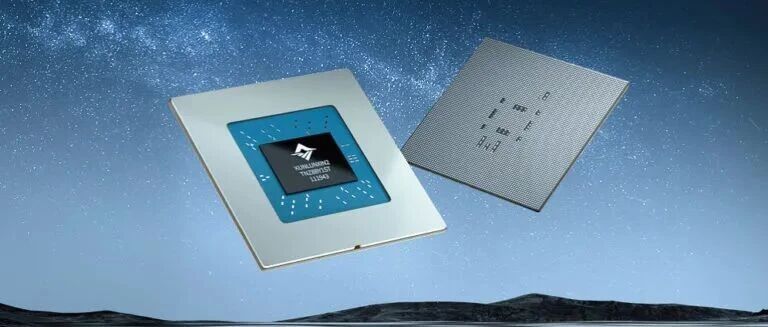
Core Viewpoint - Kunlun Core, a subsidiary of Baidu, is set to launch an IPO on the Hong Kong Stock Exchange, with a post-investment valuation of 21 billion yuan after its D-round financing in July 2025 [2] Group 1: Company Overview - Kunlun Core was established from Baidu's AI chip and architecture department, with technology development dating back to 2011 when Baidu began developing AI accelerators [2] - The company officially launched its AI chip "Baidu Kunlun" in July 2018, marking its entry into the AI chip market [2] - Kunlun Core completed independent financing in April 2021, with a first-round valuation of approximately 13 billion yuan [2] Group 2: Product Development - Kunlun Core has developed the Kunlun XPU architecture for general AI computing, focusing on practical AI application needs [3] - The company has successfully launched two generations of AI processors and multiple AI accelerator cards, with ongoing development of new products [3] Group 3: Market Position and Growth - Kunlun Core has achieved large-scale deployment of its products across various sectors, serving hundreds of clients and reaching billions of end users [5] - Approximately 40% of Kunlun Core's customers are external, including internet giants and state-owned enterprises [5] - Baidu's founder emphasizes the rapid iteration of large model technology as a key competitive advantage, with ongoing investments in advanced models [5] Group 4: Future Product Plans - Kunlun Core plans to launch the M100 chip in early 2026, optimized for large-scale inference scenarios, and the M300 chip in early 2027 for ultra-large-scale multi-modal model training and inference [6] - The company aims to provide powerful, low-cost, and self-controlled AI computing power for Chinese enterprises, highlighting its strategic position in ensuring domestic AI computing autonomy [6]



突发!百度官宣:昆仑芯正式启动港股上市进程
是说芯语· 2026-01-02 00:59
Core Viewpoint - Kunlun Core, a subsidiary of Baidu, is seeking to list on the Hong Kong Stock Exchange, with a recent valuation nearing $3 billion following a new funding round [2] Group 1: Company Overview - Kunlun Core was established from Baidu's AI chip and architecture department, with technology development dating back to 2011 [2] - The company launched its first AI chip, "Baidu Kunlun," in July 2018, marking its entry into the AI chip market [2] - The CEO, Ouyang Jian, has a strong background in chip architecture and has previously worked on various significant projects [2] Group 2: Product Development - Kunlun Core has developed two generations of general-purpose AI processors and several AI accelerator cards, with ongoing development of new products [4] - The company has successfully deployed three generations of products across various industries, serving hundreds of clients and reaching millions of end-users [6] Group 3: Financial Performance - The company is projected to generate approximately 2 billion RMB in revenue for 2024, with a net loss of around 200 million RMB [6] - By 2025, over half of the company's revenue is expected to come from external clients, with revenue anticipated to exceed 3.5 billion RMB and achieve breakeven [6] Group 4: Future Plans - Kunlun Core plans to launch the M100 chip in early 2026, optimized for large-scale inference scenarios, and the M300 chip in early 2027 for ultra-large-scale multi-modal model training and inference [7] - The company aims to provide powerful, low-cost, and self-controlled AI computing power for Chinese enterprises, highlighting its strategic position in ensuring domestic AI computing autonomy [7]
百度旗下昆仑芯计划赴港上市,估值约210亿元
是说芯语· 2025-12-06 01:06
Core Viewpoint - Kunlun Core, a subsidiary of Baidu, has recently completed a financing round valuing it at nearly $3 billion and is preparing for an IPO in Hong Kong, aiming to submit its application by Q1 2026 [2][9]. Group 1: Company Background and Development - Kunlun Core was established from Baidu's Intelligent Chip and Architecture Department, with technology development dating back to 2011 when Baidu began developing AI accelerators to meet deep learning needs [3]. - The company officially launched its cloud-based AI chip "Baidu Kunlun" in July 2018, marking its entry into the AI chip market [3]. - Kunlun Core completed independent financing in April 2021, with a valuation of approximately 13 billion yuan, led by CPE Yuanfeng and involving notable investors like IDG and Junlian [3]. Group 2: Product Offerings and Market Position - Kunlun Core has successfully launched two generations of general-purpose AI processors and multiple AI accelerator cards, with ongoing development of new products [5]. - The company has achieved large-scale deployment of its products across various sectors, including internet, telecommunications, finance, and automotive, benefiting millions of end-users [7]. - Approximately 40% of Kunlun Core's customers are external, including internet giants and state-owned enterprises, indicating a growing market presence beyond Baidu [7]. Group 3: Financial Performance and Future Projections - The company is projected to generate around 2 billion yuan in net losses for 2024, with revenues expected to exceed 3.5 billion yuan in 2025, aiming for breakeven [7]. - Baidu's founder, Robin Li, emphasizes the rapid iteration of large model technology as a key competitive advantage, with ongoing investments in advanced models to enhance AI capabilities [7]. - Future product plans include the launch of the M100 chip in early 2026 and the M300 chip in early 2027, aimed at providing powerful and cost-effective AI computing resources for Chinese enterprises [8].
AI云时代:云计算产业的新变局与长期主义者的领跑之路
Sou Hu Cai Jing· 2025-08-29 12:10
Core Insights - The integration of AI and cloud computing is reshaping the technology and business landscape, marking a new starting point for the industry [2][4] - In 2024, China witnessed the emergence of 50 trillion-level parameter models, leading to a 74.1% year-on-year growth in intelligent computing power, significantly outpacing general computing growth [1] - Baidu's intelligent cloud has become a leader in the AI field, leveraging its comprehensive AI technology stack to drive innovation and transformation in cloud services [4][6] Industry Trends - The cloud computing sector is undergoing unprecedented changes due to the incorporation of AI technologies, which are redefining service architectures and value propositions [1][4] - The competitive landscape in cloud computing is shifting from cost-based competition to a focus on innovative solutions that address specific business challenges [4][6] Company Developments - Baidu has made significant advancements in AI, launching the first deep learning framework "PaddlePaddle" in 2016 and the AI chip "Kunlun" in 2018, establishing a robust foundation for its AI capabilities [4][5] - Baidu's intelligent cloud has achieved a 24.6% market share in China's AI public cloud market, maintaining its position as the leader for six consecutive years [6][7] - The "Cloud Intelligence Integration" strategy of Baidu's intelligent cloud is set to evolve further, aiming to enhance intelligence capabilities and expand its market penetration [6][7] Product Innovations - The Baidu "Baihe" AI computing platform has been upgraded to version 5.0, focusing on enhancing inference capabilities and optimizing resource utilization [6][7] - The "Qianfan" platform has transitioned to version 4.0, providing a one-stop enterprise service platform centered around AI agents, aimed at accelerating application deployment [7] Financial Performance - Baidu's intelligent cloud revenue grew by 27% year-on-year, contributing to the company's AI new business surpassing 10 billion yuan for the first time, with a 34% year-on-year increase [7]

AI云,重画的起跑线
远川研究所· 2025-08-29 07:04
Core Viewpoint - The integration of AI and cloud computing is creating a new paradigm known as "AI cloud," which is driving significant growth in the cloud computing industry and reshaping its competitive landscape [1][2]. Group 1: AI and Cloud Computing Dynamics - In 2024, China is expected to add 50 large models with over 100 billion parameters, leading to a 74.1% year-on-year growth in intelligent computing power, significantly outpacing general computing power growth [1]. - AI is fundamentally altering the architecture and value logic of cloud services, pushing the demand for comprehensive end-to-end solutions rather than just basic AI computing infrastructure [1][9]. - The relationship between AI and cloud computing is redefining the boundaries of technology and business, creating a new starting line for competition in the cloud computing sector [1]. Group 2: Market Trends and Competitive Landscape - In 2020, the Chinese cloud computing market grew by 33.6% to reach 178.1 billion RMB, making it one of the fastest-growing regions globally, despite facing intense price wars and homogenization challenges [5]. - Major cloud providers like Amazon AWS, Microsoft Azure, and Google Cloud engaged in aggressive price cuts, with reductions of up to 60% in some services, intensifying competition [5][8]. - The shift from standardized cloud resources to customized solutions is seen as a potential remedy for the homogenization issue, although it has led to fragmentation challenges [8]. Group 3: Baidu's Strategic Positioning - Baidu has established a complete AI technology stack from hardware to applications, which is a competitive advantage not shared by its rivals [10][11]. - The "cloud-intelligence integration" strategy initiated by Baidu aims to transform the AI development paradigm and lead the evolution of the Chinese cloud computing industry [11]. - Baidu's intelligent cloud revenue grew by 27% year-on-year, with AI new business surpassing 10 billion RMB for the first time, indicating strong market performance [21]. Group 4: Future Outlook and Innovations - Baidu's intelligent cloud is set to upgrade its strategy to focus on intelligent-first AI cloud infrastructure, aiming to enhance the capabilities and penetration of AI technologies [18]. - The Baidu Baige AI heterogeneous computing platform has achieved significant performance improvements, allowing for efficient training and inference of large models [19]. - The introduction of the Agent-based AI development framework in Baidu's Qianfan platform aims to lower development barriers and accelerate application deployment across various industries [20].

【西街观察】“黄仁勋热”是AI良性竞争的缩影
Bei Jing Shang Bao· 2025-07-17 15:21
Group 1 - Huang Renxun, CEO of Nvidia, emphasizes the importance of global supply chain cooperation during his visit to China for the third Chain Expo, highlighting the interdependence of the global technology ecosystem [1] - The approval for the sale of H20 GPU in China marks a significant development for Nvidia, as the company prepares to launch the new RTX PRO GPU in the market [2] - The rise of AI in China is seen as a critical factor in the ongoing US-China tech competition, with Nvidia playing a vital role in providing the underlying computing power [2] Group 2 - Huang Renxun praises China's open-source AI as a catalyst for global progress, allowing various countries and industries to participate in the AI revolution [3] - The competition between Nvidia and domestic chip manufacturers like Huawei and Baidu is acknowledged, with Huang stating that there is room for collaboration despite competition [2] - The overall AI industry benefits from the competitive landscape, as the presence of multiple players drives down GPU costs and fosters innovation among various stakeholders [2][4]
