
M100芯片

Search documents
理想电话会全文&详解:今年是进化成“具身智能”企业的关键之年!
美股IPO· 2026-03-13 00:03
Core Viewpoint - The company aims to transition from an intelligent electric vehicle manufacturer to an artificial intelligence enterprise, with a focus on the new L9 flagship model and increased AI investment, targeting a 20% year-on-year sales growth in 2026 [1][3][4]. Financial Performance - In Q4 2025, the company's total revenue was 28.8 billion RMB, a 35% year-on-year decline, with vehicle sales revenue dropping 36.1% to 27.3 billion RMB [3][6][25]. - The operating loss for Q4 was 443 million RMB, compared to an operating profit of 3.7 billion RMB in the same period last year [3][28]. - The company expects Q1 2026 delivery volumes between 85,000 and 90,000 vehicles, with total revenue projected between 20.4 billion and 21.6 billion RMB, below market expectations [3][29]. Product Development - The new L9 series, set to launch in Q2 2026, will feature self-developed M100 chips and a fully controlled chassis, aimed at regaining market share in the high-end SUV segment [3][7][19]. - The L9 is positioned as a "embodied AI robot," with significant upgrades in perception, decision-making, and execution capabilities [7][19]. - The company plans to maintain a research and development budget of approximately 12 billion RMB in 2026, with about 50% allocated to AI-related projects [4][11][49]. AI Strategy - The company is increasing its investment in AI, with 50% of its R&D budget focused on AI projects, including self-developed chips and autonomous driving systems [4][11][21]. - The transition to an AI-focused business model is supported by a major restructuring of the R&D organization to enhance efficiency and innovation [11][21]. Sales and Marketing Strategy - The company is optimizing its sales network, focusing on high-quality locations and enhancing store operations through a "store partner" program that empowers store managers with decision-making authority [10][33]. - The company denies rumors of closing 100 stores, stating that adjustments are part of normal operational management [10][32]. Electric Vehicle Progress - The L6 electric model has resolved previous supply chain bottlenecks and is expected to maintain stable monthly sales of around 20,000 units [9][20]. - The L8 model has seen a significant increase in orders, with a nearly 180% rise in orders from January to March 2026, driven by positive user experiences [9][20].


理想汽车-W(02015)电话会:新L9突围、纯电爬坡、百亿研发投入,今年是进化成“具身智能”企业的关键之年
智通财经网· 2026-03-12 22:52
Core Viewpoint - Li Auto is undergoing a strategic transformation through organizational changes, product upgrades, and AI initiatives to address intensified competition in the electric vehicle market, although short-term financial pressures remain unresolved [1]. Financial Performance - In Q4 2025, total revenue was 28.8 billion RMB, a significant decline of 35% year-on-year, with an operating loss of 443 million RMB compared to an operating profit of 3.7 billion RMB in the same period last year [1][5]. - Vehicle sales revenue was 27.3 billion RMB, down 36.1% year-on-year, while the overall gross margin was 17.8%, recovering from 16.3% in the previous quarter but lower than 20.3% a year ago [5][24]. - The company expects Q1 2026 delivery volumes between 85,000 and 90,000 units, with total revenue projected between 20.4 billion and 21.6 billion RMB, below market expectations [1][27]. Product Development and AI Strategy - Li Auto plans to launch the new L9 series in Q2 2026, featuring self-developed M100 chips and a fully controlled chassis, aimed at regaining market share in the high-end SUV segment [1][6]. - The company is investing heavily in AI, with R&D spending reaching 11.3 billion RMB in 2025, half of which is allocated to AI-related projects, and expects to maintain a similar investment level in 2026 [2][10]. - The new L9 is positioned as an "embodied AI robot," with significant upgrades in intelligent driving technology, transitioning from traditional video-based learning to a VLA (Vision-Language-Action) model [6][34]. Sales and Market Strategy - Li Auto is optimizing its sales network, denying rumors of closing 100 stores, and focusing on enhancing the quality of existing stores while expanding in high-potential areas [9][31]. - The company has launched a "store partner" program, empowering store managers with operational autonomy and profit-sharing to improve sales performance [9][32]. - The L6 electric model has resolved previous supply chain bottlenecks and is expected to maintain stable monthly sales of around 20,000 units, while the L8 model has seen a significant increase in orders due to improved customer satisfaction [8][20]. Organizational Changes - Li Auto has restructured its R&D organization to enhance efficiency, breaking down traditional business unit barriers and focusing on core technology capabilities [10][21]. - The company aims to evolve into an "embodied intelligence company" by integrating AI into its business model, viewing vehicles as intelligent entities that continuously learn and improve [11][22].

理想25Q4电话会议问答文字版/压缩版/音频带字幕版
理想TOP2· 2026-03-12 16:38
Core Viewpoint - The company aims for a sales target of over 20% growth compared to last year, with a focus on improving operational efficiency through a direct sales model and a partner store system [1][9][16]. Sales and Market Strategy - The company plans to enhance its sales channels by prioritizing quality over quantity, with new store openings in prime locations to boost brand influence [7][9]. - The partner store mechanism is designed to empower store managers with decision-making and profit-sharing rights, aiming to improve store performance and accountability [9][16]. - The company expects to see significant improvements in sales performance by Q3 [1][9]. Product Development and Technology - The company will maintain R&D expenses at approximately 11.3 billion RMB in 2026, with a significant portion allocated to AI-related projects [2][28]. - The new M100 chip will enhance computational capabilities, allowing for more advanced models and faster processing speeds, significantly improving the driving experience [2][35][36]. - All models will feature batteries from CATL and the company's own brand by 2026, indicating deeper integration with key partners [31]. Talent Development - The company has seen a shift in its workforce, with younger employees taking on leadership roles, establishing a strong talent pipeline for the future [5][44]. - The restructuring of the R&D team aims to enhance collaboration and efficiency, with a focus on creating a cohesive system for developing intelligent driving technologies [38][41]. Supply Chain and Cost Management - The company is implementing long-term agreements with suppliers to stabilize material costs and ensure supply chain reliability amid rising raw material prices [23][26]. - Efforts to reduce costs include enhancing internal efficiencies across the entire production and supply chain [26][27]. Future Outlook - The company is optimistic about achieving its sales growth target through a "3+2" strategy, focusing on effective sales management, successful product launches, and stable electric vehicle sales [16][21]. - The integration of AI and intelligent systems is expected to differentiate the company in the automotive market, similar to the competitive landscape in the smartphone industry [36][37].
LI AUTO(LI) - 2025 Q4 - Earnings Call Transcript
2026-03-12 13:02
Financial Data and Key Metrics Changes - Total revenues in Q4 2025 were RMB 28.8 billion, down 35% year-over-year but up 5.2% quarter-over-quarter [17] - Vehicle sales contributed RMB 27.3 billion, down 36.1% year-over-year and up 5.4% quarter-over-quarter [17] - Gross profit in Q4 was RMB 5.1 billion, down 42.8% year-over-year but up 14.8% quarter-over-quarter [18] - Vehicle margin decreased to 16.8% from 19.7% year-over-year [18] - Operating expenses were RMB 5.6 billion, up 5.8% year-over-year [19] - Net income was RMB 20.2 million, down from RMB 3.5 billion in the same period last year [21] - Cash position at year-end was RMB 101.2 billion [22] Business Line Data and Key Metrics Changes - The Li L8 saw a 33% increase in orders since March compared to February, and a 179% increase compared to January [11] - The Li i6 production ramp-up has stabilized, with expectations of steady monthly sales around 20,000 units [52] Market Data and Key Metrics Changes - Li Auto's NPS for the Li L8 ranked number one among all large SUVs in a recent survey [11] - The company expects deliveries in Q1 2026 to be between 85,000 and 90,000 vehicles [22] Company Strategy and Development Direction - The company is focusing on quality over quantity in store expansion, prioritizing top-tier shopping malls [26] - A new store partner program was launched to empower store managers with decision-making power and profit-sharing [27] - The all-new Li L9 lineup is set to launch in Q2 2026, featuring significant technological upgrades [8][9] - The company aims to transition from a smart EV company to an embodied AI company, enhancing its competitive position [12] Management's Comments on Operating Environment and Future Outlook - Management acknowledged challenges in profitability across the auto retail industry but emphasized the importance of developing capable store managers [8] - The company is optimistic about the upcoming product launches and expects to see benefits from its direct sales model [38] - Management highlighted the importance of AI investments and the integration of AI into their product offerings [13][39] Other Important Information - R&D spending in 2025 totaled RMB 11.3 billion, with approximately 50% allocated to AI-related initiatives [13] - The company plans to maintain R&D expenses around RMB 12 billion in 2026, with a similar focus on AI [48] Q&A Session Summary Question: Plans for channel optimization and store partner mechanism - Management clarified that the rumor about closing 100 stores is false, focusing instead on optimizing underperforming locations [26] - The new store partner program aims to empower store managers and improve operational accountability [28] Question: Launch timeline and competitiveness of the new Li L9 - The all-new Li L9 is set to launch in Q2 2026, featuring advanced technology and a focus on understanding the physical world for autonomous driving [32] Question: Sales volume target for 2026 and balancing volume with margins - The company aims for a 20% year-on-year growth in 2026, supported by a direct sales model and the launch of new products [38] Question: Strategy for raw material cost inflation - The company is strengthening supply chain collaboration and locking in prices with long-term agreements to manage cost pressures [41][42] Question: Share buyback plans - Currently, there are no specific plans for share buybacks, but the company recognizes it as a potential tool for enhancing shareholder value [47] Question: R&D expense guidance for 2026 - R&D expenses are expected to remain around RMB 12 billion, with a continued focus on AI-related initiatives [48] Question: Details on Li i6 and Li i8 orders and production ramp-up - The Li i6 has stabilized in production, with expectations of steady sales, while the Li L8 has seen a significant increase in orders [52]
昆仑芯春节后路演,优先百度股东
是说芯语· 2026-02-15 04:01
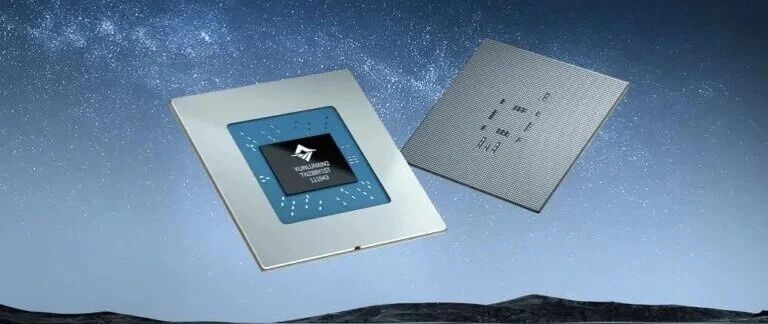
Core Viewpoint - Kunlun Core, a subsidiary of Baidu, is set to launch an IPO on the Hong Kong Stock Exchange, with a post-investment valuation of 21 billion yuan after its D-round financing in July 2025 [2] Group 1: Company Overview - Kunlun Core was established from Baidu's AI chip and architecture department, with technology development dating back to 2011 when Baidu began developing AI accelerators [2] - The company officially launched its AI chip "Baidu Kunlun" in July 2018, marking its entry into the AI chip market [2] - Kunlun Core completed independent financing in April 2021, with a first-round valuation of approximately 13 billion yuan [2] Group 2: Product Development - Kunlun Core has developed the Kunlun XPU architecture for general AI computing, focusing on practical AI application needs [3] - The company has successfully launched two generations of AI processors and multiple AI accelerator cards, with ongoing development of new products [3] Group 3: Market Position and Growth - Kunlun Core has achieved large-scale deployment of its products across various sectors, serving hundreds of clients and reaching billions of end users [5] - Approximately 40% of Kunlun Core's customers are external, including internet giants and state-owned enterprises [5] - Baidu's founder emphasizes the rapid iteration of large model technology as a key competitive advantage, with ongoing investments in advanced models [5] Group 4: Future Product Plans - Kunlun Core plans to launch the M100 chip in early 2026, optimized for large-scale inference scenarios, and the M300 chip in early 2027 for ultra-large-scale multi-modal model training and inference [6] - The company aims to provide powerful, low-cost, and self-controlled AI computing power for Chinese enterprises, highlighting its strategic position in ensuring domestic AI computing autonomy [6]

李彦宏接受《时代》专访:AGI可能不存在,中国模型落后的不太多
Feng Huang Wang· 2026-01-27 04:39
Core Insights - Baidu's CEO, Li Yanhong, expressed skepticism about the existence of General Artificial Intelligence (AGI), stating that no model can be all-encompassing, including those from OpenAI and Google [2][11] - The global AI market reached $244 billion last year, with Nvidia becoming the highest-valued company at over $4 trillion, indicating a significant trend that Baidu has capitalized on by becoming a leading full-stack AI enterprise in China [3] Company Development - Baidu was founded in 2000, initially focusing on establishing itself as China's leading search engine, with a growing interest in AI that began during Li's university years [2][4] - The company started substantial investments in AI around 2012, recognizing the importance of machine learning and deep learning technologies [4] AI Market Trends - Li Yanhong believes that 2025 will be a pivotal year for AI applications, as the focus shifts from foundational models to value creation in application layers [4] - The AI landscape is expected to consolidate, with only a few foundational models remaining, while numerous successful participants will emerge in the application layer [7] Product Development - Baidu's latest model, Wenxin Yiyan 5.0, is designed with an application-driven strategy, focusing on specific areas like search and digital humans, rather than attempting to be comprehensive [5] - The company emphasizes optimizing models for specific applications, such as persuasive script writing for digital sales, rather than trying to excel in every aspect [5] International Expansion - Baidu is actively expanding its autonomous driving services, "Luobo Kuaipao," in various cities, with plans to scale operations as local regulations permit [8] - The company leverages China's competitive supply chain to manufacture autonomous vehicles at lower costs compared to Western counterparts [8] Chip Development - Despite acknowledging a lag in GPU and AI accelerator technology compared to the U.S., Baidu is focused on developing valuable applications that do not solely rely on advanced chips [9] - The company has released a new M100 chip and is working on a new chip cluster, indicating ongoing efforts to enhance its hardware capabilities [9] Regulatory Environment - Li Yanhong highlighted the differences in regulatory approaches between China and the U.S., noting that while the U.S. focuses on a competitive race for AGI, China prioritizes practical applications of AI technology [12][11] - The Chinese government is seen as supportive of innovation, but also cautious about regulatory approvals for new technologies like autonomous vehicles [11] Energy Efficiency - Baidu has been proactive in addressing energy efficiency in data centers, achieving high energy efficiency ratings and focusing on reducing power consumption as AI demands grow [14] - The company aims to develop models with lower inference costs, which can significantly reduce energy requirements compared to competitors [14]

理想一线工人收入赶超日德的承诺,悬了
阿尔法工场研究院· 2026-01-27 00:06
Core Viewpoint - 2026 is a critical year for Li Auto, as the company faces significant challenges in production capacity and market performance, particularly with declining orders for key models L7 and L8, leading to reduced operational efficiency and worker income [2][26]. Group 1: Production and Workforce Situation - Li Auto's Changzhou factory has a comprehensive production capacity exceeding 500,000 vehicles per year, but currently, production lines for models L7 and L8 are underutilized due to a decrease in orders, resulting in workers experiencing reduced working days and income [5][17]. - Workers in the second production area report a shift to a "three days on, four days off" schedule, indicating a significant drop in production activity, which has led to concerns about income stability among employees [3][4][17]. - In contrast, the third production area, which focuses on the i6 model, remains busy, producing at least 700 units daily, highlighting disparities in production demand across different models [7][13]. Group 2: Market Performance and Sales - In 2025, Li Auto's total sales dropped to 406,000 units, a 19% year-on-year decline, making it the only new energy vehicle company to experience a sales decrease, with significant drops in the sales of L7 and L8 models [15][26]. - The company is adjusting its product strategy by refocusing on range-extended and high-end models, while limiting new electric vehicle launches to enhance market positioning and efficiency [21][22]. Group 3: Financial and Strategic Adjustments - Li Auto has over 51.1 billion yuan in cash reserves and plans to invest approximately 8.3 billion yuan in research and development, indicating a strong financial foundation to support strategic shifts [26]. - The company is undergoing organizational changes, merging product lines and integrating key departments to streamline operations and improve manufacturing efficiency [22][26]. Group 4: Future Outlook - The upcoming changes in production rhythm and strategic adjustments are seen as essential for Li Auto to regain market competitiveness and improve worker conditions, with 2026 being pivotal for the company's recovery and growth [27].
出于经营效率考量,理想汽车将关闭部分门店
Guan Cha Zhe Wang· 2026-01-23 12:21
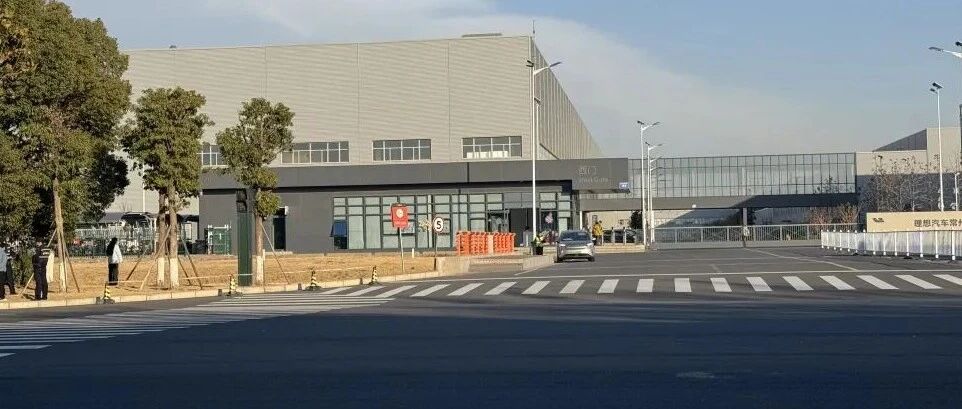
Group 1 - The core viewpoint is that Li Auto's delivery volume for 2025 is projected to be 406,000 units, representing a year-on-year decline of approximately 19%, failing to meet the adjusted sales target [1][3] - Li Auto plans to close some underperforming retail stores as part of a strategy to improve operational efficiency, although the exact number of closures is still under evaluation [2] - The number of retail centers has significantly increased from 206 in 2021 to 467 in 2023, with further growth expected to 502 by the end of 2024 and 548 by the end of 2025 [2] Group 2 - Li Auto's performance in 2025 is impacted by several factors, including the MEGA recall, low sales of the L series before its upgrade, and the nascent stage of its pure electric products [3] - The company plans to revert to a "startup management model" starting in Q4 2025 to address challenges posed by new technologies and market conditions [3] - Li Auto's self-developed chip, the M100, is set to be commercially deployed next year, which is expected to transform the vehicle experience from a passive product to one that actively provides services to users [3]
A股硬科技企业 赴港“二次上市”潮涌
Zheng Quan Shi Bao· 2026-01-09 17:51
Group 1 - A-share hard technology companies are experiencing a wave of "secondary listings" in Hong Kong, with 19 companies expected to list by 2025, indicating a push towards global development and the activation of a new A+H ecosystem [1][2] - The A-share market has established a cluster effect for hard technology enterprises, with the STAR Market and ChiNext serving as important breeding grounds, while the Hong Kong market has seen rapid growth in the hard technology sector, establishing a new valuation logic [2][3] - A-share companies generally enjoy a premium over their H-share counterparts, with premium rates ranging from 40% to 110%, particularly in sectors like AI and semiconductors [2] Group 2 - Recent A-share hard technology leaders, such as Lanqi Technology and Zhaoyi Innovation, are initiating their listing processes in Hong Kong, with Lanqi Technology planning to raise up to $1 billion for R&D and strategic investments [3] - MiniMax, a leading AI model company, successfully listed on the Hong Kong Stock Exchange, raising over HKD 4.8 billion with a subscription rate of 1837.17 times for public offerings, and its stock price increased by 109.09% on the first day [4] - The semiconductor company Biran Technology became the first domestic GPU stock in Hong Kong, achieving the largest fundraising scale since the implementation of new listing rules [5] Group 3 - The pipeline of hard technology companies preparing for Hong Kong listings is expanding, with companies like Kunlun Core and Chipmike Semiconductor nearing their listing processes, which will inject new vitality into the Hong Kong market [7] - Institutions and brokerages are optimistic about the trend of hard technology companies listing in Hong Kong, with Goldman Sachs predicting significant growth in MSCI China and CSI 300 indices, driven by corporate earnings and supportive policies [8]
A股硬科技企业赴港“二次上市”潮涌
Zheng Quan Shi Bao· 2026-01-09 17:43
Group 1 - The core viewpoint is that A-share hard technology companies are experiencing a wave of "secondary listings" in Hong Kong, with 19 companies expected to list by 2025, enhancing the global development of China's hard technology industry and activating a new A+H ecosystem [1][2] - The hard technology sector has formed a cluster effect in the A-share market, with the STAR Market and ChiNext serving as important breeding grounds, while the Hong Kong market has traditionally focused on finance, real estate, and consumption [2][3] - A-share companies are generally trading at a premium of 40% to 110% compared to their H-share counterparts, particularly in sectors like AI and semiconductors, where A-share companies enjoy higher price-to-earnings ratios [2][3] Group 2 - Recent A-share hard technology leaders, such as Lanqi Technology and Zhaoyi Innovation, are initiating their listing processes in Hong Kong, with Lanqi Technology planning to raise up to $1 billion for R&D and strategic investments [3][4] - MiniMax, a leading AI model company, successfully listed on the Hong Kong Stock Exchange, raising over HKD 4.8 billion with a subscription rate of 1837.17 times for public offerings, and its stock price increased by 109.09% on the first day [4][5] - The hard technology sector in Hong Kong is seeing the emergence of new companies, such as Kunlun Core and Chipmunk Semiconductor, which are preparing for listings, contributing to the market's vitality [7][8] Group 3 - Institutions and brokerages are optimistic about the trend of hard technology companies listing in Hong Kong, with Goldman Sachs predicting significant growth in MSCI China and CSI 300 indices, driven by corporate earnings and supported by policies in AI and globalization [8] - The Hong Kong Financial Secretary expressed cautious optimism regarding the IPO market, anticipating that the amount raised from IPOs this year could surpass last year's figures [8]