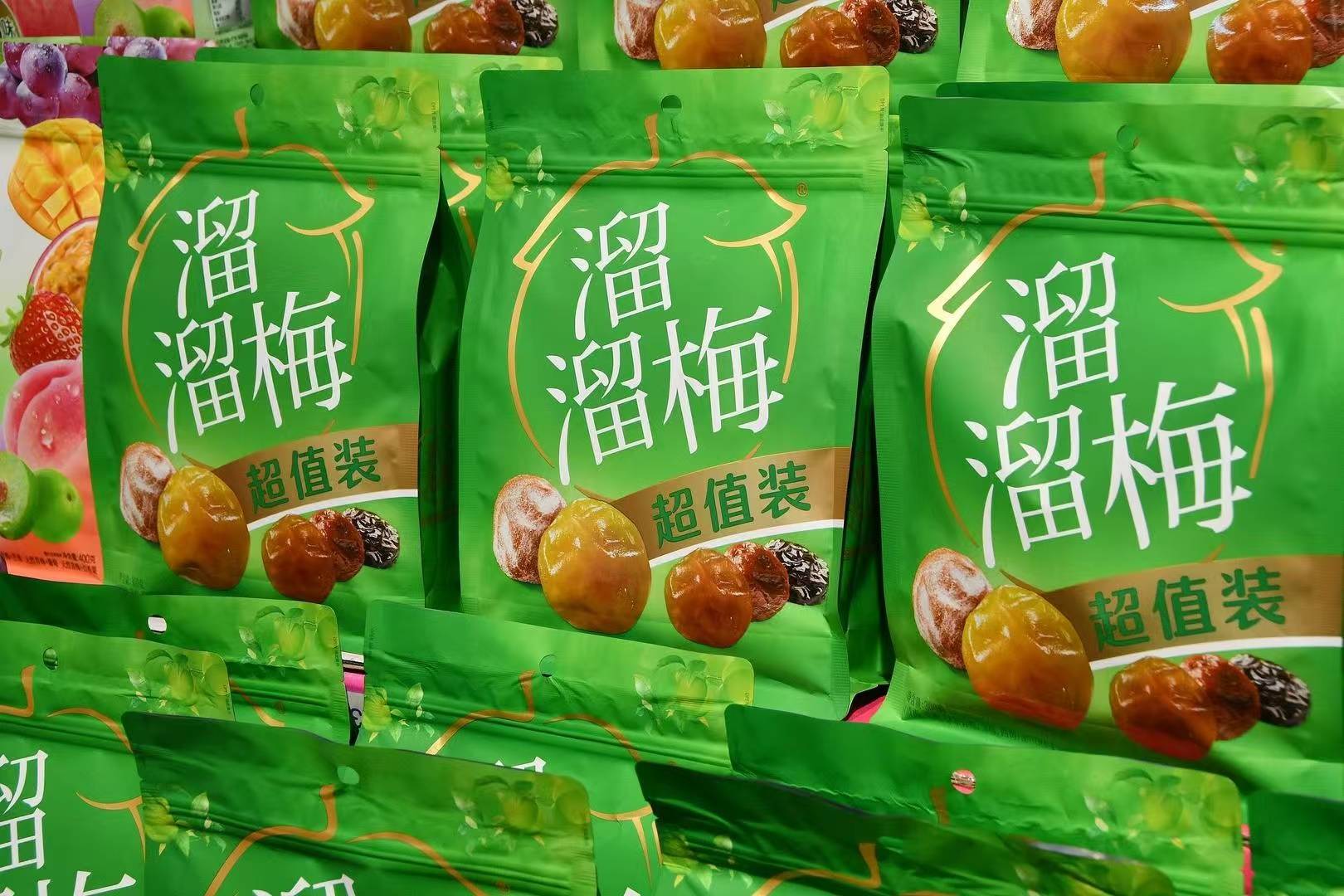
皇梅

Search documents
永辉,炮轰山姆
阿尔法工场研究院· 2026-03-18 04:28
Core Viewpoint - The article discusses a supply chain battle in the Chinese retail industry, highlighting a public letter from Yonghui Supermarket to Sam's Club, criticizing the latter's alleged "choose one of two" practices with suppliers, which Yonghui claims undermines fair competition [4][6][30]. Group 1: Yonghui's Position - Yonghui Supermarket's public letter to Sam's Club is a bold move, marking a shift from its usual humble approach to a more aggressive stance, emphasizing the need for fair supplier practices [4][6]. - Yonghui is undergoing a transformation, shifting its focus from "traffic" to "quality," aiming to establish a strong supply chain to support its new brand identity, "Quality Yonghui" [13][28]. - The company is facing significant financial challenges, with projected losses of 2.14 billion yuan in 2025, marking its fifth consecutive year of losses [12][28]. Group 2: Sam's Club's Strengths - Sam's Club is thriving in the Chinese retail market, with projected sales exceeding 140 billion yuan by 2025, reflecting a growth rate of approximately 40% [8]. - The core competitive advantage of Sam's Club lies in its robust supply chain, which has enabled the successful development of its private label, Member's Mark, accounting for over 20% of total sales [8][9]. - Sam's Club's business model focuses on global sourcing and stringent quality control, fostering strong partnerships with suppliers to create in-demand products [9]. Group 3: Industry Dynamics - The article highlights the competitive landscape in the Chinese retail sector, where companies with superior supply chains dominate the market, while quality supply chains remain scarce [25][26]. - The ongoing struggle for suppliers between major players like Yonghui and Sam's Club illustrates the intense competition and the challenges faced by retailers in securing quality products [30][32]. - The concept of "choose one of two" is debated, with some suppliers denying any restrictions imposed by Sam's Club, indicating a complex relationship between retailers and suppliers [15][19].


永辉喊话山姆:不要让供应商“二选一”!山姆曾多次被零售企业控诉……
新浪财经· 2026-03-17 09:48
Core Viewpoint - The article discusses the competitive landscape between Yonghui and Sam's Club, particularly focusing on the issue of suppliers being forced into a "choose one" situation, which is viewed as unfair competition. Yonghui emphasizes the need for fair practices and quality improvement in their own brand development [2][4][12]. Group 1: Supplier Competition - Yonghui publicly called out Sam's Club for allegedly pressuring suppliers to choose between them and other retailers, highlighting the need for fair competition in the market [2][4]. - The competition for suppliers has intensified, with both Yonghui and Sam's Club vying for quality suppliers, leading to a "supply chain war" [12][14]. - Yonghui's open letter is a response to ongoing issues with suppliers facing pressure to choose sides, indicating a significant operational challenge for the company [14][19]. Group 2: Brand Development and Quality - Yonghui aims to enhance product quality by focusing on superior raw materials, scientific formulations, advanced processes, and aesthetically pleasing designs [5]. - The company commits to transparency regarding food additives, publishing ingredient lists annually to ensure customer safety and trust [6]. - Yonghui emphasizes the importance of price competitiveness, stating that the value proposition should be based on quality and price equivalence [7]. Group 3: Market Dynamics and Challenges - Sam's Club has successfully increased its private label Member's Mark (MM) to account for over 20% of its total sales, significantly higher than the typical 10% seen in local competitors [12][13]. - Yonghui's store count is projected to decrease from 1,000 in 2023 to approximately 400 by the end of 2025 due to ongoing losses exceeding 11.6 billion yuan over five years [12][14]. - The retail landscape is evolving, with major players like Costco and others also increasing their private label offerings, intensifying the competition for unique suppliers [13][14].
山姆下架好丽友背后:零食们借山姆扩增量,有品牌去年卖2亿
Nan Fang Du Shi Bao· 2025-07-16 12:57
Core Viewpoint - The recent removal of "Low Sugar Orion Pie" from Sam's Club has sparked discussions among consumers regarding the selection strategy of the store, as many popular products have been replaced with items that are more commonly found in regular supermarkets [4][7][22]. Group 1: Product Removal and Consumer Reaction - Sam's Club has removed the "Low Sugar Orion Pie" from its app and shelves, despite it being recently introduced [1][8]. - Consumers expressed dissatisfaction on social media about the removal of high-repurchase-rate products and the introduction of more common items [4][22]. - The store's staff were unable to provide a clear reason for the product's removal or when it might return [8][12]. Group 2: Brand Strategy and Market Positioning - Several snack brands, including Orion, are leveraging Sam's Club to expand their market presence and target higher-end consumers, with some brands reporting significant sales through this channel [3][15]. - Snack brands are increasingly offering customized products for Sam's Club, which has led to substantial sales growth for some, such as Qiaqia Foods, which reported sales of approximately 200 million yuan through Sam's Club last year [15][19]. - The collaboration with Sam's Club is seen as a way for snack brands to enhance their market positioning, although there are concerns about the potential dilution of brand identity due to reliance on the retailer [22][23]. Group 3: Industry Trends and Insights - The snack food industry is undergoing a channel restructuring, with traditional supermarkets losing market share to membership-based retailers like Sam's Club, which are gaining traction among high-income consumers [21][22]. - Experts suggest that while partnerships with Sam's Club can provide growth opportunities, brands should avoid over-reliance on this channel to maintain their independent value [22][23]. - The legal perspective indicates that Sam's Club has the right to remove products based on market conditions and contractual agreements with suppliers, which does not necessarily harm consumer interests [27].
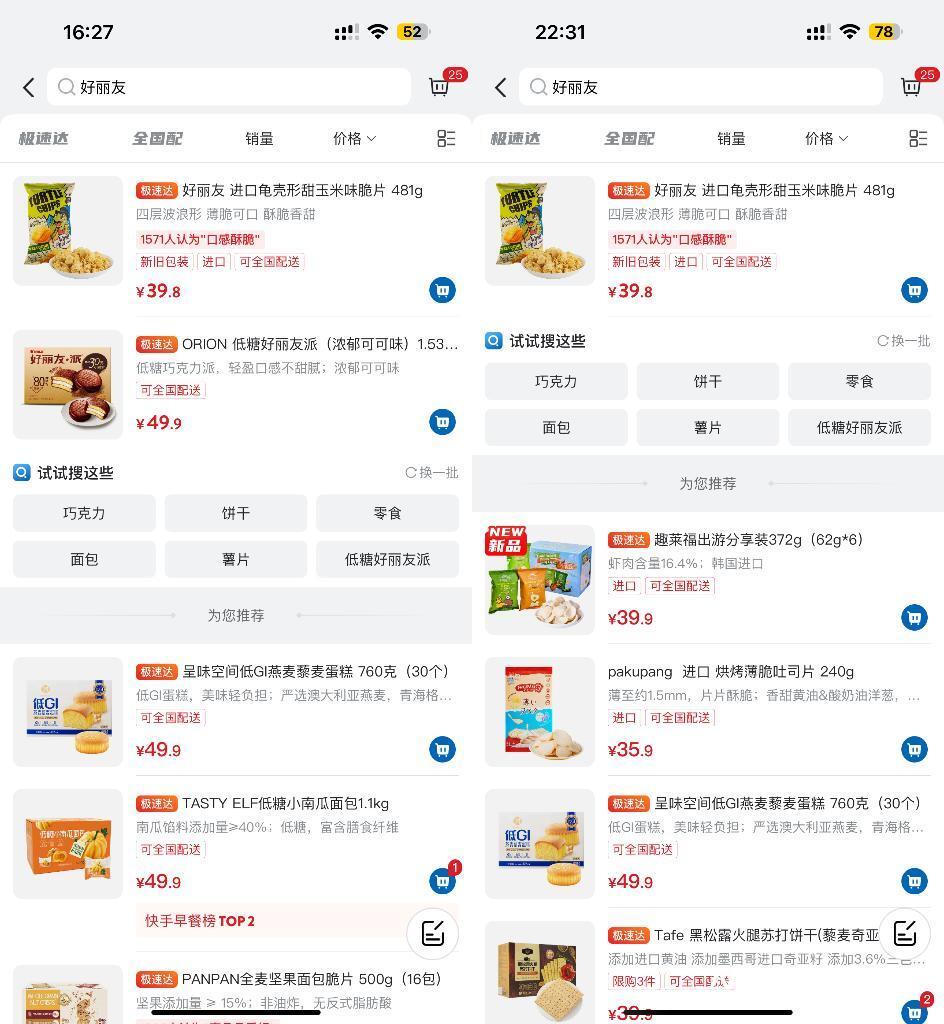
上架好丽友沪溪河等引争议,山姆变成普通超市?沃尔玛回应
Nan Fang Du Shi Bao· 2025-07-15 10:34
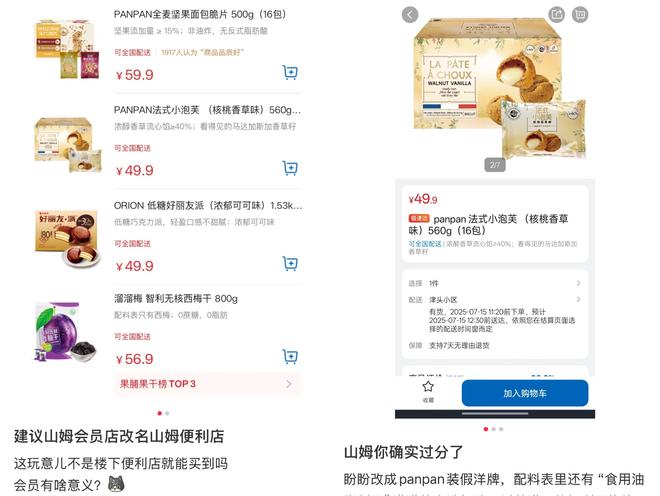
Core Viewpoint - Sam's Club has faced backlash from members for introducing products from brands like Holley, Panpan, and Xu Fu Ji, which are perceived as available in regular supermarkets, raising questions about the value of membership [1][15][19] Product Selection and Member Feedback - Recent product introductions at Sam's Club include Holley, Panpan, and Xu Fu Ji, which have led to member complaints about the lack of unique offerings [1][5][19] - Members have expressed dissatisfaction with the removal of high-repurchase-rate products in favor of items that can be found in regular supermarkets [1][19] - Walmart has acknowledged the discussions on social media regarding product selection and is considering member feedback in future strategies [14][15] Brand and Product Specifics - Products from Holley and Panpan are being sold at Sam's Club without prominent branding on packaging, leading to confusion among consumers [5][9][19] - A specific example includes Panpan's "French-style small puff" which is marketed with French text but is actually a Panpan product [2] - Sam's Club's pricing strategy includes items like a box of nuts from Hu Xi He priced at 48.9 yuan and a low-sugar Holley cake at 49.9 yuan, both marketed as "Sam's exclusive" [5][7] Market Positioning and Strategy - Experts suggest that Sam's Club must maintain a unique value proposition that cannot be easily replicated by regular supermarkets to justify its membership model [18][19] - The introduction of customized products for Sam's Club by brands like Holley and Xu Fu Ji indicates a shift towards more tailored offerings, although consumer perception remains critical [15][19] - Analysts emphasize the need for Sam's Club to differentiate its product offerings to meet the evolving demands of its target demographic, particularly middle-class consumers [18][19]

青梅之王的资本劫:红杉折价离场、D轮对赌压顶,溜溜梅IPO能破局?
Sou Hu Cai Jing· 2025-05-01 02:00
Core Viewpoint - Liu Liu Mei, the parent company of Liu Liu Guo Yuan, is attempting to enter the capital market by submitting an IPO application to the Hong Kong Stock Exchange, despite facing significant financial and operational challenges [2][12]. Group 1: Financial Performance - Liu Liu Guo Yuan sold 2 billion green plums in a year, generating annual revenue of 1.6 billion yuan [2]. - The company reported revenues of 1.174 billion yuan, 1.322 billion yuan, and 1.616 billion yuan for the years 2022, 2023, and 2024, respectively, with net profits of 68.43 million yuan, 99.23 million yuan, and 148 million yuan during the same period [7][8]. - The revenue breakdown for 2024 shows that dried plum snacks, plum jelly, and western plum products contributed 974 million yuan, 224 million yuan, and 410 million yuan, accounting for 60.3%, 13.8%, and 25.4% of total revenue, respectively [2]. Group 2: Market Position and Sales Channels - Liu Liu Guo Yuan ranks first in the Chinese plum product industry with a market share of 7% as of 2024, and it has maintained the top position in the sub-markets of green plum snacks and western plum snacks for four consecutive years [3]. - The company has shifted its sales strategy towards direct sales, with the proportion of revenue from direct sales increasing from 25.5% in 2022 to 59.2% in 2024, while revenue from distribution channels decreased correspondingly [3][4]. - The top three customers in 2024 contributed a combined revenue of 228 million yuan, 194 million yuan, and 44.3 million yuan, representing 28.2% of total revenue [4]. Group 3: Challenges and Risks - Liu Liu Mei faces significant challenges due to its heavy reliance on green plum products, which account for 60.3% of its revenue, exposing the company to market saturation risks [8]. - The average procurement price for green plums increased from 2,400 yuan/ton to 2,600 yuan/ton between 2020 and 2024, while imported western plum prices rose from 16,200 yuan/ton to 20,700 yuan/ton, leading to increased raw material costs [9]. - The company has seen a decline in the number of distributors for the first time, with a net loss of two distributors in 2024, indicating potential issues in its distribution strategy [4]. Group 4: Funding and Financial Health - Liu Liu Mei has completed four rounds of financing, with the latest round involving a buyout by Sequoia China at a significant discount, raising concerns about the company's valuation and market perception [11]. - As of the end of 2024, the company had cash reserves of only 78.05 million yuan against short-term borrowings of 312 million yuan, indicating a precarious financial situation [12]. - Government subsidies accounted for over 20% of net profit in 2024, highlighting a reliance on non-operational income that may undermine financial stability [10].
“没事就吃”的溜溜梅闯港股:三年砸9亿营销,红杉套现2.6亿离场
Sou Hu Cai Jing· 2025-04-28 09:50
Core Viewpoint - Liuliu Mei, a leading brand in the plum snack industry, is preparing for an IPO on the Hong Kong Stock Exchange after previously failing to list in A-shares, raising concerns about declining profit margins and low R&D investment [2][5]. Company Overview - Liuliu Guoyuan, the parent company of Liuliu Mei, is a major player in the Chinese fruit snack market, with its main products categorized into three types: dried plums, western plums, and other plum-related products [3]. Market Position - According to Frost & Sullivan, Liuliu Guoyuan has ranked first in the green plum and western plum snack sectors by retail sales from 2021 to 2024. However, the market ceiling is evident, with the overall snack market in China projected to grow from 13,440 billion RMB in 2024 to 17,558 billion RMB by 2029 [5]. Financial Performance - The company reported total revenues of 1.174 billion RMB, 1.322 billion RMB, and 1.616 billion RMB for the years 2022, 2023, and 2024, respectively, with net profits of approximately 68 million RMB, 99 million RMB, and 148 million RMB during the same period [5][6]. Profit Margin Trends - Despite revenue growth, the gross profit margin has been declining, with figures of 38.6%, 40.1%, and 36.0% for the years 2022, 2023, and 2024, respectively. The margins for core products like dried plums and western plums have also decreased [6][7]. Marketing and R&D Expenditure - The company has invested heavily in marketing, with sales and distribution expenses exceeding 900 million RMB over the reporting period, accounting for 24.1%, 23.4%, and 19.2% of total revenue [8][10]. In contrast, R&D spending has been low, totaling less than 77 million RMB over three years, with a R&D expense ratio of only 1.2% in 2024 [11]. Ownership and Shareholder Actions - The company is primarily controlled by its founders, who hold 87.77% of the shares. Notably, major shareholder Beijing Sequoia chose to cash out before the IPO, selling its shares for 261 million RMB [11]. Food Safety Concerns - Food safety is critical for the company, which has faced multiple complaints and regulatory actions related to product quality. There have been nearly 300 complaints, with issues such as contamination and spoilage frequently reported [12][13][16].