
纱管纸

Search documents
大道之兴 产业强州动能澎湃
Xin Lang Cai Jing· 2025-12-21 22:47
Core Insights - Guizhou's industrial transformation is driven by strategic initiatives focusing on six major industrial bases and resource optimization, aiming to enhance economic strength through industrial development [10][11]. Group 1: Industrial Development - The construction of a high-purity manganese project in Guizhou is nearing completion, with production expected to start in one month [9]. - Guizhou's gold industry is set to achieve a production value exceeding 10 billion yuan in 2024, reflecting a year-on-year growth of 111.3% [14]. - The aluminum industry in Guizhou is forming a comprehensive industrial cluster, integrating upstream and downstream processes, with 14 companies involved in the aluminum production chain [15]. Group 2: Agricultural Advancements - Guizhou's agricultural sector has seen an average annual growth of 5.2%, with a processing conversion rate of 58% for agricultural products [17]. - The region has established 38 production bases recognized as "vegetable baskets" for the Guangdong-Hong Kong-Macao Greater Bay Area [17]. - The brand value of "Puan Red" tea has reached 3.25 billion yuan, marking its entry into the top ten national red teas [26]. Group 3: Service Sector Growth - The service sector's contribution to GDP has reached 53.3%, with overnight tourist numbers increasing by an average of 14.82% annually [18]. - The opening of the Panxing High-speed Railway has significantly boosted tourism, with hotel occupancy rates rising to 75% shortly after its launch [29]. - Guizhou is enhancing its tourism offerings by integrating cultural and health tourism, with a focus on creating diverse travel experiences [30]. Group 4: Infrastructure and Investment - Guizhou has signed over 700 projects since the start of the 14th Five-Year Plan, with total contracted investments exceeding 150 billion yuan [24]. - The region is actively optimizing its business environment, with the number of industrial enterprises reaching 344 by the end of 2024 [24]. - Infrastructure investment has seen an average annual growth of 12.3%, contributing to the overall economic development [17].


金信期货日刊-20251107
Jin Xin Qi Huo· 2025-11-07 06:41
Report Summary 1. Report Industry Investment Rating No relevant content provided. 2. Core View of the Report The coniferous pulp futures have stabilized, boosting the market and leading to a slight improvement in spot transactions. The foreign market price of broadleaf pulp has been continuously increasing, providing cost support for the firmness of the spot price. However, the pattern of high inventory and weak demand remains unchanged, and the market lacks directional guidance. It is expected that the upward space for pulp is limited, and the market will maintain a volatile trend [7]. 3. Summary by Related Catalog Demand - During the week, the production of household paper, coated paper, and white cardboard decreased, while the production of offset paper increased [6]. Supply - The sample production of Chinese broadleaf pulp was 250,000 tons, an increase of 13,000 tons compared to last week. The sample broadleaf pulp market remained stable this period, and the production enterprises' equipment returned to normal production. It is expected that the sample production will maintain a stable trend in the short term [7]. Inventory - As of November 6, 2025, the sample inventory of mainstream pulp ports in China was 2.008 million tons, a decrease of 53,000 tons compared to the previous period, with a month - on - month decline of 2.6%. The inventory showed a narrow - range destocking trend this period [7]. - The inventory changes of different ports: Qingdao Port decreased by 3.9% (from 1.41 million tons to 1.355 million tons), Changshu Port increased by 0.6% (from 503,000 tons to 506,000 tons), Gaolan Port increased by 64.7% (from 34,000 tons to 56,000 tons), Tianjin Port decreased by 29.2% (from 72,000 tons to 51,000 tons), and Rizhao Port decreased by 4.8% (from 42,000 tons to 40,000 tons) [9]. Profit - The price of domestic waste paper continued to rise, and due to strong cost pressure, the gross profit of corrugated paper, boxboard paper, and white board paper shrank. The demand for bobbin paper was good, and the increase in the price of base paper exceeded the cost, resulting in a 11.00% month - on - month increase in gross profit. Due to more positive news on the demand side of social white cardboard, the increase in base paper price was greater than that of pulp price, and the gross profit increased by 78.18% month - on - month. The price of cultural printing paper base paper remained flat, while the price of domestic chemimechanical pulp increased month - on - month, so the gross profit of double - copper paper decreased by 4.37% month - on - month [7]. - Specific profit data: The gross profit of boxboard paper decreased by 3.24% (from 683 yuan/ton to 661 yuan/ton), corrugated paper decreased by 7.79% (from 408 yuan/ton to 376 yuan/ton), bobbin paper increased by 11.00% (from 100 yuan/ton to 111 yuan/ton), white board paper decreased by 9.73% (from 339 yuan/ton to 306 yuan/ton), social white cardboard increased by 78.18% (from 110 yuan/ton to 196 yuan/ton), offset paper decreased by 2.37% (from - 253 yuan/ton to - 259 yuan/ton), double - copper paper decreased by 4.37% (from 183 yuan/ton to 175 yuan/ton), and household paper remained unchanged at 149 yuan/ton [11].
专家:建议生态环境部门与海关部门联合调研评估 杜绝干磨纸浆“带病”进口
Mei Ri Jing Ji Xin Wen· 2025-09-16 15:17
Group 1 - The Chinese government implemented a ban on foreign waste imports in 2018 to prevent pollution transfer and protect public health, which has received widespread approval [1] - The ban has led to positive effects on improving China's environmental quality, but some entities have exploited loopholes by sending processed waste paper from developed countries to Southeast Asia before exporting it to China, which poses health risks and creates unfair competition for compliant paper companies [2] - The production of legitimate waste paper pulp requires extensive purification processes, while dry ground pulp production skips most of these steps, resulting in lower quality and potential contamination [2][3] Group 2 - There are existing national recommended standards for recycled paper pulp in China, but reports of impurities and pathogens in imported dry ground pulp have emerged, prompting calls for stricter enforcement and the conversion of recommended standards to mandatory ones [3] - Domestic companies utilizing recycled fibers have a rigid demand for quality, employing various methods to remove contaminants to ensure their products meet market standards, thereby minimizing safety risks in final products [3]
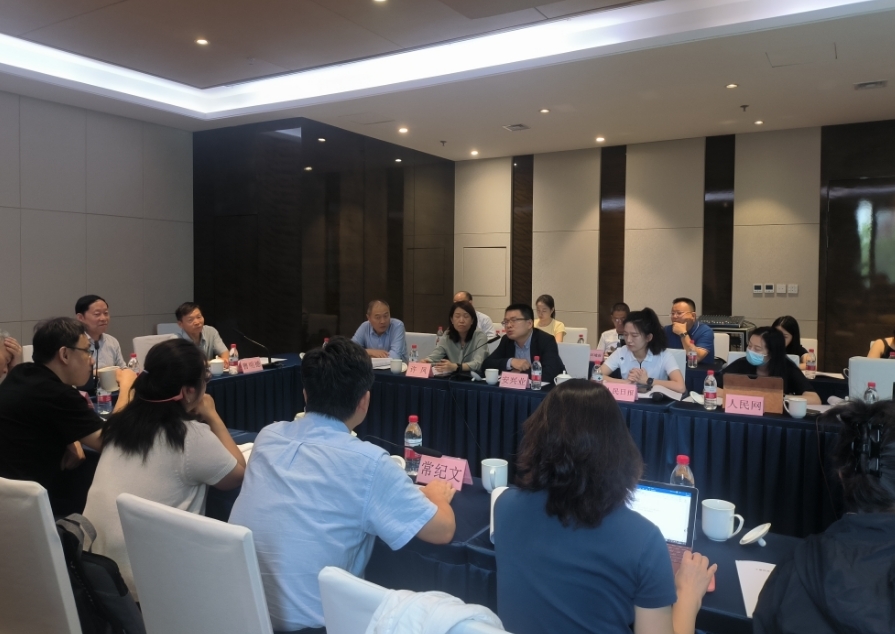
纸企集体涨价,造纸业拐点将至?
2 1 Shi Ji Jing Ji Bao Dao· 2025-08-04 13:20
Core Viewpoint - The paper industry is experiencing a price increase driven by rising costs and supply constraints, with major companies like Nine Dragons Paper and Shanying International announcing multiple price hikes in recent weeks [1][2][3] Price Increases - Since early July, major paper companies have issued multiple price increase notices, with prices for corrugated paper and recycled cardboard rising by 30 yuan/ton and all weights of recycled paper and corrugated paper increasing by 50 yuan/ton [1] - The average price of waste yellow board paper reached 1482 yuan/ton in late July, a year-on-year increase of 2.75% [1] - The price hikes aim to restore profit levels for paper manufacturers and encourage downstream packaging companies to replenish their low inventories [2][3] Industry Challenges - The paper industry is facing a supply-demand imbalance, with new production capacity exceeding 10 million tons in 2024 while consumption growth is only 1.5% [3] - The industry is experiencing a historical low in profit margins, with an overall profit of only 520 billion yuan and a profit margin of 3%-5% [3] - The competitive landscape is characterized by excessive price competition and a significant portion of companies operating at a loss [3][5] Anti-Competition Initiatives - The Guangdong Paper Industry Association has issued an "anti-involution" initiative to combat low-price competition and promote rational business practices [4][5] - The initiative includes four main proposals: resisting disorderly low-price competition, optimizing capacity structure, focusing on quality and service, and establishing self-regulatory mechanisms [5] - Industry leaders emphasize the need to shift focus from price competition to quality, service, and innovation to enhance competitiveness [6][7] Strategic Transformations - Leading companies are pursuing strategic transformations, such as Sun Paper's integrated "forest-pulp-paper" model and Xianhe's significant investments in raw material projects [7] - There is a lack of a clear policy framework for the industry's anti-involution efforts, and specific policy tools and implementation measures remain uncertain [7] - Recommendations for the industry include shifting competition focus, ensuring healthy supply chain relationships, and avoiding blind expansion and price wars [7]