
综合极端条件实验装置

Search documents
怀柔科学城29个科学设施全部进入运行状态
Xin Lang Cai Jing· 2026-01-07 22:24
Core Insights - Huairou Science City has laid out 37 technology facility platform projects, aiming for comprehensive operation and efficient utilization of 29 facilities by 2026, while also preparing over 30 projects for the 14th Five-Year Plan [1][2] Group 1: Technology Infrastructure - The 37 technology facility platform projects include 6 major national scientific infrastructure, 17 educational and research facilities, and 14 interdisciplinary research platforms, making it one of the most densely populated areas for major scientific infrastructure globally [1] - By 2025, 21 breakthrough technologies addressing critical issues will be introduced, including the new far-red light dopamine probe, with 110 significant achievements produced, and 28 awards received from Beijing Science and Technology [1] Group 2: Innovation and Development - The Laser Acceleration Innovation Center has nearly completed the world's first laser proton cancer treatment device, and breakthroughs in "iodine ion glue" technology have addressed the challenge of achieving 1,000 kilometers of range with a 100-kilogram battery [1] - The city plans to establish an internationally leading strategic technology integration development demonstration zone by 2026, focusing on enhancing public services in education, healthcare, and commercial sectors [2]
彰显中国自信!“数”看2025中国科技创新向极端条件迈进收获新突破
Yang Shi Wang· 2026-01-03 10:04
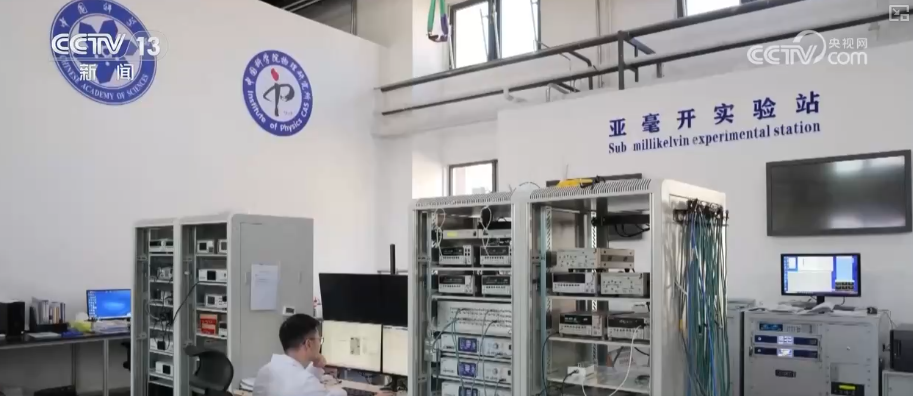
Core Insights - Extreme environments serve as a "touchstone" for technological innovation, enabling in-depth exploration of natural laws and the limits of life, thus driving scientific advancements and new technological breakthroughs [1] Group 1: Breakthroughs in Extreme Conditions - In February 2025, a comprehensive extreme conditions experimental facility was completed, capable of providing temperatures as low as 1 millikelvin, pressures exceeding 300 billion pascals, magnetic field strengths up to 26 teslas, and ultrafast light field pulse widths not exceeding 100 attoseconds, significantly enhancing China's capabilities in material science [2] - In September 2025, the world's largest supergravity centrifuge in Hangzhou was operational, achieving a maximum arm linear speed of 137 meters per second, generating 300 times Earth's gravity, and supporting a maximum load of 20 tons, simulating soil settlement over a century in a single day [4] - In 2025, China's first ice-capable manned deep-sea operation mother ship "Exploration No. 3" and the "Fighter" submersible successfully completed manned deep-sea missions in the Arctic, overcoming extreme conditions of -30°C and approximately 600 atmospheres [5][7] Group 2: Advances in Nuclear Fusion Research - The EAST (Experimental Advanced Superconducting Tokamak) achieved a world record of 100 million degrees Celsius and stable plasma operation for 1066 seconds in 2025, marking a significant leap from basic science to engineering practice in fusion energy research [8] - The EAST facility has conducted over 150,000 plasma operations since its inception in 2006, consistently setting new world records and maintaining international leadership in engineering and physics [15] - The construction of the next-generation fusion experimental device, BEST, is progressing, with plans to demonstrate fusion energy generation by 2030 [16][18] Group 3: Future Prospects in Extreme Condition Research - The establishment of advanced extreme condition experimental facilities is becoming a crucial paradigm in scientific research, aimed at discovering new materials, revealing new laws, and opening new applications [21] - China's focus on extreme conditions in deep-sea, high-altitude, and polar environments is expected to drive the development of multiple disciplines, exploring scientific questions related to material states, life behaviors, and cosmic evolution, thereby supporting innovations in new materials and energy sectors [23]

多点突破、硬核领航 2025中国科技创新再攀高峰
Xin Lang Cai Jing· 2025-12-28 12:13
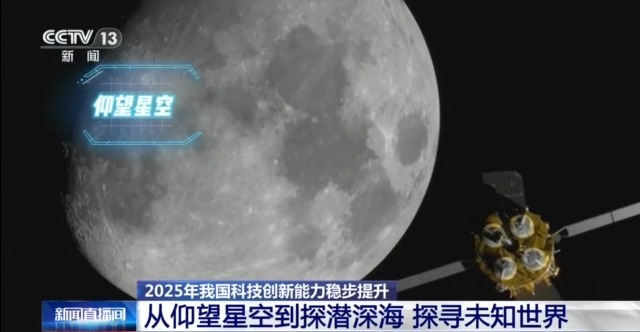
Group 1 - China's technological innovation capabilities have steadily improved, showcasing significant breakthroughs and achievements in various fields, particularly in space and deep-sea exploration [1][3] - The EAST facility in Anhui achieved a world record of 1 million degrees Celsius plasma maintained for 1066 seconds, marking a major leap in fusion energy research [1] - The Chang'e 6 mission successfully returned the first batch of lunar samples, contributing to the understanding of lunar soil and its cosmic secrets [3] Group 2 - Chinese scientists are making strides in deep-sea exploration, completing manned missions to the Arctic and initiating the UN's "Decade of Ocean Science" global deep-sea exploration plan [4] - Significant advancements in basic research include evidence supporting Lamarckian evolution and breakthroughs in quantum technology, enhancing the understanding of quantum mechanics [6][8] - The development of ultra-high precision measurement techniques in neutrino experiments and the discovery of over 1170 pulsars by the FAST telescope highlight the progress in fundamental science [10] Group 3 - The AI sector in China is evolving, with advancements enabling AI to transition from virtual applications to real-world capabilities, exemplified by humanoid robots that can adapt to physical challenges [11] - The achievements in various scientific fields reflect China's transition from following to leading in technology innovation, contributing to the nation's strength and confidence in future endeavors [13]
全释硬科技|致敬2025最闪耀的国之重器
Yang Shi Xin Wen Ke Hu Duan· 2025-12-27 05:40
Core Insights - In 2025, China is making significant strides in technological innovation, showcasing various groundbreaking projects that highlight national intelligence and pave the way for future advancements [2][3][4] Group 1: Major Technological Achievements - The "China Sky Eye" FAST has discovered over 1,170 pulsars, maintaining its global leadership in pulsar detection [2] - The Jiangmen Neutrino Experiment Facility, operational in 2025, will enhance the measurement precision of solar neutrino oscillation parameters by 1.5 to 1.8 times, allowing for a reevaluation of cosmic laws [2] - The "Fighter" manned submersible has successfully completed 43 dives in the Arctic, discovering the deepest known chemosynthetic life community, making China the only country to conduct continuous manned deep dives in the Arctic sea ice region [2] Group 2: Advancements in Energy and Research Facilities - The fully superconducting Tokamak EAST is set to achieve a world record of 100 million degrees Celsius and 1,066 seconds of steady-state operation in 2025, marking a significant leap in controlled nuclear fusion from basic science to key engineering practice [2] - The thorium-based molten salt reactor has been completed and has successfully achieved thorium-uranium conversion, opening a new chapter in nuclear energy utilization [3] - A series of large scientific facilities are under construction, including advanced attosecond laser facilities, the world's first 2,000-meter deep manned laboratory, and human cell lineage research facilities capable of drug testing [3]
新思想引领新征程丨协同聚力 京津冀科技创新开启新征程
Yang Guang Wang· 2025-12-20 03:52
Core Insights - The Chinese government is accelerating the construction of Beijing as an international technology innovation center and a high-level talent hub, aiming to make it a key source of independent and original innovation [1][2]. Group 1: Technological Infrastructure - Beijing has made significant progress in establishing a high-density technological infrastructure, ranking among the top globally, transitioning from single-point construction to cluster operations [2]. - The completion of the high-energy synchrotron radiation source in Beijing's Huairou district marks a milestone, being the world's highest brightness fourth-generation synchrotron radiation source, fulfilling national strategic and technological innovation needs [1][3]. Group 2: Collaborative Innovation - The Beijing-Tianjin-Hebei region has jointly funded over 220 basic research cooperation projects, forming innovation alliances to enhance regional innovation quality and efficiency [3]. - A collaborative model is emerging where research and development occur in Beijing while technology is transferred to Tianjin and Hebei, fostering a synergistic industrial structure [3]. Group 3: Strategic Goals and Achievements - The central government emphasizes the integration of Beijing's technological advantages with Tianjin's advanced manufacturing capabilities to drive innovation in Hebei, outlining a practical path for regional collaboration [2]. - Beijing has been recognized as the global leader in the "science center" dimension of the 2025 International Technology Innovation Center Index, solidifying its position at the forefront of global scientific and innovation activities [2].