
联想服务器

Search documents
高盛:升联想集团目标价至12.53港元 维持“买入”评级
Zhi Tong Cai Jing· 2026-02-16 07:45
Core Viewpoint - Goldman Sachs has included Lenovo Group (00992) in its assessment for the third quarter of the 2026 fiscal year, maintaining its forecasts for fiscal years 2027 to 2029 largely unchanged, with the target price raised from HKD 11.98 to HKD 12.53, and a "Buy" rating is maintained [1] Group 1 - The firm holds a positive outlook on Lenovo Group's performance for the third quarter of the 2026 fiscal year (fourth quarter of 2025), expecting the company to be less impacted by rising memory costs due to its market leadership, scale advantages, and a higher proportion of commercial products [1] - Lenovo's server business continues to expand, with profitability improvements driven by deeper penetration of general servers among cloud service providers, the expansion of AI servers leading to product mix upgrades, and restructuring measures that reduce costs and enhance operational efficiency [1]

从参与者到主导者:联想如何在AI落地层建立入口级主导权
Xin Lang Cai Jing· 2026-02-13 04:42
Core Insights - The AI industry is transitioning from a capital-intensive model training phase to a monetization phase focused on commercial efficiency as of 2026 [1][13] - Lenovo is emerging as a key player in this new phase, leveraging its extensive installed base and end-to-end delivery capabilities to capitalize on the hybrid AI architecture [1][12] Financial Performance - Lenovo reported revenue of 157.5 billion RMB for the third quarter of the 2025/26 fiscal year, representing an over 18% year-on-year growth, significantly exceeding market expectations [2][14] - Adjusted net profit increased by 36% year-on-year, surpassing market expectations by 32%, with profit growth outpacing revenue growth [2][14] Market Challenges and Strategic Response - The industry is facing challenges such as rising prices of key components like storage chips and concerns over the sustainability of the AI cycle [2][14] - Lenovo has successfully fulfilled its commitment to double-digit revenue growth and profitability, demonstrating resilience and operational strength in a complex environment [2][14] Shift in AI Industry Focus - The focus of the AI industry is shifting from training to inference, with a greater emphasis on cost-effective and user-friendly solutions for daily AI functionality [4][16] - The market is moving away from purely cloud-based AI models due to high bandwidth costs and energy bills, necessitating more economical solutions [5][16] Competitive Landscape - Companies that can cover a broad customer base and possess global supply chain resilience are becoming increasingly favored in the AI commercial ecosystem [6][18] - Lenovo's extensive device installation base positions it as a critical player in the AI monetization phase, where hardware serves as the platform for AI interaction [6][18] Hybrid AI Strategy - Lenovo's hybrid AI strategy is not merely a hardware upgrade but a comprehensive approach to AI deployment, transferring inference costs from the cloud to local devices [7][19] - The integration of local NPU and heterogeneous computing in PCs enhances response speed and privacy for users while significantly reducing AI usage costs [7][19] Revenue Growth in AI Segment - In the third quarter, Lenovo's AI-related revenue grew by 72%, accounting for 32% of total revenue, with AI PC revenue increasing by 39% and AI smartphone revenue surging by 202% [11][22] - The average selling price of AI PCs reached 845 USD, significantly above industry averages, providing structural support for profitability [20][22] Long-term Business Model - The hybrid AI model is seen as a commercially optimal solution, addressing cost and trust issues associated with cloud-based AI [21] - Lenovo's business model is evolving from merely selling devices to offering comprehensive AI capabilities, positioning the company as a steady revenue generator in the AI monetization phase [21][22] Future Outlook - Lenovo aims to leverage its hybrid AI strategy and global supply chain to create sustainable, scalable, and profitable AI business opportunities [12][24] - The company is focused on integrating AI into everyday life and enterprise operations, ensuring long-term returns for shareholders [12][24]
拉美成中国AI基建“后院”:联想、阿里、字节三企割据
Zhi Tong Cai Jing· 2025-12-05 08:57
Group 1 - A group of Chinese internet companies is investing significantly in Latin America, with TikTok announcing a $37.7 billion investment in a data center complex in northeastern Brazil, marking its first major project in the region [1] - Alibaba Cloud is also expanding its presence in Latin America by building a new data center in Brazil and expanding its existing center in Mexico, which began operations earlier this year [1] - Lenovo has established a strong foothold in the Latin American market, leading in PC sales and showing significant growth in server business with a 25% annual growth rate [1] Group 2 - International tech giants like Amazon, Google, and Microsoft are also heavily investing in Latin America, with Google investing $850 million in a new data center in Uruguay and Microsoft investing $2.7 billion in Brazil for cloud and AI infrastructure [2] - The Latin American data center market is expected to nearly double from approximately $5 billion in 2023 to nearly $10 billion by 2029, driven by demand for cloud services and AI [2][3] - The region offers advantages such as cheap and sustainable energy sources, with Chile and Brazil having high percentages of carbon-free energy, which helps reduce operational costs for tech companies [3] Group 3 - Alibaba Cloud is accelerating its expansion in Latin America, focusing on cloud infrastructure and AI applications, with a commitment to invest 380 billion yuan globally from 2025 to 2027, part of which will be allocated to Latin America [4] - Lenovo supports Alibaba Cloud's infrastructure development and collaborates with local IT companies to provide solutions, helping them save costs and expand their cloud services [5] - Lenovo's hybrid AI strategy aims to dominate the personal AI market, with AI PCs expected to account for over 80% of global PC sales by 2028 [6] Group 4 - Lenovo has also supported Chinese companies entering the Latin American market, providing IT infrastructure for companies like BYD and Geely, which require substantial computing power for their operations [7]
联想加速推动AI落地 刘军获评“年度科技领军人物”
Zheng Quan Ri Bao Wang· 2025-11-27 11:15
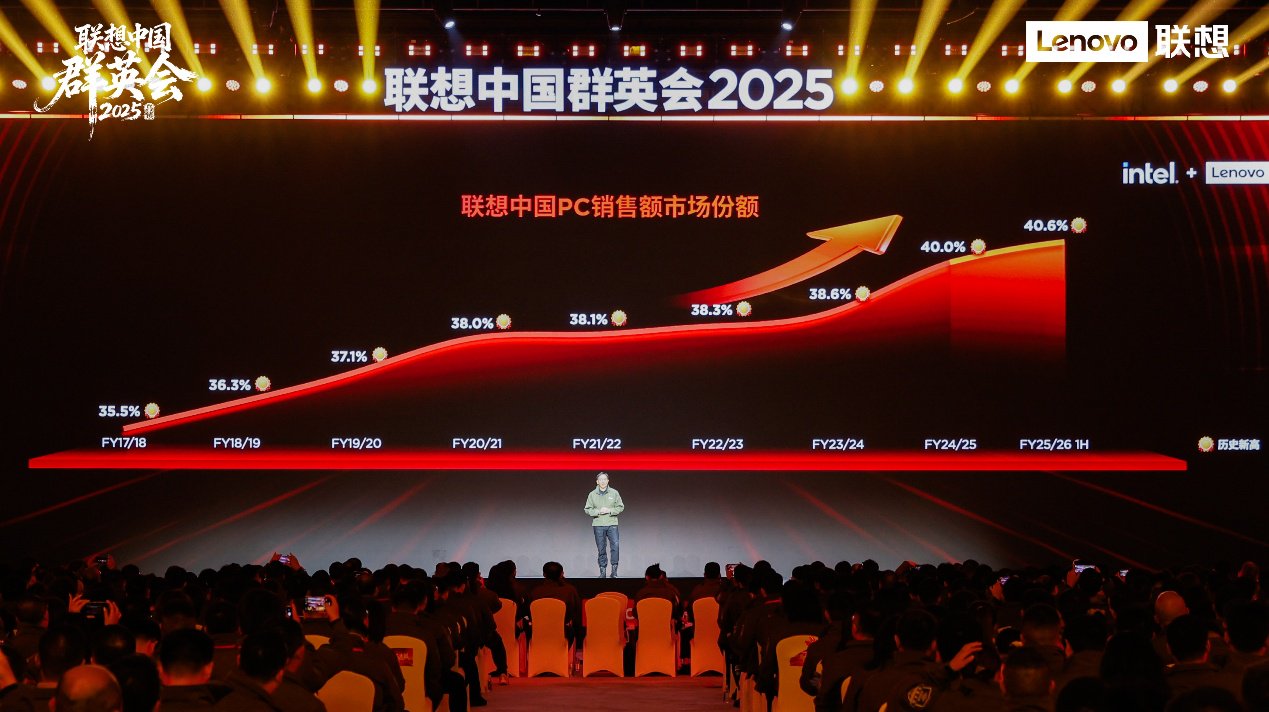
Core Insights - The WISE 2025 Business King Conference highlighted the transformative power of disruptive innovation in reshaping China's business landscape, with Lenovo's executive vice president Liu Jun being recognized as a leading figure in technology for 2025 [1] Group 1: AI-Driven Business Growth - Lenovo's China operations have achieved significant growth, with PC market share projected to reach 40.6% in the first half of the 2025 fiscal year, and AIPC accounting for over one-third of Lenovo's laptop sales [2] - Non-PC business has surged from less than 20% in the 2017/18 fiscal year to nearly 50%, establishing itself as a "second growth curve" [2] - Lenovo has directly reached 90% of the 260,000 most important enterprise customers in China, and nearly 100 million small and medium-sized enterprise customers, while also connecting with over 245 million individual customers, representing 41% of the effective purchasing population [2] Group 2: Non-PC Business Expansion - Lenovo's smart devices, including the Moto smartphone and tablets, maintain leading market shares in China, while AI infrastructure revenue has grown by 175% over the past two and a half years, positioning Lenovo as a top player in the AI infrastructure market [3] - The company's solutions and services are ranked first in China's IT service market, with over ten cities implementing urban super intelligent systems to advance smart city development [3] Group 3: Sustaining AI Leadership - Lenovo emphasizes a human and entity-centered approach to AI, promoting a hybrid AI model that integrates personal, enterprise, and public intelligence [4] - The company is advancing its "one body, multiple ends" strategy for personal AI, with the Tianxi personal super intelligent system set to release its 4.0 version soon, enhancing AI capabilities across various devices [4] - In enterprise AI, Lenovo's strategy has evolved to include a comprehensive AI infrastructure and solutions framework, focusing on diverse AI applications and services [4] Group 4: Industry Recognition - Attendees at the conference acknowledged Lenovo's forward-looking strategy and practical implementation in AI, recognizing its ability to seize opportunities in the AI wave and serve as a model for the industry [5]
联想中国区发力“三大要素” 谋篇下半财年
Zheng Quan Shi Bao Wang· 2025-11-24 13:25
Core Insights - Lenovo is committed to accelerating China's intelligent transformation through a "hybrid AI" approach, aiming to build a robust equipment library and enhance direct customer engagement [1] - Lenovo's PC market share has increased from 35.5% in the 2017/18 fiscal year to 40.6% in the first half of the 2025 fiscal year, maintaining its leading position [1][2] - The company's revenue in the first half of the 2025/26 fiscal year grew by 24% year-on-year, setting a new record for that period [2] Customer Engagement - Lenovo's direct customer engagement model has achieved an 80% coverage rate, directly reaching 90% of the 260,000 most important enterprise clients in China [1] - The company has directly engaged nearly 10 million small and medium-sized enterprises and over 245 million individual customers, representing 41% of the effective purchasing population [1] AI Infrastructure and Solutions - Lenovo's infrastructure business revenue has grown by 175% over the past two and a half years, making it the fastest-growing AI infrastructure provider in China [2] - The "Intelligent Army" initiative includes various intelligent agents across multiple business areas, contributing to significant sales growth, with over 1.8 billion yuan in sales during the "Double 11" shopping festival [2] AI Adoption Rates - The adoption rate of personal AI among individual customers has increased from 23% to 47%, while enterprise AI adoption has surged from 30% to 92% within the year [3] - Lenovo plans to enhance its personal AI, Tianxi AI, to version 4.0 by April next year, evolving from a "helper" to a "teammate" [3] Comprehensive AI Strategy - Lenovo has developed a full-stack AI capability covering AI infrastructure, solutions, and services, with a strategy that includes a comprehensive AI computing solution and various AI service offerings [4] - The company aims to integrate over 170 intelligent agents into its business processes within the fiscal year, with an expected AI penetration rate of over 24% in L4-level processes [4]
联想刘军:全力打造超强装备库 全面推进客户直营
Zhong Guo Jin Rong Xin Xi Wang· 2025-11-24 10:37
Core Viewpoint - Lenovo Group is committed to accelerating China's intelligent transformation through "Hybrid AI" and aims to build a robust equipment library while advancing direct customer engagement [1][3]. Group 1: Financial Performance - In the first half of the 2025/26 fiscal year, Lenovo's revenue in China increased by 24% year-on-year, setting a new record for the first half of the fiscal year [3]. - The direct customer engagement model has achieved significant results, with customer coverage reaching 80% [3]. - Lenovo's PC market share remains at the top, climbing to 40.6% in the first half of the 2025 fiscal year [3]. Group 2: Non-PC Business Growth - Non-PC business has rapidly grown to nearly 50% of total revenue, up from less than 20% in the 2017/18 fiscal year [5]. - Infrastructure business revenue has increased by 175% over the past two and a half years, with Lenovo servers ranking among the top in the market [5]. - Lenovo has become the leading player in China's IT service market, significantly widening the gap with the second-place competitor [5]. Group 3: AI Strategy and Development - Lenovo is positioned to lead in both personal and enterprise AI, focusing on three key elements for future planning [6]. - The company is developing a "super equipment library" that encompasses both personal AI and enterprise AI, with the personal AI strategy evolving to "Tianxi AI, one body multiple ends" [6]. - The enterprise AI strategy includes a comprehensive stack of AI capabilities, with a focus on AI infrastructure and solutions, utilizing a strategy termed "one horizontal and four verticals" [6].

联想宣布升级智联质量生态模式 聚焦 以AI赋能质量管理
Zhi Tong Cai Jing· 2025-10-17 10:51
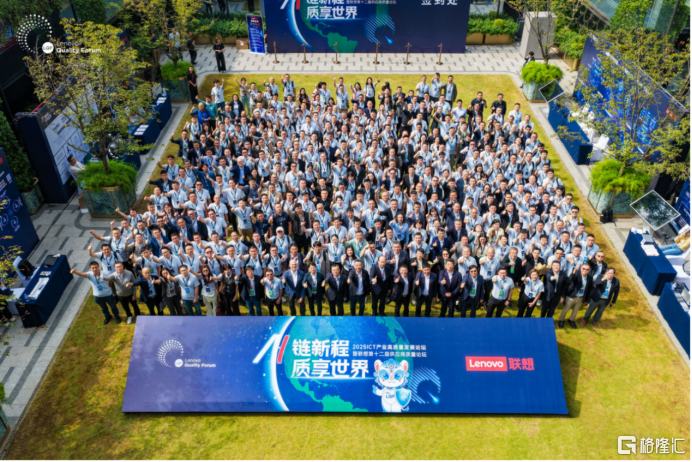
Core Insights - The forum held in Chongqing focused on the theme "AI Chain New Journey, Quality Enjoying the World," emphasizing the importance of quality in the context of new globalization and rapid AI development [1] - Lenovo has been hosting the Supplier Quality Forum annually since 2014, highlighting its commitment to quality as a cornerstone of its business and competitive advantage [1] Group 1: Quality Management Achievements - Lenovo's Vice President announced significant improvements in quality metrics over the past five years, including a 45% reduction in initial failure rates and a 21% reduction in warranty failure rates, along with a 31% increase in user satisfaction [2] - The "Extreme Left Shift" quality management philosophy aims to identify and mitigate quality risks from the earliest stages of product development, rather than at manufacturing or post-sale [2][3] Group 2: Collaborative Innovations - Lenovo's collaboration with Wistron in Chongqing has led to a modern manufacturing base that emphasizes quality control from the research and development stage, marking a shift from reactive to proactive quality management [3] - Joint efforts with BOE have resulted in innovative solutions to critical issues in product design and manufacturing, showcasing the importance of collaborative innovation in the consumer electronics industry [3] Group 3: Digital Transformation and AI Integration - Lenovo is entering the 2.0 phase of its digital transformation, driven by AI, which is seen as a new engine for quality competitiveness [5][6] - The company is enhancing its quality ecosystem by integrating AI capabilities across the entire supply chain, aiming for self-sensing, self-executing, self-decision-making, and self-adaptive quality management [6] Group 4: Global Operations and Market Growth - Lenovo's mobile business has seen significant growth, with a 45% year-on-year increase in the global foldable smartphone market, and Motorola's market share doubling to 28% [8] - The establishment of "lighthouse factories" and the implementation of AI-driven quality management have led to substantial reductions in quality losses and improved decision-making accuracy in production [7][8] Group 5: Future Directions - Lenovo aims to continue driving digital transformation in global industries, collaborating with suppliers to build a high-quality, resilient, and sustainable supply chain ecosystem [10] - The company emphasizes the importance of quality in the context of new globalization, advocating for a shift from GDP to GNP thinking among Chinese enterprises to enhance global competitiveness [9][10]
联想举办第十二届供应商质量论坛:以“极限左移 + AI”重构ICT产业质量生态
Ge Long Hui· 2025-10-17 10:02
Core Insights - The forum themed "AI Chain New Journey, Quality Enjoying the World" was held in Chongqing, where Lenovo Group gathered over 500 suppliers and industry experts to discuss building a resilient, sustainable, and win-win industrial ecosystem in the context of new globalization and rapid AI development [1][5]. Group 1: Quality Management Achievements - Lenovo Group has significantly improved its quality metrics over the past five years, with initial failure rates and in-warranty failure rates improving by 45% and 21% respectively, and user satisfaction (Net Promoter Score/Product Satisfaction Index) improving by 31% [4]. - The "Extreme Left Shift" quality management philosophy has been pivotal in these improvements, emphasizing early intervention in the product lifecycle to identify and mitigate quality risks [6][4]. Group 2: Collaboration and Innovation - Lenovo has collaborated with Wistron for over 24 years, establishing a modern manufacturing base in Chongqing, which has led to a shift from reactive to proactive quality management [8]. - The partnership with BOE has also resulted in innovative solutions to address critical quality issues, showcasing the importance of collaborative innovation in the consumer electronics industry [8]. Group 3: Digital Transformation and AI Integration - Lenovo's global supply chain has entered a new phase of digital transformation driven by AI, focusing on enhancing quality management through intelligent systems [10][12]. - The company is implementing AI across its quality ecosystem, connecting data from over 600 suppliers to enable proactive quality management and decision-making [12][13]. Group 4: Market Performance and Global Strategy - Lenovo's mobile device segment, particularly the Moto foldable phones, has seen significant growth, with a 45% year-on-year increase in global shipments and a market share increase from 14% to 28% [16]. - The company emphasizes the importance of reliability and user experience in competing with top international brands, advocating for a shift in focus from GDP to GNP in global operations [18]. Group 5: Future Outlook - Lenovo aims to continue driving digital transformation in the global supply chain, collaborating with partners to build a high-quality, resilient, and sustainable ecosystem [21].
联想宣布升级智联质量生态模式 以AI赋能质量管理
Zhi Tong Cai Jing· 2025-10-17 09:57
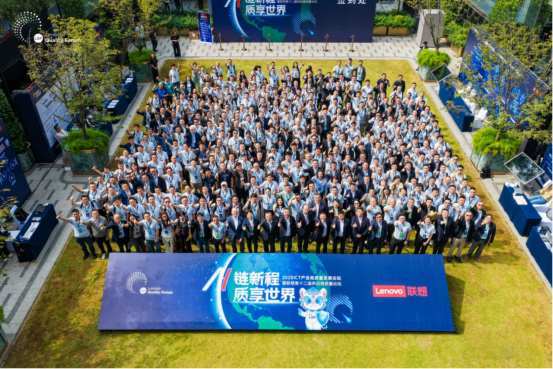
Core Viewpoint - Lenovo Group is focusing on quality management and innovation in the context of new globalization and rapid AI development, aiming to build a resilient, sustainable, and win-win industrial ecosystem through collaboration with over 500 suppliers and industry experts at the 2025 ICT Industry High-Quality Development Forum [1][2]. Group 1: Quality Management Achievements - Lenovo has improved its initial failure rate and in-warranty failure rate by 45% and 21% respectively over the past five years, with user satisfaction (Net Promoter Score/Product Satisfaction Index) improving by 31% [3]. - The "Extreme Left Shift" quality management philosophy has been pivotal in these improvements, emphasizing early intervention in the product lifecycle to identify and mitigate quality risks [6]. Group 2: Collaboration and Innovation - Lenovo has established a modern manufacturing base in Chongqing in collaboration with Wistron, focusing on quality control from the R&D stage and achieving significant advancements in quality management through joint innovation [8]. - The company is also working closely with BOE in Chongqing to address critical quality issues, implementing improvements in product design and manufacturing processes [9]. Group 3: Digital Transformation and AI Integration - Lenovo's global supply chain is entering a new phase of digital transformation driven by AI, with a focus on enhancing quality management capabilities across the entire ecosystem [10]. - The company is developing an intelligent quality management system that integrates AI to improve decision-making and risk identification, achieving a 70% reduction in quality losses since 2018 [11]. Group 4: Market Performance and Global Strategy - Lenovo's Moto foldable phones have seen a 45% year-on-year increase in global market shipments, with the brand's market share doubling from 14% to 28% in the same period [14]. - The company emphasizes the importance of high reliability and user experience to compete with top international brands, advocating for a shift from GDP to GNP thinking in global operations [18]. Group 5: Future Outlook - Lenovo aims to continue driving digital transformation in global industries, collaborating with suppliers to build a high-quality, resilient, and sustainable supply chain ecosystem [20].
阿里3800亿豪赌AI未来 联想(00992.HK)成核心受益者
Ge Long Hui· 2025-09-25 03:13
Core Insights - Alibaba Group's CEO, Wu Yongming, outlined the core strategic path for Alibaba Cloud in the AI era, focusing on open-source initiatives and the development of a "super AI cloud" to provide intelligent computing power globally [1] - The company is investing 380 billion yuan (approximately 53.5 billion USD) over three years to build AI infrastructure, aiming for a tenfold increase in global data center energy efficiency by 2032 [2] - Lenovo, as a leading global ICT infrastructure provider, is positioned to benefit significantly from Alibaba's strategic plans, showcasing its "full-stack AI" solutions at the 2025 Cloud Summit [1][2] Investment Opportunities - Lenovo's server business is expected to enter a "super order cycle" due to Alibaba's substantial investment in AI infrastructure, with Lenovo's server revenue growth reaching 74.8% globally and over 35% market share in China's AI cloud server market [2][3] - Lenovo's sixth-generation Neptune liquid-cooled servers can reduce data center power consumption by 40%, aligning with Alibaba's energy optimization goals [2] - In the first quarter of the new fiscal year, Lenovo's AI infrastructure business revenue grew by 155% year-on-year, driven by orders from Alibaba and ByteDance [3] Strategic Collaborations - Alibaba emphasized the "end-cloud collaboration" strategy, with Lenovo's terminal layout complementing Alibaba's AI model, enabling local operation and cloud updates [4] - Lenovo's AI PCs, which account for 27% of total notebook shipments in China, are designed to seamlessly integrate with Alibaba's AI services, presenting new market opportunities [4] - The collaboration between Lenovo's hybrid AI framework and Alibaba's AI model accelerates the transition from technology to application, enhancing both companies' positions in the AI industry [5] Long-term Outlook - The 380 billion yuan investment is expected to drive a surge in Lenovo's server orders and enhance profitability through liquid cooling technology [5] - In the long term, Lenovo's advantages in terminal access, data closure, and ecosystem collaboration will position it as a core partner in Alibaba's AI transformation [5] - Lenovo is poised to experience dual growth in performance and valuation in the burgeoning AI industry, leveraging its hardware capabilities and ecosystem positioning [5]
