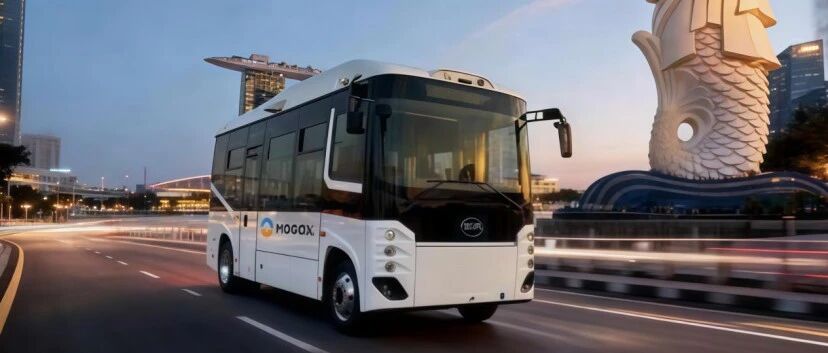
自动驾驶巴士

Search documents
早到2分钟算违约!中国自动驾驶攻入“最难搞”的新加坡,凭什么?
Feng Huang Wang Cai Jing· 2026-02-13 23:27
Core Insights - The article discusses the challenges and opportunities for Chinese autonomous driving companies, particularly focusing on the experiences of Mushroom Car Union in Singapore and the competitive landscape in the autonomous driving sector [1][2]. Group 1: Market Opportunities - Singapore is viewed as a high-standard market for autonomous driving, with strict punctuality requirements for public transport, such as a maximum of 2 minutes early and 5 minutes late [5][6]. - Mushroom Car Union has secured a project for L4 level autonomous buses in Singapore, indicating a significant step in its international expansion and collaboration with global leaders like LG Electronics [2][3]. - The company aims to integrate its autonomous buses into Singapore's public transport network, which is seen as a critical move to demonstrate its technology's viability [5][6]. Group 2: Employment and Social Impact - The introduction of autonomous buses is not perceived as a threat to human drivers but rather as a solution to the shortage of bus drivers, particularly in regions like Singapore where there is a significant gap in driver availability [10][11]. - The company emphasizes that its autonomous buses will enhance public transport by providing better punctuality and reducing operational costs, ultimately benefiting users [9][10]. - There is a focus on human-centered design in the development of autonomous buses, with features aimed at improving accessibility for elderly and disabled passengers [12]. Group 3: Technological Development - Mushroom Car Union has developed a technology that combines visual and solid-state LiDAR systems, achieving over 50% improvement in perception distance and a 70% reduction in false detection rates [6][7]. - The company has accumulated over 5 million kilometers of operational data, which supports its technological advancements and operational capabilities [6]. - The transition to fully autonomous driving is seen as a long-term goal, with current operations involving remote safety operators who intervene only in extreme situations [14][15]. Group 4: Industry Trends - The autonomous driving industry is experiencing a shift from purely technology-driven narratives to a focus on practical implementation and profitability [2]. - The article highlights the need for companies to navigate the challenges of regulatory environments and public acceptance as they expand internationally [8][9]. - The industry is undergoing a "de-bubbling" phase, where companies must refine their focus and address key issues such as efficiency and safety [14].
误差仅容5分钟,这家公司要征服海外自动驾驶高地
Feng Huang Wang· 2026-02-13 15:22
Core Insights - The article discusses the challenges and opportunities for Chinese autonomous driving companies, particularly focusing on the experience of Mushroom Car Union in Singapore and the competitive landscape in the autonomous driving sector [1][2]. Group 1: Market Opportunities - The Middle East is seen as a hot market for autonomous driving, while Singapore presents stringent conditions for operation, such as strict punctuality requirements for buses [1][4]. - Mushroom Car Union has chosen to enter the Singapore market, which is characterized by high standards for public transport and a supportive regulatory environment [4][6]. - The company has secured a project for L4 level autonomous buses in Singapore, indicating a significant step in its international expansion [2][4]. Group 2: Technological Capabilities - Mushroom Car Union has developed a technology that integrates visual and solid-state LiDAR, achieving over 50% improvement in perception distance and a 70% reduction in false detection rates [8][12]. - The company has accumulated over 5 million kilometers of operational data in China, enhancing its technical maturity and product engineering capabilities [8][12]. Group 3: Employment and Social Impact - The introduction of autonomous buses is not seen as a threat to human drivers but rather as a solution to the shortage of bus drivers, particularly in Singapore where there is a significant gap in driver availability [10][14]. - The company aims to enhance the user experience by incorporating features that cater to the elderly and disabled, making autonomous buses more appealing compared to traditional options [15][12]. Group 4: Future Vision - The long-term goal of Mushroom Car Union is to become a leading global provider of autonomous driving solutions, focusing on public transportation and leveraging international partnerships [18]. - The company acknowledges the need for remote safety operators initially, transitioning towards fully autonomous operations as technology advances [17][16].
早到2分钟算违约!中国自动驾驶攻入“最难搞”的新加坡,凭什么?
凤凰网财经· 2026-02-13 12:05
Core Insights - The article discusses the challenges and opportunities for Chinese autonomous driving companies, particularly focusing on the international expansion of Mushroom Car Union, which has chosen Singapore as a key market despite its stringent regulations [1][4]. Group 1: Market Opportunities and Challenges - Singapore is viewed as a high-standard market for autonomous driving, with strict punctuality requirements for public transport, comparable to that of metro systems [6][8]. - The company has secured a project for L4 autonomous buses in Singapore, indicating a significant step in its international strategy [2][4]. - The overall investment landscape for autonomous driving has shifted, with a decline in funding from 932 billion yuan in 2021 to an expected 350 billion yuan by 2025, emphasizing the need for verifiable operational capabilities [2]. Group 2: Technological Advancements - Mushroom Car Union has developed a technology that integrates visual and solid-state LiDAR, achieving over 50% improvement in perception distance and a 70% reduction in false detection rates [8][10]. - The company has accumulated over 5 million kilometers of operational data in China, which supports its technological maturity and readiness for international deployment [8]. Group 3: Employment and Social Impact - The introduction of autonomous buses is not seen as a threat to human drivers but rather as a solution to the shortage of bus drivers in Singapore, where there is a reported shortfall of over 2,000 drivers [16][19]. - The company aims to enhance public transport by making it more user-friendly, particularly for the elderly and disabled, through thoughtful design features [20]. Group 4: Future Vision and Goals - The long-term goal of Mushroom Car Union is to become a leading global provider of autonomous driving solutions, focusing on public transport and leveraging partnerships to expand its capabilities [28]. - The company acknowledges the need for a gradual transition towards fully autonomous systems, with remote monitoring as a stepping stone [23][24].

平潭城市出行与物流服务自动驾驶先导应用试点通过现场核验
Xin Lang Cai Jing· 2026-02-01 23:26
Core Insights - The pilot project for autonomous driving in urban transportation and logistics services in Pingtan successfully passed the second batch of intelligent transportation pilot site inspections by the Ministry of Transport, marking a significant breakthrough in smart connected infrastructure and autonomous driving applications in the region [1] Group 1: Project Overview - The project is the first of its kind in the country to pass on-site verification in the urban transportation and logistics sector [1] - The inspection was organized by the Fujian Provincial Department of Transportation in collaboration with the Transportation Research Institute of the Ministry of Transport [1] - The expert group verified various autonomous driving bus test routes and observed the operation of autonomous shuttle buses and logistics vehicles [1] Group 2: Implementation and Support - Since the approval of the pilot, the experimental zone has prioritized high standards and quality in advancing the project, establishing a working group for smart connected vehicles [2] - A joint mechanism for vehicle access registration and approval processes has been created, along with the issuance of management guidelines for road testing and demonstration applications [2] - The project has innovatively explored a multi-investment model combining purchase, leasing, and social capital to address funding challenges [2] Group 3: Future Directions - The project aims to leverage the pilot inspection as an opportunity to focus on technological innovation, scene expansion, and system improvement for the large-scale implementation of autonomous driving technology [3] - The initiative is expected to integrate deeply into the region's unmanned systems and low-altitude economic development, contributing to the construction of Pingtan as an international tourist island [3]
自动驾驶2025年终盘点:走出“青春期”,从技术炫技到全球落地
3 6 Ke· 2025-12-31 04:27
Core Insights - The autonomous driving industry reached a significant milestone in 2025, transitioning from a conceptual phase to practical applications, with various companies achieving regulatory approvals and launching commercial operations [1][3][21] Industry Developments - In 2025, Chinese autonomous driving companies accelerated their global expansion, with notable projects such as MOGOX and BYD winning Singapore's first L4 autonomous bus pilot project, marking a significant entry into developed countries' public transport systems [3][5] - The successful implementation of L3 autonomous driving regulations in Beijing and Chongqing established a framework for commercial operations, with the first L3 vehicles receiving conditional approval for operation in specific areas [8][9][11] Technological Advancements - The industry saw a shift towards end-to-end architectures and localized adaptations, with companies like Huawei introducing advanced systems that significantly reduce latency and improve performance in complex driving scenarios [12] - The introduction of affordable high-level autonomous driving features in vehicles, such as the BYD Qin L DM-i, has increased market penetration, with the adoption rate for advanced driving features in vehicles under 150,000 yuan rising from 5% to 18% by the end of 2025 [13] Capital Market Activities - The dual listing of Pony.ai and WeRide on the Hong Kong Stock Exchange marked a significant event in the capital market, with both companies focusing their fundraising efforts on commercializing L4 technology [16][18] - Despite initial stock price declines post-listing, the dual listing is seen as a benchmark for the industry, providing a stable financing channel and highlighting the long-term value of autonomous driving technologies [19] Globalization and Market Expansion - The global rollout of Robotaxi services accelerated, with partnerships like WeRide and Uber launching operations in Dubai, while Tesla initiated limited testing in the U.S. [6][21] - The successful deployment of autonomous driving solutions in high-density urban environments, such as Singapore, enhances China's influence in global autonomous driving standards [6][21] Regulatory and Safety Considerations - The industry faced challenges related to safety and regulatory compliance, with incidents prompting a reevaluation of operational safety measures and the establishment of stricter regulatory frameworks [20][21] - The balance between innovation and regulation is crucial for the sustainable development of the autonomous driving sector, as evidenced by the regulatory responses to safety incidents [20][21]
科技融汇十五运,可感智慧与温情
Xin Hua Wang· 2025-11-18 08:29
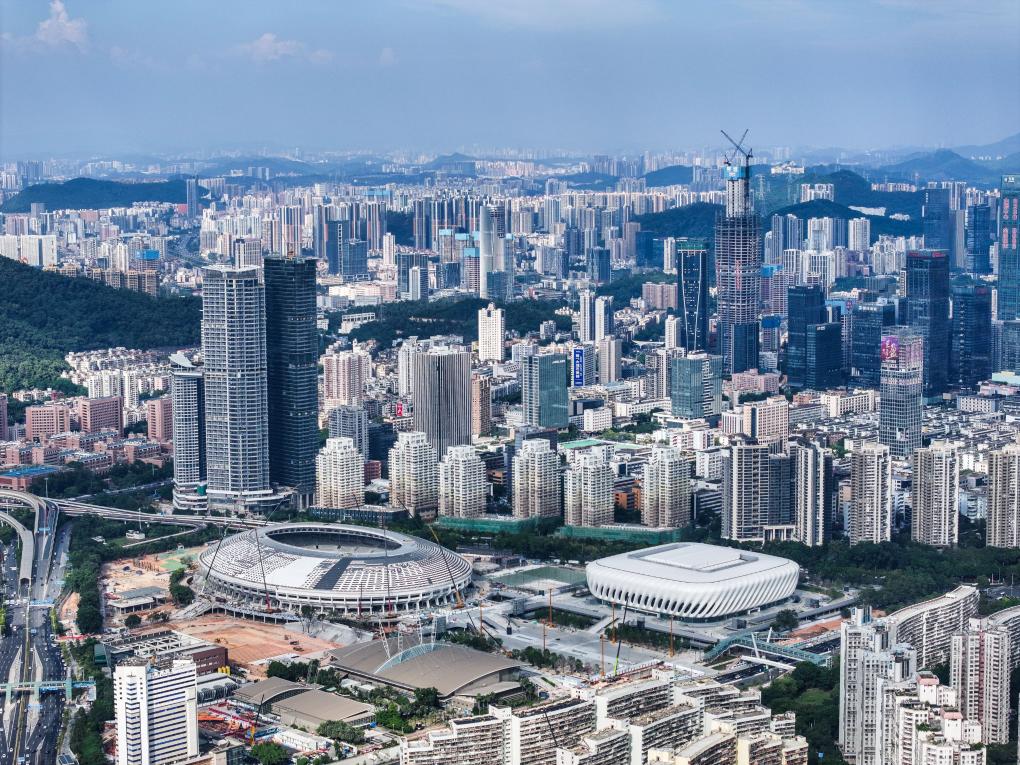
Core Insights - The integration of technology into the 15th National Games enhances both the intelligence and warmth of the event, showcasing innovations such as digital systems, green energy, and autonomous vehicles [1][4]. Group 1: Venue Upgrades - The Shenzhen Sports Center has undergone significant renovations, increasing seating capacity from 6,000 to 16,000 and enabling quick conversion for various sports events [2]. - The venue features advanced facilities, including a retractable roof, movable screens, and a specialized grass type for the football field, ensuring optimal conditions for athletes [2]. Group 2: Technological Innovations - The Guangdong Olympic Sports Center employs Huawei's smart venue solutions, utilizing WiFi 7 technology to provide comprehensive coverage for over 80,000 spectators, ensuring stable and high-speed internet access [4]. - A small intelligent microgrid system powered by green energy is implemented for the opening ceremony, with an expected electricity consumption of 15 million kilowatt-hours, reducing carbon emissions by 14,200 tons [4]. Group 3: Transportation and Accessibility - During the event, 19 autonomous buses will operate on five routes, alongside over 260 self-driving vehicles providing transport between key locations, enhancing accessibility for attendees [7]. - The use of autonomous vehicles reflects a shift in urban mobility, showcasing how technology is transforming daily life and transportation [7].
十五运会打造“海陆空铁”一体化出行服务体系 无缝衔接助力观众观赛
Yang Guang Wang· 2025-11-13 00:45
Group 1 - The core focus of the news is on the measures taken by the Guangdong-Hong Kong-Macao Greater Bay Area to ensure smooth and safe transportation for participants and spectators during the 15th National Games [1] - Multiple smart and fast passageways have been activated at various ports in the Greater Bay Area to facilitate the flow of people and goods [1] - The Shenzhen Entry-Exit Border Inspection Station has enhanced passenger flow monitoring and preemptively opened sufficient inspection channels to provide a seamless experience for spectators [1] Group 2 - The railway department has dynamically adjusted train services based on actual passenger flow during the event, including the introduction of special trains for nighttime spectators [1] - The Guangzhou Public Transport Group has deployed 19 autonomous buses and opened 5 autonomous bus routes to connect major event venues and transport hubs [1] - The autonomous driving technology for the buses has been optimized through complex route testing to ensure safety and stability during the event [2]
快讯 | 文远知行港交所上市——全球首家在“美股+港股”上市的自动驾驶科技企业
Sou Hu Cai Jing· 2025-11-11 01:46
Core Insights - The article highlights that Wenyan Zhixing has officially listed on the Hong Kong Stock Exchange on November 6, becoming the first autonomous driving technology company to have a dual primary listing in both the US and Hong Kong [1] Company Overview - Wenyan Zhixing, which debuted on NASDAQ on October 25, 2024, specializes in the development of autonomous vehicle systems and software [1] - The company offers a range of autonomous driving products and services, including autonomous buses, taxis, and cleaning vehicles, along with related sensor kits [1] Regulatory and Market Presence - Currently, the company holds autonomous driving licenses in seven countries, covering over 30 cities across 11 countries, including China, Belgium, France, and the UAE [1]
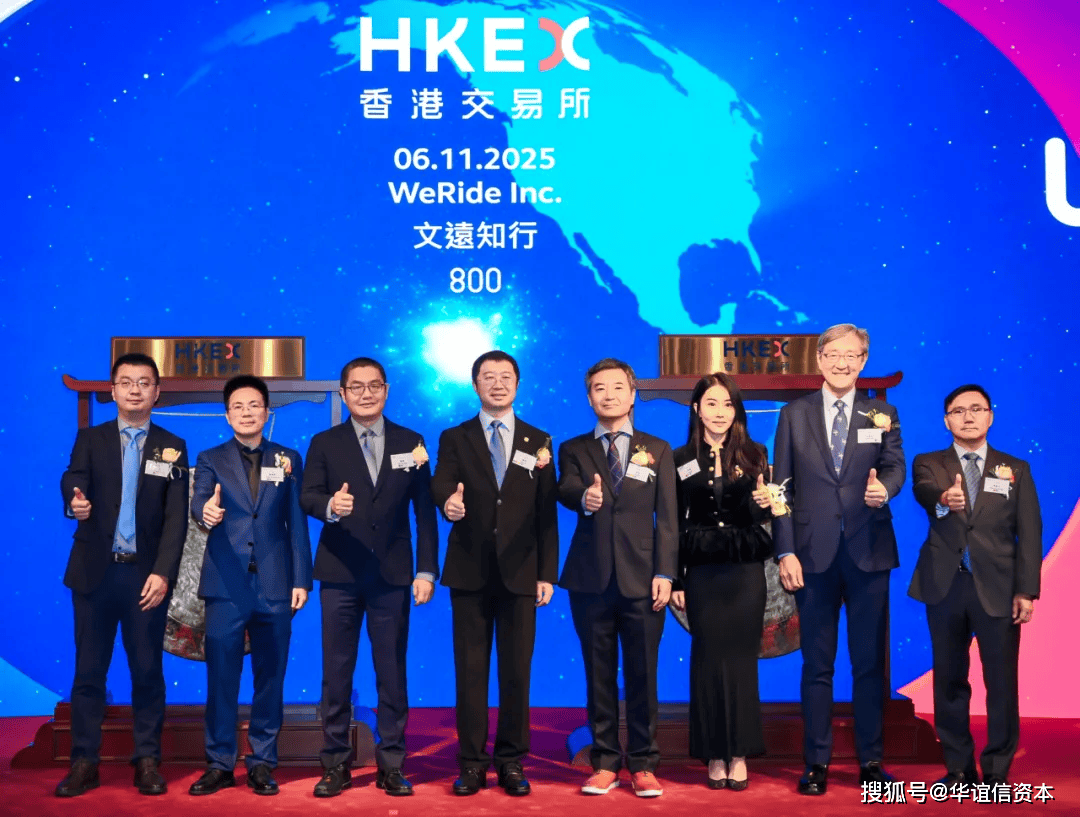
文远知行正式登陆港交所 完成美股+港股”双重主要上市
Sou Hu Cai Jing· 2025-11-06 06:42
Core Viewpoint - Wenyuan Zhixing has officially listed on the Hong Kong Stock Exchange, becoming the first autonomous driving technology company to achieve a dual primary listing in both the US and Hong Kong markets [1][3] Group 1: Company Overview - The company issued 88.25 million shares at a price of HKD 27.1 per share, raising a total of HKD 2.392 billion [3] - Wenyuan Zhixing plans to use the raised funds for technology development, accelerating the commercialization of L4 level fleets, marketing and promotion, working capital, and general corporate purposes [3] - The company is set to debut on the NASDAQ on October 25, 2024, and specializes in the development of autonomous vehicle systems and software, offering products such as autonomous buses, taxis, and cleaning vehicles, along with related sensor kits [3] Group 2: Market Presence - Wenyuan Zhixing holds autonomous driving licenses in seven countries, covering over 30 cities across 11 countries, including China, Belgium, France, and the UAE [3] Group 3: Financial Performance - Revenue projections for Wenyuan Zhixing from 2022 to 2024 are as follows: CNY 528 million, CNY 402 million, and CNY 361 million, with a projected revenue of CNY 200 million for the first half of 2025 [3] - Corresponding net losses for the same periods are projected to be CNY 1.298 billion, CNY 1.949 billion, CNY 2.517 billion, and CNY 792 million for the first half of 2025 [3]
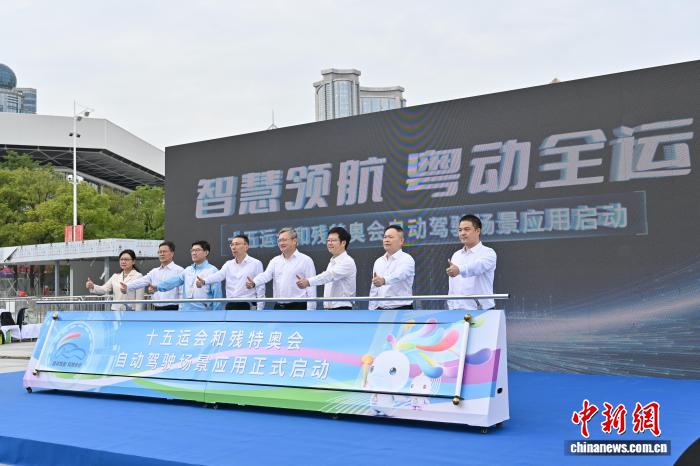
广州举行十五运会和残特奥会自动驾驶场景应用启动仪式
Zhong Guo Xin Wen Wang· 2025-11-04 05:21
Group 1 - The event marked the launch of autonomous driving applications in Guangzhou, coinciding with the 15th National Games and the Special Olympics [1][7] - Attendees experienced self-driving vehicles during the ceremony, highlighting the growing interest and engagement in autonomous technology [1][5] - The presence of autonomous buses at the event showcased advancements in public transportation solutions [3][7]