
至强处理器

Search documents
英特尔投资SambaNova3.5亿美元挑战GPU在AI推理领域的主导地位
Sou Hu Cai Jing· 2026-02-25 10:36
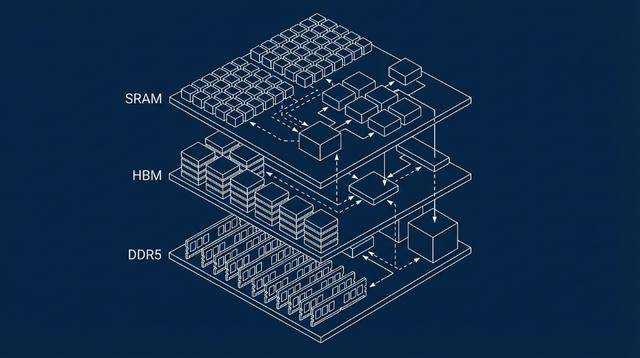
Core Insights - SambaNova has successfully raised $350 million to advance its dataflow architecture technology, positioning itself as an alternative to GPU-based AI systems [2] - The funding round included Intel Capital, which dispelled rumors of Intel's acquisition of SambaNova, and established a long-term partnership aimed at providing GPU alternatives for generative AI deployment [2][8] - SambaNova plans to release the SN50 accelerator later this year, with significant performance improvements over its predecessor, the SN40L [3] Funding and Partnerships - The funding round was backed by investors including Vista Equity, Cambium Capital, and several venture capital firms anticipating returns from SambaNova's upcoming reconfigurable dataflow units (RDU) [2] - Intel's partnership will involve collaboration on hardware-software co-design and the use of Intel's Xeon processors in SambaNova's new RDU [2][8] Product Development - The SN50 accelerator will deliver 2.5 times the 16-bit floating-point performance and 5 times the FP8 performance compared to the SN40L, achieving 1.6 and 3.2 petaFLOPS respectively [3][7] - Each RDU will feature 432MB of on-chip SRAM, 64GB of HBM2E memory with a bandwidth of 1.8TB/s, and 256GB to 2TB of DDR5 memory, enhancing flexibility amid rising memory prices [3][4] Competitive Landscape - Despite significant improvements, the SN50's specifications may not appear as impressive compared to modern GPUs, offering about 64% of the dense FP8 computing capability of Nvidia's Blackwell architecture [4] - SambaNova claims its dataflow architecture reduces data movement overhead, allowing for lower power consumption and potentially higher user generation speeds compared to Nvidia's B200 [4][8] Market Positioning - SambaNova's SN40L accelerator has been recognized as one of the highest-performing inference service providers, capable of processing up to 378 tokens per second for large language models, outperforming GPU-based services [5] - The company aims to optimize its products for better inference economics, focusing on selling infrastructure rather than building dedicated inference clouds like competitors [6]

英特尔电话会:与英伟达的战略合作将通过NVLink技术开辟市场,芯片产能紧张预计持续到2026年
美股IPO· 2025-10-30 07:22
Core Insights - Intel's strategic partnership with NVIDIA aims to leverage NVLink technology to develop multiple generations of new products for cloud services, enterprise, and consumer markets, creating new incremental market opportunities [1][7] - Intel's Q3 2025 revenue reached $13.7 billion, exceeding guidance, with a 6% quarter-over-quarter growth, and a non-GAAP EPS of $0.23, significantly above analyst expectations [3][22] - The company faces capacity constraints, particularly in Intel 10 and Intel 7 nodes, which are expected to persist until 2026, limiting its ability to meet demand in data center and client products [3][5][8] AI-Driven Demand and Strategic Cooperation - The growth in Intel's performance is primarily driven by the accelerated construction of AI infrastructure, which is boosting demand for traditional computing [7][21] - The adoption rate of AI PCs is increasing, with an estimated 100 million units expected to ship by the end of the year [7][22] - Intel's CEO emphasized that the collaboration with NVIDIA is not about competing in existing markets but rather about opening new incremental markets [7][49] Capacity Constraints and Capital Expenditure Strategy - Intel is actively managing its supply chain by prioritizing wafer capacity for server products and accelerating the transition to Intel 18A and more advanced processes [6][8] - The company plans to maintain a disciplined capital expenditure strategy, with a total investment of approximately $18 billion in 2025, focusing on customer commitments before increasing capacity [8][29] - Despite strong demand, Intel's capital expenditure remains cautious, with Q3 capital spending at $3 billion and a focus on improving operational efficiency [22][29] Financial Performance and Profitability Concerns - Intel's Q3 non-GAAP gross margin was 40%, exceeding guidance by 4 percentage points, driven by higher revenue and a favorable product mix [9][22] - The company expects gross margin to decline to approximately 36.5% in Q4 due to initial ramp-up costs of new products and the impact of the Altera spin-off [9][22] - Long-term gross margin improvement is tied to product competitiveness and cost structure, with ongoing efforts to enhance product offerings in the data center segment [9][10] New Collaborations and Financial Impact - Strategic partnerships with NVIDIA, SoftBank, and government funding have significantly improved Intel's cash position, with $30.9 billion in cash and short-term investments as of Q3 [11][23] - These collaborations not only provide financial support but also create strategic business opportunities, particularly in AI infrastructure [11][23] - Intel's CFO highlighted that the partnerships are expected to enhance the company's financial flexibility and confidence in executing its strategy [11][23] Advanced Process Development and Future Outlook - Intel is making steady progress on its Intel 18A process, with plans to launch it this year, while also advancing the development of Intel 14A [17][18] - The company is optimistic about the long-term demand for wafer capacity and advanced packaging services, driven by the rapid expansion of AI infrastructure [27][19] - Intel's focus on ASIC and design services aims to expand its x86 IP influence and cater to external customer needs [15][18]


英特尔终于盈利了
半导体行业观察· 2025-10-24 00:46
Core Viewpoint - Intel warns that CPU shortages may persist into next year due to current demand exceeding supply, despite reporting improved execution for the fourth consecutive quarter [2][3]. Financial Performance - Intel reported a 3% year-over-year revenue increase for Q3, reaching $13.7 billion, driven by a 5% increase in the Client Computing Group's revenue to $8.5 billion, while the Data Center and AI Group's revenue declined by 1% to $4.1 billion [2]. - The company's gross margin was 38.2%, up 23.2 percentage points from the previous year, and earnings per share were $0.90, compared to a loss of $3.88 per share in the same quarter last year [2]. - Intel achieved a net income of $4.3 billion, marking its first quarterly profit since 2023, after a net loss of $17 billion in the same quarter last year due to restructuring and impairment costs [3]. Supply Chain and Production - CFO David Zinsner highlighted meaningful measures taken to strengthen the balance sheet, including accelerated financing from the U.S. government and investments from Nvidia and SoftBank, enhancing operational flexibility [3]. - Intel's manufacturing performance improved, with revenue from manufacturing reaching $4.2 billion, attributed to increased efficiency in chip foundries [3]. - Zinsner indicated that supply constraints are primarily due to capacity limitations in older Intel 10 and Intel 7 manufacturing nodes, which are critical for producing older generation processors [3][4]. Product Demand and Market Dynamics - Demand for older products, such as the Intel Core processors and Xeon processors, remains strong, driven by the transition to Windows 11, which has led many enterprises to upgrade their systems [6]. - Despite the high demand for older nodes, Intel is also seeing double-digit growth in AI PC products, with an expected shipment of around 100 million AI PC processors by the end of the year [5][6]. - Zinsner noted that the supply issues might peak in Q1 of next year, after which Intel expects to catch up in the following months [6]. Industry Insights - The comments from Intel's CFO align with observations from distributors regarding the CPU shortage, indicating a combination of improving demand and product transitions in the market [7].
英特尔深入零售门店打造“智慧大脑”,重点发力海外
Feng Huang Wang· 2025-05-09 02:45
Core Insights - Intel is leveraging AI and computing power to transform retail experiences, enabling features like facial recognition for personalized recommendations and quick checkout processes [1] - At the 25th China Retail Industry Expo, Intel showcased smart retail solutions in collaboration with partners, emphasizing the role of AI technologies in retail transformation [1] Group 1: Smart Retail Solutions - Intel's smart retail architecture combines edge computing and endpoint devices, utilizing its Core Ultra processors and Xe graphics for various retail functionalities [1] - The endpoint devices powered by Intel's Core Ultra processors support functions such as smart shopping assistance, stock alerts, product recommendations, and advertising, aimed at reducing operational costs [1] - Edge devices, supported by Core Ultra processors and multiple Xe graphics cards, facilitate store management tasks like compliance checks and customer flow analysis [1] Group 2: AI POS Solutions - Intel's AI POS solutions are built on different levels of computing platforms, optimized with Intel's oneAPI and OpenVINO toolkits for flexible algorithm models [2] - The company aims to break the price war cycle with its initiatives and plans to launch another Edge AI project this year to promote retail devices in overseas markets [2]