
阿芙拉型油轮

Search documents
对话一线租船专家-直击本周霍尔木兹通行情况变化
2026-03-30 05:15
Summary of Conference Call Records Industry Overview - The records primarily discuss the oil shipping industry, focusing on the dynamics of the VLCC (Very Large Crude Carrier) and MR (Medium Range) tanker markets, particularly in the context of the ongoing geopolitical tensions in the Middle East, specifically around the Strait of Hormuz [1][2][3][4][5][6][7][8][9][10][11][12][13][14][15][16][17][18][19][20][21]. Key Points and Arguments Shipping Market Dynamics - The blockade of the Strait of Hormuz has led to an oversupply of VLCC capacity in the Middle East, prompting shipowners to redirect vessels to the Atlantic routes, resulting in a surge in TCE (Time Charter Equivalent) rates for Aframax tankers to $320,000 per day [1][2]. - VLCC freight rates have reportedly bottomed out and are expected to rebound, with projections indicating that rates from the U.S. Gulf to the Far East could approach $30 million, nearing the highs seen at the onset of the conflict [1][3]. - The TCE for MR tankers has surpassed $100,000 per day due to a shift in European refined oil imports towards the U.S. Gulf, driven by the blockade [5][6]. Future Projections - The average VLCC freight rate is projected to stabilize at 250 points (approximately $250,000 per day) in 2026, with a gradual decline to 220 and 190 points in 2027 and 2028, respectively, as new ship deliveries slow down [1][18]. - New ship supply is critically low, with only 37 new VLCCs expected to be delivered in 2026, leading to sustained tightness in capacity until at least 2028 [1][16]. Geopolitical Impacts - The ongoing geopolitical tensions, particularly involving Iran, have created a complex environment for shipping, with certain countries negotiating exemptions for their vessels to pass through the Strait of Hormuz [2][10]. - The potential for conflict escalation, including the involvement of U.S. ground troops in Iran, could further complicate shipping routes and market dynamics [10][11]. Market Sentiment and Behavior - Shipowners are currently favoring the U.S. Gulf market due to its strong demand and favorable conditions, even as the Middle East market faces challenges [3][8]. - The market is experiencing a "siphoning effect," where strong demand in the U.S. Gulf is attracting global Aframax and Suezmax tankers, alleviating some of the oversupply pressure in the Middle East [3][4]. Operational Challenges - The congestion at the Yanbu port, which has reached a daily export capacity of 4.8 million barrels, is causing delays and increasing demand for Suezmax tankers due to limited VLCC docking facilities [1][17]. - The operational efficiency of shipping routes is significantly impacted by geopolitical tensions, with alternative routes being considered to avoid conflict zones, which could increase shipping distances and costs [9][12]. Long-term Market Outlook - Post-conflict, there is expected to be a strong demand for oil replenishment and diversification of import sources, which could further benefit the shipping market [15][20]. - The current high freight rates are anticipated to provide substantial returns for shipping companies, with projections indicating that the average TCE for VLCCs could remain above $200,000 per day in the near term [19][20]. Conclusion - The oil shipping industry is navigating a complex landscape shaped by geopolitical tensions, market dynamics, and operational challenges. The outlook remains cautiously optimistic, with potential for high returns driven by strong demand and limited supply in the coming years [1][19][20].
聚焦:美伊冲突推升航运资产风险溢价,快递反内卷延续:交通运输行业周报(20260223-20260301)
Huachuang Securities· 2026-03-01 13:30
Investment Rating - The report maintains a "Buy" recommendation for the shipping sector and highlights the ongoing positive sentiment in the oil shipping market [2][42]. Core Insights - The escalation of the US-Iran conflict has increased the risk premium for shipping assets, particularly affecting oil transportation through the Strait of Hormuz, which is crucial for global energy and shipping markets [1][10]. - The VLCC spot rates have surged to $200,000 per day, with significant weekly increases across various routes, indicating a strong upward trend in shipping rates [2][26]. - The express delivery sector is experiencing a recovery in volume growth, with major players like Zhongtong and Yuantong outperforming the market [3][43]. Summary by Sections Oil Shipping - The US-Iran conflict has heightened attention on the Strait of Hormuz, through which approximately 11% of global maritime trade passes, including 34% of oil exports [1][11]. - VLCC spot rates have increased significantly, with the Clarkson VLCC-TCE index reaching $200,000, a 40.1% increase week-on-week [2][26]. - Investment recommendations include focusing on the oil shipping sector, particularly companies like COSCO Shipping Energy, China Merchants Energy Shipping, and China Merchants Jinling [2][42]. Express Delivery - The express delivery industry is undergoing a "de-involution" phase, with regulatory efforts aimed at creating a more orderly competitive environment [3][43]. - The volume growth in the express delivery sector has shown improvement, with a year-on-year increase of 5.8% in cumulative collection volume as of February 22 [3][46]. - Leading companies such as Zhongtong and Yuantong are recommended for investment due to their strong market positions and growth potential [3][48][49]. Industry Data Tracking - Domestic civil aviation passenger volume increased by 6.3% year-on-year during the Spring Festival period, indicating a recovery in air travel [7][54]. - The air cargo price index at Pudong Airport showed a year-on-year increase of 7.4%, reflecting a positive trend in air freight [7][73]. - The Baltic Dry Index (BDI) and the Shanghai Containerized Freight Index (SCFI) have also shown upward movements, indicating a strengthening in shipping demand [7][77].
聚焦:美伊冲突推升航运资产风险溢价,快递反内卷延续:交通运输行业周报(20260223-20260301)-20260301
Huachuang Securities· 2026-03-01 11:26
Investment Rating - The report maintains a "Buy" recommendation for the shipping sector and highlights a positive outlook for the express delivery industry [2][3]. Core Insights - The escalation of the US-Iran conflict is driving up the risk premium for shipping assets, particularly affecting oil transportation [10][11]. - The express delivery sector is experiencing a continuation of anti-competitive practices, with volume growth exceeding expectations [3][46]. Summary by Sections Oil Transportation - The US-Iran conflict has intensified, potentially increasing the risk premium for shipping assets. Approximately 11% of global maritime trade passes through the Strait of Hormuz, including 34% of oil exports and 30% of LPG exports [11][10]. - VLCC spot rates have surged to $200,000, with a week-on-week increase of 40.1%. The one-year VLCC charter rate has also risen to $100,000 per day, reflecting a 9% increase [2][26]. - The report emphasizes three factors contributing to the bullish sentiment in the VLCC market: the US-Iran conflict, the rise of Long Jin as a major VLCC operator, and increased compliance trade demand due to sanctions [42][38]. Express Delivery - The anti-competitive practices in the express delivery sector are being addressed by the State Post Bureau, which has identified it as a key focus for 2026 [43]. - The sector's volume growth is gradually recovering, with a year-on-year increase of 5.8% in cumulative collection volume as of February 22 [46]. - Leading companies like Zhongtong and Yuantong are outperforming the market, with Zhongtong's volume growth at 9.3% compared to the industry average of 5% [47][48]. Industry Data Tracking - Domestic civil aviation passenger volume increased by 6.3% year-on-year before the Spring Festival, with average ticket prices also rising [54][55]. - The air cargo price index at Pudong Airport showed a year-on-year increase of 7.4% as of February 23 [73]. - The BDI and SCFI indices have shown increases of 5% and 7% respectively, indicating a positive trend in the shipping market [77].
油轮跟踪-美伊局势僵持-行业供给脆弱
2026-02-13 02:17
Summary of Conference Call on Shipping Industry Industry Overview - The shipping industry, particularly the Very Large Crude Carrier (VLCC) segment, is experiencing high market conditions with optimistic expectations for 2026. The spot market rate for VLOC is approximately $120,000 per day as of February 11, 2026, and one-year charter rates have surged from $60,000-$70,000 to $98,000-$99,000, indicating strong confidence among shipowners in the market outlook for 2026 [2][3][4]. Key Points and Arguments - **Geopolitical Risks**: The ongoing tensions between the U.S. and Iran could lead to short-term spikes in shipping rates, potentially exceeding $150,000-$200,000 if the Strait of Hormuz is disrupted. Even if negotiations occur, prolonged stalemate or sanctions will likely push rates higher [2][5]. - **Impact of the Russia-Ukraine Conflict**: The conflict has intensified EU sanctions against Russian maritime services, complicating operations for shadow fleets and reducing the capacity of compliant fleets. This situation is expected to benefit the Aframax and Suezmax tanker markets, leading to further increases in rates [2][6]. - **India's Shift in Oil Imports**: Under U.S. pressure, India has committed to reducing imports of Russian oil, increasing its demand for compliant maritime transport from the U.S. and Venezuela. In December, India's daily oil imports from Russia dropped to approximately 900,000 barrels, a decrease of 600,000-800,000 barrels compared to October [2][7]. - **Challenges for Shadow Fleets**: Shadow fleets are facing increased operational difficulties and shrinking survival space due to high maintenance costs and risks of vessel seizure. Currently, sanctioned vessels account for 16.3% of the global fleet, responsible for 23% of global oil exports [2][8][9]. - **Internationalization of the Renminbi**: The internationalization of the Renminbi is accelerating, with Saudi Aramco settling 45% of its crude oil exports to China in Renminbi. The trend towards using local currencies in trade could challenge the dominance of the U.S. dollar [2][11]. Additional Insights - **Market Dynamics**: The shipping market is expected to experience significant volatility due to increased industry concentration, with companies like Synacor expanding their control over VLCC capacity. This could alter pricing dynamics and lead to more pronounced fluctuations in rates [2][15]. - **Future Outlook**: The shipping industry may face a seasonal downturn in the first half of 2026, but there is potential for rapid recovery in rates thereafter. The overall shipping cycle remains uncertain but with significant upside potential [2][17]. - **Profitability Expectations**: Major shipping companies like China Merchants Energy and COSCO Shipping Energy are projected to achieve profits of approximately 8.5 billion to 9 billion RMB and 8 billion to 8.5 billion RMB, respectively, based on current charter rates [2][18]. - **Risks**: Short-term risks include potential agreements between the U.S. and Iran that could lead to a rapid withdrawal from the Middle East, negatively impacting market sentiment. Long-term risks hinge on the resolution of the Russia-Ukraine conflict and the potential lifting of sanctions [2][21]. This summary encapsulates the key insights and dynamics affecting the shipping industry as discussed in the conference call, highlighting both opportunities and risks for investors.
波交所:VLCC市场在上周于所有波罗的海公布航线上保持稳定
Di Yi Cai Jing· 2025-12-15 12:00
Group 1: Market Overview - The Middle East MR freight rates experienced a mild increase over the weekend, with the TC17 35kt Middle East/East Africa route index rising to WS230, an increase of 10 points [9] - In the UK-Europe market, MR freight rates saw a significant decline, with the TC2 37kt ARA/US Atlantic Coast route index dropping by 12.5 points to WS136, and the Baltic round trip TCE decreasing by 15% to slightly above $14,000 per day [9] - The US Gulf MR freight rates continued to decline, with the TC14 38kt US Gulf/UK-Europe route falling from WS179 to WS166, and the Baltic round trip TCE dropping from $24,100 to $21,600 per day [9] Group 2: Specific Vessel Types - The Capesize market showed a notable decline, with the Baltic Capesize route (5TC) dropping from $41,571 to $30,731, indicating increasing freight rate pressure [1] - The Panamax market started weakly, particularly in the Atlantic, with the Baltic Panamax route (5TC) averaging $15,194, reflecting limited activity [2] - The Supramax market faced challenges, with the Atlantic and Pacific markets both under pressure, and notable transactions included a 38,000 dwt vessel from Rio de Janeiro to the East Coast of Mexico at $21,500 [4] Group 3: Oil Tanker Market - The LR2 market in the Middle East remained stable, with the TC1 75kt Middle East/Japan route index holding at WS155, corresponding to a TCE of approximately $37,000-$39,000 per day [5][6] - The VLCC market remained stable across all Baltic routes, with the Middle East Gulf to China route (TD3C, 270,000 tons) rate increasing to WS125.78, corresponding to a TCE of $122,676 per day [12] - The Suezmax market showed overall stability, with the Nigeria to UK Continent route (TD20, 130,000 tons) maintaining a rate of WS126, corresponding to a TCE of approximately $61,400 per day [13] Group 4: LNG and LPG Markets - The LNG market softened, with major route rates adjusting after a strong two-month increase, particularly on the BLNG2 US Gulf-Europe route, which saw a significant drop of $16,800 to $115,000 per day [17] - The LPG market exhibited a divergence, with the Eastern market under pressure and the Western market showing increased activity, leading to higher rates on routes such as the Houston-Far East route, which rose by $7.83 to $129.50 [18]
聚焦:VLCC运价维持年内高位,看好2026年景气持续向好:交通运输行业周报(20251124-20251130)-20251201
Huachuang Securities· 2025-12-01 07:12
Investment Rating - The report maintains a positive investment rating for the oil tanker sector, indicating a favorable outlook for 2026 [1][2]. Core Insights - VLCC freight rates have continued to rise, reaching a peak of $126,000 per day on November 21, 2025, and slightly decreasing to $122,000 per day by November 28, 2025 [1][11]. - The report anticipates sustained demand for oil transportation due to global crude oil production increases and ongoing sanctions affecting non-compliant oil trade [2][22]. - The supply-side dynamics remain stable, with stricter environmental policies countering the limited new ship deliveries [25][26]. Industry Data Tracking - In the aviation sector, domestic passenger volume increased by 5.7% year-on-year, with an average ticket price rise of 3.0% [8][27]. - The Baltic Dry Index (BDI) rose by 12.5% week-on-week, indicating a positive trend in shipping rates [43][47]. - The report notes a slight decline in the transportation sector, with a 0.5% drop in the transportation index, underperforming against the CSI 300 index by 2.1 percentage points [62][63]. Investment Recommendations - The report suggests focusing on companies with strong earnings elasticity and dividend value, particularly in the oil and air transport sectors [3][4]. - Specific recommendations include COSCO Shipping Energy, China Merchants Energy Shipping, and China Merchants Jinling Shipyard, highlighting their potential for growth in the current market environment [26][22].
中国造船凭什么让国际船东“追着”下单?意大利船东称已超越日韩
Sou Hu Cai Jing· 2025-09-29 04:22
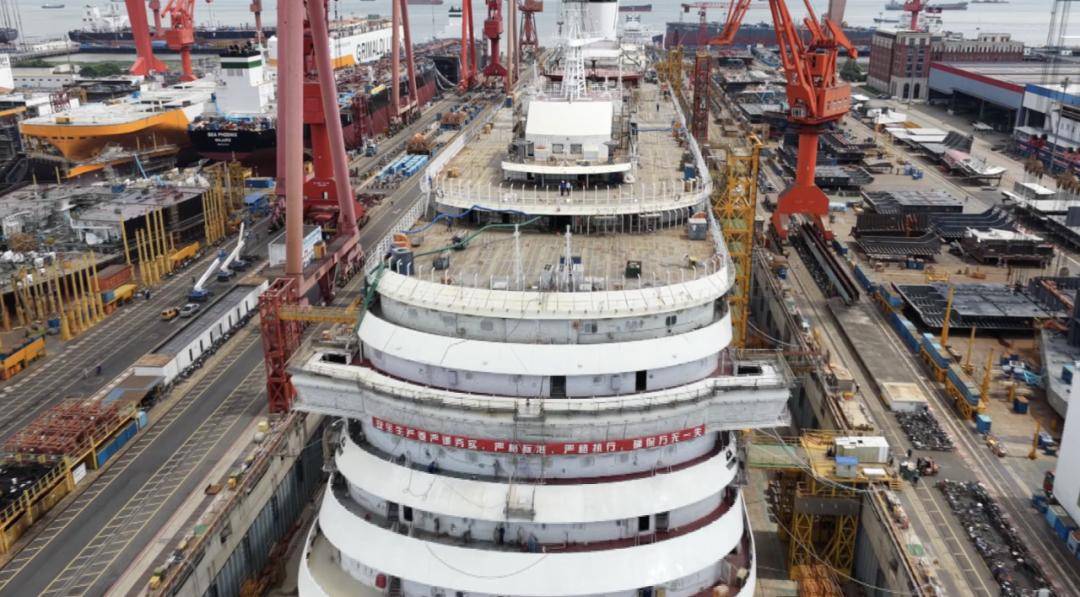
Core Insights - The article highlights the rapid advancements and achievements of China's shipbuilding industry, particularly at the Waigaoqiao Shipbuilding Factory, showcasing its ability to produce large vessels efficiently and competitively on a global scale [1][20]. Group 1: Shipbuilding Efficiency - The Waigaoqiao Shipbuilding Factory can complete the construction of a 10,000-ton vessel in just over 80 days, with the hull taking only 22 days to form [5][20]. - The construction process is meticulously managed, with each phase compared to a well-orchestrated symphony, ensuring strict adherence to timelines and quality standards [5][7]. Group 2: International Market Presence - Established in 1999, the Waigaoqiao Shipbuilding Factory has evolved into a significant international shipbuilding hub, with 90% of its orders coming from overseas clients [9]. - The factory has successfully built a reputation for quality and speed, leading international shipowners to prefer Chinese manufacturing over traditional shipbuilding nations like Japan and South Korea [20]. Group 3: High-End Cruise Ship Manufacturing - The factory is making strides in the high-end cruise ship sector, previously dominated by Italian and German shipyards, with plans to develop a complete cruise ship industry chain within 5 to 10 years [10][12]. - The construction of the second cruise ship, Aida Huacheng, has seen improvements in efficiency, reducing the build time by four months compared to the first ship [14]. Group 4: Technological Advancements - The use of advanced technologies such as laser cutting and intelligent welding has significantly enhanced the shipbuilding capabilities in China, allowing for the construction of larger vessels [16]. - The factory is currently developing an 11,800-car PCTC (Pure Car and Truck Carrier), which is expected to set new records in shipbuilding efficiency [19].

油轮板块专家访谈:本轮运价上涨的解读与展望
2025-09-10 14:35
Summary of Conference Call on VLCC Market Dynamics Industry Overview - The conference call focused on the VLCC (Very Large Crude Carrier) segment within the oil shipping industry, highlighting recent price surges and market dynamics [1][2]. Key Points and Arguments 1. **Price Surge**: VLCC rates skyrocketed to $71,000 this week, marking a 30% increase, indicating tightening supply and demand dynamics due to a significant reduction in available VLCCs for immediate loading [1][3]. 2. **OPEC+ Production Increase**: OPEC+ is gradually releasing an additional 2.2 million barrels per day, crucial for structural demand recovery, particularly with a deadline in September for most of this increase to materialize [1][4]. 3. **Market Share Recovery**: OPEC+ aims to regain market share lost to shale oil since 2020, with production increases intended to stabilize global oil prices and balance geopolitical factors [5][11]. 4. **Stable Oil Prices**: Oil prices have stabilized between $65-$70 per barrel, stimulating global inventory replenishment, with China’s August imports rising significantly [6][8]. 5. **Global Trade Route Changes**: The restructuring of global trade routes has increased long-distance shipping demand, with Brazil's oil exports to China rising by 60% year-on-year, contributing to supply-demand tension [7][19]. 6. **Iranian Supply Resilience**: Despite extreme pressure, Iranian oil production has rebounded to over 3 million barrels per day, with exports around 1.7 million barrels per day, indicating limited impact from sanctions [8][9]. 7. **Market Sentiment**: Current market sentiment is positive, with expectations of continued price increases at least until Q4 2025, driven by structural changes in supply and demand [2][10]. 8. **Future Price Trends**: The upward trend in VLCC rates is expected to persist due to effective supply constraints and structural demand growth, with projections extending into 2026 [12][13]. 9. **Old Vessel Retirement Challenges**: The retirement of aging vessels is hindered by their operational profitability, as many older VLCCs remain economically viable despite their age [14][15]. 10. **Low New Ship Orders**: New ship orders remain low due to high construction costs and uncertainties regarding future environmental regulations, which deter investment in new vessels [16][18]. Additional Important Insights - **Impact of Geopolitical Events**: Geopolitical factors, such as sanctions and environmental policies, are expected to further influence the operational landscape for older vessels, potentially leading to their retirement [15][20]. - **Market Concentration**: The VLCC market is highly concentrated, with the top ten companies holding a significant market share, which affects decision-making and investment in new vessels [17][18]. - **Future Shipping Market Outlook**: The shipping market is anticipated to experience structural improvements, with a conservative growth forecast for VLCC rates, contingent on OPEC+ policies and geopolitical stability [20].
本月刚刚上市!这家船厂公布业绩
Sou Hu Cai Jing· 2025-08-20 10:09
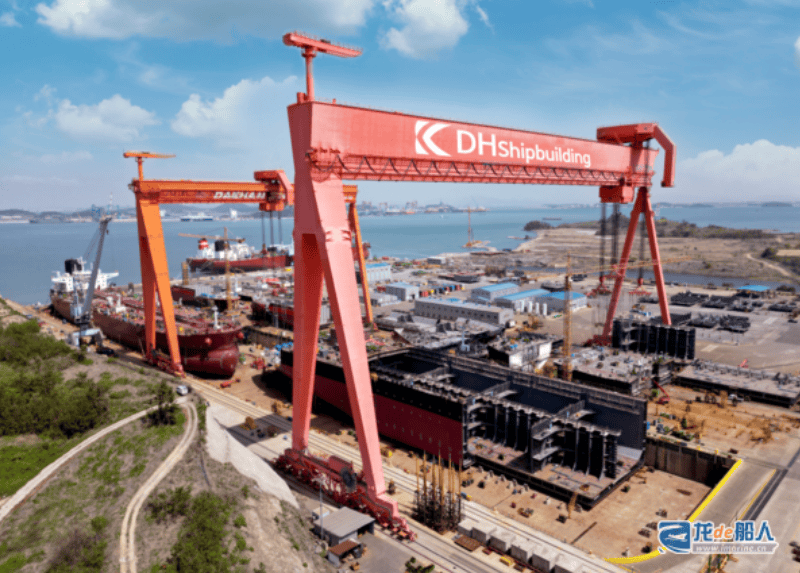
Group 1 - DH Shipbuilding reported consolidated revenue of 296 billion KRW (approximately 1.53 billion RMB) in Q2, a year-on-year increase of 16.7% [1] - The company achieved an operating profit of 62.5 billion KRW (approximately 320 million RMB) in Q2, representing a year-on-year growth of 84.4% [1] - For the first half of the year, DH Shipbuilding accumulated revenue of 603.7 billion KRW (approximately 3.12 billion RMB) and an operating profit of 132.2 billion KRW (approximately 680 million RMB), with an operating margin of 21.9% [1] Group 2 - Since being acquired by KH Investment Group in 2022, DH Shipbuilding has implemented strategies focused on high-value-added vessels, internalizing external manufacturing segments, maximizing equipment efficiency, and fine-tuning cost management, leading to improved revenue and profitability [3] - The company has stabilized the delivery of its main vessel types at a rate of one vessel per month in the first half of the year, with plans to start constructing high-value-added vessels like oil tankers in the second half [3] - DH Shipbuilding aims to maintain its industry-leading operating profit margin and establish itself as a competitive shipyard in the global market [3] Group 3 - In 2023, DH Shipbuilding received orders for two Suezmax oil tankers from Greek shipping company Sun Enterprises, with a total order value of approximately 180 million USD, expected to be delivered in Q1 2027 [4]
南华油品发运数据周报:VLCC型油轮需求减少,当周BDTI运价指数涨幅受限-20250815
Nan Hua Qi Huo· 2025-08-15 11:23
1. Report Industry Investment Rating No relevant content provided. 2. Core Viewpoints of the Report - From August 11th to 14th, the BDTI crude oil freight rate index closed at 1019 points, up 1.19% week-on-week (with narrowing growth) and 12.72% year-on-year (with expanding growth). The increase in the number of crude oil vessels in the Red Sea and Gulf of Aden regions continued to boost the BDTI index, but the decline in demand for VLCC tankers and the decrease in shipping distances limited the index's growth [2]. - As of August 8th, the shipping volume showed a pattern of "two increases and two decreases." The shipping volumes of the US and Russia increased by 11.69% and 18.95% respectively, while those of Saudi Arabia and the UAE decreased by 5.14% and 20.83% respectively [2]. - Attention should be paid to important events such as OPEC+ crude oil production increase, US tariff policies, and the Fed's interest rate cut expectations [2]. 3. Summary by Relevant Catalogs BDTI Crude Oil Freight Rate Index Trend - As of August 14, 2025, the BDTI crude oil freight rate index closed at 1019 points, up 1.19% week-on-week and 12.72% year-on-year. The growth rate of the freight rate narrowed seasonally [2]. Tanker Shipping Distance - In the 30th week of 2025 (as of August 1st), the shipping distances of VLCC, Suezmax, and Aframax tankers all decreased week-on-week. The Suezmax tankers had the largest week-on-week decrease, but the rate of decrease slowed compared to the previous week. Compared with the same period last year, the VLCC tankers had the largest decrease in shipping distance [4]. - From August 9th to 13th, the total tanker traffic in the Red Sea increased significantly, with an average of 813 tankers passing through per day, an increase of 20 from the previous week. The number of crude oil tankers increased by 41, while the number of product tankers decreased by 18. Among the crude oil tankers, the number of VLCCs remained unchanged, the number of Suezmax tankers increased by 21, and the number of Aframax tankers increased by 23 [6]. - In the Gulf of Aden, the tanker traffic increased slightly, reaching 154 tankers, an increase of 6 from the previous week. The number of crude oil tankers increased by 7, while the number of product tankers decreased by 2. Among the crude oil tankers, the number of VLCCs increased by 2, the number of Suezmax tankers increased by 3, and the number of Aframax tankers decreased by 2 [6]. Tanker Capacity - As of August 8, 2025, the number of scrapped tankers was 9425, an increase of 2 week-on-week and 83 year-on-year; the number of effective vessels was 18310, an increase of 3 week-on-week and 440 year-on-year; the number of vessel deliveries was 219, an increase of 23 week-on-week and 99 year-on-year; the number of vessel orders was 1343, a decrease of 13 week-on-week and an increase of 115 year-on-year; the number of vessels under construction was 215, an increase of 3 week-on-week and 77 year-on-year [8]. - As of August 9th, the port tanker capacity of all ship types increased. Specifically, the number of VLCCs docked was 2334, an increase of 141 week-on-week; the number of Aframax tankers docked was 2736, an increase of 80 week-on-week; the number of Suezmax tankers docked was 2207, an increase of 17 week-on-week [8]. Crude Oil Shipping Data Tracking - As of August 8, 2025, the crude oil shipping volumes of the US and Russia increased week-on-week, while those of Saudi Arabia and the UAE decreased. Specifically, the US crude oil weekly shipping volume continued to rise by 11.69%; the Russian crude oil weekly shipping volume rose by 18.95%; the Saudi crude oil weekly shipping volume fell by 5.14%; the UAE crude oil weekly shipping volume continued to fall by 20.83% [10]. - In terms of shipping vessel types for US crude oil, the shipping volume continued to rise. The demand for Suezmax tankers increased significantly by 45.16% week-on-week, while the demand for VLCC and Aframax tankers decreased by 8.23% and 12.07% respectively [10]. - The Russian crude oil shipping volume increased week-on-week. The demand for Aframax tankers increased significantly by 55.99% week-on-week, while the demand for Suezmax tankers decreased by 0.42% [10]. - The Saudi crude oil shipping volume decreased week-on-week. The demand for Aframax tankers decreased the most, with the demand for VLCC and Suezmax tankers decreasing by 2.74% and 5.7% respectively [10]. - The UAE crude oil shipping volume continued to decrease. The demand for VLCC and Suezmax tankers decreased, with the demand for VLCC tankers decreasing by 13.48% and the demand for Suezmax tankers decreasing significantly by 46.87%. The demand for Aframax tankers increased by 17.13% [10]. - The total crude oil shipping volume of other countries such as Kuwait, Iraq, Iran, Algeria, and Nigeria decreased slightly, mainly due to the decline in the shipping volumes of Kuwait, Iran, and Algeria [27]. Crude Oil Arrivals - During the week, the crude oil arrivals in China, India, and the Netherlands all decreased week-on-week. The arrivals in China and the Netherlands returned to the levels of the same period last year, while the arrivals in India were lower than last year [28].