
英伟达Vera Rubin芯片

Search documents
空欢喜!英伟达H200停产
Xin Lang Cai Jing· 2026-03-06 07:32
Core Viewpoint - Nvidia has ceased production of its H200 processors tailored for the Chinese market, indicating a lack of short-term sales expectations for this product in China [1][3]. Group 1: Production Changes - Nvidia has informed TSMC to reallocate production capacity away from the H200 to focus on the Vera Rubin chip [3]. - This decision reflects Nvidia's pessimism regarding the H200's sales prospects in the Chinese market [3]. Group 2: Regulatory Context - In mid-January, the U.S. government announced a relaxation of export regulations for Nvidia's H200 chips to China, which led Nvidia's CEO Jensen Huang to state that the supply chain for H200 had been restarted and that demand from Chinese customers was "very high" [3]. - Despite the U.S. government's approval for limited H200 product exports to China, Nvidia's CFO Colette Kress revealed that the company has not sold any H200 chips to Chinese firms and remains uncertain about future sales [3]. Group 3: Market Sentiment - Commentary from C114 suggested that Nvidia's ability to conduct substantial and long-term business in China is hindered by a lack of mutual trust between the U.S. and China [3]. - Bloomberg reported that ongoing tightening of advanced AI chip export controls by the U.S. has imposed multiple restrictions on the sales of the H200 in the Chinese market [3].

谷歌TPU助力OpenAI砍价三成,英伟达的“王座”要易主了?
3 6 Ke· 2025-12-02 08:19
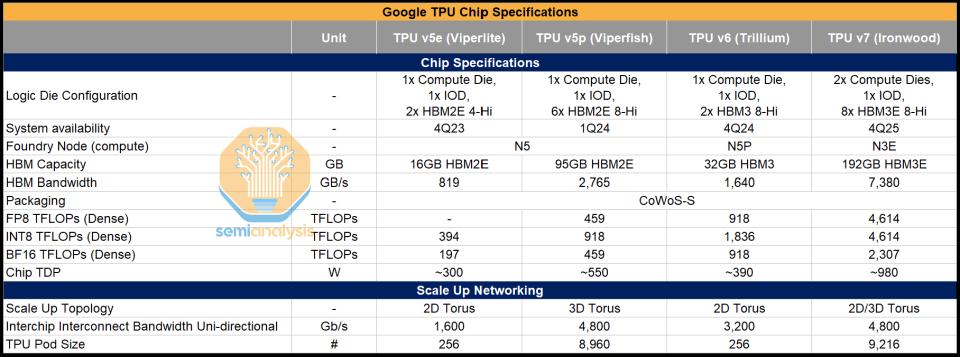
Core Insights - Google is shifting its TPU strategy from primarily serving its own AI models to actively selling chips to third parties, directly competing with Nvidia [1][2] - Anthropic has become one of the first significant customers for Google's TPU, involving a deal for approximately 1 million TPUs, which includes both direct hardware purchases and rentals through Google Cloud Platform (GCP) [1][2][3] - The competitive landscape is changing, with OpenAI negotiating a 30% price discount in discussions with Nvidia by considering alternatives like TPUs [1] Group 1: Partnership with Anthropic - Google has mobilized its resources to provide TPUs to external customers, marking a significant step in its strategy to become a differentiated cloud service provider [2] - The partnership with Anthropic aligns with its goal to reduce reliance on Nvidia, with Google having made early investments in Anthropic while limiting its voting rights [2] - Anthropic will deploy TPUs in its own facilities and also rent additional TPUs through GCP, allowing Google to compete directly with Nvidia [3] Group 2: Financial Implications - The deal with Anthropic includes a direct sale of approximately $10 billion worth of TPU systems, with 400,000 TPUv7 chips, making Anthropic a key customer for Broadcom [3] - Anthropic's rental of an additional 600,000 TPUv7 chips through GCP is expected to generate about $42 billion in contract value, significantly contributing to GCP's order backlog [3] Group 3: Technical Advancements - TPUv7 "Ironwood" is nearing parity with Nvidia's Blackwell architecture in theoretical performance and memory bandwidth, with a competitive edge in pricing [5][12] - The total cost of ownership for each TPU is approximately 44% lower than Nvidia's GB200, and even with a premium for external customers, the cost remains 30%-50% lower than Nvidia systems [6][8] - Google is working to eliminate software compatibility barriers by developing native support for frameworks like PyTorch, aiming to make TPUs a viable alternative without requiring developers to overhaul their toolchains [10][12] Group 4: Competitive Landscape - Nvidia is preparing a counterattack with its next-generation "Vera Rubin" chip, which may reshape the competitive landscape [13] - Google plans to develop TPUv8 in two versions, but analysts note that the designs are conservative and may face delays [13] - The success of Nvidia's upcoming chips could challenge Google's current pricing advantages, emphasizing the need for Nvidia to execute its technology roadmap effectively [13]


“星际之门”在美国“新开5个数据中心”,投资额高达4000亿美元,目标“三年建成,7GW”
3 6 Ke· 2025-09-25 03:19
Core Insights - OpenAI and Oracle are advancing the $500 billion Stargate project, with the first site in Texas now operational [1] - The project aims to invest $400 billion over the next three years, ultimately reaching 7GW capacity [1] - Oracle plays a central role in the expansion, with a partnership to develop up to 4.5GW of new capacity valued at over $300 billion [2][3] Project Details - The first data center is located in Abilene, Texas, equipped with Oracle's cloud infrastructure and NVIDIA's chip racks [1] - The Abilene site is expected to expand to over 1GW capacity, enough to power approximately 750,000 American homes [1] - The project includes five new sites across Texas, New Mexico, Ohio, and an undisclosed Midwest location [1][2] Capacity and Demand - Oracle's new sites are projected to provide over 5.5GW of capacity to meet the growing demand for AI training and inference [3] - The construction scale is unprecedented, aimed at addressing the significant shortage of computing power required for AI operations [4] Financing Structure - The project is supported by a complex funding network, with OpenAI expected to pay for computing power through operational expenses [5] - OpenAI's revenue is projected to reach $13 billion this year, with plans to finance construction through cash flow and debt [5] - NVIDIA is also involved through equity investment, raising questions about the "circular financing" model [5] Political and Economic Implications - The Stargate project has significant political and economic dimensions, with OpenAI's vision extending beyond technology to global geopolitical influence [6][7] - The project is expected to create over 6,000 construction jobs and nearly 1,700 long-term positions [7] - OpenAI aims to reshape the U.S. power grid and enhance the country's global standing through this initiative [7]


AMD将重启对华AI芯片出口,特朗普政策变了?
第一财经· 2025-07-16 03:17
Core Viewpoint - The U.S. Department of Commerce is re-evaluating the export license for AMD's AI chip MI308 to restart sales to China, which has led to a significant increase in AMD's stock price by over 7% [1] Group 1: AMD and NVIDIA Developments - AMD previously reported a loss of $800 million due to export controls on the MI308 chip to China [2] - NVIDIA's CEO announced that the H20 chip will receive U.S. approval for sales to China, with modifications made to meet regulatory requirements [2] - Both MI308 and H20 chips are specifically developed for the Chinese market in response to U.S. export restrictions [2] Group 2: U.S. Policy Shift - U.S. Commerce Secretary Howard Lutnick explained the policy shift aims to create dependency of Chinese companies on U.S. technology by selling them sufficient AI chips [2] - Currently, Chinese companies are only receiving NVIDIA's fourth-best performing chips [2] Group 3: Chinese AI Chip Development - Analysts indicate that China has developed the capability to independently create AI chips and infrastructure, reducing reliance on U.S. technology [2] - Research director He Hui from Omdia noted that the resumption of U.S. AI chip sales will still face significant uncertainties due to fluctuating U.S.-China policies [3] Group 4: NVIDIA's Product Line - NVIDIA's Blackwell series is recognized as the best AI chip for cloud computing and data center manufacturers, with the latest Blackwell Ultra generation starting installations in data centers [3] - The next-generation Vera Rubin chip is expected to be launched by NVIDIA in 2027 [3]

计算机行业跟踪周报371期:华为与英伟达AI大会将召开,腾讯积极进行算力储备-2025-03-16
Haitong Securities· 2025-03-16 13:04
Investment Rating - The investment rating for the information services industry is "Outperform the Market" and is maintained [2]. Core Insights - The report highlights that Tencent's recent investment in computing power is a necessary step in the context of AI development, indicating a sustained growth in demand for computing resources as AI applications expand [7]. - Upcoming conferences by Huawei and NVIDIA are expected to attract market attention towards the AI industry, with new AI products likely to accelerate overall industry development [7]. - The report suggests monitoring companies such as Kingsoft Office, Hongsoft Technology, Hehe Information, Runze Technology, Guoneng Rixin, Tongxingbao, Newland, and Saiyi Information for potential investment opportunities [7]. Summary by Sections Market Performance - The report provides a comparative performance analysis showing a decline of -27.29% for the information services sector from March 2024 to December 2024, while the Haidong Composite Index shows a lesser decline of -14.60% [3]. Related Research - The report references several related studies, including topics on Huawei's AI initiatives and the global launch of the first general AI agent, Manus, which are pivotal in understanding the current trends in the AI sector [4][5]. Upcoming Events - Huawei's Ascend AI Conference and Partner Conference are scheduled for March 21, 2025, focusing on the impact of large model development on the AI industry and showcasing new products [6]. - NVIDIA's GTC 2025 will take place from March 17 to 21, 2025, featuring discussions on AI infrastructure and the unveiling of the next-generation AI chip, Vera Rubin [6].
