
星际之门项目

Search documents
OpenAI承诺“自食其力”:星际之门项目将全额承担能源基建成本,以消除涨价隐忧
Zhi Tong Cai Jing· 2026-01-21 06:39
Group 1 - OpenAI will cover the construction costs of energy-related infrastructure for its "Stargate" data center to address concerns about rising utility costs for consumers [1] - The company aims to collaborate with local communities to ensure that these projects do not increase electricity expenses [1] - Microsoft has made a similar commitment regarding energy costs for its data center projects, although many details remain unclear [1] Group 2 - The "Stargate" initiative, announced a year ago, involves an investment of $500 billion to build infrastructure for AI workloads, with partners including SoftBank and Oracle [2] - The first site of the project is a large data center in Abilene, Texas, developed by Oracle in collaboration with Crusoe [2] - OpenAI is working with Oracle and Vantage Data Centers in Wisconsin to develop new energy generation capabilities, including solar and battery storage, with special rate standards to protect other customers from price increases [2]
“星际之门”在美国“新开5个数据中心”,投资额高达4000亿美元,目标“三年建成,7GW”
3 6 Ke· 2025-09-25 03:19
Core Insights - OpenAI and Oracle are advancing the $500 billion Stargate project, with the first site in Texas now operational [1] - The project aims to invest $400 billion over the next three years, ultimately reaching 7GW capacity [1] - Oracle plays a central role in the expansion, with a partnership to develop up to 4.5GW of new capacity valued at over $300 billion [2][3] Project Details - The first data center is located in Abilene, Texas, equipped with Oracle's cloud infrastructure and NVIDIA's chip racks [1] - The Abilene site is expected to expand to over 1GW capacity, enough to power approximately 750,000 American homes [1] - The project includes five new sites across Texas, New Mexico, Ohio, and an undisclosed Midwest location [1][2] Capacity and Demand - Oracle's new sites are projected to provide over 5.5GW of capacity to meet the growing demand for AI training and inference [3] - The construction scale is unprecedented, aimed at addressing the significant shortage of computing power required for AI operations [4] Financing Structure - The project is supported by a complex funding network, with OpenAI expected to pay for computing power through operational expenses [5] - OpenAI's revenue is projected to reach $13 billion this year, with plans to finance construction through cash flow and debt [5] - NVIDIA is also involved through equity investment, raising questions about the "circular financing" model [5] Political and Economic Implications - The Stargate project has significant political and economic dimensions, with OpenAI's vision extending beyond technology to global geopolitical influence [6][7] - The project is expected to create over 6,000 construction jobs and nearly 1,700 long-term positions [7] - OpenAI aims to reshape the U.S. power grid and enhance the country's global standing through this initiative [7]


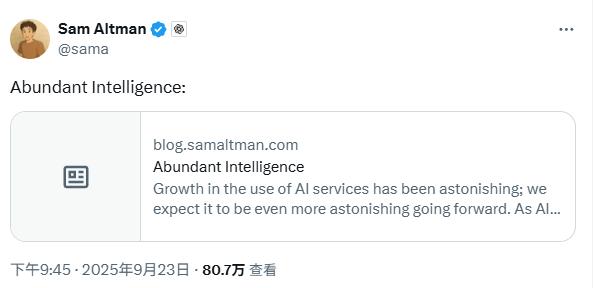
【特稿】OpenAI称“星际之门”要在美新建5座数据中心
Xin Hua She· 2025-09-24 07:32
Core Points - OpenAI announced the construction of five AI data centers in the U.S. as part of the "Star Gate" project in collaboration with Oracle and SoftBank [1] - The project aims to achieve a power capacity of nearly 7 gigawatts and an investment exceeding $400 billion over the next three years [1] - The initial announcement of the project included a planned investment of $500 billion over four years to build infrastructure supporting AI development [1] Summary by Sections Project Details - The five data centers will be located in Texas, New Mexico, and Ohio, with three being built in Texas and New Mexico, and two in Ohio [1] - The flagship data center in Abilene, Texas, will also undergo expansion [1] - The project faced delays and had to downsize its initial goals, with plans to build only one small data center by the end of the year [1] Local Impact - The Abilene data center consists of eight buildings in an H-shape, raising concerns among residents regarding resource demands [2] - The water reservoir in Abilene is mostly half-full, limiting outdoor watering to two days a week for residents [2] - The data center's initial water usage for cooling systems is 1 million gallons (approximately 3.79 million liters), with an expected annual requirement of 12,000 gallons (approximately 45,000 liters) per building [2] Energy Sources - Currently, the data centers are powered by natural gas, but there are long-term plans to transition to alternative energy sources [2]
“星际之门”在美国“新开5个数据中心”,投资额高达4000亿美元,目标“三年建成,7GW”
华尔街见闻· 2025-09-24 04:27
Core Insights - OpenAI and Oracle are advancing the $500 billion "Gateway" project, with the first site in Texas now operational [1][2] - The project aims to invest $400 billion over the next three years, ultimately reaching 7GW capacity [2] - OpenAI's CFO highlighted that the Texas Abilene site could expand to over 1GW, enough to power approximately 750,000 American homes [2] Project Expansion - The expansion includes five new sites in Texas, New Mexico, Ohio, and an undisclosed Midwest location [1][2] - Oracle is leading the construction of three large data centers as part of this initiative [4][5] - OpenAI and Oracle's agreement involves developing up to 4.5GW of new capacity over five years, valued at over $300 billion [5] Infrastructure Demand - The unprecedented scale of the Gateway project is a response to the significant demand for computing power for AI training and inference [6][8] - OpenAI's CFO emphasized the current shortage of computing power, stating that there is not enough capacity to fulfill all AI capabilities [8] - The construction aims to ensure that computing power is available by 2026, utilizing NVIDIA's next-generation Vera Rubin chips [9] Financing Structure - The project is supported by a complex financing structure, with OpenAI paying for computing power through operational expenses [12] - OpenAI's projected revenue for the year is expected to reach $13 billion, with plans to use cash flow and debt financing for construction costs [13] - NVIDIA is also involved through equity investment, receiving compensation for the chips provided [15] Political and Economic Implications - The Gateway project carries significant political and economic implications, having been announced in collaboration with former President Trump [19][20] - The project is expected to employ over 6,000 construction workers daily and provide nearly 1,700 long-term jobs [21] - OpenAI's infrastructure development aims to reshape the U.S. power grid and enhance the country's global influence [22][23]
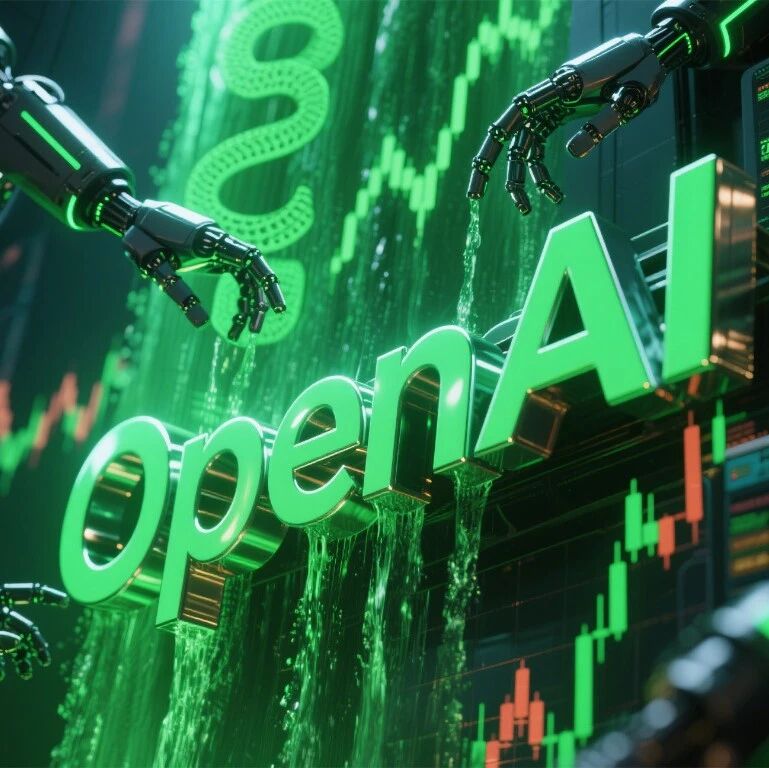
“星际之门”在美国“新开5个数据中心”,投资额高达4000亿美元,目标“三年建成,7GW”
美股IPO· 2025-09-24 00:25
Core Viewpoint - The "Gateway" project in Abilene, Texas, marks a significant step in addressing the computational power shortage required for AI operations, with a total investment exceeding $400 billion and a capacity target of nearly 7 gigawatts over the next three years [1][3][5]. Group 1: Project Overview - The first site of the "Gateway" project has officially commenced operations, utilizing Oracle's cloud infrastructure and NVIDIA chips [1][3]. - The project will expand to four additional sites in New Mexico, Ohio, and a yet undisclosed location in the Midwest [2][3]. - The Abilene site is expected to ultimately exceed 1 gigawatt of capacity, sufficient to power approximately 750,000 American households [3]. Group 2: Financial Structure - The project is supported by a complex funding network, with OpenAI expected to pay for the computational power through operational expenses [6][8]. - OpenAI's revenue for the year is projected to reach $13 billion, with plans to finance construction costs through cash flow and debt [9]. - NVIDIA is involved in the project through equity investment and will receive compensation for the chips deployed [10]. Group 3: Economic and Political Implications - The "Gateway" project has significant political and economic implications, with over 6,000 construction workers employed daily and nearly 1,700 long-term jobs created [15]. - OpenAI's vision extends beyond technology, aiming to play a more prominent role in global geopolitical and economic dynamics [16].


裁员20%!软银愿景基金继续大瘦身
证券时报· 2025-09-20 15:17
Core Viewpoint - SoftBank's Vision Fund is set to lay off nearly 20% of its workforce, marking the largest layoffs in venture capital history, as it shifts its investment focus towards artificial intelligence [1][2]. Group 1: Layoff Details - The Vision Fund, established in 2017, has a current scale of $157.3 billion, including its first and second funds and a Latin America fund [3]. - The fund peaked at 474 employees in March 2020 but has since reduced its workforce to over 300, with the latest layoffs occurring despite strong financial performance [3]. - In Q1 of FY2025-2026, the fund reported net revenue of 1.82 trillion yen, a 7% year-on-year increase, and a net profit of 421.82 billion yen, reversing previous losses [3]. Group 2: Strategic Shift to AI - The layoffs and shift towards AI investments indicate a move away from a previously diversified investment strategy to a more concentrated approach focused on high-risk, high-reward opportunities [5]. - SoftBank has been intensively investing in capital-intensive AI projects, including a $9.7 billion investment in OpenAI and acquisitions of top AI chip companies [6][7]. - CEO Masayoshi Son emphasized the importance of achieving Artificial Super Intelligence (ASI) and outlined four key areas of focus: AI chips, AI robots, AI data centers, and energy [6]. Group 3: Financial Position and Future Plans - SoftBank's substantial cash reserves, amounting to 4 trillion yen (approximately $27 billion), provide a strong foundation for aggressive investments in AI [7]. - The company has recently liquidated $4.8 billion from selling shares in T-Mobile to enhance liquidity for future investments [7]. - Despite the ambitious ASI strategy, progress on the U.S. Stargate project with OpenAI has been slower than expected, indicating potential challenges ahead [7].


裁员20%!软银愿景基金继续大瘦身
Sou Hu Cai Jing· 2025-09-20 11:24
Core Viewpoint - SoftBank's Vision Fund is set to lay off nearly 20% of its workforce, marking the largest layoffs in venture capital history, as it shifts its investment focus towards artificial intelligence [1][2]. Group 1: Layoff Details - The Vision Fund, established in 2017, has a current scale of $157.3 billion, including its first and second funds and a Latin American fund [2]. - The fund peaked at 474 employees in March 2020 but has since reduced its workforce to over 300 employees [2]. - The layoffs occur despite strong performance, with the fund reporting a net revenue of 1.82 trillion yen for Q1 FY2025-2026, a 7% year-on-year increase, and a net profit of 421.82 billion yen, surpassing market expectations [2]. Group 2: Strategic Shift - The layoffs are part of a broader strategy to focus on bold investments in AI and breakthrough technologies, as stated by a Vision Fund spokesperson [3]. - The fund will continue to invest, with remaining employees directed towards ambitious projects like the $500 billion Stargate initiative in collaboration with OpenAI and Oracle [3]. Group 3: AI Investment Focus - The shift towards AI marks a departure from previous diversified investment strategies, aligning with SoftBank's recent capital-intensive investments in AI infrastructure and models [4]. - SoftBank has invested $9.7 billion in OpenAI and is pursuing a capital-intensive infrastructure strategy centered around its chip designer Arm, acquiring several AI chip companies [4]. - As of March 2023, SoftBank's investments in Nvidia and TSMC have increased to approximately $3 billion and $330 million, respectively [4]. Group 4: Financial Position - SoftBank's CEO Masayoshi Son emphasizes the importance of achieving Artificial Super Intelligence (ASI) and has outlined four key areas of focus: AI chips, AI robots, AI data centers, and energy [5]. - The company has a strong cash reserve of 4 trillion yen (approximately $27 billion), bolstered by the sale of T-Mobile shares, providing a solid foundation for aggressive investments in AI [5][6]. - The CFO stated that SoftBank's balance sheet supports its aggressive investments in AI, including a $30 billion investment in OpenAI and participation in the $500 billion Stargate project [6].
Kimi K2高速版发布;OpenAI将“星际之门”项目引入欧洲丨AIGC日报
创业邦· 2025-08-02 01:09
Group 1 - OpenAI is launching its first AI data center project in Europe, named "Stargate" in Norway, in partnership with Nscale and Aker, with a 50/50 joint venture for ownership [2] - Alibaba's Tongyi Qianwen has introduced a programming model called Qwen3-Coder-Flash, which excels in agentic coding, browser use, and tool use, surpassing current top open-source models [2] - Deepseek's affiliated company has published a patent for a method and system for deploying large language models, aimed at maximizing hardware utilization and reducing latency [2] - The Kimi K2 Turbo version has been released, increasing output speed from 10 tokens per second to 40 tokens per second while maintaining the same model parameters [2]


出海速递 | 出海去巴西,上天堂还是进地狱?/美国官宣“对等关税”——这是最全关税列表
3 6 Ke· 2025-08-01 11:01
Group 1 - The article discusses the global expansion of AI companies, highlighting the competitive landscape and opportunities presented by international markets [2] - It emphasizes the importance of understanding local regulations and market dynamics for successful overseas operations [4][6] - The article notes that companies must shift from merely avoiding barriers to actively building global supply chains [6] Group 2 - The news highlights Alibaba's Gaode Map launching ride-hailing services in 24 countries across Europe and Asia, enhancing its international presence [8] - It reports on ZhiYuan Robotics' international expansion, with expectations to ship thousands of units this year to markets including North America and Europe [7] - Microsoft has become the second company globally to reach a market capitalization of $4 trillion, following Nvidia, indicating strong performance in the tech sector [9]


OpenAI与甲骨文将为星际之门项目进一步开发4.5吉瓦的数据中心容量
news flash· 2025-07-22 14:32
Group 1 - OpenAI and Oracle announced the development of 4.5 gigawatts of data center capacity for the Stargate project, marking the expansion phase of this large infrastructure initiative [1] - The Stargate project is a joint venture established by OpenAI, Oracle, and SoftBank, with plans to invest up to $500 billion in AI infrastructure in the U.S. over the next four years [1] - The new data center capacity is expected to create over 100,000 jobs in construction and operations within the U.S. [1] Group 2 - The total capacity of the Stargate AI data centers will exceed 5 gigawatts following this expansion [1] - Prior to this announcement, reports indicated that the Stargate project had faced challenges in getting started [1]