草本白酒

Search documents
2026内容消费趋势白皮书:凡人至上-赞意
Sou Hu Cai Jing· 2025-12-11 00:11
Group 1 - The core transformation in content consumption for 2026 is the rise of "ordinary people," moving away from grand narratives, as the value judgment shifts from elites and institutions to relatable individuals [1][6][10] - In the entertainment and content industry, stories of ordinary people's struggles and triumphs are becoming mainstream, with a focus on small character narratives in film and television [23][24][26] - Short dramas are emerging as emotional "quick fixes," while healing variety shows provide low-conflict environments for audiences [31][39] Group 2 - In the commercial retail sector, brands are moving away from elitism and are encouraged to connect with ordinary consumers, emphasizing authentic communication and emotional connections [2][12][29] - The marketing approach is shifting towards "micro-touchpoint" creativity, where everyday items become vehicles for emotional engagement [2][12] - Young consumers are redefining value through "aesthetic simplicity" and "wisdom in imperfection," challenging traditional brand pricing strategies [2][12] Group 3 - In the realm of travel and lifestyle, there is a trend towards local experiences and self-exploration, with "county travel" and local markets gaining popularity [2][10] - The democratization of technology and the internet is empowering ordinary individuals, making AI tools accessible for practical needs and creative expression [2][10] - Health and wellness are becoming integral to daily life, with a focus on cost-effective, situational care, and grassroots sports gaining traction [2][10] Group 4 - The brand marketing landscape is undergoing a "people's revolution," shifting from "hero-making" narratives to genuine dialogue with consumers [2][12] - Emotional compensation is becoming a key value in advertising, with brands needing to engage in two-way interactions rather than one-sided promotions [2][12] - The ultimate goal for brands is to authentically document the everyday lives of consumers, reflecting their stories and struggles [29][30]


记者直击!多家龙头药企“意外”现身糖酒会,药食同源加速发展
Hua Xia Shi Bao· 2025-10-17 12:38
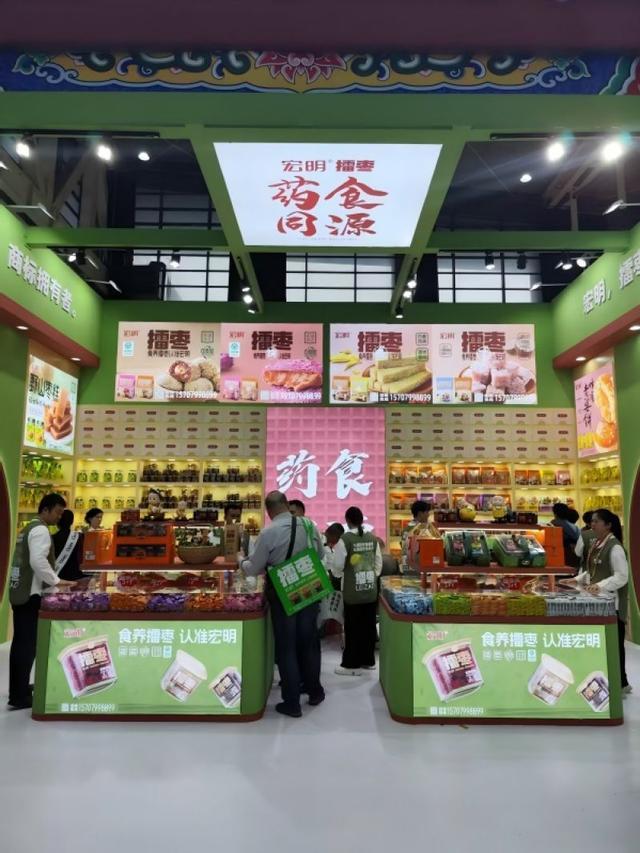
Core Viewpoint - The "food and medicine homology" market is rapidly growing, with various companies, including well-known pharmaceutical firms, participating in the 113th National Sugar and Wine Commodity Fair to promote products that align with this concept [2][6][7]. Group 1: Industry Participation - Notable pharmaceutical companies like Tian Shi Li and Tong Ren Tang are showcasing products at the fair, such as functional teas and herbal alcoholic beverages, emphasizing the integration of health and wellness into everyday consumption [3][5]. - Tian Shi Li's new product "Jiang Cha" targets health-conscious individuals aged 30-45, claiming to regulate post-meal blood sugar levels and improve sleep quality, with a monthly sales volume of 40,000 boxes [3][5]. Group 2: Market Growth - The "food and medicine homology" industry is experiencing accelerated growth, with the narrow market projected to reach 265 billion yuan in 2024, reflecting an 18% year-on-year increase [7][8]. - The broader market, including traditional supplements and functional foods, is expected to reach approximately 800 billion yuan by 2024 and 1.2 trillion yuan by 2030, with a compound annual growth rate of about 12% [7][8]. Group 3: Innovation and Consumer Trends - Innovative products like goji berry gummies and ginseng chocolates have seen a 300% compound growth rate among consumers under 35 over the past three years, indicating a strong demand for health-oriented snacks [8]. - The convenience of managing "food and medicine homology" products under regular food regulations, combined with the established efficacy of many traditional Chinese medicinal ingredients, is driving industry growth [8]. Group 4: Standardization Challenges - The current lack of a robust standardization system for "food and medicine homology" products poses risks, as only one local standard exists in Shandong, leading to potential consumer confusion [9][10]. - Experts at the fair discussed the need for nutritional labeling standards to enhance consumer understanding and ensure food safety, emphasizing the importance of integrating scientific research with public education [9][10].
2025年第41周:酒行业周度市场观察
艾瑞咨询· 2025-10-17 00:03
Group 1 - The Chinese liquor industry is undergoing profound changes by 2025, with shifts in consumer habits, channel restructuring, and capital market hesitance leading to both challenges and new opportunities [3][4][6] - The competition among regional liquor companies is becoming crucial due to increasing market concentration, consumption stratification, and channel inventory pressure, with four strategies proposed for success: market research, comprehensive assessment, terminal competition, and digital empowerment [5] - The rise of the post-90s generation in the liquor market is reshaping industry dynamics, with new players leveraging innovative channels like live streaming and instant delivery to drive growth [6][7] Group 2 - The upcoming Mid-Autumn Festival sees major liquor companies signaling price stabilization and increased channel investment to counter market pressures, with strategies including sales expense increases and inventory optimization [8][9] - Over 70% of consumers prefer classic products, indicating a return to value-driven purchasing during the holiday season, with brands focusing on quality and cultural elements to attract buyers [9][10] - Meituan's collaboration with top liquor brands to establish a comprehensive authenticity assurance system marks a significant leap in the instant retail sector, enhancing consumer trust and promoting a healthy market environment [10][11] Group 3 - The liquor industry is experiencing a shift towards rational consumption, with light bottle liquor gaining popularity as consumers prioritize cost-effectiveness and brand loyalty [12] - Major brands are engaging in cultural and experiential marketing to deepen connections with consumers, as seen in Qingdao Beer’s fan events and Wuliangye’s international cultural exchanges [13][15] - The launch of new products and strategic initiatives by companies like Langjiu and Niulanshan reflects a focus on quality and cultural resonance, aiming to capture market share in a competitive landscape [20][18] Group 4 - The establishment of quality control systems and agricultural partnerships by Fenjiu demonstrates a commitment to high-quality growth and sustainability in the liquor industry [25][26] - The introduction of low-alcohol products by companies like Fenyang Wang reflects a trend towards healthier drinking options, catering to evolving consumer preferences [27] - The integration of liquor with culinary experiences, as seen in Fenjiu's collaboration with Huaiyang cuisine, highlights the industry's efforts to innovate and enhance consumer engagement [28]

酒行业周度市场观察-20251016
Ai Rui Zi Xun· 2025-10-16 06:51
Investment Rating - The report does not explicitly state an investment rating for the industry Core Insights - The Chinese liquor industry is undergoing profound changes in 2025, with shifts in consumer habits, channel restructuring, and capital market hesitance leading to both challenges and new opportunities [2] - The emergence of the post-90s generation as a new force in the liquor market is reshaping the industry landscape, emphasizing instant delivery and digital sales channels [4] - The industry is expected to reach a performance bottom in the first half of 2026, with head brands adjusting strategies to stabilize prices and optimize inventory [4][6] Industry Environment - The liquor industry is experiencing significant transformation characterized by consumer habit changes, channel restructuring, and capital market caution, leading to high inventory and performance declines [2] - Regional liquor companies are gaining traction while leading brands face performance pressures, indicating a divergence in market dynamics [2] - The focus on product innovation, particularly in low-alcohol and light bottle liquor, aligns with younger consumer trends [2] - The upcoming 2026 China Liquor Expo is anticipated to be a key platform for industry players to seize new growth opportunities [2] Brand Dynamics - Major liquor brands are adopting innovative marketing strategies to engage consumers, such as Meituan's collaboration with top liquor companies to ensure product authenticity in instant retail [8] - Qingdao Beer is enhancing its brand connection with consumers through cultural events and sponsorships, such as the National Fan Conference [9] - Wuliangye is promoting its internationalization efforts through cultural exchanges and themed events at global exhibitions [10] - The rise of live-streaming sales, particularly among younger entrepreneurs, is significantly impacting the liquor sales landscape [4][12] - Brands like Niulanshan are leveraging emotional marketing strategies to resonate with consumers, enhancing brand loyalty [12] Consumer Trends - Over 70% of consumers prefer classic liquor products, indicating a return to value-driven purchasing during the holiday seasons [7] - The trend towards rational consumption is evident as consumers prioritize quality and value in their purchasing decisions [7] - The focus on health and lower alcohol content is becoming increasingly important among consumers, particularly in the context of new product launches [21]