
被动权益基金

Search documents
盘点2025年四季度被动权益基金:主要宽基指数有所分化 华夏占有率最高 易方达、华泰柏瑞等管理规模均超千亿
Xin Lang Cai Jing· 2026-01-27 09:01
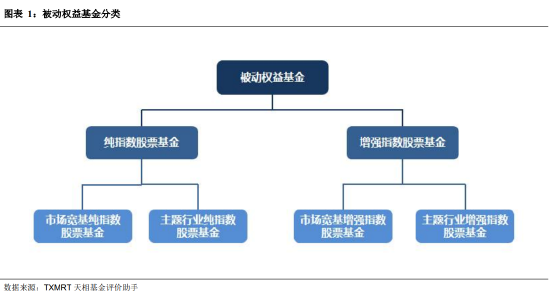
Core Viewpoint - The report highlights the performance and trends of passive equity funds in the fourth quarter of 2025, indicating a growth in total market size and a mixed performance across various indices, with a focus on the implications for future investment strategies in AI applications, commercial aerospace, and nuclear fusion. Group 1: Market Overview - As of the end of Q4 2025, the total market size of passive equity funds reached 4.77 trillion yuan, an increase of 3.49% from the previous quarter [1][5][43] - The size of pure index stock funds was 4.52 trillion yuan, while enhanced index stock funds accounted for 0.25 billion yuan, reflecting increases of 3.26% and 7.78% respectively [1][5][43] - The total number of passive equity funds was 2,065, with 1,594 being pure index stock funds and 471 enhanced index stock funds, showing growth from the previous quarter's total of 1,926 [5][47] Group 2: New Fund Issuance - In Q4 2025, the total new issuance of passive equity funds was approximately 816.80 billion yuan, with 183 new funds launched, a decrease of 75 from the previous quarter [1][7][50] - The issuance scale for pure index stock funds was 576.75 billion yuan with 134 funds, while enhanced index stock funds raised 240.05 billion yuan with 49 funds [1][7][50] Group 3: Market Performance - The performance of major indices in Q4 2025 showed divergence, with the Shanghai Composite Index rising by 2.22%, while the CSI 300 Index fell by 0.23% and the ChiNext Composite Index dropped by 0.73% [2][44] - The Tianxiang pure index stock fund index decreased by 2.01%, whereas the Tianxiang enhanced index stock fund index increased by 0.99% [2][44][52] Group 4: Fund Flows - The overall market for passive equity funds remained stable, with subscription volumes at 14,151.39 billion units and redemption volumes at 12,523.91 billion units, resulting in a net subscription of 1,627.49 billion units, which increased compared to the previous quarter [2][24][66] - The trading volume in the secondary market for passive equity funds reached 73,207.50 billion units, predominantly driven by pure index stock funds, which accounted for 72,984.02 billion units of the total [2][28][70] Group 5: Sector Analysis - The top five sectors held by passive equity funds included electronics, non-bank financials, power equipment, food and beverage, and telecommunications, with a combined holding ratio of 86.18% [2][33][75] - The holding ratios for these sectors showed fluctuations over the quarters, with electronics holding 17.24% by the end of Q4 2025 [2][34][76] Group 6: Fund Management Companies - As of Q4 2025, major fund management companies in the passive equity fund market included Huaxia Fund, with a management scale of approximately 794.2 billion yuan, holding the highest market share of 16.65% [2][35][79] - Other notable companies included E Fund, Huatai-PB Fund, and Southern Fund, all managing over 100 billion yuan, indicating a stable market structure with no significant changes in rankings [2][35][79]

国泰海通|基金评价:高质量发展时代公募基金行业回顾与展望
国泰海通证券研究· 2025-10-30 11:48
Group 1: Core Views - The public fund industry in China is entering a new stage of high-quality development, characterized by profound changes in fund products, companies, sales models, and environmental patterns [1][2] - The future opportunities for different types of public fund products vary, with a focus on active equity funds, passive equity funds, fixed income funds, and innovative products like REITs [1] Group 2: Public Fund Development Trends - Active equity funds will see more standardized benchmark indices, shifting the assessment focus from relative rankings to excess returns [1] - Passive equity funds have rapidly developed over the past two years, with index replication funds reducing fees to benefit investors, while enhanced index products, though currently small in scale, show promising future growth [1] - In fixed income funds, active bond funds and fixed income plus products are thriving in a low-interest-rate environment, and bond index funds are also entering a rapid growth phase [1] - Innovative products such as REITs are accelerating issuance, and multi-asset allocation funds of funds (FOFs) remain a blue ocean market [1] Group 3: Fund Company Development Outlook - The public fund company landscape shows a clear "Matthew Effect," where larger companies can maintain their strengths while smaller firms may benefit from specialized development [2] - The trend in investment research systems is moving towards integration, with a shift from creating star fund managers to building company-wide investment research brands [2] - AI is expected to permeate various aspects of fund company management, talent development, and investment research capabilities [2] Group 4: Public Fund Sales Environment Outlook - The sales model is transitioning from a focus on short-term scale to prioritizing long-term client interests and quality service [2] - The fund sales industry is undergoing ecological restructuring centered around advisory services, with a dual focus on buyer advisory transformation and diversified asset allocation [2] - The emergence of institutional direct sales platforms is anticipated, which will test the differentiated research service capabilities of distribution agencies [2] - Potential market dynamics include a strong market concentration, a dual-driven sales environment of direct and indirect sales, a combination of diversification and digitalization, and a new landscape of high-quality development [2]

高质量发展时代公募基金行业回顾与展望
Haitong Securities International· 2025-10-30 04:01
Report Industry Investment Rating No relevant content provided. Core Viewpoints of the Report - The development trend of public funds emphasizes equities, benchmarks, and long - term perspectives. Different types of public funds face different opportunities. For example, active equity funds will standardize benchmark indices and shift from focusing on relative rankings to excess returns; passive equity funds are experiencing the resonance of fee reduction and product innovation; fixed - income funds, especially those with "fixed - income +" products, are booming in the low - interest - rate era; and innovative products such as REITs are accelerating issuance while multi - asset allocation FOFs remain a blue ocean [2]. - The development prospect of fund companies is to return to investment research. Both large and comprehensive fund companies and small and niche ones are worth looking forward to. The industry shows a Matthew effect, and companies should choose different development strategies according to their scale. The investment research system is moving towards integration, and the back - office of fund companies may be empowered by AI [2]. - The sales environment of public funds is shifting from focusing on scale to enhancing investors' sense of gain. The sales model is changing from "emphasizing new issuance and neglecting continuous operation" to "emphasizing continuous operation and optimizing services", and the industry is undergoing ecological reshaping around investment advisory services. The establishment of institutional direct - sales platforms will test the differentiated research and service capabilities of代销 institutions [3]. Summary According to the Directory 1. Public Fund Development Trends: Emphasizing Equities, Benchmarks, and Long - Term Perspectives 1.1 Active Equity Funds: Standardization of Benchmark Indices and Transition from Relative Ranking to Excess Returns - **Benchmark Index Standardization**: The "Action Plan for Promoting the High - Quality Development of Public Funds" strengthens the binding effect of performance comparison benchmarks. Currently, the benchmark indices of active equity funds are mostly representative broad - based, industry - themed, and style indices. However, most funds do not strictly track the benchmarks, and the industry deviation is in the range of 0.35 - 0.75. This year, 177 funds have changed their performance comparison benchmarks, and the trend is to make them more in line with actual investments. Future benchmark design will be more representative, standardized, and closer to actual investment directions [8][12][21]. - **Serious Assessment**: The assessment should be long - term and focus on excess returns. Long - term assessment helps fund managers adhere to investment concepts, and funds with stable long - term performance have better cumulative returns and risk control. Emphasizing excess returns can tie fund managers' interests with investors and reduce tail risks. Funds that achieve positive excess returns in the long - term have better performance and risk control [24][25][33]. 1.2 Passive Equity Funds: Resonance of Fee Reduction and Product Innovation and Acceleration of the Improvement of the Characteristic Index System - **Replicating Index Funds**: The product spectrum is rich, with a significant leading - company effect. As of September 30, 2025, the total scale of stock ETFs reached 411.7167 billion yuan, and the average daily trading volume in 2025 was 1.24 billion yuan. The management fees of ETFs are relatively low, and many large - scale broad - based ETFs have reduced fees. In the future, differentiated indices may become a blue ocean, and fund companies can carry out forward - looking layout and differentiated competition [43][46][54]. - **Index - Enhanced Products**: These products have both discipline and the ability to obtain excess returns. As of June 30, 2025, the total scale of over - the - counter index - enhanced funds was 20.1028 billion yuan. They can achieve differentiated layout by diversifying tracking indices and developing enhanced ETFs, and are expected to become an important link between passive and active investments [56][60][65]. 1.3 Active Fixed - Income Funds: The Booming of "Fixed - Income +" Products in the Low - Interest - Rate Era and the Popularity of Long - Term Investment Products - In the low - interest - rate environment since 2024, the scale of "fixed - income +" funds has increased. In the first half of 2025, the scale of "fixed - income +" funds increased by 232.3 billion yuan, with the scale of stable products surpassing that of balanced products. Stable "fixed - income +" funds have lower returns but better risk control, and the dividend - low - volatility strategy is suitable for them. With regulatory encouragement and the low - interest - rate environment, "fixed - income +" products are expected to continue to grow [66][69][79]. 1.4 Passive Fixed - Income Funds: Accelerated Trend and Continuous Emergence of Innovative Products Supported by Policies - The development of fixed - income index funds has gone through several stages, including the budding, trial, accelerated growth, slow growth, and explosive growth stages. As of Q2 2025, there were 243 bond index funds with a total scale of 1.42 trillion yuan. In the future, the tool - oriented trend of bond funds will be strengthened, ETFs will play a more important role, and innovative products will continue to emerge under policy support [80][84][94]. 1.5 Innovative Products: Accelerated Issuance of REITs and Multi - Asset Allocation FOFs Remain a Blue Ocean - **REITs Products**: With policy support, the issuance of REITs products has accelerated. As of June 30, 2025, there were 75 products with a total scale of 16.4087 billion yuan. REITs have unique asset allocation attributes, such as combining stock, bond, and alternative investment characteristics, having a long - term maturity, and rich underlying asset types. They are important tools for institutional investors' asset allocation and have broad development prospects [98][101][104]. - **FOF**: FOFs are suitable carriers for multi - asset allocation. Multi - asset allocation FOFs and ETF - FOFs are still a blue ocean. Currently, the scale of multi - asset allocation FOFs accounts for a relatively low proportion of all FOFs, but with the growth of asset - allocation demand and policy support, their scale and number are expected to increase significantly [106][109][113]. 2. Fund Company Development Trends: Return to Investment Research, Both Large and Comprehensive and Small and Niche Are Worth Looking Forward To 2.1 Company Strategic Positioning Selection: Comprehensive vs. Characteristic - **Industry Pattern of Public Funds**: The industry pattern of public funds will continue to concentrate on the top. Although the concentration of China's public fund industry has not increased significantly in the past five years, it is expected to rise in the future. The concentration of equity funds is higher than that of fixed - income funds, and the development trends of the two are different [117][118][123]. - **Comprehensive Fund Companies**: Large fund companies should be positioned as comprehensive fund companies. By referring to the development paths of E Fund and China Asset Management, comprehensive fund companies should maintain their advantages in active equity products and strengthen other product lines, such as passive equity, active Hong Kong stocks, passive fixed - income, and FOF products [125][126][127]. - **Characteristic Fund Companies**: Small and medium - sized fund companies should combine their endowments and deeply cultivate their advantages to achieve characteristic development [2]. 2.2 Investment Research System Construction: Platformization and Branding - The investment research system is moving towards integration, and the key is to achieve "harmony with differences". The investment team is shifting from creating star fund managers to building the brand of the company's investment research [25]. 2.3 Back - Office of Fund Companies: AI Empowers to Improve Efficiency - The back - office of fund companies should pay attention to long - term assessment to ensure the construction of talent echelons, actively introduce employee stock ownership to play a long - term incentive mechanism, and use AI to empower the entire business chain system of funds [29]. 3. Outlook on the Sales Environment of Public Funds: From Scale to Sense of Gain 3.1 Shift from Emphasizing New Issuance to Emphasizing Continuous Operation and Improve the Service Ability for Individual Customers - Policy guidance promotes the transformation of public fund sales from "emphasizing new issuance" to "emphasizing continuous operation and service", and strengthens the customer holding experience [31]. 3.2 Investment Advisory Services Change the Sales Industry Ecosystem, and the Rise of Buyer - Side Investment Advisory and Multi - Asset Allocation - The industry is transforming to the buyer - side investment advisory model and promoting multi - asset allocation, which will reshape the sales industry ecosystem [34]. 3.3 The Establishment of Institutional Direct - Sales Platforms Is Expected, Testing the Differentiated Research and Service Capabilities of代销 Institutions - The development of direct - sales platforms will pose challenges to代销 channels.代销 institutions should strengthen their buyer - side capabilities, deepen cooperation with funds, and transform towards multi - asset allocation, long - term value, and personalized services when serving institutional investors [39]. 3.4 Outlook on the Pattern of the Public Fund Sales Environment - The sales environment of public funds may present a pattern of "the strong getting stronger", a dual - drive of "direct sales +代销", a combination of diversification and digitalization, and a new situation of high - quality development [3].
2025年8月基金投顾投端跟踪报告:主动权益基金仓位抬升,多维弹性品种获增持
Ping An Securities· 2025-09-10 11:55
Group 1 - The total number of fund advisory portfolios on the Tian Tian Fund APP reached 454 as of the end of August 2025, an increase of 4 from the previous month, with new portfolios in consumption, pharmaceuticals, dividends, and overseas strategies [9][10][11] - The performance of the fund advisory portfolios showed that the median return of the equity-debt balanced portfolios lagged behind similar FOF products over the past year, with all types of equity-debt balanced portfolios underperforming their benchmarks in the month [17][18] - The active equity funds saw significant increases in holdings, particularly in quantitative strategies, industry rotation strategies, and growth styles, indicating a shift towards more dynamic investment approaches [41][42] Group 2 - The performance of sector-specific portfolios indicated that all sector portfolios had positive median returns over the past year, with pharmaceuticals, new energy, consumption, dividends, and state-owned enterprises outperforming their benchmarks [23][27] - The regional portfolios, particularly those focused on Hong Kong stocks, outperformed their benchmarks over the past year, while overseas strategy portfolios underperformed in the same period [22][23] - The top-performing sector portfolios this year were concentrated in pharmaceuticals and technology, with the highest returns coming from the "Pharmaceutical Hamburger" and "China's Hard Technology" portfolios [25][27] Group 3 - The tracking of fund positions revealed that the conservative advisory portfolios reduced their holdings in index funds while increasing their allocation to mixed funds, reflecting a strategic shift in asset allocation [30][32] - The balanced advisory portfolios decreased their bond fund holdings and increased their mixed fund allocations, indicating a preference for more flexible investment strategies [32][35] - The aggressive advisory portfolios also reduced their stock fund holdings while increasing their allocations to active equity funds, suggesting a trend towards more active management in pursuit of higher returns [32][35]
2025年7月基金投顾投端跟踪报告:平衡型、进取型组合增持主动权益,量化策略产品受青睐
Ping An Securities· 2025-08-13 03:29
Group 1: Overall Situation of Fund Advisory Combinations - As of the end of July 2025, there are a total of 450 fund advisory combinations available on the Tian Tian Fund APP, an increase of 4 from the previous month [2][8] - The distribution of fund advisory combinations includes 399 stock-bond central combinations, 32 track-type combinations, and 19 regional combinations, with stock-bond central combinations being the most prevalent [2][8] - The newly added combinations include one aggressive and one balanced stock-bond central combination, along with two conservative combinations [2][8] Group 2: Performance Tracking of Advisory Combinations - Over the past year, the median return of aggressive stock-bond central combinations outperformed similar FOF products, while balanced and conservative combinations underperformed [14][17] - In July, all track-type combinations showed positive median returns, with military, smart manufacturing, pharmaceuticals, new energy, consumption, dividends, and central state-owned enterprise combinations outperforming their benchmarks [22][23] - The median return of regional strategy combinations, including Hong Kong and overseas strategies, also outperformed their benchmarks in July [22][23] Group 3: Changes in Fund Holdings - The conservative advisory combinations reduced their bond fund holdings while increasing their allocation to QDII funds, with QDII fund average positions rising by 0.48% [32][35] - Balanced advisory combinations decreased their index fund holdings and increased their stock fund allocations, with stock fund average positions increasing by 0.33% [32][35] - Aggressive advisory combinations reduced their mixed fund holdings and increased their index fund allocations, with index fund average positions rising by 0.42% [32][35] Group 4: Tracking of Individual Fund Holdings - The most favored active equity funds by advisory combinations include those managed by value style managers, quantitative strategy managers, and technology theme managers [41] - The top actively increased funds include quantitative strategies and technology themes, with significant increases in holdings for funds managed by Ma Fang, Yi Wei, and Sun Meng [41] - The most favored QDII funds include those targeting global growth industries, particularly the E Fund Global Growth Select [41]


银河证券胡立峰简评《推动公募基金高质量发展行动方案》:基准为锚利益绑定 推动主动权益基金改革发展
Xin Lang Ji Jin· 2025-05-08 02:07
Core Viewpoint - The China Securities Regulatory Commission (CSRC) has issued an action plan to promote the high-quality development of public funds, focusing on optimizing fund operation models and establishing mechanisms that link fund company income with investor returns [1][2]. Group 1: Fund Structure and Performance - The structure of public fund holders is predominantly individual investors at 51.89%, while active equity funds have an even higher individual investor proportion of 85.27% [2]. - Active equity fund assets have decreased from a peak of 4 trillion yuan at the end of 2021 to 2.5 trillion yuan by the first quarter of 2025 [2]. - The market share of active equity funds has dropped from 16.93% in June 2021 to 7.45% by the end of 2024 [2]. Group 2: Fee Structure and Reform - The management fee structure for public funds, established over 20 years ago, is being revised to adapt to current market conditions and investor needs [3]. - The action plan introduces a floating management fee mechanism linked to fund performance, reinforcing the role of performance benchmarks [5]. - The reform aims to align the interests of fund managers, executives, and investors, providing incentives for those who achieve long-term performance [4]. Group 3: Evaluation and Assessment - The action plan proposes a shift in the evaluation of active equity funds from net asset value growth to include excess return and profit margin assessments [7]. - Fund evaluation institutions are encouraged to enhance their metrics to better inform investors about fund performance relative to benchmarks [7]. Group 4: Industry Collaboration and Development - The reform of the management fee structure necessitates a balance between investor and industry interests, emphasizing investor benefits while considering the reasonable profit expectations of fund managers [8]. - Smaller fund companies are advised to adopt cost-reduction strategies or differentiate their offerings to navigate industry challenges [8].