西班牙红酒

Search documents
新春市集上新,“洋年货”和“土特产”一站买齐
Xin Hua Wang· 2026-02-09 07:41
Group 1 - The article highlights the vibrant market for New Year goods, showcasing a blend of domestic and international products available in local markets, enhancing consumer experience during the festive season [1][2] - The "Shared Big Market · Export to China" event launched on February 4, 2026, features a one-stop global procurement exhibition, integrating high-quality international products into the Spring Festival shopping experience [4][6] - In Yiwu, Zhejiang, the largest small commodity distribution center, European goods such as Spanish wine and Polish milk are being delivered via the China-Europe freight trains, creating a "mobile European New Year goods market" [6] Group 2 - The inclusion of intangible cultural heritage elements in the New Year goods market is enriching consumer choices and experiences [7] - Various cultural events, such as the "Non-Heritage New Year Goods Market" in Hangzhou, are merging traditional festive elements with modern trends, reflecting the dynamic nature of consumer preferences [11] - The "Cultural Festival" in Chongqing on February 5, 2026, features nearly a hundred enterprises, providing a diverse range of products across multiple consumption categories [14] Group 3 - E-commerce platforms are launching "New Year Festival" specials, facilitating the online purchase of both global products and local specialties, enhancing accessibility for consumers [17] - In Xinjiang, local agricultural products like walnuts and dates are gaining popularity through live streaming and online sales, contributing to rural revitalization efforts [19] - Postal and express delivery services are increasing capacity and establishing dedicated transportation lines to ensure timely delivery of both imported and local products during the festive season [21]


“钢铁驼队”拉来“洋年货”
Xin Lang Cai Jing· 2026-01-30 19:46
Core Insights - The article highlights the increasing activity of the Yiwu China Import Commodity City, particularly in the context of the upcoming Spring Festival, showcasing the import of various European goods through the China-Europe Railway Express [1] Group 1: Trade Activities - From January 1 to January 28, 2023, a total of 208 China-Europe Railway Express trains were dispatched from Yiwu, primarily carrying daily necessities, smart home appliances, new energy vehicle parts, and automotive engines [1] - The return trains are loaded with imported goods such as red wine, ham, dairy products, sunflower seed oil, and cosmetics, indicating a diverse range of products being traded [1]
《中欧班列发展报告(2025)》发布:有力保障国际产业链供应链稳定
Zhong Guo Xin Wen Wang· 2025-11-19 01:12
Core Insights - The "China-Europe Railway Express Development Report (2025)" highlights the stability and efficiency of the railway service, which has become a new model for international transportation and trade, significantly contributing to the stability of global supply chains [1][2] Group 1: Development and Impact - By October 2025, the China-Europe Railway Express is expected to have operated 118,600 trains, transporting 11.7 million TEUs (Twenty-foot Equivalent Units), with a logistics service network covering the entire Asia-Europe region [1] - The range of goods transported has expanded to 53 categories and over 50,000 types of products, with high-value items like automotive parts, machinery, and electronics accounting for over 60% of exports from China via this railway by 2024 [1] - The rapid development of the China-Europe Railway Express has made the Belt and Road Initiative more tangible, fostering the growth of logistics and related industries, and creating new industrial and commercial centers that provide more job opportunities and income for local populations [1] Group 2: New Business Models and Economic Growth - The emergence of new service models such as "Railway + Supermarket" has enabled a "buy global, sell global" approach, allowing Chinese consumers to purchase high-quality European products directly [2] - The railway has significantly boosted the economy of border towns, with places like Malaszewicze in Poland becoming key logistics hubs, and Duisburg in Germany transforming into an important European logistics center [2] - From 2013 to 2024, the value of goods transported by the China-Europe Railway Express has increased approximately 33 times, with its share of total China-Europe trade rising from 0.4% to 8.5% [2]
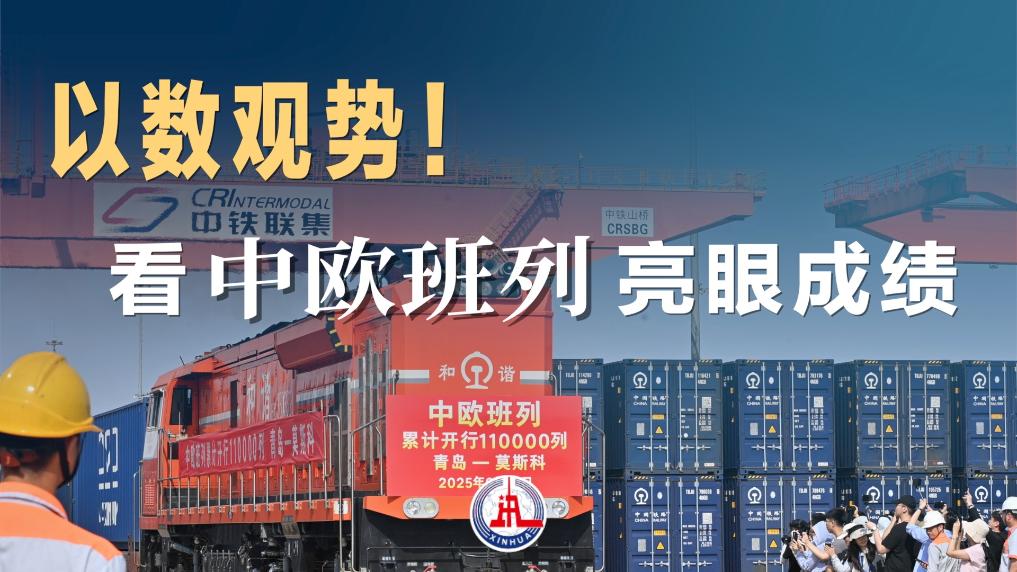
以数观势!看中欧班列亮眼成绩
Xin Hua She· 2025-06-20 11:40
Core Points - The launch of the Jinhua-Baku international transport corridor marks the 26th China-Europe freight train route from Zhejiang, enhancing logistics capabilities and connectivity [1] - The China-Europe freight train service has seen significant growth, with over 110,000 trains operated and a total cargo value exceeding $450 billion as of June 10 [1] - The service connects 128 cities in China and reaches 26 European countries and 11 Asian countries, facilitating trade and economic cooperation [2] Group 1: Transportation Network Development - The Asia-Europe railway transport network is becoming increasingly dense, with established routes enhancing trade efficiency [3] - The Dalian, Tianjin, Qingdao, and Lianyungang ports are key starting points for the 28 scheduled China-Europe freight train routes [2] Group 2: Port Capacity Expansion - The Erenhot port is the only railway port for the China-Europe freight trains, with 1,645 trains processed as of June 14, reflecting a year-on-year increase of 5.11% [5] - The number of inbound trains increased by 17.73%, indicating growing trade activity [5] Group 3: Innovation in Transportation Models - The railway department has improved the maximum number of wagons and traction capacity for the freight trains, increasing to 55 wagons and 3,000 tons respectively [7] Group 4: Customs Facilitation - Collaboration with customs has optimized the "fast pass" model, reducing customs clearance time from approximately half a day to under 30 minutes, with some cases taking only a few minutes [9] Group 5: Efficient Cargo Organization - The establishment of 14 regional consolidation centers for the China-Europe freight trains has led to an efficient logistics system, with 88% of trains originating from these centers [11] Group 6: Diversification of Cargo Types - Since 2016, the annual growth rate of the China-Europe freight trains has been 35%, with cargo types expanding to over 53 categories and 50,000 varieties, including a rising proportion of high-tech and high-value-added goods [13] Group 7: Belt and Road Initiative Impact - The China-Europe freight train service is a significant achievement of the Belt and Road Initiative, enhancing economic ties and providing development momentum for participating countries [15] - The initiative emphasizes connectivity and mutual benefits, with China committed to being a driving force for global interconnectivity [15]
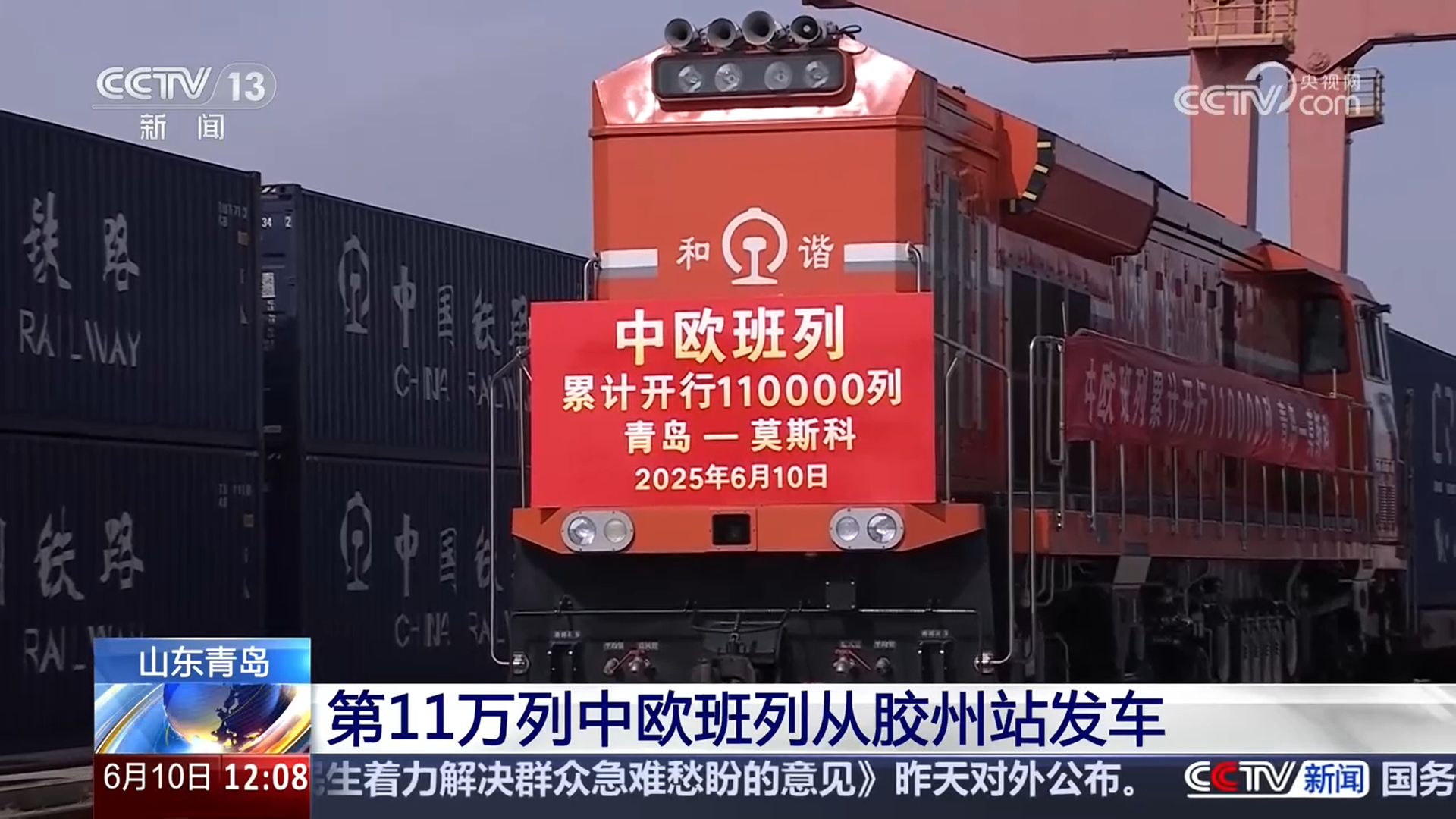
“超级货柜”中欧班列 让更多“中国制造”走向世界 世界的美好走进中国
Yang Shi Wang· 2025-06-10 06:59
Core Insights - The China-Europe Railway Express has reached a significant milestone with the 110,000th train departing from Qingdao, marking a total cargo value exceeding $450 billion [1][3] - The latest train, numbered 75052, is transporting over 10,000 smart home appliances manufactured in Shandong, valued at more than 20 million yuan [1][3] Summary by Sections Milestone Achievement - The 110,000th train is a symbolic achievement for the China-Europe Railway Express, which took 90 months to reach the first 10,000 trains [3] - The frequency of train operations has significantly increased, with the time taken to reach each subsequent 10,000 train milestone reducing to just six months [3] Economic Impact - The enhanced cargo capacity of the railway is facilitating the export of more "Made in China" products to the world while also allowing international goods to enter China [3] - The return trips of the trains are increasingly bringing foreign products such as Spanish wine, Dutch cheese, and Thai durian into the daily lives of Chinese consumers, positioning the railway as a "shopping cart" for the public [3]