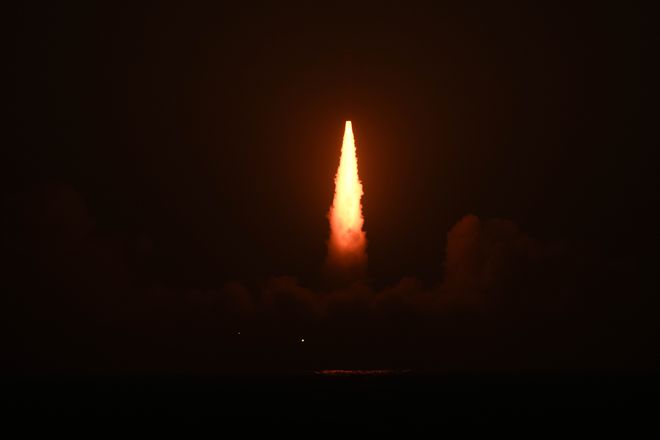
谷神星一号海射型

Search documents
“商业航天”成中国新年热词
Zhong Guo Xin Wen Wang· 2026-01-28 07:40
Core Insights - "Commercial space" has rapidly become a hot topic in China, highlighted by significant achievements in January 2023, including the successful suborbital recovery of the Lihong-1 remote sensing vehicle and the announcement of actor Huang Jingyu as one of China's first commercial space tourists [1] Group 1: Industry Developments - In 2023, China conducted 67 launches, placing 270 satellites into orbit, with 137 of these being commercial satellites, accounting for 65% of the total [1] - By 2025, it is projected that China will conduct 92 launches, with 50 being commercial, representing 54% of the total launches, and 311 commercial satellites will be placed into orbit, making up 84% of all satellites launched that year [1] Group 2: Technological Advancements - The deployment of low Earth orbit satellite constellations is gaining momentum, with China applying to the International Telecommunication Union for approximately 200,000 low Earth orbit satellite orbits and frequency resources [2] - The Hainan satellite super factory is designed to produce 1,000 satellites annually, while a flexible intelligent satellite production line in Jinan has reduced manufacturing costs to between 100,000 to 200,000 RMB per kilogram [2] Group 3: Challenges and Opportunities - The main challenge in the industry is the mismatch between demand and production capacity, despite the establishment of foundational infrastructure [2] - The commercialization of space services is seen as a long-term goal, with the potential for 200,000 satellites to create an integrated information network that supports digital transformation across various industries [3] Group 4: Policy and Strategic Initiatives - The "14th Five-Year Plan" emphasizes the construction of a modern industrial system and the acceleration of building a strong space nation, marking a significant focus on commercial space as a strategic pillar [3] - Multiple provinces in China are implementing industrial policies to accelerate the development of the entire space industry chain, with Beijing emerging as a global hub for commercial space, housing over 300 high-tech enterprises in the sector [3][4]
商业航天“资本赛”开跑:SpaceX瞄准年内上市,中国五箭客冲刺“第一股”
3 6 Ke· 2026-01-23 12:53
Core Viewpoint - The competition for the title of "China's first commercial space stock" has intensified, with multiple companies, including Blue Arrow Aerospace and SpaceX, making significant progress in their IPO processes and technological advancements in the space industry [1][2][3]. Group 1: IPO Progress - Blue Arrow Aerospace is currently leading the IPO race among five Chinese commercial space companies, having entered the "inquiry" stage after a rapid five-month process [2][3]. - The introduction of the "fifth set of listing standards" on the Sci-Tech Innovation Board has opened doors for unprofitable but technologically advanced companies, benefiting Blue Arrow Aerospace [2]. - Other companies like China Aerospace, Tianbing Technology, and Xinghe Power are also in various stages of their IPO processes, with China Aerospace expected to submit its prospectus soon [3]. Group 2: Valuation and Funding - All five companies have achieved valuations exceeding 10 billion yuan, with Blue Arrow Aerospace and Tianbing Technology valued over 20 billion yuan [3]. - The companies have engaged in multiple rounds of financing, with significant activities noted just before their IPOs, indicating strong investor interest [3][4]. - Blue Arrow Aerospace and China Aerospace did not engage in new financing in 2025, with their last rounds occurring in late 2024 [4]. Group 3: Technological Developments - The key competitive edge in the space industry is the development of reusable rockets, with Blue Arrow Aerospace and others focusing on liquid oxygen methane and recovery technology [7][8]. - Blue Arrow Aerospace has developed the "Tianque" series of liquid oxygen methane engines, marking a significant technological milestone in China's space capabilities [7]. - Other companies are also advancing their rocket technologies, with plans for high-frequency launches and various types of reusable rockets [8]. Group 4: Market Dynamics - The commercial space industry is expected to grow significantly, with the global space economy projected to reach approximately 2.9 trillion yuan by 2024 [10]. - The competition is shifting from merely reducing launch costs to focusing on application scenarios, as demonstrated by SpaceX's Starlink [9]. - China's commercial space sector is rapidly evolving, with a projected market size exceeding 2.5 trillion yuan and a compound annual growth rate of over 20% [11]. Group 5: Financial Challenges - Despite the rapid growth and high valuations, companies in the commercial space sector face significant profitability challenges, with Blue Arrow Aerospace reporting substantial losses [12]. - Analysts expect a shift in market valuation from broad narratives to specific financial metrics and order visibility as companies mature [12]. - The industry is anticipated to transition from capital-driven narratives to value realization as technological advancements and cost controls improve [12].
一天两枚火箭发射失利,中国航天科技集团、星河动力两家公司发文:具体原因正排查
Mei Ri Jing Ji Xin Wen· 2026-01-18 05:08
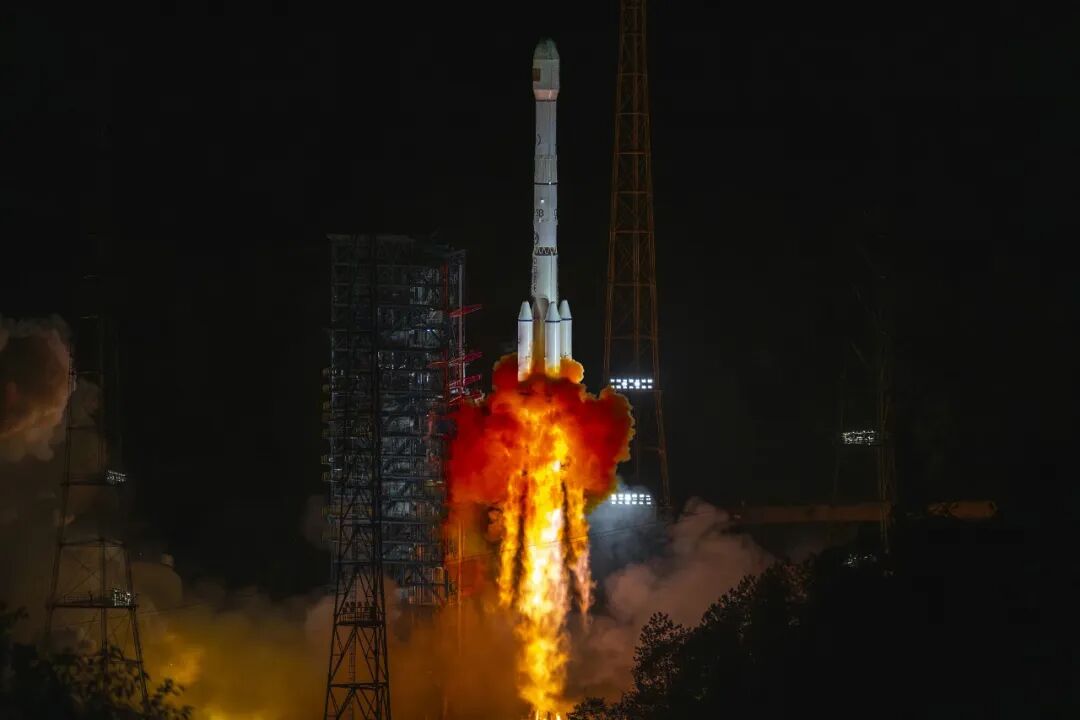
Core Viewpoint - The aerospace sector is experiencing volatile reactions in the capital market, highlighted by two recent rocket launch failures on January 17, 2024 [1]. Group 1: Long March 3B Rocket - The Long March 3B rocket launched the Shijian-32 satellite but experienced flight anomalies, resulting in mission failure. The specific cause is under further analysis [3][4]. - The Long March 3B is notable for being the first Chinese rocket model to exceed 100 launches, with a total of 115 launches, 110 successful, 3 failures, and 2 partial successes [10]. - This rocket is primarily used for launching heavy satellites into geosynchronous transfer orbits and is a key player in China's commercial launch services [8]. Group 2: Star River Dynamics - Star River Dynamics, established in 2018, is the first private company in China to achieve mass production and high-density launches of rockets. It focuses on solid and liquid rocket launch services [11]. - The company has raised over 5.3 billion yuan through multiple funding rounds, with a recent D-round financing of 2.4 billion yuan, achieving a post-investment valuation of 15-16 billion yuan [11]. - The company’s main product, the Gushenxing series of rockets, has successfully completed six sea launch missions, with the latest on January 16, 2024, marking a significant achievement in commercial space launches [12]. Group 3: Industry Trends and Challenges - The Chinese aerospace industry reached a record 92 launches in 2023, with a notable contribution from private companies, although the overall launch success rate still lags behind the Long March series [15]. - The industry faces challenges such as low total rocket supply, insufficient single-rocket capacity, and high launch costs, which are seen as bottlenecks in the development of the aerospace ecosystem [15]. - There is a growing expectation for private rocket companies to complement state-owned enterprises in meeting the high-frequency launch demands [15].


商业航天巨头致歉,估值150亿元,已启动IPO辅导
21世纪经济报道· 2026-01-17 10:54
Core Viewpoint - The article discusses the recent failure of the Ceres-2 commercial rocket launch by Star River Dynamics, highlighting the company's commitment to investigating the failure and ensuring future success in their missions [1][4]. Group 1: Company Overview - Star River Dynamics, established in 2018, is the first private commercial rocket company in China to achieve mass production and high-density launches [4]. - The company has successfully conducted 21 commercial launches, delivering a total of 89 satellites into their designated orbits [4]. - The Ceres-1 rocket is the main model for Star River Dynamics, holding a competitive position in the commercial launch market [4]. Group 2: Recent Developments - On January 16, 2026, Star River Dynamics successfully launched the Ceres-1 sea launch variant, marking a positive start for private commercial launches in the year [4]. - The company has completed 10 rounds of financing, with a valuation of approximately 15 billion yuan, and has submitted an IPO counseling report scheduled for October 2025 [4]. - The founders of Star River Dynamics, Liu Baiqi and Liu Jianshe, collectively hold 32.36% of the company's shares, acting as the actual controllers [4]. Group 3: Industry Context - Other private commercial rocket companies in China, including Blue Arrow Aerospace, Tianbing Technology, Zhongke Aerospace, and Interstellar Glory, have also initiated their IPO processes [4]. - Blue Arrow Aerospace's IPO application has been accepted, aiming to raise 7.5 billion yuan, while Zhongke Aerospace's counseling status has recently changed to acceptance [4].
星河动力致歉
Xin Lang Cai Jing· 2026-01-17 10:33
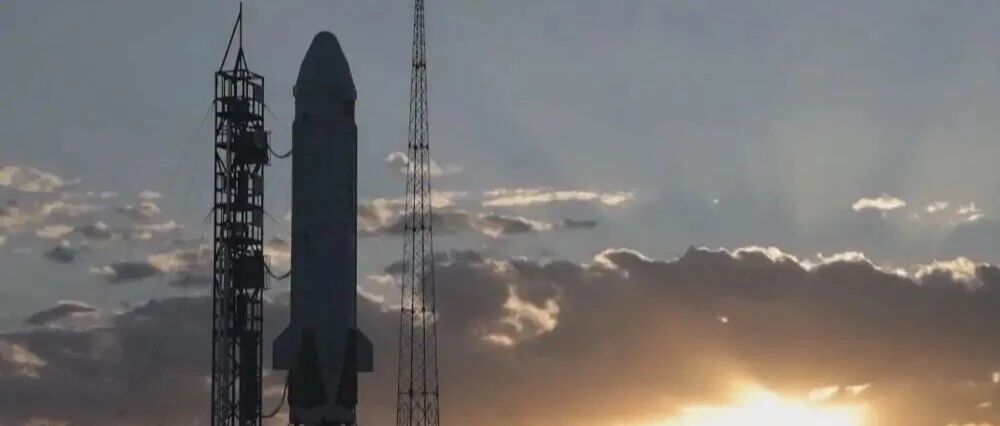
Group 1 - The private commercial launch vehicle "Vesta II" experienced a flight anomaly during its first test mission on January 17, 2023, at 12:08 PM, with the specific cause currently under analysis [1] - Beijing Xinghe Power Aerospace Technology Co., Ltd. (Xinghe Power) issued an apology to all parties involved and expressed commitment to thoroughly investigate the failure and ensure the success of future launches [2] - Xinghe Power was established in 2018, with core products including the "Zhishenxing" series of medium to large reusable liquid launch vehicles and the "Vesta" series of small solid launch vehicles, covering payload capacities from 300 kg to 58 tons [2] Group 2 - As of now, Xinghe Power has completed 10 rounds of financing, with a valuation of approximately 15 billion yuan, and has submitted an IPO counseling record in October 2025 [2] - The "Vesta I" sea launch variant has successfully completed six sea launch missions since its first flight on September 5, 2023, with the latest mission on January 16, 2023, marking the 21st successful launch for Xinghe Power, delivering a total of 89 commercial satellites into their designated orbits [4]
星河动力:谷神星一号海上发射圆满成功
Bei Jing Shang Bao· 2026-01-16 13:28
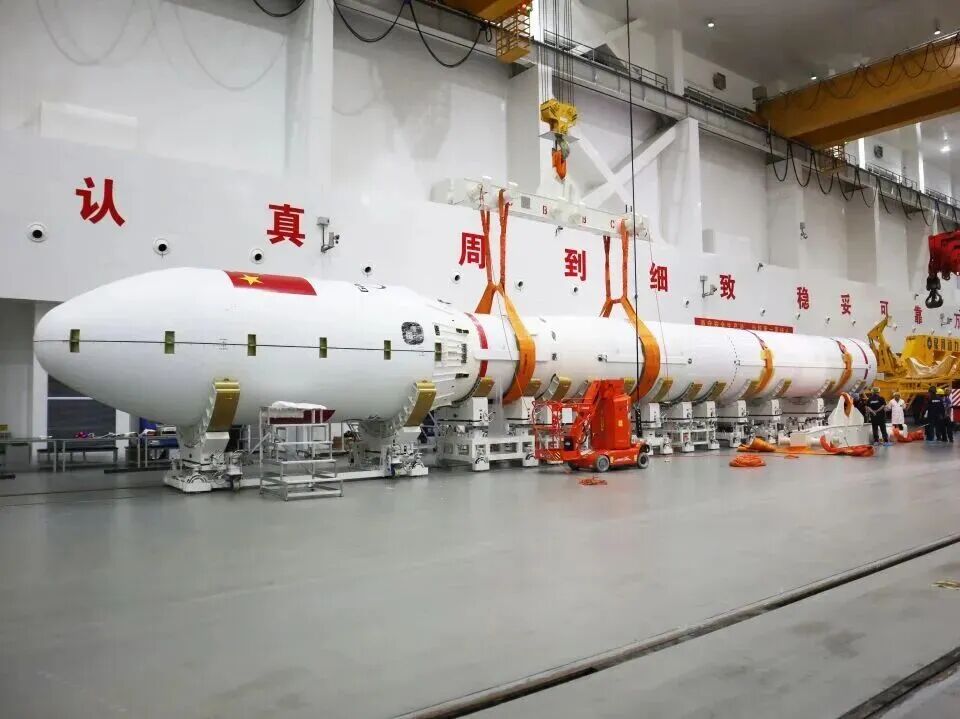
Core Viewpoint - The commercial aerospace company Xinghe Power successfully completed its 21st launch mission, deploying four satellites into orbit as part of the Tianqi constellation, marking a significant milestone in its operational capabilities [1] Group 1: Launch Details - On January 16, 2026, at 04:10 Beijing time, Xinghe Power executed the launch of the "Tianqi Constellation" satellites (06 group) from the Taiyuan Satellite Launch Center, successfully placing four satellites into a near-Earth orbit at an altitude of 850 km and an inclination of 45° [1] - This mission was named "Wanghai Tide" and is the seventh launch of the Gushenxing series rockets for the Tianqi constellation [1] Group 2: Company Achievements - To date, Xinghe Power has successfully conducted 21 commercial launch deliveries, accurately placing a total of 89 satellites with various functionalities into their designated orbits [1]
多重利好来袭!近日密集回调的商业航天热股反弹
Shang Hai Zheng Quan Bao· 2026-01-16 03:37
Group 1 - The recent successful launch of the "Goddess Star" series by Xinghe Power marks a significant achievement in China's commercial aerospace sector, with the launch of four satellites into low Earth orbit [1][3] - The "Goddess Star" constellation is China's first low-orbit IoT communication satellite network, designed for global coverage and low-cost data services across various industries, including agriculture, emergency services, and smart cities [3][4] - The China Aerospace Science and Technology Corporation emphasized the importance of advancing commercial aerospace and optimizing industrial structure in its 2026 annual work meeting, highlighting the need for regulatory compliance in the sector [4][7] Group 2 - The "Goddess Star" series has successfully completed 21 commercial launches, delivering a total of 89 satellites into their designated orbits, showcasing the reliability of the "Goddess Star" rocket since its first flight in September 2023 [3][4] - SpaceX's Starship, a next-generation heavy-lift rocket, aims to revolutionize space transport with its reusable design, capable of carrying significant payloads to various destinations, including the Moon and Mars [7] - Elon Musk's projections suggest that Starship could achieve a launch frequency of nearly 1,000 times per year, potentially transporting 1 million tons of cargo annually, which would be a substantial increase in human spaceflight capacity [4][7]

谷神星一号海上发射圆满成功!
Huan Qiu Wang Zi Xun· 2026-01-15 23:54
Group 1 - The core viewpoint of the article highlights the successful launch of the "Tianqi Constellation" satellites by Xinghe Power Aerospace, marking a significant milestone in China's satellite communication capabilities [1][3][6] - The launch involved four satellites (No. 37 to No. 40) being placed into a near-Earth orbit at an altitude of 850 km and an inclination of 45 degrees, representing the seventh launch of the "Tianqi Constellation" series [1][3] - This mission is part of the ongoing development of the "Tianqi Constellation," which is China's first low-Earth orbit IoT communication satellite constellation, aimed at enhancing domestic satellite communication services [3][6] Group 2 - The "Tianqi Constellation" has completed its first phase of global networking and is now entering a new stage of large-scale application and ecological collaboration in the satellite IoT industry [3][6] - The constellation is designed to provide global coverage with features such as miniaturization, low power consumption, and cost-effectiveness, serving various industries including forestry, agriculture, emergency services, tourism, and smart cities [6][7] - Since its first flight on September 5, 2023, the "Goddess Star I" sea launch vehicle has achieved a 100% success rate across six sea launch missions, successfully delivering a total of 89 commercial satellites into their designated orbits [7]