
色谱仪

Search documents
年薪40万,安捷伦 艾力蒙塔 睿科 凯来等高薪招聘生化环材等专业仪器人才
仪器信息网· 2026-03-28 09:01
Job Opportunities - Agilent is hiring a Sales Engineer with a Master's degree in relevant fields such as pharmaceuticals, food, environment, chemistry, biology, or materials, requiring strong communication skills and a willingness to learn [3] - Tianmei Yituo is urgently seeking a Chromatography Sales Engineer in Hangzhou, offering a salary range of 8k-12k with 13 months' salary, requiring at least 3 years of relevant experience [4] - Zhice Technology is looking for a Sales Manager in Shanghai with a Master's degree in chemistry-related fields and 1-2 years of sales experience in semiconductor or laboratory equipment [5] - Kailai is hiring a Salesperson for Life Sciences in Beijing, requiring over 5 years of sales experience and familiarity with ICP-MS technology [6] - Yic Precision is seeking a Regional Sales Manager focused on the semiconductor industry, requiring technical background and experience in managing large clients [8] - Difen De is hiring a Sales Engineer with a focus on food, chemistry, or environmental sciences, requiring strong communication and project coordination skills [10] - Sanze Instruments is looking for a Sales Engineer in Suzhou, offering a salary range of 7k-20k, requiring relevant educational background and sales experience [11] - Ruike is hiring a Sales Manager for water quality analysis products in Guangzhou, requiring over 5 years of sales experience in the environmental sector [12] - Beiyin Biological is seeking a Sales Engineer in Wuxi, requiring 3 years of sales experience and familiarity with scientific instruments [13] - Pannuo Technology is looking for an International Sales Engineer in Shanghai, requiring 2-5 years of sales experience and fluent English [14] - Guangzhou Jingying is urgently hiring an Application Engineer with experience in SEM/TEM equipment [15] - Linli Instruments is seeking an Assistant Engineer in Fuzhou to assist with various technical tasks related to chromatography and spectroscopy [16] - Beifen Ruili is hiring a Pre-sales Technical Support in Beijing, requiring over 3 years of experience in analytical chemistry or precision instruments [17] - Shigao is looking for a Chromatography Application Engineer in Chengdu, requiring proficiency in GC and GC-MS instruments [18] - Ailimonte is hiring an After-sales Engineer in Guangzhou, requiring at least one year of experience in the measurement or analysis industry [19] - Gangyan Nake is urgently seeking an Electrical Engineer in Guangzhou, requiring a Master's degree in relevant fields and familiarity with PCB design [20] - Tianmei Yituo is looking for a Chromatography Engineering Supervisor in Shanghai, requiring over 3 years of experience in instrument development [21] - Laibotai is hiring an Atomic Absorption Spectrometer R&D Engineer in Beijing, requiring over 5 years of relevant experience [22] - Linsais is seeking an Application Engineer in Shanghai, requiring a Master's degree and experience in analytical instruments [24] - Jingke Ruida is looking for a Quality Control Engineer, requiring over 2 years of relevant experience and familiarity with various analytical instruments [26]





近1亿元!浙江科技大学采购大批仪器设备(含重点实验室及设备更新项目)
仪器信息网· 2026-02-27 03:56
Core Insights - Zhejiang University of Science and Technology has announced multiple government procurement intentions, with a total budget of 99.14 million yuan for 16 items of laboratory equipment [1][2]. Procurement Overview - The procurement includes various sophisticated instruments such as chromatographs, transmission electron microscopes, nuclear magnetic resonance spectrometers, and automated cable harness testing systems, among others [2][4]. - The expected procurement period is from April 2026 to June 2026 [2]. Detailed Procurement List - The procurement aims to support key laboratories in precise molecular analysis and cutting-edge research, necessitating the purchase of imported rapid chromatographs, with a budget of 235,000 yuan for one batch [4]. - For the Intelligent Manufacturing and Integrated Circuit Education and Training Center, a budget of 9,091,750 yuan is allocated for various equipment including acid-base cleaning machines and ICP-MS [5]. - The Digital Industrial Design Education and Training Center has a budget of 9,013,014 yuan for a giant computer to facilitate a comprehensive digital design process [5]. - The Intelligent Manufacturing Academy has a budget of 10,700,000 yuan for a digital twin experimental platform and other machinery [5]. - The Analysis Testing Center has a budget of 16,680,000 yuan for purchasing a transmission electron microscope and a nuclear magnetic resonance spectrometer [5]. - The Environmental Resources College has a budget of 24,472,000 yuan for acquiring 20 pieces of equipment including liquid chromatography-mass spectrometry [5]. - The Construction Engineering College has a budget of 12,360,000 yuan for various mechanical equipment [5]. - The Biochemistry College has a budget of 10,727,000 yuan for equipment including a 50L stainless steel fermentation tank and gas chromatography-mass spectrometry [7].

旧仪器化身“教具”走上“新岗位”
Xin Lang Cai Jing· 2026-02-10 21:07
Core Viewpoint - The training program at Jilin Petrochemical Company emphasizes practical skills development for young employees through innovative methods, enhancing their competencies and contributing to the company's high-quality growth [1][2]. Group 1 - The use of an old chromatograph as a teaching tool demonstrates the company's commitment to hands-on training, allowing employees to learn about equipment in a practical context [1]. - The training session led by an expert illustrates the transformation of abstract concepts into tangible knowledge, making it easier for employees to understand the equipment's functions [1]. - The initiative reflects the company's broader strategy of diversifying training methods, including expert-led teaching, mentorship, and targeted training programs to boost employee skills [2].
市场监管总局:在汽车、食品等领域制定国产仪器设备验证评价系列标准
仪器信息网· 2026-01-21 09:02
Core Viewpoint - In 2026, the State Administration for Market Regulation will comprehensively promote the verification and evaluation of domestically produced inspection and testing instruments, aiming to establish an authoritative standard system, tackle key technologies, cultivate international brands, and enhance reliability and competitiveness [1]. Group 1 - The verification and evaluation system for domestic inspection and testing instruments will focus on three main areas: establishing an authoritative standard system, addressing core key technologies, and cultivating internationally competitive brands [2]. - The standard system will be market demand-oriented, particularly in the automotive and food sectors, developing a series of verification standards to help users build confidence through technical validation [2]. - A collaborative effort among industry, academia, and research will be organized to focus on high-end general equipment such as mass spectrometers, chromatographs, and tire-coupled road simulation test machines, aiming to overcome bottlenecks in core components and software [2]. Group 2 - Support will be provided to leading domestic testing instrument companies for technological innovation, with a focus on advancing the "Artificial Intelligence + Inspection and Testing" initiative to promote the iterative upgrade of domestic intelligent testing equipment, transitioning from "catching up" to "leading" [2].

检验检测仪器设备国产化验证评价工作全面启动
Yang Guang Wang· 2026-01-20 03:59
Core Viewpoint - The State Administration for Market Regulation will fully promote the domestic verification and evaluation of inspection and testing instruments and equipment by 2026, accelerating the "import substitution" process [1] Group 1: Domestic Verification and Evaluation System - The verification and evaluation system will focus on three main areas: establishing an authoritative standard system, tackling core key technologies, and cultivating internationally competitive brands [1][2] - By the end of 2024, 11.36% of inspection and testing institutions will be recognized as high-tech enterprises, significantly higher than the national average of 14.95 times [1] Group 2: Standard System and Technology Development - The system will develop series of verification and evaluation standards for domestic instruments, particularly in the automotive and food sectors, to help users build confidence and break foreign product monopolies [1] - A collaborative effort among industry, academia, and research will focus on high-end general equipment such as mass spectrometers and chromatographs to overcome bottlenecks in core components and software [1] Group 3: Brand Development and Innovation - Support will be provided for leading domestic testing instrument companies to innovate technologically, enhancing the verification and evaluation standard system and promoting application scenarios to gradually increase the domestic rate [2] - The initiative will also advance the "Artificial Intelligence + Inspection and Testing" action, promoting the iterative upgrade of domestic intelligent testing equipment to transition from "catching up" to "leading" [2]

3325万!哈师大集中采购多批科研仪器,含吸附仪、电镜等41台设备
仪器信息网· 2026-01-14 09:02
Core Viewpoint - Harbin Normal University has announced five procurement projects for scientific research instruments, with a total budget of 33.2497 million yuan, covering 41 sets of equipment including chromatographs, in-situ electron microscopes, and X-ray analyzers [1][2]. Group 1: Project Summaries - **Project One**: Announced on January 5, 2023, for the procurement of scientific research public service platform instruments, with a budget of 5.377 million yuan. It includes an automatic gas adsorption analyzer, chemical adsorption instrument, high-performance liquid chromatography-inductively coupled plasma mass spectrometry system, and UV-visible near-infrared spectrophotometer [4]. - **Project Two**: Announced on January 7, 2023, for the procurement of imported micro-nano in-situ electron beam etching scanning electron microscope, with a budget of 9.756 million yuan. It includes a micro-nano in-situ electron beam etching scanning electron microscope and an in-situ microstructure Raman analyzer [6]. - **Project Three**: Announced on January 8, 2023, for the procurement of an imported in-situ X-ray crystal diffraction analyzer, with a budget of 4.9773 million yuan [8]. - **Project Four**: Announced on January 9, 2023, for the procurement of an imported micro-nano computed tomography scanner, with a budget of 8.4618 million yuan [11]. - **Project Five**: Announced on January 11, 2023, for the procurement of comprehensive processing and testing equipment for polymer materials, with a budget of 4.6776 million yuan. It includes various instruments such as gel permeation chromatograph, 3D printer, universal testing machine, and more [13][14].

不干投行了!前民生证券质控VP回家当了非独立董事
Xin Lang Cai Jing· 2026-01-11 23:37
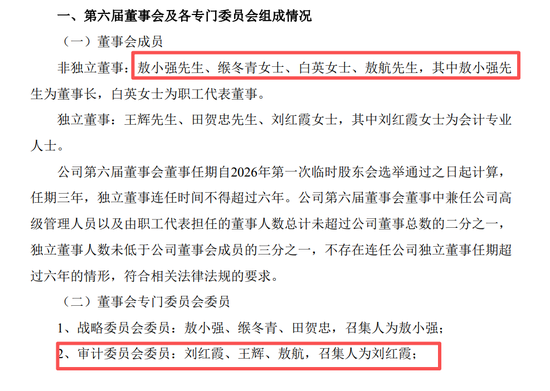
Core Viewpoint - The recent board reshuffle at Xuedilong has attracted attention, particularly due to the election of two notable non-independent directors, Aoxiao Qiang and Aohang, who are closely related to the company's controlling shareholder [1][13]. Group 1: Company Leadership - Aoxiao Qiang is the actual controller of Xuedilong, holding a direct stake of 57.83% and serving as the chairman of the board [2][14]. - Aohang, the son of Aoxiao Qiang, has recently joined the company as a project manager, having previously not been part of the management team [2][14]. Group 2: Aohang's Background - Aohang has a background aimed at becoming a financial elite, initially studying telecommunications engineering and management at Beijing University of Posts and Telecommunications, later shifting to business studies abroad [3][15]. - He graduated from the University of Reading in July 2016 with a degree in International Securities, Investment, and Banking, and subsequently joined Guotai Junan Securities as an investment banking assistant [3][15]. - In August 2020, Aohang transitioned to Minsheng Securities, where he advanced to a mid-level position as Vice President of Quality Control over five years [5][15]. Group 3: Company Performance - Xuedilong, a leading company in environmental monitoring, has been actively expanding into scientific instruments, including mass spectrometers, chromatographs, spectrometers, and portable instruments [8][19]. - The company's performance has shown slight fluctuations, with revenue on a downward trend; profits peaked at 230 million in the first three quarters of 2022 but dropped significantly to 76 million in the first three quarters of 2024, currently recovering to 115 million [9][20].

面向高端科学仪器全产业链 这个国家级成果转化中心亮点纷呈
Nan Fang Du Shi Bao· 2025-12-16 02:46
Group 1 - The 2025 Higher Education Technology Achievement Fair is being held in Guangzhou from December 15 to 17, organized by the Ministry of Education and the National University Regional Technology Transfer Center [2] - The National High-end Scientific Instrument Regional Technology Transfer Center aims to create a national hub for technology breakthroughs, achievement transformation, and enterprise cultivation in the scientific instrument field [2][6] - The center is expected to attract high-level talent and facilitate the transformation of significant achievements in Guangzhou [2] Group 2 - Scientific instruments are essential for scientific research and technological innovation, with over 70% of Nobel Prize achievements in physics and chemistry relying on advanced scientific instruments [4] - The Chinese scientific instrument sector faces challenges, with over 70% of instruments imported, and more than 90% for high-end instruments, highlighting the need for domestic development [5] - The center's establishment is a response to national strategies aimed at enhancing technological self-reliance and security [5][6] Group 3 - The center will cover the entire industrial chain of high-end scientific instruments, including key components and application services, focusing on various advanced instruments [6] - The long-term mission includes reducing development costs by 50%, shortening product development cycles by 30%, and nurturing at least one world-class scientific instrument enterprise [6] - The center has received systematic support from national and local governments, including annual funding of approximately 150 million yuan and a reserved area for 200 projects [7]

63岁清华博士再谋转让天瑞仪器控制权 上次转让因被立案调查终止
Mei Ri Jing Ji Xin Wen· 2025-11-30 23:17
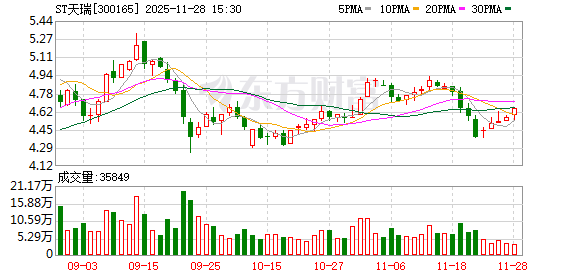
Core Viewpoint - ST Tianrui (SZ300165) is planning a change in control, which may lead to a shift in its major shareholder and actual controller, Liu Zhaogui, who currently holds 20.37% of the company's shares [2][3][6]. Group 1: Control Change Announcement - Liu Zhaogui, the founder and actual controller of ST Tianrui, is in the process of planning a change in the company's control, with the stock being suspended from trading starting December 1, 2023, for no more than two trading days [2]. - The transaction related to the control change is still uncertain, as no agreements have been signed, and discussions regarding the specific transaction plan are ongoing [3]. Group 2: Regulatory Issues and Penalties - ST Tianrui has been under risk warning since December 2024 due to violations related to revenue recognition, leading to a warning and fines totaling 3 million yuan for the company and additional fines for Liu Zhaogui and other executives [3][7]. - The previous attempt to change control was halted due to an investigation by the China Securities Regulatory Commission (CSRC) [4]. Group 3: Financial Performance - ST Tianrui's financial performance has been declining, with revenue dropping to 851 million yuan in 2024, only 55.2% of its 2021 revenue, and a cumulative net loss of 354 million yuan since 2021 [7]. - The company specializes in analytical testing instruments and environmental governance, with core products including spectrometers and chromatographs [7].

雪迪龙(002658):业绩高增持续兑现 高端仪器及碳监测业务领先布局
Xin Lang Cai Jing· 2025-10-29 08:36
Core Viewpoint - The company's profitability has significantly improved, with a notable optimization in business structure, leading to a substantial increase in net profit compared to revenue growth [2][3] Financial Performance - In the first three quarters of 2025, the company achieved operating revenue of 888 million yuan, a year-on-year increase of 6.34% - The net profit attributable to shareholders reached 115 million yuan, reflecting a year-on-year growth of 52.10% - The net profit growth rate (52.10%) far exceeded the revenue growth rate (6.34%), with a non-recurring net profit growth of 61.81% [1][2] Quarterly Highlights - In the third quarter, the company recorded operating revenue of 292 million yuan, a year-on-year increase of 12.15% - The net profit for the third quarter was 53 million yuan, showing a remarkable year-on-year growth of 101.69% [2] Business Strategy - The improvement in profitability is attributed to enhanced receivables management and a reduction in bad debt provisions compared to the previous year - The company has strategically shifted focus from government (To G) business to enterprise (To B) markets, improving project quality and payment conditions - A decrease in sales expenses also indicates effective cost control [2][3] Market Position and Innovations - The company is making significant strides in the domestic substitution logic, particularly in high-end instruments for environmental and industrial process analysis - Key breakthroughs include the promotion of domestic alternatives for explosion-proof laser analyzers and chromatographs in industries like petrochemicals and cement [2][3] Emerging Fields - The company has established a technological lead in the nuclear power sector by providing gas analysis systems for the world's first commercial fourth-generation nuclear power project - In the semiconductor industry, its products are utilized for gas purity detection in lithography machines, serving top global manufacturers - The company is also expanding into cutting-edge applications such as aircraft engine exhaust analysis [3] Carbon Monitoring Business - The company positions its carbon monitoring business as a core growth point, having made proactive investments in online measurement systems and carbon accounting software - A joint venture with the China Metrology Institute aims to participate in the national dual carbon standard system construction - With the expansion of the national carbon market, the company is expected to benefit significantly from the anticipated demand for carbon monitoring equipment [3] Profit Forecast - The company is projected to achieve operating revenues of 1.501 billion, 1.652 billion, and 1.837 billion yuan for 2025-2027, with year-on-year growth rates of 5.67%, 10.11%, and 11.17% respectively - The net profits attributable to shareholders are expected to be 208 million, 222 million, and 245 million yuan, with growth rates of 23.50%, 6.77%, and 10.25% respectively - Based on the closing price on October 27, 2025, the corresponding P/E ratios are projected to be 26.33, 24.66, and 22.37, with EPS of 0.33, 0.35, and 0.39 yuan [4]