
逍遥丸

Search documents
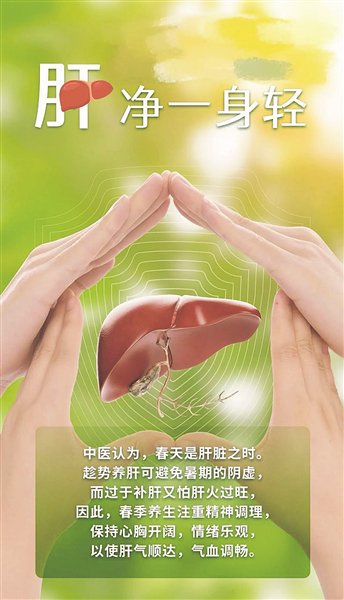
春季养肝正当时
Xin Lang Cai Jing· 2026-02-24 19:18
Group 1 - The article emphasizes the importance of adjusting health practices in spring to align with the natural revival of life and energy, as per traditional Chinese medicine [2] - It highlights the need to prevent health issues related to seasonal changes, such as colds, skin diseases, and fluctuations in blood pressure, by modifying lifestyle habits [2] - Recommendations include increasing outdoor activities, practicing gentle exercises, and performing acupressure on specific points to balance the body's energy [2] Group 2 - Dietary adjustments are advised, focusing on consuming more vegetables and fruits, particularly those that are fresh and light, to avoid internal heat and dampness [3] - The article suggests incorporating green beans in meat dishes and increasing the proportion of green vegetables to prevent heat-related issues and protect the digestive system [4] Group 3 - It discusses the relationship between spring, the liver, and the potential for increased internal heat, which can lead to various symptoms such as headaches and irritability [5] - Recommendations for managing liver heat include using specific traditional Chinese medicines and herbal teas that have cooling properties [5] Group 4 - Emotional regulation is highlighted as crucial for overall health, with specific acupressure points suggested to help manage stress and maintain emotional balance [6] - The article also recommends seasonal herbal teas to promote comfort and well-being, tailored to different health needs [6]

主业承压 仲景食品押注西洋参
Bei Jing Shang Bao· 2025-12-24 14:14
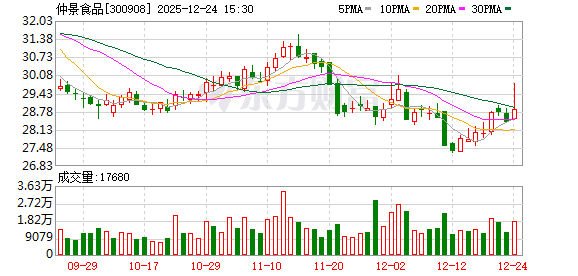
Core Insights - Zhongjing Food has officially launched its new products, concentrated ginseng liquid and ginseng tea, which contain 100mg of ginsenosides per bag, marking the first health drink with clearly defined core nutritional components [2][3] - The company is expanding into the health food sector amid pressure on its main condiment business, leveraging its strong traditional Chinese medicine background [2][3][8] Product Launch - The new ginseng products are designed to provide consumers with a reliable modern dietary solution and are currently available on online platforms, with offline channels still being developed [3] - The introductory price for both products is set at 9.9 yuan, while regular prices range from 79 yuan to 199 yuan [3] - Initial sales data shows low consumer engagement, with multiple product links on Tmall and JD indicating "0 purchases" [3] Market Trends - Over 70% of consumers aged 18-35 are willing to pay a premium for foods with specific health benefits, driving rapid growth in the health food market, which is projected to reach 1.2 trillion yuan by 2025, with a year-on-year growth of 16.8% [4] - Ginseng is a popular ingredient in this sector, and the National Health Commission has included it in the list of food-medicine homologous products [4] Challenges - The market currently offers ginseng primarily in traditional forms such as slices, powders, and capsules, which may lead to consumer skepticism regarding the new concentrated liquid and tea formats [4] - Zhongjing Food's condiment business is facing growth pressures, with sales of its flagship mushroom sauce reaching 324 million yuan in 2022, but new product launches have not replicated this success [5][6] Financial Performance - The company's revenue growth has slowed, with projected revenues of 999.4 million yuan and 1.098 billion yuan for 2023 and 2024, respectively, showing a decline in growth rate from 12.77% to 10.4% [6] - In the first three quarters of 2025, revenue decreased by 1.56% to 826 million yuan, while net profit increased by 3.18% to 154 million yuan [6] Strategic Recommendations - To overcome growth bottlenecks, Zhongjing Food should adopt a "single focus, multiple brands" strategy, maintaining its market position in mushroom sauce while expanding into health sectors with differentiated branding [7] - The company should leverage its "Chinese medicine gene" and technical expertise from its controlling shareholder to create unique products that stand out in the market [8] - Emphasizing the clear nutritional benefits and convenience of the new ginseng products through online marketing and offline experiences can help shift consumer perceptions and expand market reach [9]
“监管差”缩小 中成药行业该警醒了
Jing Ji Guan Cha Bao· 2025-11-30 05:30
Core Viewpoint - The Chinese patent medicine industry is facing increased scrutiny and regulatory challenges, particularly regarding pricing disparities and the misuse of traditional medicine prescriptions, necessitating a shift towards genuine innovation and responsible practices [1][2][3]. Group 1: Regulatory Environment - The Tianjin Medical Insurance Bureau has initiated price risk management for 230 Chinese patent medicine varieties, revealing price discrepancies as high as 3042 times among different products [1]. - The regulatory environment for Western medicine is becoming stricter, with the National Medical Products Administration (NMPA) enforcing quality and efficacy evaluations, while Chinese patent medicine companies have been able to evade similar scrutiny [2]. - There is a growing concern about the misuse of Chinese patent medicines, with some hospitals excessively prescribing these medications, leading to calls for stricter regulations on who can prescribe them [1][2]. Group 2: Industry Challenges - The Chinese patent medicine industry has rapidly developed into a market exceeding 400 billion yuan, but it has been marred by over-marketing and misinterpretation of "integrated Chinese and Western medicine" [2]. - The reliance on "micro-innovation" and "pseudo-innovation" is becoming unsustainable as regulatory standards tighten, pushing companies to seek true innovation rather than minor adjustments to existing products [2][3]. - The era of inflated pricing and high profits for Chinese patent medicines is coming to an end, prompting leading companies to explore transitions into broader health product markets [3]. Group 3: Recommendations for the Industry - Companies are advised to move away from superficial innovations and focus on developing new medicinal materials, formulations, and delivery methods to meet stricter regulatory requirements [2][3]. - A return to the principles of "differentiated treatment" in traditional Chinese medicine is recommended, with a call for the NMPA to limit the scope of indications for Chinese patent medicines to prevent misuse [3]. - The industry should shift from being solely a medical insurance product to a broader health product, targeting preventive care for populations at risk of health issues [3].
中成药价差超3000倍,多地整治价格风险线索
3 6 Ke· 2025-11-26 07:00
Core Insights - The article highlights the significant price discrepancies in traditional Chinese medicine (TCM), with some products showing price differences exceeding 3000 times compared to the lowest daily treatment costs in the same province [1] Group 1: Price Discrepancies - There are over 88,000 types of TCM listed nationwide, with some products having daily treatment costs more than five times the lowest daily treatment costs for the same type of medicine in certain provinces [1] - The price differences are attributed to variations in ingredients, quality standards, and manufacturing by different companies, but extreme discrepancies indicate potential price manipulation [1] Group 2: Regulatory Actions - The National Healthcare Security Administration has initiated a special governance action targeting TCM products with daily treatment cost discrepancies greater than ten times and listed prices above 100 yuan [1] - Multiple regions, including Anhui, Tianjin, Shanxi, and Liaoning, have begun to release new price risk clues and require companies to conduct self-checks on their pricing practices [1] Group 3: Specific Cases - In Tianjin, a list of 886 drugs was published, with most daily costs within ten times the minimum daily cost for the same type, but some products showed price differences exceeding a thousand times [2] - Specific examples include the "Xiaoyao Wan" from Yaodu Pharmaceutical Group priced at 2129.40 yuan daily, compared to a minimum of 0.70 yuan, resulting in a 3042 times difference [2] - Other notable products include "Buzhong Yiqi Wan" priced at 3807.00 yuan daily, with a minimum of 1.50 yuan, showing a 2538 times difference [2]

有中成药差价高达3000倍,多地紧急出手整治
2 1 Shi Ji Jing Ji Bao Dao· 2025-11-25 14:43
Core Viewpoint - The recent crackdown on abnormal pricing of traditional Chinese medicine (TCM) is intensifying, with multiple regions in China implementing price governance measures to address significant price discrepancies in TCM products [2][10]. Group 1: Price Governance Measures - Various provinces, including Anhui, Shanxi, Shandong, Inner Mongolia, Tianjin, and Liaoning, have issued notifications requiring TCM companies to self-reduce prices between November 25 and November 28, 2025 [2]. - The price governance initiative began in July 2023, following the release of a document titled "First Batch of Medical Price Risk Clue Notifications" by the National Healthcare Security Administration (NHSA) [2][6]. - The NHSA has distributed clues regarding suspected high-priced TCM products, particularly those with daily treatment costs exceeding ten times the minimum daily cost [6][10]. Group 2: Price Discrepancies - There are over 88,000 TCM products listed nationwide, with some products showing daily treatment costs that are five times higher than the lowest daily treatment costs in certain provinces [5]. - In Tianjin, a list of 886 TCM products revealed that while most had daily costs within ten times the minimum, some exceeded a thousand times, with the highest discrepancy reaching 3042 times [6][7]. Group 3: Impact on Companies - The price governance measures are expected to significantly impact companies, as products with price differences exceeding ten times may be suspended from listing, affecting sales and profitability [10]. - Larger companies may adapt better to cost pressures through improved production processes, while smaller firms may struggle to survive in a more competitive environment [10][11]. - The governance is likely to force companies to shift focus towards quality and production efficiency, moving away from reliance on high marketing costs [11][12]. Group 4: Long-term Pricing Mechanism - The establishment of a long-term pricing control mechanism is essential, which may include expanding the coverage of centralized procurement for TCM and conducting regular price checks to identify and address abnormal pricing [10][12]. - A quality and pricing linkage system is proposed to enhance regulatory oversight and reduce price manipulation, alongside a credit system for procurement to penalize companies that engage in price fraud [12].

有中成药差价高达3000倍,多地紧急出手整治
21世纪经济报道· 2025-11-25 14:35
Core Viewpoint - The article discusses the recent developments in the governance of traditional Chinese medicine (TCM) pricing, highlighting the significant price discrepancies and the regulatory measures being implemented across various provinces in China to address these issues [4][5][12]. Group 1: Pricing Governance Measures - Multiple provinces, including Anhui, Shanxi, and Tianjin, have issued notifications requiring TCM companies to self-reduce prices between November 25 and November 28, 2025, as part of a broader initiative to regulate TCM pricing [4][5]. - The governance initiative began in July 2023, following the release of a document by the National Healthcare Security Administration (NHSA) aimed at guiding companies to standardize pricing behavior [5][7]. - The NHSA has identified over 88,000 TCM products, with some showing daily treatment costs exceeding five times the lowest daily treatment costs for the same product in certain provinces [7][12]. Group 2: Price Discrepancies - In Tianjin, a recent list revealed that some TCM products had daily costs that were over 3,000 times higher than the lowest daily costs for the same type of product, indicating significant price inflation [5][6][8]. - Specific examples include the "Xiaoyao Wan" from Yaodu Pharmaceutical Group, priced at 2,129.40 yuan per day, compared to a minimum daily cost of 0.70 yuan, resulting in a price difference of 3,042 times [8]. Group 3: Impact on the Industry - The pricing governance is expected to impact companies and the industry significantly, with potential sales declines for products that exceed the price thresholds set by the NHSA [12]. - Larger companies may adapt better to these changes through improved production processes, while smaller firms may struggle to survive due to their inability to manage costs effectively [12]. - The governance measures are anticipated to force companies to shift focus towards product quality and clinical efficacy, moving away from reliance on high marketing expenses [12][13]. Group 4: Long-term Pricing Mechanism - Experts suggest that expanding the coverage of TCM centralized procurement and establishing a pricing system linked to product quality could help create a long-term pricing control mechanism [13]. - Continuous monitoring and timely warnings for unusually high prices are recommended to form a dual defense system of "centralized procurement pressure + online price control" [13].

3000倍价差!中成药价格异常 多地启动专项整治
2 1 Shi Ji Jing Ji Bao Dao· 2025-11-25 10:52
Core Viewpoint - The recent price governance initiative for traditional Chinese medicine (TCM) is intensifying, with multiple regions in China implementing measures to address abnormal pricing, requiring companies to self-reduce prices by the end of November 2025 [1][3]. Group 1: Price Governance Measures - Various provinces, including Anhui, Shanxi, Shandong, Inner Mongolia, Tianjin, and Liaoning, have issued notifications for TCM companies to lower prices, following a national directive from the National Healthcare Security Administration (NHSA) [1][3]. - The price governance initiative began in July 2023, with the NHSA distributing a document titled "First Batch of Medical Price Risk Clue Notifications" to guide companies in standardizing pricing behavior [1][3]. - The governance has led to increased transparency, with some regions publicly disclosing price discrepancies, such as Tianjin revealing that some TCM daily treatment costs were over 3,000 times higher than the lowest daily costs for the same products [1][3]. Group 2: Price Discrepancies and Implications - A report indicated that among over 88,000 TCM products listed nationwide, some had daily treatment costs exceeding five times the lowest daily costs for the same products in certain provinces [3]. - The NHSA has identified high-priced TCM products with daily treatment costs greater than 10 times the lowest price and has initiated special governance actions to address these discrepancies [3][4]. - In Tianjin, a list of 886 drugs was published, with some products showing price differences exceeding 1,000 times, prompting the local procurement center to require companies to reduce prices to within three times the lowest daily cost [4]. Group 3: Industry Impact and Long-term Mechanisms - The price governance is expected to significantly impact companies and the industry, with potential sales declines for products with excessive price differences, leading to a dual challenge of price reduction and maintaining performance [7]. - Larger companies may adapt better to cost pressures through improved production processes, while smaller firms may struggle to survive if they cannot achieve economies of scale or quality control [7]. - The governance is anticipated to drive a transformation in the industry, pushing companies to focus on product quality and clinical efficacy rather than relying on high marketing costs [7][8]. Group 4: Future Strategies for Price Control - To further reduce price discrepancies in TCM, experts suggest expanding the scope of centralized procurement and incorporating high-priced products into procurement processes, alongside regular price checks [8]. - Establishing a pricing system linked to product quality and enhancing regulatory oversight throughout the supply chain are recommended to minimize gray pricing areas [8]. - Implementing a credit system for procurement, with penalties for companies that engage in price fraud or refuse to adjust prices, is also proposed as a strategy to ensure compliance [8].
仲景食品:公司专注于健康调味品的研发、生产与销售
Zheng Quan Ri Bao Zhi Sheng· 2025-10-21 11:38
Core Viewpoint - The company focuses on the research, production, and sales of healthy condiments, positioning itself as a market leader in this niche [1] Group 1: Product Offerings - The company has developed several innovative products, including Zhongjing Mushroom Sauce, Zhongjing Shanghai Scallion Oil, and supercritical extraction spice products, which are recognized as category pioneers in the healthy condiment sector [1] - Zhongjing's traditional Chinese medicine products, such as Liuwei Dihuang Pills and Xiaoyao Pills, are associated with its affiliate, Zhongjing Wanxi Pharmaceutical Co., Ltd. [1]
佛慈制药:2025年上半年公司销量排在前列的产品主要是六味地黄丸、二陈丸等
Zheng Quan Ri Bao Zhi Sheng· 2025-08-28 09:07
Core Viewpoint - The company, Foci Pharmaceutical, announced on August 28 that its leading products in sales for the first half of 2025 will include traditional Chinese medicine products such as Liuwei Dihuang Wan, Erchen Wan, Xiaoyao Wan, Guipi Wan, Bazhen Wan, and others, indicating a strong market presence and strategic focus on these items [1] Product Strategy - The company plans to continue its strategy of developing major products, aiming to consolidate and enhance the market share of traditional concentrated pill products like Liuwei Dihuang Wan series [1] - There is a particular emphasis on increasing sales of unique products such as Shenrong Gudan Wan and Fufang Huangqi Jianpi Oral Liquid, as well as high-demand products like Erchen Wan, Angong Niuhuang Wan, Bazhen Wan, and Anshen Buxin Wan [1]

佛慈制药(002644) - 002644佛慈制药投资者关系管理信息20250828
2025-08-28 02:46
Financial Performance - In the first half of 2025, the company's revenue reached 3,010.46 million CNY, with a net profit attributable to shareholders of 42.9 million CNY, and a net cash flow from operating activities of 1,788.09 million CNY, achieving a year-on-year growth of 364.33% [2][4] - The overall gross margin for the first half of 2025 increased to 39.93%, up by 5.32% compared to the same period last year [3][7] Sales Channels and Market Strategy - The company maintained over 60% sales from commercial chains, approximately 20% from medical channels, and around 20% from online and other channels, with overall sales performance remaining stable compared to the previous year [4] - The company is leveraging e-commerce platforms like JD and Tmall to enhance market share and develop potential markets [4] Product Development and Innovation - The company is focusing on the secondary development of four unique products, including the Ren Shen Gu Ben Wan and Fu Fang Huang Qi Jian Pi Oral Liquid, aiming to enhance their market competitiveness through technological upgrades [6] - Major products with strong sales in the first half of 2025 include Liu Wei Di Huang Wan, Er Chen Wan, and An Gong Niu Huang Wan, with plans to continue promoting these key products [5] International Expansion - The company has exported products to 32 countries and regions, including the USA, Canada, and Australia, and has achieved significant international certifications, including TGA and PIC/S [8] - Future plans include increasing international market share through brand collaboration and channel sharing [8] Cost Management and Future Planning - The decrease in sales expenses is attributed to a decline in revenue and effective cost control measures implemented by the company [8] - The company is actively developing its "14th Five-Year Plan," focusing on marketing breakthroughs, brand building, and innovation in research and development [8]