通用DRAM内存

Search documents
三星芯片,利润飙升
半导体芯闻· 2026-01-05 10:13
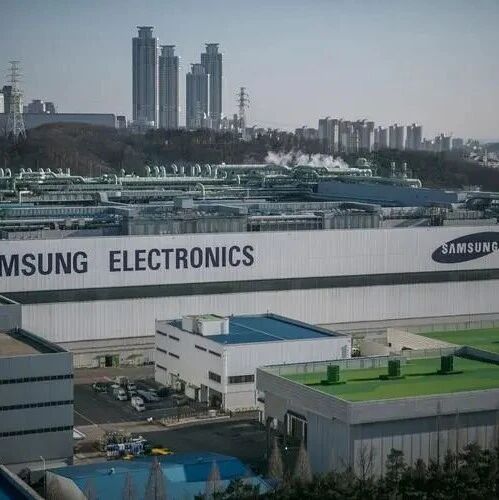
Core Viewpoint - Samsung Electronics is expected to report record-high quarterly profits for Q4 last year, driven by increased demand for advanced storage semiconductors and general memory due to investments in AI infrastructure [1][2]. Group 1: Financial Performance Expectations - Samsung Electronics is projected to achieve a revenue of 89.217 trillion KRW and an operating profit of 16.455 trillion KRW for Q4, marking a year-on-year increase of 17.7% and 153.4% respectively [1]. - IBK Securities forecasts an operating profit of 21.746 trillion KRW for Q4, while Daol Investment Securities predicts 20.4 trillion KRW, both exceeding the previous record of 17.570 trillion KRW set in Q3 2018 [1]. Group 2: Market Dynamics and Pricing - The significant driver for Samsung's performance is the surge in general DRAM memory prices, with the average contract price for PC DRAM products rising from 9.3 USD at the end of last year to an expected 1.35 USD by the end of 2024, indicating a nearly sevenfold increase [2]. - Despite the growing demand for general memory due to AI investments, supply constraints in high-bandwidth memory (HBM) are expected to persist, leading to continued shortages [2]. Group 3: Semiconductor Business Outlook - Samsung's DRAM business is anticipated to achieve an operating profit margin exceeding 50%, while NAND business margins are expected to reach 20% [2]. - The next-generation AI semiconductor business, including HBM4, is gaining momentum, with expectations of stable supply and increased market share from approximately 10% last year to 30% this year [2]. Group 4: System-on-Chip and Foundry Business - The system-on-chip (LSI) and foundry segments are expected to benefit from recent contracts, including a 23 trillion KRW deal with Tesla and potential orders from AMD for 2nm chips [3]. - Samsung's advancements in chip design, such as the Exynos 2600 processor for Galaxy S series and Exynos Auto chips for BMW, indicate a positive trajectory for the semiconductor division [3]. - Analysts predict that if the system semiconductor sector stabilizes after the recovery of storage semiconductors, Samsung's performance could surpass its peak levels [3].

破解AI泡沫论:存储器指数回暖背后的风向标
2 1 Shi Ji Jing Ji Bao Dao· 2025-12-02 02:02
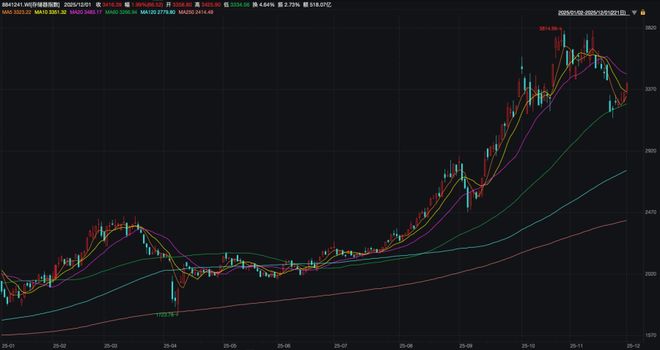
Core Viewpoint - The storage market experienced a significant downturn in late November due to concerns over the AI bubble, but has shown signs of recovery as of December 1, with the storage index rising 1.99% and a year-to-date increase of 97.7% [1][3] Market Trends - The storage sector is benefiting from the increasing demand for high-bandwidth memory (HBM) driven by AI applications, with major companies like OpenAI and NVIDIA securing substantial contracts for memory chips [3][4] - The supply chain dynamics have shifted, with a notable increase in prices for DDR4 memory and a halt in pricing for DDR5 and SSDs due to supply constraints [5] Regional Development - Guangdong has solidified its dominant position in the storage and AI hardware industry, with a significant number of storage index constituents based in the region, showcasing a multi-polar and deepened industrial layout [7][9] - Companies like Jiangbo Long are expanding their operations from Shenzhen to Zhongshan, indicating a strategic shift towards leveraging regional advantages [7] Industry Collaboration - The collaboration between various companies and local governments in Guangdong is fostering a robust ecosystem for the storage industry, with significant investments in advanced manufacturing and data center infrastructure [8][9] Future Outlook - The demand for storage is expected to remain strong, with projections indicating that supply constraints may not ease until at least the end of 2026, driven by both natural demand growth and supply-side reductions [5][6] - The structural changes in the storage industry, propelled by AI, are anticipated to create a prolonged upward cycle, supported by regional industrial collaboration [10][11]
SK海力士计划2026年扩充非HBM通用DRAM产能
Ju Chao Zi Xun· 2025-12-01 09:57
Core Viewpoint - SK Hynix is set to expand its production capacity for both HBM and general DRAM memory in response to the anticipated growth in memory demand, utilizing existing wafer fab space to balance production without significant capital expenditure increases [1][3]. Group 1: HBM Production Expansion - The new HBM DRAM capacity will primarily come from the recently completed Cheongju M15X fab, indicating a strategic focus on high-bandwidth memory to capture market share in AI servers and high-performance computing [3][4]. - Analysts believe that the expansion plan reflects the industry's approach to capacity management in the AI era, aiming to leverage structural opportunities presented by HBM while mitigating risks associated with reliance on a single product line [4]. Group 2: General DRAM Production Strategy - The new general DRAM capacity will be sourced from existing facilities, including Cheongju M8, Icheon M10, Icheon M14, and Icheon M16, with plans to optimize and upgrade these older plants [3]. - The company aims to increase its general DRAM capacity to 70,000 wafers per month by 2026, with some industry insiders suggesting that it could reach a mid-term target of 100,000 wafers per month sooner through further expansion [3][4]. Group 3: Market Dynamics and Future Outlook - The expansion strategy is designed to ensure stable supply for traditional markets such as PCs, servers, and mobile devices while maintaining high growth in HBM [3]. - Future expansion rates for general DRAM will be influenced by global end-user demand, pricing cycles, and competitor strategies, indicating that capacity release and profitability may face uncertainties [4].
三星重夺存储芯片市场霸主之位!
国芯网· 2025-10-15 04:49
Core Viewpoint - The article discusses the competitive landscape in the semiconductor industry, highlighting Samsung Electronics' anticipated revenue growth and market position relative to SK Hynix in the storage chip sector [2][6]. Group 1: Samsung Electronics Performance - Counterpoint Research forecasts that Samsung Electronics is expected to achieve $19.4 billion in revenue for Q3 2025, surpassing SK Hynix's projected $17.5 billion, thereby reclaiming its status as the world's largest memory chip manufacturer [2][6]. - Samsung's storage revenue for Q3 2025 is projected to grow by 25% quarter-over-quarter, driven by strong performance in both DRAM and NAND flash memory segments [4][6]. - The strong demand for DRAM and NAND flash memory is credited for Samsung's robust performance in Q3 2025, with expectations of a full recovery in the following year due to the introduction of next-generation high-bandwidth memory (HBM) chips [6]. Group 2: Future Outlook - The ongoing recovery in general DRAM memory and HBM business is expected to support Samsung Electronics in maintaining its leading position in Q4 2025 [6]. - The company's storage division is anticipated to see significant growth in 2026, propelled by advancements in HBM3E and HBM4 technologies [6].