
酸汤粉

Search documents
省两会聚焦贵州酸汤走向全国,贵州:首站——四川成都!
Nan Fang Nong Cun Bao· 2026-02-03 02:34
Group 1 - The core focus of the article is on the development of Guizhou's sour soup industry, which is being promoted as a significant ecological food industry in the province, with a goal of transforming it into a billion-dollar industry [4][5][7]. - The sour soup industry is transitioning from a "workshop-style" production to a standardized and industrialized model, with fermentation cycles reduced from several months to just 7 days, achieving over 90% flavor restoration [8][9][10]. - Guizhou's unique karst mountain climate provides natural fermentation conditions, and local ingredients like tomatoes and wood ginger contribute to the creation of seven distinct sour soup varieties, forming a "one place, one soup" flavor map [11][12]. Group 2 - As of October 2025, there will be over 8,700 restaurants nationwide featuring "sour soup," with more than 1,600 Guizhou sour soup-themed restaurants across 62 cities [17][18]. - The article highlights successful cases of Guizhou sour soup brands expanding outside the province, such as "Qian Duoduo" opening over 100 stores in 8 provinces and "Da Guo Chan" achieving sales of 81 million yuan in the Guangdong-Hong Kong-Macao Greater Bay Area [19][20]. - The article outlines four recommendations for enhancing the sour soup brand, including product innovation tailored to different regional tastes and the introduction of low-salt, low-fat, or organic certified products for international markets [24][25]. Group 3 - A promotional event titled "Guizhou Brand Agricultural Products (Chengdu) Special Promotion" will take place on February 6, where Guizhou's sour soup products will be showcased to consumers in Sichuan [26][28]. - The event aims to facilitate direct interaction between consumers and Guizhou's sour soup products, including seasoning sauces and hot pot bases, while also releasing a Sichuan Guizhou hot pot map [27][29].


[决战决胜“十四五”]酸甜有味一座城
Xin Lang Cai Jing· 2025-12-25 22:30
Core Insights - During the "14th Five-Year Plan" period, Majiang County aims for high-quality development by strengthening its特色产业 (characteristic industries) centered around blueberries and sour soup, while promoting new urbanization and coordinated development of industry, towns, and people's livelihoods [8][14]. Blueberry Industry - Majiang County has established a full industrial chain project for blueberries in collaboration with Huiyuan Group, with an annual production of 42,000 tons and a comprehensive output value exceeding 850 million yuan, benefiting over 8,000 farmers [9][10]. - The county has developed over 30 products from blueberries, including juice, wine, and dried fruit, and is set to implement the national standard for geographical indication products for Majiang blueberries by September 2025 [9][10]. Sour Soup Industry - The sour soup production base of Mingyang Food Co., Ltd. has a capacity of 80,000 tons, with products sold in all 31 provinces and exported to Europe, America, and Southeast Asia, achieving an output value exceeding 400 million yuan last year [10]. - The sour soup industry has transitioned from "family workshops" to modern production, creating seasonal employment for over 3,000 people and significantly increasing local incomes [10][12]. Urbanization and Infrastructure - Majiang County has expanded its urban area to 5.57 square kilometers, renovated 83 old residential communities, and improved transportation networks, making it the first county in Qiandongnan to be recognized as a "Four Good Rural Road" national demonstration county [11][12]. - The urbanization rate of the permanent population has reached 53%, an increase of 6.05 percentage points compared to the previous five-year plan [11]. Industrial and Economic Growth - The county's industrial output value is projected to reach 1.6 billion yuan by 2025, reflecting a 65% increase from 2020, driven by the transformation of blueberries and sour soup into high-value industrial products [12][14]. - The county has successfully created two national 4A-level tourist attractions and four 3A-level attractions, enhancing its tourism brand and generating significant revenue from events like the "Farming Fun Sports Meeting" [12][13]. Employment and Cultural Integration - The Guizhou Embroidery Company has employed 3,400 local artisans, blending traditional techniques with modern creativity, resulting in a production value exceeding 9 million yuan in the first three quarters of this year [13]. - The integration of traditional culture into industry has enhanced the brand's influence and expanded its market reach, including international sales [13].

西南最有生活味的小城,80%的游客都错过了
3 6 Ke· 2025-11-19 03:13
Core Insights - The article highlights the unique charm and cultural richness of Kaili, a city in Guizhou, China, emphasizing its authentic local experiences and traditional crafts [1][4][22] Group 1: Cultural and Culinary Experience - Kaili is portrayed as a place where visitors can experience the true flavors of Guizhou, with local delicacies like sour soup fish and sour soup noodles being central to its culinary identity [3][21] - The city is described as a sensory journey, inviting travelers to slow down and immerse themselves in the local atmosphere, contrasting with the fast-paced tourist spots [3][15] Group 2: Traditional Crafts and Local Life - The article emphasizes the vibrant local markets where traditional crafts such as Miao embroidery and Dong wood carvings are showcased, reflecting the region's rich cultural heritage [16][19] - The daily life in Kaili is depicted as lively and engaging, with scenes of local interactions in markets and streets, showcasing a community that values simplicity and authenticity [4][20] Group 3: Artistic and Cinematic Atmosphere - Kaili's ambiance is likened to a slow-paced art film, particularly during rainy nights, creating a poetic and nostalgic atmosphere that resonates with the works of filmmaker Bi Gan [8][22] - The city is characterized by its unique visual and emotional landscape, where the interplay of light, sound, and local life creates a distinct "Kaili moment" that captivates visitors [14][22]

单品销量增长5倍,从流量到“留量” 贵州风味借拼多多出圈?
2 1 Shi Ji Jing Ji Bao Dao· 2025-10-31 17:41
Core Insights - The article highlights the rise of Guizhou's sour soup as a significant regional delicacy, transitioning from local consumption to national popularity through e-commerce platforms like Pinduoduo [2][3][19] - The collaboration between local brands and e-commerce platforms has led to substantial sales growth and market expansion for Guizhou's agricultural products [3][16][19] E-commerce Impact - Pinduoduo's "New Quality Merchant Support Plan" and subsequent "Billion Support" initiative have significantly boosted local brands, including Guizhou sour soup, enabling them to reach a broader audience [2][19] - Sales figures for Guizhou sour soup have increased dramatically, with one brand reporting monthly sales exceeding 600,000 yuan after optimizing packaging and marketing strategies [3][16] Product Innovation and Market Expansion - Guizhou sour soup has evolved from a local specialty to a versatile product, with innovations such as sour soup hot pot and ready-to-eat options being developed to cater to changing consumer preferences [16][22] - The introduction of smaller packaging sizes for home use has been a strategic move to tap into the growing demand for convenient cooking solutions [16][22] Industry Growth and Economic Impact - The sour soup industry in Guizhou has seen a significant increase in production capacity, with annual output exceeding 150,000 tons and a growing number of production lines [12][19] - Local farmers are benefiting from the industry's growth, with income increases reported due to partnerships with companies that guarantee purchase agreements [19][20] Collaborative Efforts and Future Outlook - Local brands are collaborating to enhance product offerings and market reach, with joint ventures and shared resources becoming common practice [22] - The article emphasizes the potential for Guizhou's agricultural products to break regional barriers and gain recognition on a national and global scale, driven by e-commerce and innovative marketing strategies [22]

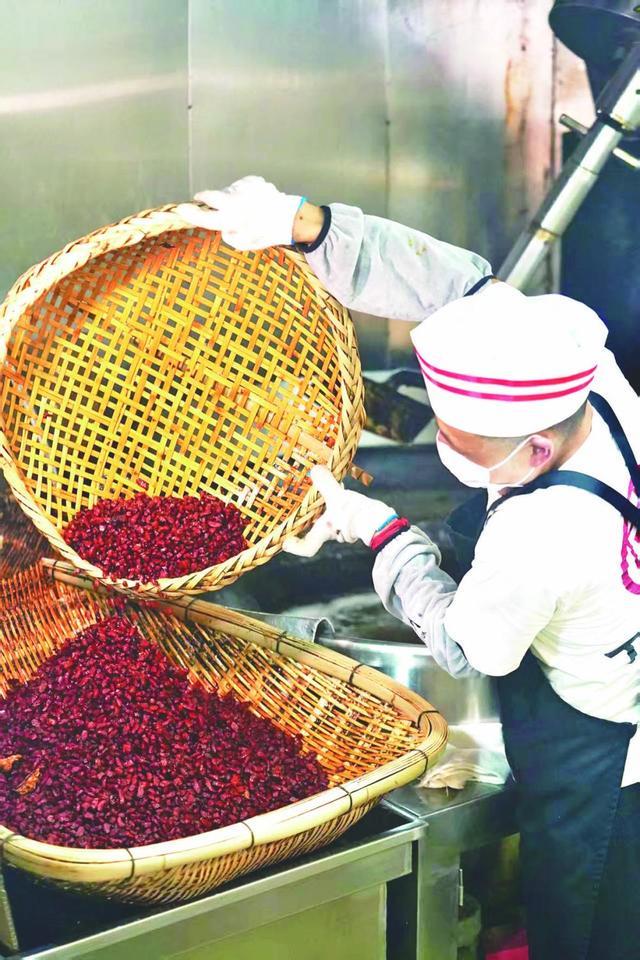
单品销量增长5倍,从流量到“留量”,贵州风味借拼多多出圈?
2 1 Shi Ji Jing Ji Bao Dao· 2025-10-31 07:32
Core Insights - The article highlights the rise of Guizhou's sour soup as a significant regional delicacy, transitioning from local consumption to national popularity through e-commerce platforms like Pinduoduo [2][3][16] - The integration of traditional flavors with modern technology and marketing strategies has enabled local producers to scale their operations and reach broader markets [7][20] Group 1: E-commerce and Market Expansion - Pinduoduo's support for local brands has led to substantial sales growth, with one company reporting monthly sales exceeding 600,000 yuan since September [2][3] - The sour soup industry has seen a significant increase in online orders from regions outside of Guizhou, indicating a growing national demand [6][17] - The collaboration with local cultural events, such as the "Village Super" football matches, has helped boost the visibility and sales of Guizhou products [11][16] Group 2: Production and Technological Advancements - Guizhou's sour soup production has evolved from small family workshops to modern factories, with 58 production lines capable of producing over 150,000 tons annually [7][17] - Companies are focusing on standardizing production processes and improving fermentation techniques to enhance product quality and shelf life [7][9] - The introduction of digital management systems has streamlined operations, allowing for better quality control and increased production capacity [7][19] Group 3: Product Diversification and Consumer Trends - The sour soup market is diversifying with new product lines, including instant meals and beverages, to cater to younger consumers and changing dietary preferences [20][21] - The number of sour soup-related restaurants has surpassed 8,700, with a 40% annual growth rate, indicating a strong trend in the food service sector [14][15] - Companies are adapting their products to meet regional tastes, such as developing thicker sauces for markets outside of Guizhou [15][21] Group 4: Economic Impact and Community Development - The growth of the sour soup industry has created economic opportunities for local farmers, with some reporting an increase in income by 7,500 yuan per household [17][19] - Investments in production facilities and supply chain improvements are fostering sustainable agricultural practices and enhancing local economies [19][20] - The collaboration between companies and local farmers is strengthening the agricultural supply chain, ensuring high-quality raw materials for production [19][20]

2025年米粉行业发展报告-第一财经商业数据中心
Sou Hu Cai Jing· 2025-09-14 10:10
Industry Overview - The Chinese rice noodle industry has evolved over two millennia from a local snack to a national cuisine, focusing on technological innovation, full supply chain collaboration, and globalization as core development directions [1] - The market size of the entire rice noodle industry in China is expected to exceed 300 billion yuan by 2025, with online sales of pre-packaged instant rice noodles reaching 5.28 billion yuan [1][2] - The industry is characterized by diverse brand dynamics, with innovative consumer brands dominating the market, while traditional brands are also adapting to the fast-paced changes [1][2] Consumer Trends - Nearly 90% of consumers eat rice noodles weekly, with the post-85s to post-95s and working professionals being the primary consumer groups [2] - The demand for quality upgrades is driven by consumer preferences for taste, convenience, and cost-effectiveness, leading to an increase in the price range of pre-packaged rice noodles [2][45] - The trend towards social dining and experiential consumption is evident, with consumers favoring dining out for the atmosphere and social media sharing [48] Market Dynamics - The online sales channel for pre-packaged instant rice noodles is growing significantly, with over 60% of consumers purchasing through multiple channels, primarily e-commerce and large supermarkets [1][24] - The brand landscape is becoming more mature, with local time-honored brands revitalizing their offerings and new brands entering the market [27][30] - The supply chain is evolving, with upstream, midstream, and downstream sectors collaborating to enhance efficiency and product quality [38][41] Future Outlook - The global rice noodle market is projected to grow at an annual rate of 3.74%, reaching 24.5 billion USD by 2032, while the Chinese market is expected to exceed 80 billion yuan by 2025 [2] - Over 50% of consumers plan to increase their purchasing frequency, indicating a positive outlook for the industry [2] - The industry must focus on supply chain innovation, flavor and health improvements, and cultural integration to unlock further economic and cultural value [2][15]
