
量子磁力仪

Search documents
在成都,原来“量子”这样影响我们
Xin Lang Cai Jing· 2026-02-24 22:22
Group 1 - The recent quantum technology product launch in Chengdu showcased 15 innovative products, highlighting the practical applications of quantum technology in everyday life [1][2] - A notable product is a temperature sensor that operates without batteries or wires, utilizing electromagnetic waves, which has already been implemented by the State Grid in Chengdu [1] - Another significant innovation is a quantum flow meter that accurately measures the composition of oil, gas, and water in pipelines, addressing challenges in high-viscosity crude oil measurement [2] Group 2 - Chengdu's atomic clock has been integrated into the BeiDou satellite system, enabling large-scale domestic timing applications and breaking foreign monopolies in precision timing [2] - The fiber-optic sound detection system developed by Fuzhian Technology is designed for campus anti-bullying alerts, demonstrating the societal impact of quantum technology [2] - Experts indicate that Chengdu has strong potential in the quantum precision measurement sector due to its advantageous industries in oil and gas, rail transit, and healthcare [3]
天奥电子(002935.SZ):公司量子磁力仪主要针对脑磁测量领域进行研发
Ge Long Hui· 2026-01-09 00:48
Core Viewpoint - Tianao Electronics (002935.SZ) is focusing on the development of quantum magnetometers primarily for the field of brain magnetometry and has not yet initiated the medical device registration process [1] Group 1 - The company is engaged in research and development of quantum magnetometers [1] - The primary application of the quantum magnetometers is in brain magnetometry [1] - The medical device registration process for the quantum magnetometers has not been started [1]

2025量子科技多线领跑 AI赋能千行百业
Sou Hu Cai Jing· 2025-12-31 16:23
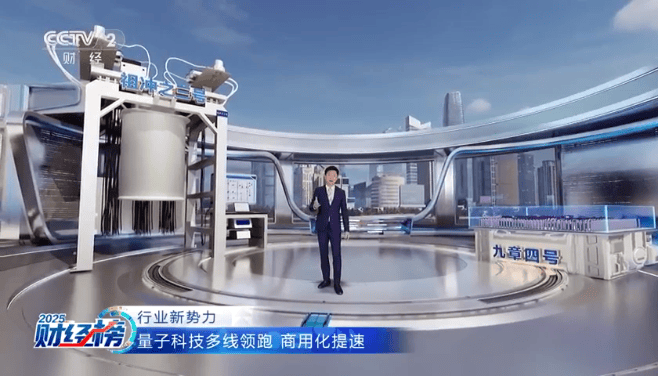
Group 1: Quantum Technology - In 2025, China's quantum technology commercialization is accelerating, showcasing vast application prospects [3] - China's "Zuchongzhi 3" superconducting quantum computer is reportedly 10 trillion times faster than the world's fastest supercomputer for specific tasks, while "Jiuzhang 4" can solve problems in microseconds that would take supercomputers 10^42 years [3] - Over 30 countries have released quantum strategy plans with total investments exceeding $35 billion, and the number of related companies has surpassed 800, with financing exceeding $14.5 billion in the past decade [3] Group 2: Artificial Intelligence - AI has evolved from a reactive model to a proactive service model, enabling autonomous operations in factories and personalized services in daily life [5] - The AI industry in China is projected to exceed 1.2 trillion yuan by 2025 and is expected to surpass 1.8 trillion yuan by 2028, with over 15% of work decisions globally anticipated to be made by AI agents by 2028 [5] Group 3: Smart Glasses - Smart glasses are emerging as the next mainstream interactive terminal, with significant advancements in battery life, optical display, and integration with AI models [7] - In the first half of the year, over 2.4 million smart glasses with camera functions were shipped globally, with China capturing a 35.5% market share, leading the world [7] - The Chinese smart glasses market is expected to grow at a compound annual growth rate of 55.6% from 2024 to 2029, the highest globally [7] Group 4: New Energy Storage - New energy storage technologies are ensuring the stability and affordability of green electricity, acting as "super charging stations" for cities [9] - By the end of September, China's new energy storage capacity reached 103 million kilowatts, accounting for over 40% of the global total, making it the world leader [9] Group 5: Innovative Pharmaceuticals - China's innovative pharmaceuticals are advancing in research, application, and international expansion, with a focus on cancer and rare diseases [11] - The number of innovative drugs in development accounts for approximately 30% of the global total, with a record number of approvals and 50 innovative drugs included in the national medical insurance directory [11] - Total licensing agreements for innovative drugs have surpassed $100 billion, demonstrating China's capability in original technology and global recognition [11]

量子信息技术专题研究(二):科技巨头加速布局,量子产业前景可期
Guoyuan Securities· 2025-12-21 14:12
Investment Rating - The report maintains a "Recommended" investment rating for the quantum technology industry [6] Core Insights - Quantum computing is expected to advance faster than market expectations, becoming a core component of future computing systems alongside classical and AI computing [1][12] - The 2025 Nobel Prize in Physics was awarded for groundbreaking work in quantum tunneling and energy level quantization, indicating rapid iterations in quantum technology [2] - Major international companies are enhancing their engineering capabilities and commercializing quantum technologies, making significant strides in quantum hardware and software [3] - Domestic companies are accelerating their development around self-controllable technologies and practical applications in quantum measurement and computing [4] Summary by Sections 1. Quantum Technology Development - Quantum technology is transitioning from basic research to engineering and industrialization, with significant advancements in core device manufacturing and algorithm development [23] - The industry is expected to become a crucial support for future information technology transformations and enhance national technological competitiveness [23] 1.1 Quantum Communication - The global quantum communication market is projected to grow from $1.1 billion in 2025 to $10.5 billion by 2034, with a compound annual growth rate (CAGR) of approximately 28.3% [30] - In China, the quantum communication market is expected to reach $1 billion by 2024, with a CAGR of 52.3% from 2025 to 2030 [34] 1.2 Quantum Computing - The global quantum computing market is anticipated to grow from $5.04 billion in 2024 to $807.75 billion by 2035, indicating a CAGR of 87.64% [44][45] - In China, the quantum computing market is projected to increase from $118.5 million in 2024 to $410 million by 2030, with a CAGR of 23.5% [51] 1.3 Quantum Precision Measurement - The global quantum precision measurement market is expected to expand from $1.674 billion in 2024 to $4.497 billion by 2035, with a CAGR of 9.40% [59] - In China, the quantum measurement industry is projected to grow to $2.14 billion in 2024, with a growth rate exceeding 30% [62]
量子力学诞生百年 我国正迎来加速突破
Xin Hua She· 2025-07-12 07:19
Core Viewpoint - This year marks the 100th anniversary of quantum mechanics, with UNESCO declaring it the "International Year of Quantum Science and Technology," highlighting significant advancements in quantum computing, communication, and measurement in China [1] Quantum Computing - Quantum computing is likened to the "engine" of quantum technology, with recent breakthroughs including the release of the superconducting quantum computing prototype "Zuchongzhi No. 3," which outperforms the fastest supercomputers by a factor of one trillion [2] - The transition from basic research to large-scale, practical applications in quantum computing is accelerating, with industries such as finance, aerospace, and pharmaceuticals recognizing its potential [2][3] Quantum Communication - China has achieved significant milestones in quantum direct communication, including a record-breaking communication speed over 100 kilometers and the establishment of a 300-kilometer quantum direct communication network [4] - The successful satellite-based transmission of encrypted image data over a distance of over 12,900 kilometers marks a significant leap towards long-distance secure quantum communication [4] - The emphasis on quantum communication is driven by national support and investment, positioning China strategically in the global quantum information technology landscape [4][5] Quantum Measurement - The release of various quantum sensors, including diamond single-spin sensors and quantum magnetometers, indicates rapid advancements in quantum measurement technology [7] - Applications in medical fields, such as early screening for coronary heart disease, and industrial quality control in lithium battery production are being explored [7] - Despite key breakthroughs, experts note that there is still a considerable gap compared to advanced countries, particularly in foundational theory and market acceptance [7] Strategic Outlook - The development of quantum technology is compared to a marathon, emphasizing the need for sustained strategic determination alongside innovation and leadership [8]
长三角议事厅·周报|长三角文旅协同:从机制破壁到价值共创
Xin Lang Cai Jing· 2025-05-26 08:08
Core Viewpoint - The integration of tourism associations in the Yangtze River Delta region aims to enhance regional coordination and development through cultural and tourism collaboration, breaking down administrative barriers and reconstructing transportation networks [1][2][3]. Group 1: Institutional Breakthroughs - The implementation of the "same city treatment" mechanism allows for cross-provincial tourism with mutual recognition of standards, data sharing, and regulatory interaction, facilitating innovative initiatives like the "high-speed rail tourism annual pass" [2]. - The "Shanghai-Disneyland-Suzhou Gardens-Hangzhou West Lake" tourism route is projected to see a 28% increase in visitor numbers in 2024, driving over 35% growth in surrounding consumption [2]. - The "High-Quality Integrated Development Cooperation Agreement for Inbound Tourism" set to launch in 2025 aims to optimize the 240-hour transit visa exemption policy, enhancing the appeal of the "Shanghai-Hangzhou-Suzhou" tourism products [2]. Group 2: Regional Planning - The Shanghai metropolitan area is actively developing land-based tourism circle plans, with Jiangsu focusing on upgrading scenic spots and vacation areas, while Zhejiang emphasizes "transportation and tourism integration" [3]. - Anhui is promoting cultural tourism integration, embedding "Hui culture" into the broader Yangtze River Delta market [3]. Group 3: Practical Innovations - Brand collaboration is driving regional tourism consumption, with events like the Shanghai Tourism Festival and Jiangsu Rural Tourism Festival creating a celebratory matrix across the four regions [4]. - The "Four Seasons Anhui" promotional campaign is creating a tourism loop by integrating high-quality resources from Anhui with Shanghai [4]. - The high-speed rail network, exceeding 6,500 kilometers, facilitates a "1-hour metropolitan area, 3-hour city group, and 5-hour regional travel" model [4]. Group 4: Resource Integration - The Yangtze River Delta has established a competitive tourism product system based on seven core resources, creating 30 unique tourism routes and 8 world-class corridors [5]. - The launch of the "Shanghai Holiday Train: Enjoy the Yangtze River Delta" tourism train connects top attractions, transitioning regional tourism from "point supply" to "chain operation" [5]. Group 5: Value Co-Creation - The region is moving from "platter-style integration" to "systematic coupling" of cultural resources, enhancing cultural identity and value recognition [6][7]. - Collaborative projects, such as exhibitions and product development between cultural institutions, exemplify the trend of cultural integration [7]. - Future initiatives may include joint applications for intangible cultural heritage projects and shared performance resources to deepen cultural collaboration [7].
3款前沿量子传感器发布
Ke Ji Ri Bao· 2025-05-22 00:04
Core Viewpoint - Quantum precision measurement technology is transitioning from laboratory experiments to industrial applications, providing new detection technology upgrades across various sectors such as electricity, energy, infrastructure, new materials, medical testing, and metrology [2]. Group 1: Company Developments - Guoyi Quantum Technology (Hefei) Co., Ltd. has developed the world's smallest sensor, a diamond single-spin sensor, which utilizes diamond nitrogen-vacancy center quantum sensing technology and offers nanometer-level spatial resolution [1]. - The company also introduced two additional quantum sensors: a quantum magnetometer with sensitivity surpassing traditional magnetometers for high-precision measurement of weak magnetic fields, and a microwave field strength meter utilizing Rydberg atom quantum sensing technology for high dynamic range and precision [1]. Group 2: Industry Trends - The successful development of these quantum sensors marks a significant step towards the industrialization of quantum precision measurement technology, moving it from a "laboratory miracle" to an "industry dividend" [2]. - Continuous breakthroughs in key technologies and expanding application scenarios are propelling the large-scale application of quantum precision measurement technology in China [2]. - The company plans to increase R&D investment to accelerate product iteration and upgrade, focusing on higher precision, miniaturization, ease of use, and lower costs for quantum sensors [2].

多款前沿量子传感器在合肥发布 覆盖医疗诊断等多元应用场景
Xin Hua Cai Jing· 2025-05-18 23:11
Core Insights - Quantum precision measurement technology is entering a rapid development phase with breakthroughs in core technologies and expanding application scenarios [1][2] - The newly launched quantum sensors cover diverse applications including power grid detection, medical diagnosis, and geological exploration [1] Company Developments - Guoyi Quantum Technology (Hefei) Co., Ltd. has independently developed several advanced quantum sensors aimed at upgrading detection technologies in various fields such as electricity, energy, semiconductors, new materials, and medical testing [1] - The company plans to increase R&D investment to accelerate product iteration and upgrade, focusing on higher precision, miniaturization, ease of use, and lower costs for quantum sensors [2] Industry Trends - 2023 is designated as the International Year of Quantum Science and Technology, highlighting the importance of quantum precision measurement technology as a foundational and leading technology for modern industrial systems [2] - Quantum precision measurement technology is expected to surpass classical technology limits in terms of measurement sensitivity and resolution [2] - Anhui Province is actively promoting the integration of quantum technology innovation and industrial innovation, with over 80 companies in the quantum industry chain, including Guoyi Quantum [2]
多款前沿量子传感器亮相合肥 量子精密测量技术规模化应用驶入快车道
Zheng Quan Shi Bao Wang· 2025-05-18 12:14
Core Insights - The conference on quantum precision measurement technology was held in Hefei, attracting nearly 200 representatives from major state-owned enterprises and research institutions [1] - Guoyi Quantum Technology (Hefei) Co., Ltd. launched several quantum sensors, laying the foundation for the industrial application of quantum precision measurement technology [1] - Quantum precision measurement technology is expected to surpass classical technology limits in sensitivity and resolution, transforming "invisible into visible" [1] Company Developments - The diamond single-spin sensor released by Guoyi Quantum is one of the smallest sensors made by humans, featuring nanometer-level spatial resolution, suitable for non-destructive testing of chips [2] - The quantum magnetometer has sensitivity far exceeding traditional magnetometers, enabling high-precision measurement of extremely weak magnetic fields, which can aid in early diagnosis of cardiovascular diseases [2] - The microwave field strength meter, based on Rydberg atom quantum sensing technology, offers high dynamic range and precision for microwave field measurements, applicable in microwave metrology and electromagnetic environment monitoring [2] Industry Trends - The series of quantum sensors provides new detection technology upgrade solutions for various sectors, including electricity, energy, infrastructure, semiconductors, new materials, and medical diagnostics [2] - With continuous breakthroughs in core technology and expanding application scenarios, the large-scale application of quantum precision measurement technology is entering a rapid development phase [2] - The company plans to increase R&D investment to accelerate product iteration and upgrade, aiming for higher precision, miniaturization, ease of use, and lower costs in quantum sensors [2]