
钕镨

Search documents
全球矿业研究 | 2026年金属市场的七大展望
彭博Bloomberg· 2026-02-25 06:05
Core Viewpoint - The article discusses the 2026 outlook for the metals and mining sector, focusing on three main themes: persistent safe-haven demand, supply structure changes driving divergence in base metals, and resource security becoming a policy priority [3][4]. Group 1: Precious Metals - Gold is expected to outperform the S&P 500 again in 2026, with an average price projected around $5,000 per ounce [3][6]. - Silver may experience a modest correction after a strong rally, but its average price is still anticipated to be significantly above market consensus [3][5]. Group 2: Supply Structure Changes - The copper market is expected to tighten, with prices likely to remain above $12,000 per ton, while nickel may see a price drop to around $15,000 due to oversupply unless Indonesia intervenes [4][5]. - The alumina market is projected to see price support from cost curves, with a potential decline limited to about 10% [4]. Group 3: Resource Security - Government funding is driving accelerated development of rare earth resources, with an estimated $10 billion in public sector investment expected [4][5]. - U.S. steel tariffs are likely to remain in place, benefiting domestic producers [4]. Group 4: Mining Companies Outlook - Major mining companies are reflecting a rebound in market risk appetite, with a trend of capital reallocation towards tangible assets [9]. - The structural supply constraints in metals, particularly copper, support price resilience, indicating potential upward revisions in profit forecasts [9]. Group 5: Silver Mining Companies - Silver mining companies, including Fresnillo, are expected to maintain strong performance in 2026, benefiting from high precious metal prices and robust operational execution [11]. - The consensus forecast predicts a 44% year-over-year increase in earnings for silver companies in 2026, based on silver and gold prices of $83 and $4,820 per ounce, respectively [11][12].

高盛:深入探讨稀土金属
Goldman Sachs· 2025-12-04 15:36
Investment Rating - The report recommends a buy rating for MP Materials and suggests investing in the global rare earth basket (GSXG RARE) which includes leading Chinese rare earth companies [1][11]. Core Insights - The rare earth market, although small, is crucial for key industries and supports approximately 3% of the US GDP, amounting to $1.5 trillion [2][3]. - Heavy rare earth resources are particularly scarce, with 80% located in China or Myanmar, and China currently dominates global refining and magnet manufacturing [1][3]. - The easing of US-China trade tensions has created opportunities for MP Materials, which has secured a minimum price for NdPr, with future growth dependent on operational execution and manufacturing expansion [1][8]. Summary by Sections Market Overview - The global rare earth sales were approximately $7 billion in 2024, which is 1/33 of the copper market [2]. - The NdPr market is expected to face a continuous deficit until 2027, with a projected annual growth rate of about 7% driven by demand in electronics, AI, and low-carbon sectors [3][13]. Company Analysis - MP Materials focuses on NdPr, essential for smartphones, electric vehicles, and defense magnets, and has established infrastructure and quality customer relationships [1][7]. - Ramaco Resources is heavily reliant on the less liquid Scandinavian market and faces significant capital expenditure and approval risks for its Brook mine project [1][7]. Investment Strategy - The recommended investment strategy involves the global rare earth basket (GSXG RARE), which includes MP Materials, Energy Fuels, and Lynas, with a focus on companies showing sustainable profit growth [1][11]. - The current valuation of these companies is considered more reasonable compared to previous months, indicating a favorable buying opportunity [11].
澳洲稀土供应商表态,美媒:西方“稀土替代”破灭
Sou Hu Cai Jing· 2025-12-01 16:24
Core Viewpoint - The global race for rare earth resources is intensifying as countries seek to establish a supply chain independent of China, highlighting the strategic importance of these materials in modern industry and defense [1][3]. Group 1: Importance of Rare Earths - Rare earths are essential for high-end manufacturing and defense, with significant quantities required for electric vehicles, wind turbines, and military technology [5][12]. - China's dominance in the rare earth supply chain is not solely based on reserves but also on its advanced purification technology, achieving levels of purity that many Western countries cannot match [7][10]. Group 2: Western Response and Initiatives - Following China's export restrictions and price surges, Western nations initiated various strategies to reduce dependence on Chinese rare earths, including the U.S. Rare Earths Act and the EU's Critical Raw Materials Alliance [14][27]. - Australia’s Peak Rare Earths discovered a significant deposit in Tanzania, which was initially seen as a potential solution for Western supply needs [16][29]. Group 3: Challenges Faced by Western Companies - Peak Rare Earths faced significant challenges, including political resistance in Tanzania and a lack of sustained investment, which hindered its ability to develop the mine [19][21]. - The company struggled financially and ultimately had to accept Chinese investment, which led to a complete acquisition by a Chinese firm, highlighting the difficulties faced by Western companies in establishing a reliable supply chain [25][29]. Group 4: Strategic Implications - The acquisition of Peak by a Chinese company underscores the shifting dynamics in the global rare earth market, where Western efforts to secure independence have faltered due to financial and operational challenges [27][31]. - The situation illustrates the need for long-term investment and technological support in the rare earth sector, areas where Western companies have been lacking compared to their Chinese counterparts [31].


澳洲稀土巨头突然倒戈!拒美2.4亿投向中国,美媒:稀土替代梦碎
Sou Hu Cai Jing· 2025-11-29 10:40
Core Viewpoint - The acquisition of the Ngualla rare earth mine in Tanzania by China's Shenghe Resources marks a significant shift in the global rare earth landscape, undermining Western aspirations for self-sufficiency in this strategic resource [1][3]. Group 1: Acquisition Details - Shenghe Resources completed the acquisition of Australian Peak Rare Earths for AUD 195 million, securing control over a world-class rare earth mine [1]. - The Peak board rejected a higher offer of AUD 240 million from another investment firm, indicating a strategic preference for Shenghe Resources [3]. Group 2: Importance of Ngualla Mine - The Ngualla mine contains 887,000 tons of high-quality neodymium-praseodymium ore, representing 15% of the world's proven high-quality rare earth resources [5]. - Neodymium-praseodymium is essential for manufacturing permanent magnets, which are critical components in electric vehicles and wind turbines [5]. Group 3: Western Challenges - The former CEO of Peak stated that while they possess resources, they struggle to convert them into products, highlighting a broader issue within the Western rare earth sector [6]. - The lack of a complete industrial chain is a fundamental reason why the West has failed to maintain control over this strategic resource [5]. Group 4: China's Dominance in Rare Earths - China dominates the global rare earth industry, accounting for 58.6% of mining, 85.4% of refining, and 91.6% of permanent magnet production [8]. - This dominance means that 9 out of every 10 permanent magnet motors in electric vehicles rely on Chinese rare earth materials [8]. Group 5: Strategic Insights - China's advantage in the rare earth permanent magnet sector is estimated to be 8-10 years ahead of the West, according to a report by the State Council Development Research Center [10]. - The technical barriers and high costs associated with establishing a complete rare earth supply chain pose significant challenges for Western investors [12]. Group 6: Future Outlook - Short-term reliance on China for rare earths is expected to continue, with predictions indicating that by 2030, 91% of the West's heavy rare earth demand will depend on China [19]. - Establishing a non-Chinese rare earth supply chain could require an investment of USD 120 billion, with product costs potentially increasing by 3-5 times [19]. - Long-term cooperation is suggested as a viable solution, with the potential for rare earths to serve as a bridge for collaboration rather than a tool for competition [21].
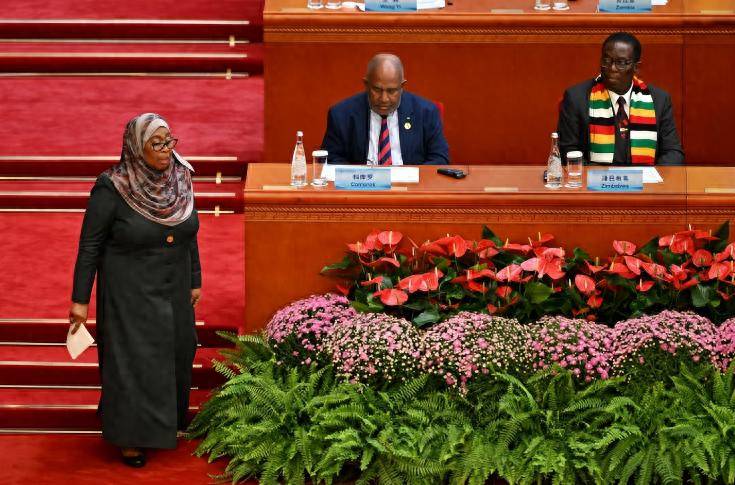
澳洲稀土供应商正式表态,美媒:西方“稀土替代”破灭,认命吧
Sou Hu Cai Jing· 2025-11-26 22:30
Core Insights - The global rush for rare earth mining resources is driven by the desire to establish a supply chain independent of China, but recent acquisitions show that China continues to dominate this sector [1][3][4] - Australia’s Peak Rare Earths failed to create a non-Chinese supply chain, highlighting the challenges faced by Western companies in breaking free from reliance on Chinese rare earths [3][5] - China's control over the rare earth supply chain is significant, with 91.62% of global production of rare earth permanent magnet materials coming from China as of 2025 [3][12] Industry Overview - Western countries, including the US, France, and Germany, are actively seeking key mineral deposits to establish rare earth production lines, but many promising sites have already been acquired by Chinese companies [4][5] - The acquisition of Peak by a Chinese rare earth giant signifies a strategic loss for Western nations, enhancing China's market power in the rare earth sector [5][11] - The Ngualla mine in Tanzania, discovered by Peak, contains high-quality rare earth deposits, but the project faced funding challenges and was ultimately acquired by Chinese interests [5][9] Market Dynamics - China's dominance in rare earths is not solely based on resource quantity; it also controls critical processing stages, making it difficult for other countries to compete [3][12] - The trade war initiated by the US has allowed China to leverage its rare earth resources, leading to increased export revenues despite stable export volumes [3][12] - The acquisition of Peak by a Chinese firm reflects a broader trend where Western companies struggle to secure funding and support for rare earth projects, while Chinese companies benefit from state backing [11][12] Strategic Implications - The failure of Peak to secure Western funding and support underscores the difficulties in establishing a self-sufficient rare earth supply chain outside of China [9][11] - The high acquisition premium paid by the Chinese company for Peak's shares indicates a strategic long-term vision, contrasting with the short-term profit focus of Western investors [12] - The ongoing acquisitions by Chinese firms in the rare earth sector suggest that the global landscape for these critical materials will remain heavily influenced by China for the foreseeable future [11][12]

外资大行谈中国稀土政策调整:德银看大国博弈,美银看非中供应链替代机会
Zhi Tong Cai Jing· 2025-10-16 14:41
Group 1 - The adjustment of China's rare earth export policy is interpreted as a strategic move in response to U.S. pressure, aiming to gain negotiation leverage in semiconductor discussions [2][3] - The U.S. has expanded export restrictions, which has weakened China's trust in trade negotiations, indicating a potential backlash against U.S. policies [2] - China has linked rare earth controls directly to semiconductor parameters, establishing a negotiation logic of "equivalent exchange" with the U.S. [3] Group 2 - Bank of America predicts a price differentiation trend in rare earths, forecasting that the average price of neodymium-praseodymium will reach $85 per kilogram by the second half of 2025, with significant increases for heavy rare earths by 2030 [4][5] - Non-Chinese rare earth supply chains are considered "scarce assets," with limited companies capable of large-scale production outside of China, leading to a buy rating for Lynas Rare Earths and MP Materials [5] - Lynas Rare Earths is the only company outside China with significant production capacity for both light and heavy rare earths, benefiting from government support and potential valuation increases [5]
