地缘政治竞争

Search documents
美国瞄准刚果民主共和国的铜和钴矿
Shang Wu Bu Wang Zhan· 2026-02-27 16:11
Core Insights - The article highlights a significant investment initiative by a U.S.-backed investment fund in the Democratic Republic of Congo (DRC), aiming to acquire a 40% stake in key copper and cobalt mines, indicating a strategic move to secure critical mineral supplies [1][2] Group 1: Investment Details - A non-binding agreement has been signed between the U.S. government-supported Orion Critical Mineral Consortium and mining giant Glencore to acquire stakes in the Mutanda Mining Company and Kamoto Copper Company [1] - The total value of the stakes in these two projects is nearly $9 billion, with Glencore currently holding 95% of Mutanda and 70% of Kamoto [1] - In the previous year, Mutanda and Kamoto produced 247,800 tons of copper and 33,500 tons of cobalt concentrate and hydroxide, accounting for nearly 30% of Glencore's total copper production [1] Group 2: Strategic Implications - This proposed transaction represents one of the most significant U.S. investments in the DRC mining sector in the past decade, reflecting a shift towards direct involvement in mineral production amid increasing geopolitical competition for strategic resources [2] - The focus on copper and cobalt is driven by their growing importance for economic security and industrial policy, as these metals are essential for electric vehicles, renewable energy infrastructure, and advanced industrial technologies [2]

非洲采矿业推动就业增长
Shang Wu Bu Wang Zhan· 2026-02-25 13:28
Core Insights - The demand for critical minerals globally is rising, leading to increased investments in mining, processing, and the entire industry chain in Africa, solidifying the mining sector's role as an employment engine with a positive outlook for development [1] Group 1: Industry Overview - Africa holds approximately $29.5 trillion in mineral wealth, accounting for 20% of global reserves, with $8.6 trillion yet to be developed [1] - The mining industry is a crucial source of income for Africa and a key pathway for job creation and economic diversification [1] - Future focus will shift from reliance on raw material exports to local processing of downstream industries such as aluminum and battery materials, transforming resource advantages into sustainable industrial employment [1] Group 2: Current Developments - Several African countries are advancing new mining projects: Namibia plans to resume uranium production and expand into rare earths and lithium; South Africa aims to invest $125.2 billion over five years to enhance the critical mineral value chain; Zambia's mining sector is projected to provide 73,000 jobs by 2025, with copper mine expansions attracting further investment and employment [1] - The U.S. has signed a mineral cooperation agreement with the Democratic Republic of the Congo, which has $24 trillion in mineral reserves, of which only 10% has been developed, indicating significant employment growth potential [1] Group 3: Challenges and Opportunities - Geopolitical competition for critical minerals like cobalt and lithium in Africa is intensifying, while insufficient financing channels continue to hinder the expansion of the mining sector, particularly affecting local companies and small operators [1] - There is a growing need for enhanced collaboration between Africa and global financial institutions to address these challenges [1]
高盛:深入探讨稀土金属
Goldman Sachs· 2025-12-04 15:36
Investment Rating - The report recommends a buy rating for MP Materials and suggests investing in the global rare earth basket (GSXG RARE) which includes leading Chinese rare earth companies [1][11]. Core Insights - The rare earth market, although small, is crucial for key industries and supports approximately 3% of the US GDP, amounting to $1.5 trillion [2][3]. - Heavy rare earth resources are particularly scarce, with 80% located in China or Myanmar, and China currently dominates global refining and magnet manufacturing [1][3]. - The easing of US-China trade tensions has created opportunities for MP Materials, which has secured a minimum price for NdPr, with future growth dependent on operational execution and manufacturing expansion [1][8]. Summary by Sections Market Overview - The global rare earth sales were approximately $7 billion in 2024, which is 1/33 of the copper market [2]. - The NdPr market is expected to face a continuous deficit until 2027, with a projected annual growth rate of about 7% driven by demand in electronics, AI, and low-carbon sectors [3][13]. Company Analysis - MP Materials focuses on NdPr, essential for smartphones, electric vehicles, and defense magnets, and has established infrastructure and quality customer relationships [1][7]. - Ramaco Resources is heavily reliant on the less liquid Scandinavian market and faces significant capital expenditure and approval risks for its Brook mine project [1][7]. Investment Strategy - The recommended investment strategy involves the global rare earth basket (GSXG RARE), which includes MP Materials, Energy Fuels, and Lynas, with a focus on companies showing sustainable profit growth [1][11]. - The current valuation of these companies is considered more reasonable compared to previous months, indicating a favorable buying opportunity [11].
澳大利亚在所罗门群岛推“体育外交”为抗衡中国?专家解读
Huan Qiu Shi Bao· 2025-08-17 22:43
Group 1 - Australia is extending its geopolitical strategy through sports, particularly in the Pacific region, to counter China's influence [1] - The Solomon Islands have established a new football club, Solomon Kings FC, in partnership with Australia's Brisbane Wolves, which is expected to be a founding member of the Oceania Professional Football League supported by FIFA [2] - The Australian government is actively engaging with Pacific nations through sports, providing opportunities for training and competitions for both men's and women's football teams [2] Group 2 - China's influence in the Solomon Islands is noted, particularly through a security cooperation framework and the construction of a national stadium funded by China [3] - The Solomon Islands football team may seek additional support from China, which could conflict with Australian government interests [3] - China's approach emphasizes development, respect for sovereignty, and mutual benefit, contrasting with Australia's sports aid potentially aimed at countering Chinese influence [3]
美国关税战进攻?除中国,周五完成全部任务,中方打开天窗说亮话
Sou Hu Cai Jing· 2025-07-31 15:05
Group 1 - The U.S. has made significant progress in trade agreements with the EU, imposing a 15% tariff on EU goods while maintaining near-zero tariffs on other markets, indicating a shift in U.S. trade policy under Trump's leadership [1][5] - The U.S. Treasury Secretary expressed concerns over China's continued purchase of Iranian and Russian oil, warning of potential punitive tariffs up to 500% if these actions persist, highlighting the U.S.'s strong stance in global economic order [4] - China has established a clear position, prepared to counter U.S. secondary sanctions by bypassing dollar settlements and relying on stable energy cooperation, particularly with Russia, as evidenced by a ten-year oil supply agreement signed in 2022 [7] Group 2 - Recent developments in U.S.-China trade negotiations indicate that while there is no extension of the tariff ceasefire, Trump retains ultimate decision-making power over trade agreements and pending tariffs [8] - Chinese representatives have stated their intention to continue pushing for the implementation of "reciprocal tariffs" and to delay countermeasures, signaling a mature and determined response strategy to U.S. tariff actions [10] - Despite agreements with countries like the EU and Japan, there remains uncertainty regarding the full implementation of these agreements, as local investments may not materialize as expected, suggesting that the U.S. may not have fully "won" in these negotiations [12]

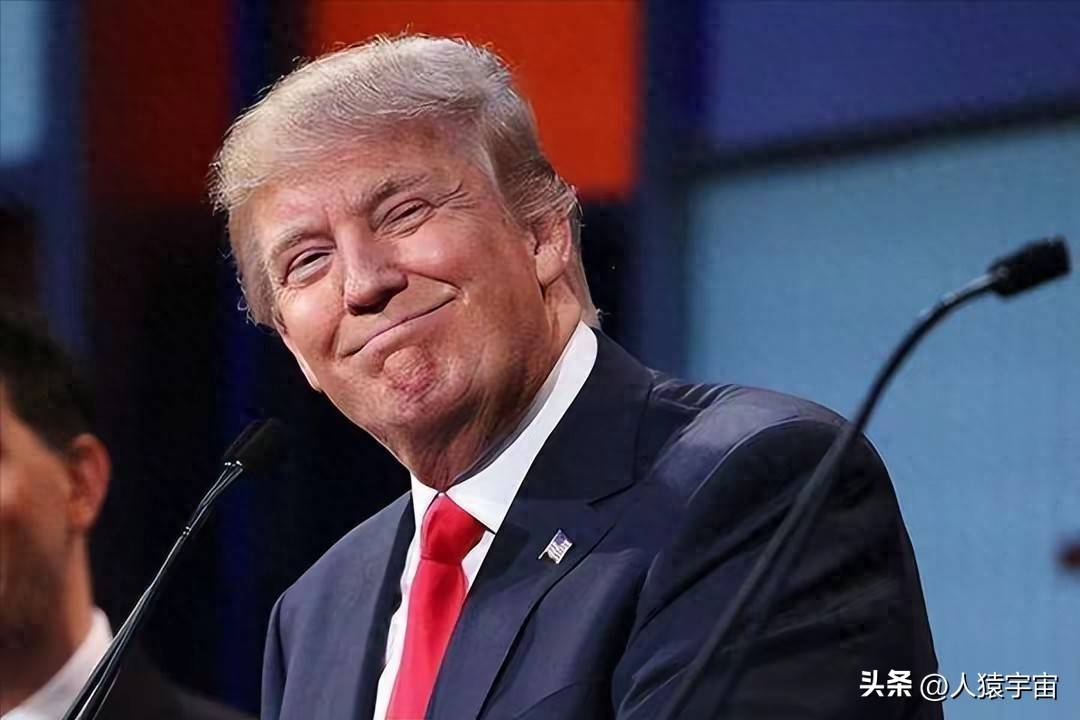
马来西亚总理:关税已成地缘政治施压工具
news flash· 2025-07-09 14:38
Core Viewpoint - The Malaysian Prime Minister Anwar highlighted that tariffs, export restrictions, and investment barriers have become sharp tools in geopolitical competition, transforming from instruments of economic growth to means of pressure, isolation, and containment [1] Group 1 - Tariffs are now utilized as tools for geopolitical competition rather than for economic growth [1] - Export restrictions are being employed to exert pressure and isolate nations [1] - Investment barriers are increasingly seen as mechanisms for containment in the current geopolitical landscape [1]
马来西亚总理:关税和出口限制现在已经成为地缘政治竞争的利器。
news flash· 2025-07-09 02:31
Core Insights - The Prime Minister of Malaysia stated that tariffs and export restrictions have now become tools of geopolitical competition [1] Group 1 - Tariffs and export restrictions are increasingly utilized in the context of geopolitical rivalry [1]
印最大造船厂收购科伦坡船坞,为抗衡中国?专家:不切实际且略显滑稽
Huan Qiu Shi Bao· 2025-06-30 22:48
Group 1 - Mazagon Dock Limited (MDL) has announced the acquisition of at least 51% stake in Colombo Dockyard PLC (CDPLC) for approximately $53 million, becoming the largest shareholder [1][2] - The acquisition is seen as strategically significant, allowing MDL to establish a foothold in the Indian Ocean and counter China's growing influence in Sri Lanka [1][2] - The transaction is expected to be completed within four to six months and will involve purchasing shares from CDPLC's major shareholder, Japan's Onomichi Dockyard, and subscribing to new shares [2] Group 2 - MDL is a major manufacturer of submarines and warships for the Indian Navy and views this acquisition as a key step in its internationalization strategy [2] - The strategic location of CDPLC in Colombo Port and its established capabilities are expected to enhance MDL's position as a significant player in South Asia and lay the foundation for becoming a global shipbuilder [2] - Indian media has characterized this acquisition as a proactive measure in the geopolitical competition in the Indo-Pacific region, particularly in response to China's expanding presence in the Indian Ocean [2]
印巴冲突的后续走向
2025-05-08 15:31
Summary of Key Points from the Conference Call Industry or Company Involved - The conference call primarily discusses the escalating conflict between India and Pakistan, particularly focusing on the Kashmir issue and its implications for regional stability and international relations. Core Points and Arguments - **Escalation of Conflict**: The conflict between India and Pakistan escalated significantly in April-May 2025, triggered by a major terrorist attack in Indian-administered Kashmir on April 22, resulting in 26 deaths, predominantly Indian tourists. This incident led to India's military response on May 7, marking the most intense military engagement since the 1971 war [2][5][11]. - **India's Strong Measures**: India implemented a series of strong countermeasures against Pakistan, including diplomatic sanctions, suspension of trade, and the unprecedented halt of the Indus Water Treaty, which has been in effect since 1960. This treaty is crucial for Pakistan's water supply and agricultural needs [1][9][10]. - **Military Engagement**: The military operation named "Operation Red Spot" involved 125 aircraft and resulted in casualties on both sides. India claimed to target terrorist infrastructure, while both nations reported civilian casualties, highlighting the conflict's humanitarian impact [11][13][19]. - **International Reactions**: The international community, including the US, China, and Russia, expressed concern over the potential for nuclear confrontation and called for restraint. The US notably sided with India, reflecting the strengthening US-India relations [12][16][22]. - **Long-term Implications**: The Kashmir issue remains a core dispute, with historical grievances and geopolitical competition influencing future relations. While large-scale war is deemed unlikely due to nuclear deterrence, small-scale conflicts are expected to persist [5][29][30]. Other Important but Possibly Overlooked Content - **China's Position**: China is closely monitoring the situation due to its interests in the China-Pakistan Economic Corridor (CPEC) and regional stability. The Chinese government is actively engaging with Pakistan to safeguard its investments [6][32]. - **Impact on Regional Organizations**: The South Asian Association for Regional Cooperation (SAARC) has been significantly affected, with India boycotting meetings hosted by Pakistan since 2016, leading to its diminished effectiveness [4]. - **Domestic Factors in Pakistan**: Pakistan's internal political and economic instability, exacerbated by security issues, limits its capacity for sustained military engagement against India. The military's recent authorization for retaliatory actions could escalate tensions further [30][32]. - **Water Resource Disputes**: The Indus Water Treaty and its implications for water security are critical, as India's actions to limit water flow could provoke significant domestic unrest in Pakistan, potentially leading to military responses [31]. This summary encapsulates the key discussions and insights from the conference call, highlighting the complex interplay of military, political, and economic factors in the India-Pakistan conflict.
太无耻了,欧洲航空安全局不守信誉,取消今年给C919适航证计划
Sou Hu Cai Jing· 2025-05-02 06:35
Group 1 - The European Union Aviation Safety Agency (EASA) has unexpectedly delayed the certification of China's C919 aircraft by three to six years, pushing back what was anticipated to be a 2025 certification [1][3] - This delay comes despite previous commitments from the EU to enhance cooperation with China and complete the C919's certification process by 2025, raising concerns about the changing rules of engagement in international aviation [3][5] - The timing of the delay coincides with increased pressure from the EU for China to purchase more Airbus aircraft, particularly the A320 series, while the U.S. is urging allies to contain China's aviation industry [5][8] Group 2 - The C919 has already achieved over 50,000 hours of safe flight in domestic operations, receiving positive feedback from passengers and airlines, indicating its readiness for international markets [6][10] - The delay is perceived as a political maneuver rather than a technical issue, reflecting broader geopolitical tensions and trade negotiations between China and the EU [8][10] - China Commercial Aircraft Corporation (COMAC) has secured nearly 1,200 domestic orders for the C919, which could significantly impact Boeing and Airbus's market shares if the aircraft gains international certification [10][12]