长安奔奔

Search documents
新春走基层|新能源浪潮涌入小县城,增长背后亦有“变速”
Hua Xia Shi Bao· 2026-02-22 02:01
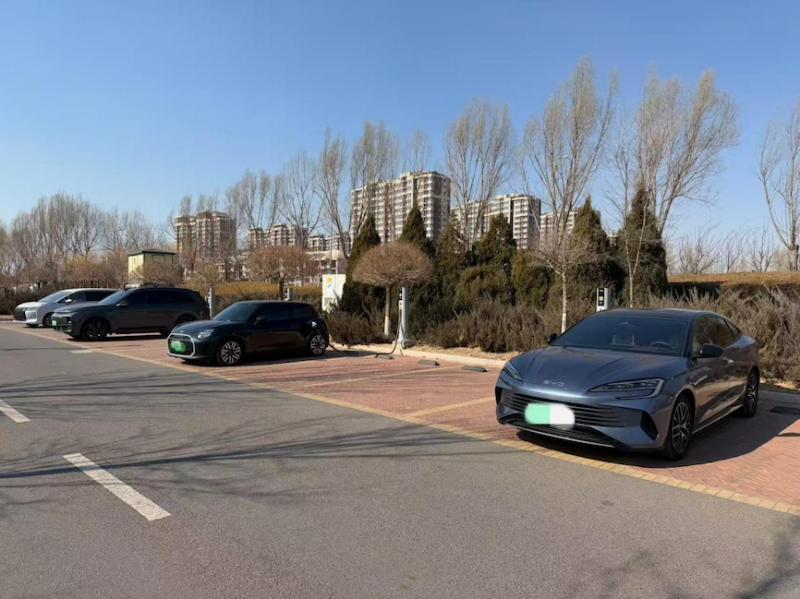
Core Insights - The penetration rate of new energy vehicles (NEVs) in China is projected to reach 47.9% by 2025, with December 2025 marking the first month where it surpasses 50%, maintaining its position as the world's largest market for 11 consecutive years [2] - The transition of NEVs from a niche market to a mainstream consumer product is evident, with a significant increase in the variety of models available, including higher-end brands like Tesla and NIO [3][4] - Consumer preferences are shifting towards higher-value vehicles, as evidenced by the increasing presence of models priced above 200,000 yuan in the market [5] Market Dynamics - The growth of NEVs in rural areas, such as Zhuolu County, is accompanied by a structural shift in consumer preferences, moving from low-cost models to more diverse options that include premium brands [3][4] - The rapid expansion of charging infrastructure is supporting the growth of NEVs, with over 20 million charging facilities nationwide by the end of 2025, and a 56.2% year-on-year increase in private charging stations [6] - Despite the growth in infrastructure, charging anxiety persists, with only 28.7% of households having private charging stations, indicating a gap between infrastructure expansion and actual accessibility [6] Consumer Behavior - The demand for plug-in hybrid vehicles (PHEVs) is declining, with their contribution to the NEV market dropping from 69.7% in 2024 to 15.1% in the first three quarters of 2025, reflecting a market adjustment as pure electric vehicles become more affordable [7][8] - The average selling price of A-class gasoline vehicles has fallen below that of PHEVs, leading consumers to reassess the cost-effectiveness of hybrid models compared to traditional gasoline vehicles [8] - The willingness to pay for advanced driving features is low among consumers in rural areas, with a significant portion preferring basic, practical vehicles over those with high-tech features [9][10] Industry Trends - The 2025 NEV catalog includes a record 124 models, but there is a noted decrease in basic practical models designed for everyday use, as manufacturers focus on higher-margin products [10] - The current market environment allows consumers to make more informed choices, leading to a clearer understanding of genuine needs versus artificially stimulated demand [10]

总销量154万台,国民神车复活!纯电小车时代来了?
电动车公社· 2026-02-10 16:02
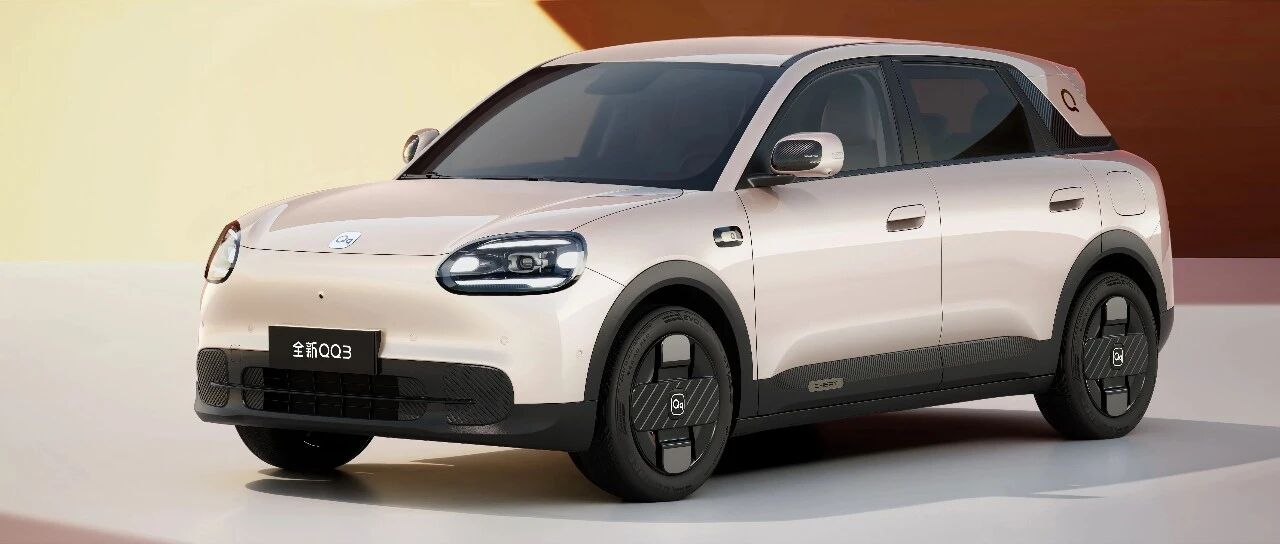
Core Viewpoint - The small car market is set to experience significant changes and growth, highlighted by the successful launch of new models like the Honda Fit and Chery QQ3, indicating a shift in consumer preferences and market dynamics [1][5][7]. Group 1: Market Dynamics - The new Honda Fit sold out its limited 3,000 units within a short period, showcasing a successful marketing and sales strategy [2][4]. - In contrast, the Chery QQ3 received 27,319 blind orders within just 3 hours of its launch, indicating a strong demand for electric small cars [5][7]. Group 2: Historical Context of Small Cars - Small cars have historically been defined by their size and affordability, catering to essential transportation needs while gaining popularity for their practicality [8][11]. - The evolution of small cars has been influenced by their low entry barriers and ease of imitation, allowing emerging automotive markets to adopt and adapt successful designs [15][16][20]. Group 3: Changes in Chinese Small Car Market - The Chery QQ, launched in 2003, became a market sensation with a starting price below 40,000 yuan, offering features that were competitive for its time [27][30]. - The market for small cars in China has shifted as consumer preferences evolved, with a growing demand for larger, more comfortable vehicles and the rise of compact cars and SUVs [35][37]. Group 4: The New Era of Electric Small Cars - The introduction of the Wuling Hongguang MINI EV in 2020 marked a turning point for electric small cars in China, offering an affordable and practical solution for urban transportation [43][44]. - The competitive landscape for electric small cars is rapidly evolving, with numerous models emerging that emphasize original design and local supply chain capabilities [52][54]. Group 5: Future Outlook - The Chery QQ3 represents a new chapter for the brand, combining modern technology and design to meet the demands of today's consumers [62][65]. - The strong initial demand for the QQ3, evidenced by its blind orders, suggests a promising future for small electric cars in the Chinese market [73].
41年3000万辆!这家3次创业的中国品牌,凭啥成为全球速度天花板?
电动车公社· 2025-12-12 16:06
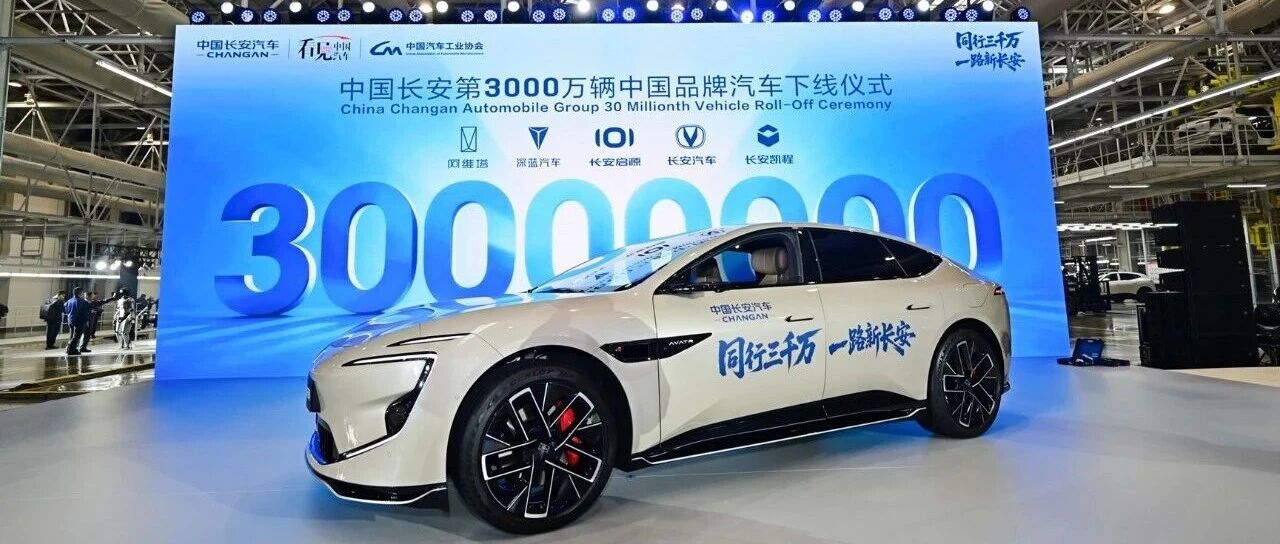
Core Viewpoint - Changan Automobile has recently achieved significant milestones, including the launch of its high-end brand Avita's IPO application and reaching the production of 30 million vehicles, establishing itself as a leading player in the domestic automotive market [1][2][8]. Group 1: Historical Achievements - Changan Automobile became the first domestic brand to sell over 10 million vehicles in 2014 [6]. - In 2021, it achieved another milestone by surpassing 20 million vehicles sold [7]. - The company has now reached 30 million vehicles sold, marking a significant achievement in its 41-year history [8]. Group 2: Challenges with Joint Ventures - Changan's joint ventures with global car manufacturers like Suzuki, Ford, and Mazda faced challenges, leading to declining market shares and eventual exits from the Chinese market [9][14][19][27]. - The struggles of these joint ventures highlighted the necessity for Changan to rely on its own brand for growth and success in the competitive automotive landscape [28]. Group 3: Strategic Transformations - Changan's evolution includes three major phases: transitioning from military to civilian production, shifting from commercial to passenger vehicles, and transforming into a technology-driven company focusing on smart and low-carbon mobility [30][38][43]. - The company has launched multiple successful models, including the UNI series and CS75, and has been a leader in the domestic market for several years [41]. Group 4: Future Goals and Innovations - Changan aims to become a world-class automotive group with global competitiveness and core technologies, targeting a production and sales goal of 5 million vehicles by 2030, with over 60% being new energy vehicles [56][62]. - The company is also exploring new fields, including humanoid robots and flying cars, while focusing on establishing Avita as a high-end brand to drive future growth [64][66].

目标年销500万辆!独立后的长安汽车,凭啥这么狂?
电动车公社· 2025-08-02 16:33
Core Viewpoint - The recent establishment of China Changan Automobile Group as an independent entity under the direct management of the State-owned Assets Supervision and Administration Commission (SASAC) marks a significant shift in its operational structure, allowing for greater autonomy and resource allocation in the competitive automotive market [2][10][35]. Group 1: Independence and Structural Changes - Changan Automobile has transitioned from being part of the China Ordnance Equipment Group to an independent central enterprise, aligning it with other major players like FAW and Dongfeng [4][6]. - The restructuring allows Changan to focus solely on automotive manufacturing, shedding its previous military-industrial ties, which complicated its operational framework [10][26]. - The new identity as a standalone entity enhances Changan's decision-making efficiency and management capabilities, facilitating a more streamlined approach to business operations [26][35]. Group 2: Strategic Goals and Market Position - Changan has set an ambitious target of achieving an annual sales volume of 5 million vehicles by 2030, with a focus on electric vehicles making up over 60% of this total [57][58]. - The company aims to establish itself among the top 10 global automotive manufacturers, emphasizing the importance of both domestic and international market expansion [57][60]. - Changan's sales performance in the first half of the year reached 1.355 million vehicles, marking an 8-year high, indicating a strong market presence [49]. Group 3: Product Development and Innovation - Changan plans to launch a series of new models, including the Changan Q07 laser version and various electric SUVs, to support its sales targets [52][54]. - The company is focusing on three main brands: Changan, Deep Blue, and Avita, each with specific market segments and sales goals, contributing to the overall target of 5 million vehicles [54][55][57]. - The emphasis on innovation and product development is crucial for maintaining competitiveness in the rapidly evolving automotive landscape [60][61]. Group 4: Resource Allocation and Collaboration - The establishment of the new Changan Automobile Group allows for better resource integration, including the absorption of the former China Changan's subsidiary, which will enhance its supply chain and operational capabilities [36][38]. - Changan is expected to leverage its new status to attract strategic partnerships and collaborations across various sectors, expanding its operational ecosystem beyond traditional automotive boundaries [38][47]. - The company is poised to enhance its global footprint through a comprehensive strategy that includes manufacturing, logistics, and financial services [42][57].